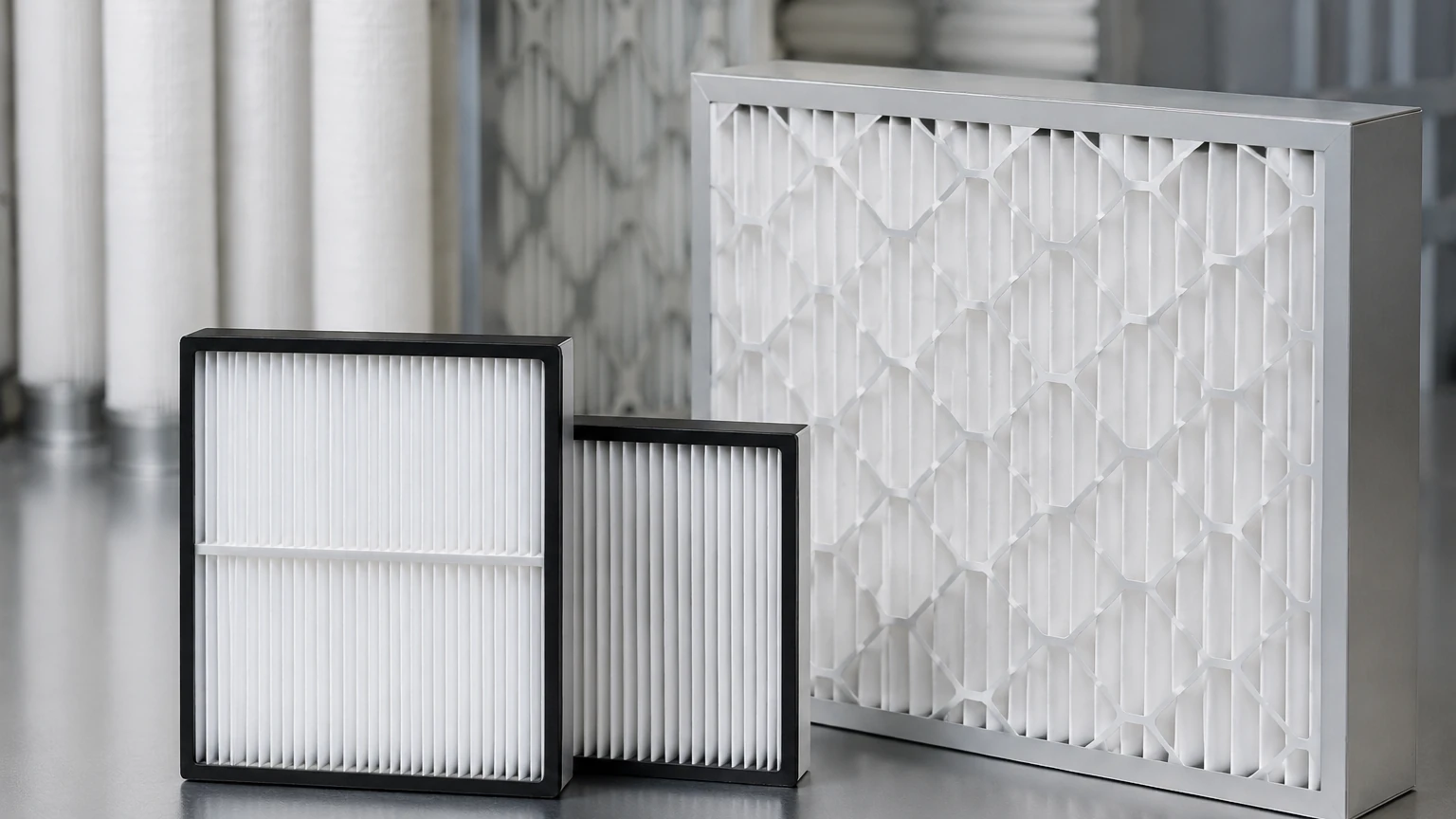
Merv 17 Air Filter
In the landscape of industrial air filtration, the classification of a filter determines its suitability for specific environmental controls and process requirements. The MERV 17 air filter represents a significant threshold in filtration technology, moving beyond standard commercial ventilation and into the realm of High-Efficiency Particulate Air (HEPA) performance. For engineers and facility managers operating in sectors such as pharmaceutical manufacturing, semiconductor fabrication, and precision chemical processing, understanding the technical nuances of MERV 17 is essential for maintaining air quality standards and protecting sensitive equipment.
Understanding the MERV 17 Classification
The Minimum Efficiency Reporting Value (MERV) is a standard derived from the ASHRAE 52.2 test procedure. While the standard MERV scale typically ranges from 1 to 16, ratings from 17 to 20 are generally categorized under HEPA and ULPA (Ultra-Low Penetration Air) classifications. A merv 17 air filter is engineered to capture at least 99.97% of particles as small as 0.3 microns in diameter.
This level of efficiency is achieved through a combination of filtration mechanisms: interception, impaction, and diffusion. Unlike lower-rated filters that rely primarily on mechanical straining, MERV 17 media utilizes dense layers of sub-micron fibers—often borosilicate glass or specialized synthetic polymers—to trap microscopic contaminants. In industrial contexts, these filters are the primary defense against bacteria, combustion smoke, carbon dust, and microscopic allergens that could compromise product integrity or worker safety.
Technical Performance and Airflow Dynamics
One of the most critical engineering considerations when integrating a merv 17 air filter into an existing HVAC or process air system is the associated pressure drop. Due to the high density of the filter media required to achieve 99.97% efficiency, these filters exhibit significantly higher resistance to airflow compared to MERV 8 or MERV 13 variants.
Initial and Final Resistance
Technical specifications for MERV 17 filters typically list an initial resistance (clean filter) and a recommended final resistance (dirty filter). For many industrial HEPA-grade filters, the initial resistance may range from 0.5 to 1.0 inches of water gauge (w.g.) at a rated velocity of 250 to 500 feet per minute (fpm). As the filter accumulates particulate matter, this resistance increases. Engineers must ensure that the system’s fan and motor assembly can handle the increased static pressure without a catastrophic drop in air exchange rates. Failure to account for this can lead to motor burnout or inadequate ventilation in critical zones.
Face Velocity and Efficiency
The efficiency of a merv 17 air filter is also sensitive to face velocity. Operating a filter above its rated velocity can lead to "bleed-through," where particles are forced through the media by high-pressure air. Conversely, operating at lower velocities often improves efficiency due to the increased effect of diffusion on sub-micron particles. Precision air handling units (AHUs) must be calibrated to maintain stable velocities to ensure the filter performs to its certified rating.
Critical Applications for High-Efficiency Filtration
The deployment of MERV 17 filtration is rarely a standard requirement for general office spaces; rather, it is a necessity for controlled environments where even trace amounts of particulate matter can cause failure.
1. Pharmaceutical and Biotech: In sterile fill-finish areas and laboratories, MERV 17 filters are used to eliminate airborne microbes and cross-contamination. These environments often require validated air quality levels (ISO Class 5 to Class 8).
2. Microelectronics and Semiconductors: The manufacturing of microchips requires nearly particle-free air. A single dust particle can ruin a silicon wafer. MERV 17 and higher filters are the backbone of cleanroom ceiling grids in these facilities.
3. Healthcare and Surgical Suites: To prevent the spread of airborne pathogens and protect immunocompromised patients, hospitals utilize MERV 17 filtration in operating rooms and isolation wards.
4. Chemical and Nuclear Processing: When handling hazardous powders or radioactive isotopes, high-efficiency filtration is required to prevent the escape of toxic particulates into the atmosphere.
Engineering Selection Criteria for MERV 17 Systems
Selecting a merv 17 air filter involves more than just verifying the efficiency rating. Engineers must evaluate the physical construction and material compatibility of the filter unit to ensure long-term reliability.
Frame Construction and Durability
Industrial filters are subject to vibration, pressure fluctuations, and sometimes high humidity. Frames are typically constructed from galvanized steel, aluminum, or stainless steel. For applications involving corrosive chemicals or high-moisture environments, stainless steel frames are preferred for their oxidation resistance and structural integrity. The use of rigid frames prevents the media from flexing or collapsing under high static pressure, which would otherwise lead to air bypass.
Seal Integrity and Gaskets
The efficiency of a MERV 17 filter is rendered moot if air can bypass the filter media. High-efficiency systems require robust sealing mechanisms. Common options include closed-cell neoprene gaskets or fluid (gel) seals. Fluid seals involve a channel filled with a specialized silicone gel on the filter frame that mates with a knife-edge on the housing, providing a leak-proof barrier that is superior to traditional mechanical compression gaskets.
Pre-filtration Strategies
A merv 17 air filter is an expensive component. To maximize its service life, a multi-stage filtration strategy is mandatory. This usually involves a primary stage of MERV 8 pre-filters to catch large dust and debris, followed by a secondary stage of MERV 13 or 14 filters to remove mid-sized particles. In heavy industrial environments, stainless steel wire mesh filters may be used as the first line of defense to remove large scale, oil mist, or heavy particulates, protecting the delicate HEPA media from premature clogging.
Maintenance and Operational Longevity
The total cost of ownership (TCO) for high-efficiency filtration is heavily influenced by maintenance practices. Unlike low-efficiency filters that might be changed on a fixed calendar schedule, MERV 17 filters should be managed based on differential pressure monitoring.
Monitoring Pressure Drop
Installing magnehelic gauges or digital pressure sensors across the filter bank allows maintenance teams to track the loading of the filter in real-time. A common industry standard is to replace the filter when the pressure drop reaches twice the initial resistance or a predetermined limit set by the equipment manufacturer (often around 1.5 to 2.0 inches w.g.).
Integrity Testing (DOP/PAO Testing)
In regulated industries, simply installing a MERV 17 filter is not enough. In-situ integrity testing using Dispersed Oil Particulate (DOP) or Polyalphaolefin (PAO) aerosols is performed to ensure that the filter and its housing are free of leaks. This testing confirms that the entire assembly—not just the media—meets the required 99.97% efficiency standard.
Customization and Industrial Integration
Every industrial facility has unique spatial and environmental constraints. Standard off-the-shelf filters may not fit specialized machinery or high-temperature exhaust streams. This is where custom manufacturing becomes vital. Manufacturers like Kaifil specialize in providing the structural components and specialized metal filtration media that support high-performance air systems.
When designing a system, engineers should consider the housing material, the need for high-temperature resistance, and the specific dimensions required for seamless integration into existing ductwork. For comprehensive information on industrial filtration components and customized metal filter solutions, technical teams can consult the Main Page to explore material options and engineering support.
Customization also extends to the filter's physical configuration. Deep-pleat designs provide more surface area, which reduces the initial pressure drop and extends the service life, whereas mini-pleat designs allow for a higher volume of air in a shallower frame, ideal for space-constrained AHUs. Selecting the right configuration requires a balance between available space, fan capacity, and the desired replacement cycle.
Conclusion
The implementation of a merv 17 air filter is a technical commitment to superior air purity. By capturing 99.97% of sub-micron particles, these filters enable the most demanding industrial processes to function without the risk of contamination. However, the success of a MERV 17 system depends on rigorous engineering: from calculating pressure drops and selecting durable stainless steel frames to implementing a multi-stage pre-filtration strategy. By focusing on these technical parameters, purchasing teams and engineers can ensure that their filtration investment delivers consistent performance, protects critical assets, and maintains compliance with stringent industry standards.