


Perslucht Gereinigd Filter
In industrial filtration, maintaining continuous operation while managing high particulate loads is a significant engineering challenge. The "perslucht gereinigd filter"—commonly known in English-speaking technical circles as a compressed air cleaned filter or pulse-jet filter—represents a critical solution for processes that cannot afford downtime for manual filter cleaning. These systems utilize high-pressure air pulses to dislodge accumulated solids from the filter media, ensuring that the pressure drop remains within acceptable limits and the flow rate remains consistent.
For engineers and procurement professionals, selecting the right filter media and structural design for these systems is paramount. While many pulse-jet systems historically used fabric bags, modern industrial applications in the chemical, pharmaceutical, and food and beverage sectors increasingly demand the durability and precision of stainless steel filtration components. This article explores the technical foundations, material considerations, and engineering specifications of compressed air cleaned filtration systems.
Understanding the Mechanism of Compressed Air Cleaned Filters
The fundamental principle of a perslucht gereinigd filter is the use of a reverse-flow air pulse to clean the filter element in situ. In a typical industrial setup, the process gas or liquid passes through the filter media, leaving behind a layer of contaminants, often referred to as the "filter cake." As this cake thickens, the resistance to flow increases, resulting in a higher differential pressure across the element.
To manage this, the system is equipped with a compressed air reservoir and a series of pulse valves. When the differential pressure reaches a pre-set threshold, or at specific timed intervals, a solenoid valve opens for a fraction of a second (typically 50 to 150 milliseconds). This releases a high-pressure blast of air into the clean side of the filter. The sudden expansion of air creates a shockwave that flexes the filter media and reverses the flow momentarily, causing the filter cake to detach and fall into a collection hopper below.
From an engineering perspective, the efficiency of this cleaning cycle depends on several factors:
1. Pulse Pressure: Usually ranging from 4 to 7 bar, depending on the media type.
2. Pulse Duration: Must be long enough to dislodge the cake but short enough to minimize air consumption and process disruption.
3. Nozzle Alignment: The compressed air must be directed precisely into the center of the filter element to ensure uniform cleaning across the entire surface area.
Material Engineering: Why Stainless Steel is Essential
When designing or specifying a perslucht gereinigd filter, the choice of filter media determines the system's longevity and performance. While synthetic fibers are common in low-temperature dust collection, stainless steel wire mesh and sintered metal components are the preferred choice for demanding industrial environments.
Durability Under Mechanical Stress
The pulse-jet cleaning process subjects the filter media to repeated mechanical stress. Fabric filters can suffer from fatigue and eventually tear, leading to bypass and system failure. In contrast, stainless steel wire mesh filters are engineered to withstand thousands of pulse cycles without losing structural integrity. The inherent rigidity of metal prevents the media from over-stretching, which ensures that the pore sizes remain consistent over the life of the filter.
Thermal and Chemical Resistance
Many industrial processes involve high temperatures or corrosive chemicals that would degrade standard filter materials. Stainless steel (typically Grades 304, 316, or 316L) provides excellent resistance to oxidation at high temperatures and can withstand exposure to acids, alkalis, and organic solvents. This makes them indispensable in chemical processing and steam filtration applications where a perslucht gereinigd filter must operate reliably in harsh conditions.
Precision and Cleanability
Stainless steel media can be manufactured with high precision. Sintered metal felt and multi-layer wire mesh provide specific micron ratings, ranging from coarse filtration to sub-micron levels. Furthermore, because the surface of stainless steel is relatively smooth compared to fibrous materials, the filter cake releases more easily during the pulse cycle, leading to more efficient cleaning and lower residual pressure drop.
Performance Metrics: Filtration Accuracy and Pressure Management
For technical teams, evaluating a perslucht gereinigd filter requires a deep dive into performance metrics. The goal is to balance filtration efficiency with the energy costs associated with compressed air usage and system pressure loss.
Filtration Efficiency and Micron Rating
The micron rating of the filter element must be matched to the particle size distribution of the contaminants. In pulse-jet systems, the formation of a controlled filter cake actually assists in filtration, as the cake itself acts as a secondary filtering layer. However, the primary stainless steel media must be robust enough to capture particles during the initial stages of the cycle and after each pulse. Engineering teams must specify whether they require absolute or nominal filtration ratings based on the sensitivity of downstream equipment.
Differential Pressure (ΔP)
The differential pressure is the most critical indicator of filter health. A well-designed system will maintain a stable "equilibrium" ΔP, where the amount of dust removed during the pulse cycle equals the amount deposited during the filtration cycle. If the ΔP continues to rise despite cleaning, it indicates "blinding" of the media, where particles become lodged deep within the pores. Using high-quality stainless steel mesh with optimized pore geometry can significantly reduce the risk of internal blinding.
Industrial Applications and Compatibility
The versatility of the perslucht gereinigd filter allows it to be used across a broad spectrum of industries. Each sector has unique requirements regarding hygiene, pressure, and material compatibility.
* Chemical Processing: In the production of catalysts, pigments, and specialty chemicals, these filters are used to recover valuable product from gas streams. The corrosion resistance of 316L stainless steel is vital here.
* Food and Beverage: Stainless steel filters are preferred due to their food-grade safety and ability to withstand Clean-in-Place (CIP) procedures. They are often used in spray drying and powder handling where moisture levels must be controlled to prevent the filter cake from clumping.
* Pharmaceuticals: High-precision filtration is required to ensure product purity and to protect operators from hazardous active pharmaceutical ingredients (APIs). The ability to clean the filter without opening the housing (using compressed air) is a major safety advantage.
* Hydraulic and Water Treatment: In high-pressure hydraulic systems or large-scale water filtration, back-pulsing with air or the process fluid itself helps maintain flow in continuous-duty applications.
Maintenance Cycles and Total Cost of Ownership
While the initial capital expenditure for a stainless steel perslucht gereinigd filter is higher than that of disposable or fabric-based systems, the Total Cost of Ownership (TCO) is often significantly lower.
Extended Service Life
Stainless steel filter cartridges can last for several years, whereas fabric bags may need replacement every few months. This reduces the costs associated with purchasing new filters, labor for installation, and the environmental impact of disposing of used media.
Energy Efficiency
A filter that cleans effectively with a lower-pressure air pulse or fewer pulses per hour saves significant energy. Compressed air is one of the most expensive utilities in a manufacturing plant. By optimizing the filter media for better cake release, plants can reduce their air consumption.
Reliability and Uptime
Unexpected filter failure can halt an entire production line. The mechanical robustness of metal filtration components provides a higher safety margin against pressure surges or temperature spikes, ensuring more predictable maintenance schedules.
Customization and OEM Solutions for Specialized Filtration
No two industrial processes are identical, which is why customization is a core component of effective filtration. When sourcing a perslucht gereinigd filter, engineers should consider the specific geometry of their filter housing and the unique characteristics of the particulate matter they are handling.
Customization options often include:
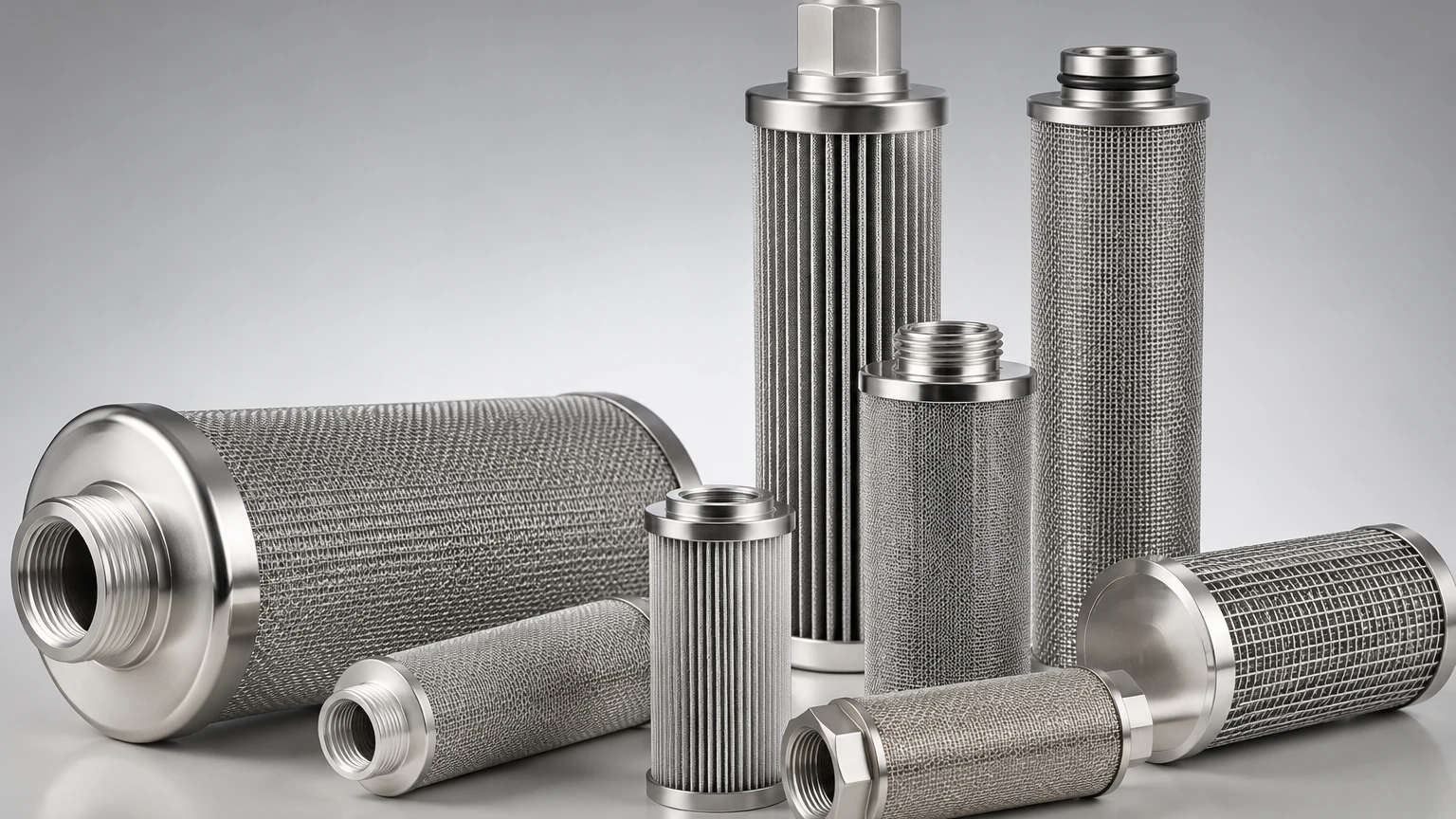
* Pleated vs. Cylindrical Designs: Pleating the stainless steel mesh can increase the surface area by 3 to 5 times compared to a standard cylinder, allowing for higher flow rates in the same footprint.
* Reinforced Cores: For high-pressure applications, the internal support core must be engineered to prevent collapse during the filtration cycle and to withstand the internal pressure of the air pulse.
* End Cap Configurations: Custom end caps (threaded, flange, or bayonet-style) ensure a leak-proof seal within existing housings.
For organizations looking to optimize their filtration processes, reviewing technical specifications and manufacturing capabilities is the first step toward achieving long-term efficiency. You can Review product options and application support on our Main Page to see how custom stainless steel solutions can be integrated into your specific pulse-jet cleaning systems.
Conclusion: Selecting the Right Solution
The implementation of a perslucht gereinigd filter is a strategic decision that impacts the efficiency, safety, and profitability of industrial operations. By moving away from disposable media and toward engineered stainless steel components, companies can achieve higher filtration precision and greater mechanical reliability.
When evaluating potential solutions, engineers should prioritize manufacturers who understand the nuances of fluid dynamics and material science. Confirming the micron rating, pressure ratings, and chemical compatibility before procurement will ensure that the filtration system performs as expected under real-world conditions. With the right combination of high-quality media and optimized pulse-jet cleaning, industrial facilities can maintain continuous production with minimal intervention and maximum resource recovery.
