


Nanofiber Filter
In the landscape of industrial filtration, the demand for higher efficiency, lower energy consumption, and longer service life has driven the evolution of filter media. Among the most significant advancements in recent decades is the development and integration of the nanofiber filter. By utilizing fibers with diameters in the nanometer range—typically between 50 and 500 nanometers—these filters offer performance characteristics that traditional micro-fiber media cannot match. For engineers and procurement professionals, understanding the technical nuances of nanofiber technology is essential for optimizing filtration systems in sectors ranging from chemical processing to pharmaceutical manufacturing.
Understanding Nanofiber Technology in Industrial Filtration
A nanofiber filter is defined by the scale of its constituent fibers. To put this in perspective, conventional synthetic or glass fibers used in industrial filtration usually range from 10 to 50 microns in diameter. Nanofibers are roughly 100 to 1,000 times smaller. This drastic reduction in fiber size fundamentally changes the physics of how particles are captured.
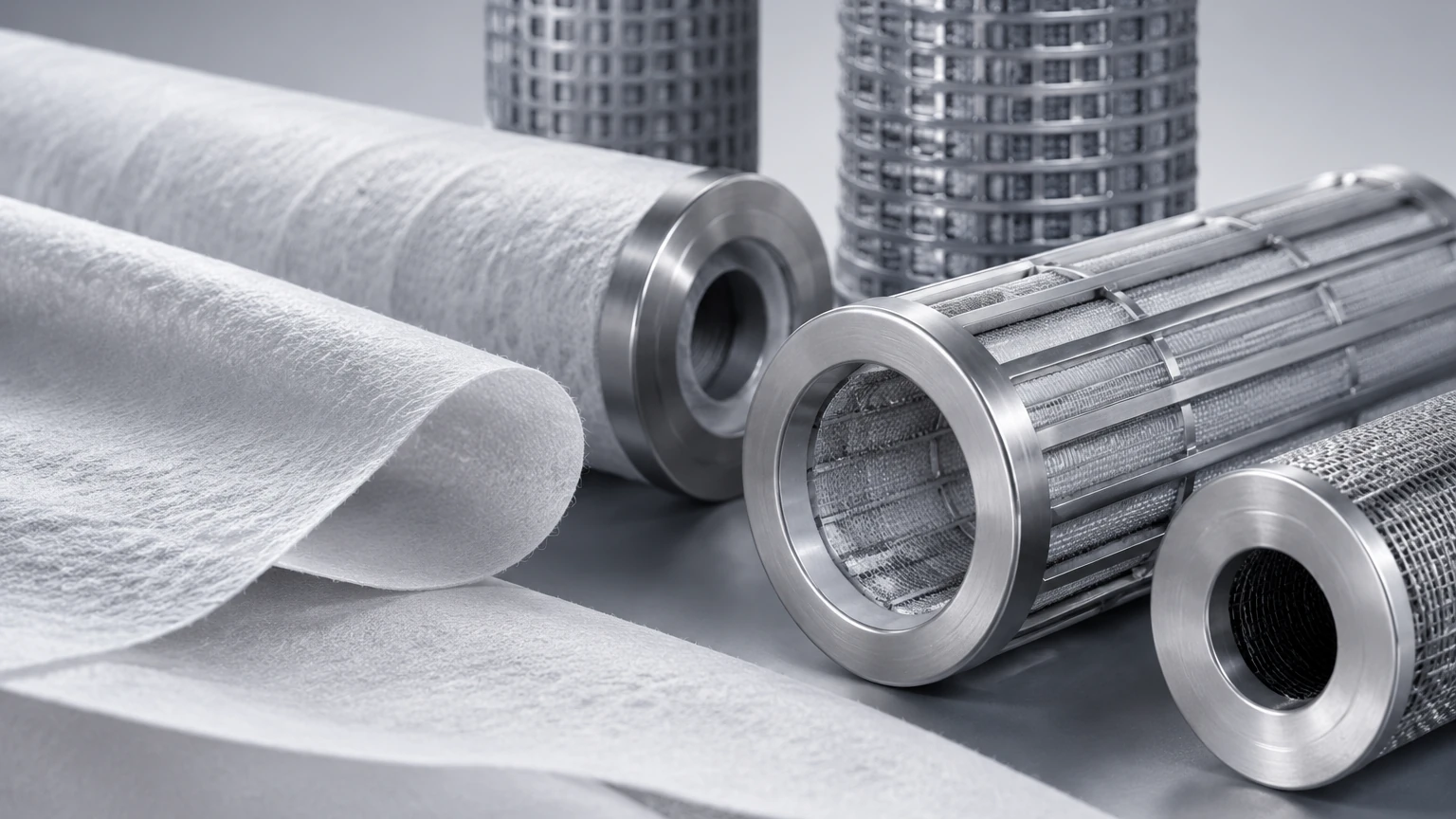
From an engineering standpoint, the primary advantage of nanofibers is their exceptionally high surface-area-to-volume ratio. This allows for a high density of fibers within a very thin layer, creating a complex, tortuous path for contaminants without significantly obstructing fluid or gas flow. In industrial applications, these nanofibers are rarely used as a standalone material due to their delicate nature; instead, they are typically applied as a thin coating or "web" onto a robust substrate, such as a non-woven synthetic fabric or, for high-temperature and corrosive environments, a stainless steel wire mesh provided by specialists like Main Page.
Key Mechanisms of Nanofiber Filtration
The efficacy of a nanofiber filter is rooted in several physical mechanisms that occur at the sub-micron level. Unlike standard filters that may rely heavily on simple mechanical sieving, nanofiber media utilize a combination of the following:
1. Interception
Interception occurs when a particle follows a gas or liquid streamline but comes within one particle radius of a fiber, causing it to adhere. Because nanofibers are so thin and densely packed, the probability of a particle intercepting a fiber is significantly higher than in traditional media.
2. Inertial Impaction
This mechanism is dominant for larger, heavier particles. As the fluid flow bends around a fiber, the particle's inertia carries it forward into the fiber. While this is common in all mechanical filters, the high fiber density of a nanofiber web ensures that fewer particles escape this collision.
3. Diffusion (Brownian Motion)
For the smallest particles (typically below 0.1 microns), movement is governed by Brownian motion—random zig-zagging caused by collisions with gas or liquid molecules. The small gaps in a nanofiber filter increase the likelihood that these erratically moving particles will strike a fiber and be captured.
4. The Slip-Flow Effect
Perhaps the most technically unique aspect of nanofiber filtration in gas applications is the "slip-flow" effect. When fiber diameters become comparable to the mean free path of gas molecules, the air molecules "slip" past the fiber surface rather than coming to a complete stop. This reduces the drag force (pressure drop) across the filter while maintaining high capture efficiency for particles. This allows a nanofiber filter to achieve HEPA-level efficiency with significantly less resistance than conventional glass-mat filters.
Advantages of Nanofiber Media over Traditional Materials
When evaluating a nanofiber filter for industrial use, it is important to compare its performance against standard polyester, cellulose, or fiberglass media. The benefits generally fall into three categories: efficiency, pressure drop, and loading characteristics.
Superior Surface Loading
Traditional depth filtration media capture particles throughout the thickness of the material. Over time, particles become embedded deep within the filter, leading to a steady increase in pressure drop that cannot be easily reversed by pulse cleaning. In contrast, a nanofiber filter promotes surface loading. The fine mesh of nanofibers catches contaminants at the very surface of the media. In dust collection systems, this allows for much more effective pulse cleaning, as the dust cake releases easily from the surface, extending the interval between replacement cycles.
Lower Energy Consumption
Because of the slip-flow effect and the high porosity of the nanofiber web, these filters typically operate at a lower stabilized pressure drop. For large-scale industrial HVAC or intake systems, a reduction in pressure drop translates directly into reduced energy consumption for fans and pumps, often representing the largest component of the total cost of ownership.
Enhanced Protection of Downstream Equipment
In applications such as gas turbine intake or high-precision chemical processing, even trace amounts of sub-micron particulate can cause catastrophic wear or contamination. The high fractional efficiency of nanofibers ensures that the smallest, most damaging particles are removed before they reach critical components.
Engineering Considerations: Substrates and Structural Support
One of the most critical aspects of specifying a nanofiber filter is the choice of substrate. Nanofibers themselves lack the mechanical strength to withstand the high pressures and flow velocities common in industrial hydraulic or chemical systems. Therefore, the nanofiber layer must be bonded to a support structure.
For many demanding applications, stainless steel wire mesh is the preferred substrate. Stainless steel provides the necessary rigidity and resistance to chemical degradation that synthetic substrates lack. When a nanofiber web is integrated with a precision-engineered metal mesh, the resulting composite filter combines the ultra-fine filtration of nanotechnology with the durability of industrial-grade metal. Professionals looking for these integrated solutions often consult the Main Page of specialized manufacturers to ensure the substrate is compatible with the operating temperatures and chemical exposures of their specific process.
Performance Evaluation and Selection Criteria
Selecting the right nanofiber filter requires a deep dive into technical specifications beyond simple micron ratings. Engineers should confirm the following data points before procurement:
* Face Velocity: The speed at which the fluid or gas approaches the filter surface. Nanofiber performance can vary significantly based on whether the system operates at high or low velocities.
* Pressure Drop (Delta P): Both the initial (clean) pressure drop and the expected operating pressure drop after several cleaning cycles should be evaluated.
* Efficiency Standards: Is the filter rated according to ISO 16890, ASHRAE 52.2 (MERV ratings), or EN 1822 (HEPA/ULPA)? Nanofiber filters often achieve MERV 15 or 16 ratings where standard media might only reach MERV 10 or 12.
* Bonding Strength: In high-vibration or high-pulsation environments, the adhesion of the nanofibers to the substrate is paramount. Delamination can lead to "media migration," where the nanofibers themselves become a contaminant in the downstream flow.
Application in Demanding Industrial Environments
While nanofiber filters are widely known for air quality applications, their use in liquid and specialized industrial processes is expanding.
Chemical and Petrochemical Processing
In these environments, filters must withstand aggressive solvents and extreme pH levels. A nanofiber filter utilizing chemically resistant polymers like PVDF (Polyvinylidene fluoride) or PTFE (Polytetrafluoroethylene) can provide the necessary fine filtration while maintaining structural integrity.
Pharmaceuticals and Food & Beverage
These industries require high levels of sterility and the removal of microscopic biological contaminants. Nanofiber media are increasingly used in pre-filtration stages to protect expensive membrane filters, effectively removing bacteria and fine particulates that would otherwise cause premature clogging.
Hydraulic and Lube Oil Systems
Precision hydraulic systems are sensitive to "silt"—fine particles in the 1-5 micron range that cause abrasive wear. Incorporating a nanofiber layer into hydraulic filter cartridges can significantly improve the ISO Fluid Cleanliness levels of the system, extending the life of valves and pumps.
Maintenance, Lifecycle, and Total Cost of Ownership
A common misconception is that a nanofiber filter is always more expensive. While the initial purchase price may be higher than standard cellulose or synthetic filters, the total cost of ownership (TCO) is often lower.
1. Extended Service Life: Because surface loading allows for better cleaning (in pulse-jet systems) or slower depth-clogging (in liquid systems), the time between filter changes is increased. This reduces labor costs and downtime.
2. Energy Savings: As previously mentioned, the lower operating pressure drop reduces the load on motors and drives. Over the life of a filter, the energy savings can often pay for the filter itself.
3. Reduced Waste: Longer-lasting filters mean fewer units sent to landfills or incineration, supporting corporate sustainability goals.
Engineers should implement a rigorous monitoring program using differential pressure gauges to determine the optimal replacement point. Relying on fixed time intervals often leads to either premature replacement (wasting money) or delayed replacement (risking equipment damage).
Conclusion
The integration of nanofiber technology into industrial filtration represents a shift toward more precise, efficient, and sustainable operations. By understanding the mechanics of how a nanofiber filter captures sub-micron particles and the importance of selecting the correct substrate—such as the custom stainless steel solutions found on the Kaifil Main Page—technical professionals can significantly improve their process outcomes. Whether the goal is to reduce energy costs, protect sensitive downstream equipment, or achieve higher purity levels, nanofibers provide a versatile and high-performance solution for the modern industrial environment.
