


Pleated Air Filter Manufacturers
In industrial environments, the efficiency of air and gas filtration systems is a critical factor in maintaining operational integrity, protecting downstream equipment, and ensuring product purity. Pleated air filter manufacturers play a pivotal role in this ecosystem by providing solutions that balance high filtration efficiency with low pressure drop. Unlike flat-panel filters, pleated designs significantly increase the effective filtration area (EFA) within the same physical footprint, allowing for higher flow rates and extended service lives. For engineers and procurement specialists, selecting the right manufacturing partner requires a deep understanding of material science, pleat geometry, and the specific demands of the application environment.
Understanding the Engineering Behind Pleated Air Filtration
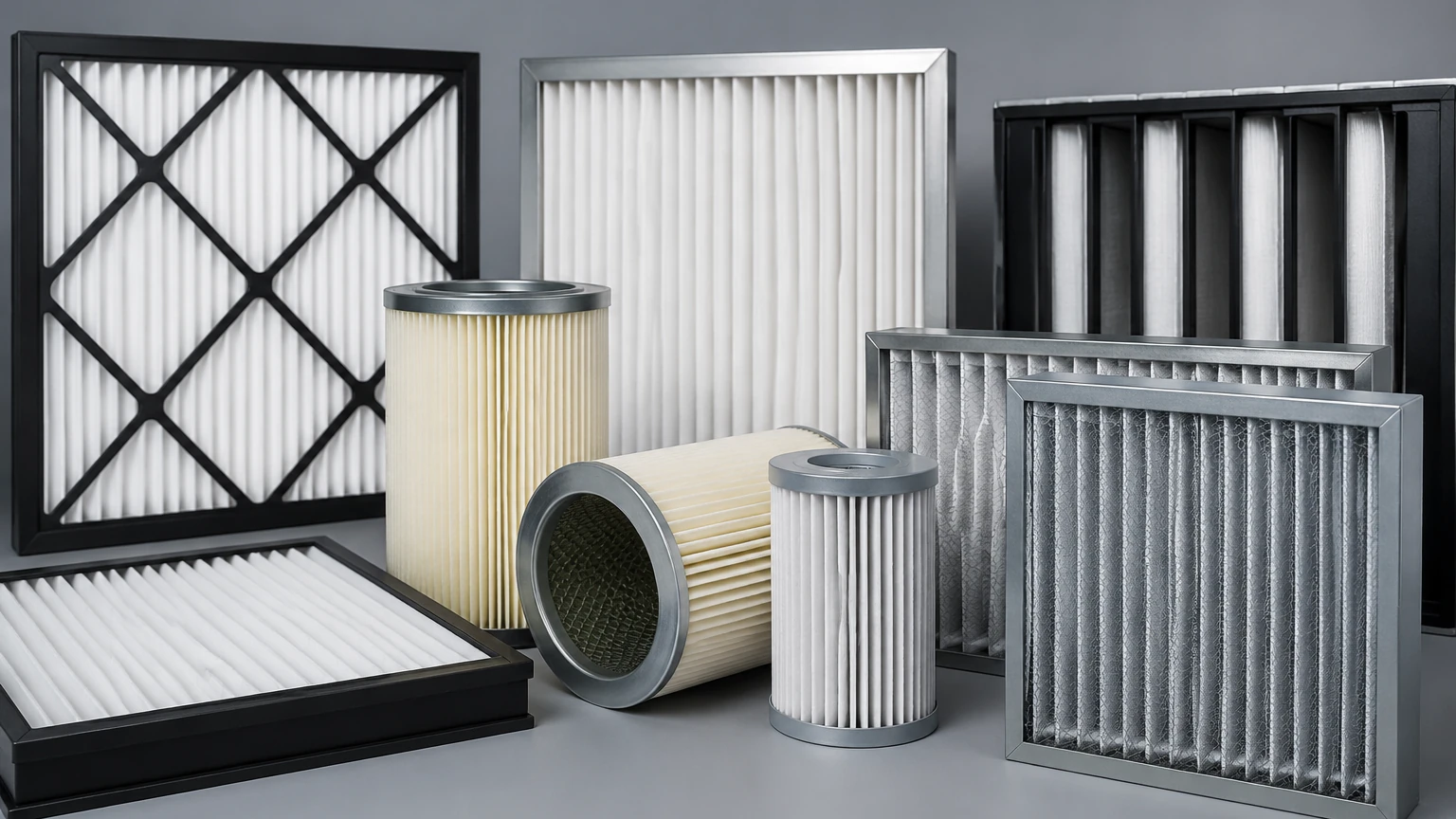
The primary advantage of working with specialized pleated air filter manufacturers lies in the technical optimization of the filter media. The pleating process involves folding the filtration material—whether it be stainless steel wire mesh, synthetic fibers, or glass fiber—into a series of ridges and valleys. This geometric configuration serves a dual purpose: it maximizes the surface area available for particle capture and provides structural rigidity to the filter element.
From an engineering perspective, the performance of a pleated filter is governed by the relationship between pleat depth, pleat count, and the velocity of the air passing through the media. A higher pleat density increases the surface area, which theoretically lowers the face velocity across the media, leading to improved particle retention and reduced pressure drop. However, if pleats are packed too tightly, the "pleat crowding" effect can occur, where the airflow is restricted, and the effective area actually decreases. Professional manufacturers use precision pleating machinery to ensure optimal spacing, which is essential for maintaining consistent performance throughout the filter's lifecycle.
Key Material Considerations for Industrial Pleated Filters
While many commercial applications utilize synthetic or paper-based media, industrial-grade pleated air filter manufacturers often specialize in metal-based solutions, particularly stainless steel. Stainless steel pleated filters are indispensable in high-temperature, high-pressure, or corrosive environments where polymer-based filters would fail.
Stainless Steel Wire Mesh
Stainless steel wire mesh is a preferred material for pleated filters in the chemical processing, pharmaceutical, and food and beverage industries. It offers excellent mechanical strength and can be manufactured to precise micron ratings. The use of 304 or 316L stainless steel provides the necessary corrosion resistance for harsh chemical vapors or steam filtration. Furthermore, metal pleated filters are often cleanable and reusable, offering a lower long-term cost compared to disposable alternatives.
Sintered Metal Fiber
For applications requiring ultra-fine filtration and high dirt-holding capacity, manufacturers may utilize sintered metal fiber media. This material consists of thin stainless steel fibers that are randomly laid and sintered together to create a porous, high-strength structure. When pleated, this media provides exceptional permeability and can withstand significant differential pressures, making it ideal for hydraulic systems and high-pressure gas filtration.
Customization Capabilities: Beyond Standard Dimensions
One of the most significant benefits of partnering with experienced pleated air filter manufacturers is the ability to obtain customized solutions. Industrial processes rarely conform to standard "off-the-shelf" specifications. Customization involves several engineering variables:
* Micron Ratings: Manufacturers can tailor the pore size of the media to capture specific particle sizes, ranging from coarse pre-filtration to sub-micron absolute filtration.
* End Cap Configurations: Depending on the housing, filters may require specific end cap designs such as Double Open End (DOE), 222 O-rings, or 226 bayonet fittings to ensure a leak-proof seal.
* Structural Support: In high-flow applications, pleated filters may require internal support cores or external cages made of perforated metal to prevent pleat collapse under pressure.
* Dimensions: Custom lengths and diameters are often necessary to fit existing filtration housings or to meet specific flow rate requirements within a confined space.
For technical teams looking to explore these options, the Main Page of a manufacturer like Kaifil offers a comprehensive overview of how custom stainless steel components are engineered to meet these diverse industrial needs.
Performance Metrics and Quality Assurance in Manufacturing
When evaluating pleated air filter manufacturers, technical professionals must look beyond basic marketing claims and focus on verifiable performance metrics. A reliable manufacturer will provide data based on standardized testing protocols, ensuring that the filters perform as expected in the field.
Pressure Drop (Delta P)
Pressure drop is the difference in total pressure between the upstream and downstream sides of the filter. A low initial pressure drop is critical because it reduces the energy consumption of fans and pumps. Manufacturers optimize pleat geometry to minimize this resistance while maintaining filtration efficiency.
Filtration Efficiency and Beta Ratio
In industrial liquid and gas filtration, the Beta Ratio is a common metric used to describe filtration efficiency. It measures the number of particles of a given size in the upstream fluid versus the number in the downstream fluid. A high Beta Ratio indicates superior particle retention. Manufacturers should be able to provide efficiency curves that demonstrate how the filter performs across various particle sizes.
Material Traceability and Certification
In industries such as pharmaceuticals and food processing, material traceability is non-negotiable. Manufacturers should provide Mill Test Reports (MTRs) for the stainless steel used and ensure compliance with relevant standards such as FDA requirements for food-contact surfaces or ISO quality management systems.
Total Cost of Ownership: Maintenance and Longevity
The initial purchase price of a filter is only one component of the Total Cost of Ownership (TCO). Pleated air filter manufacturers who focus on industrial durability help organizations reduce long-term costs through several factors:
1. Service Life: By increasing the surface area, pleated filters can hold more contaminants before reaching the terminal pressure drop. This extends the interval between filter changes, reducing labor costs and downtime.
2. Cleanability: Stainless steel pleated filters can often be cleaned using ultrasonic baths, backwashing, or chemical cleaning. This reusability eliminates the recurring cost of purchasing disposable filters and reduces the environmental impact of waste disposal.
3. Energy Efficiency: A filter that maintains a lower pressure drop for a longer period requires less energy to move air or fluid through the system. Over the course of a year, the energy savings in a large-scale industrial facility can be substantial.
Engineers should discuss the expected replacement cycles and cleaning protocols with manufacturers during the selection process to accurately calculate the TCO for their specific application.
Selecting the Right Partner for Industrial Filtration Solutions
Choosing between various pleated air filter manufacturers requires a systematic evaluation of their technical expertise and production capabilities. A manufacturer should act as an engineering partner rather than just a component supplier.
Before finalizing a supplier, it is essential to confirm their experience with your specific industry. For instance, the filtration requirements for a hydraulic system differ vastly from those of a sterile air system in a pharmaceutical plant. Inquire about their OEM capabilities—can they produce proprietary designs that integrate seamlessly into your equipment? Do they have the capacity for both small-batch custom prototypes and large-scale production runs?
Furthermore, consider the manufacturer's ability to provide technical support. This includes assistance with filter sizing, material compatibility checks, and troubleshooting performance issues in the field. A manufacturer that offers comprehensive engineering support helps mitigate the risks of filtration failure, which can lead to costly equipment damage or product contamination.
In conclusion, the selection of pleated air filter manufacturers is a strategic decision that impacts the efficiency and reliability of industrial processes. By focusing on pleat engineering, material quality, and customization capabilities, purchasing teams can secure filtration solutions that meet the rigorous demands of modern industry. For those seeking high-performance, custom stainless steel filtration components, visiting the Main Page of an established manufacturer like Kaifil provides a starting point for developing reliable, application-specific solutions.
