


Pleated Cartridge Filter
In industrial filtration, the efficiency of a process often hinges on the surface area available for contaminant capture. The pleated cartridge filter represents a significant engineering advancement over traditional cylindrical or depth-style filters. By folding the filter media into a series of pleats, manufacturers can significantly increase the effective filtration area (EFA) within the same footprint. For engineers and procurement teams in the chemical, pharmaceutical, and food and beverage sectors, understanding the technical nuances of these components is essential for optimizing system performance and reducing operational downtime.
At Kaifil, the focus is on providing high-performance stainless steel filtration solutions that withstand the rigors of demanding industrial environments. Unlike polymer-based disposables, stainless steel pleated filters offer durability, chemical resistance, and the ability to be cleaned and reused, making them a cornerstone of sustainable industrial processes.
Understanding the Engineering Behind Pleated Cartridge Filters
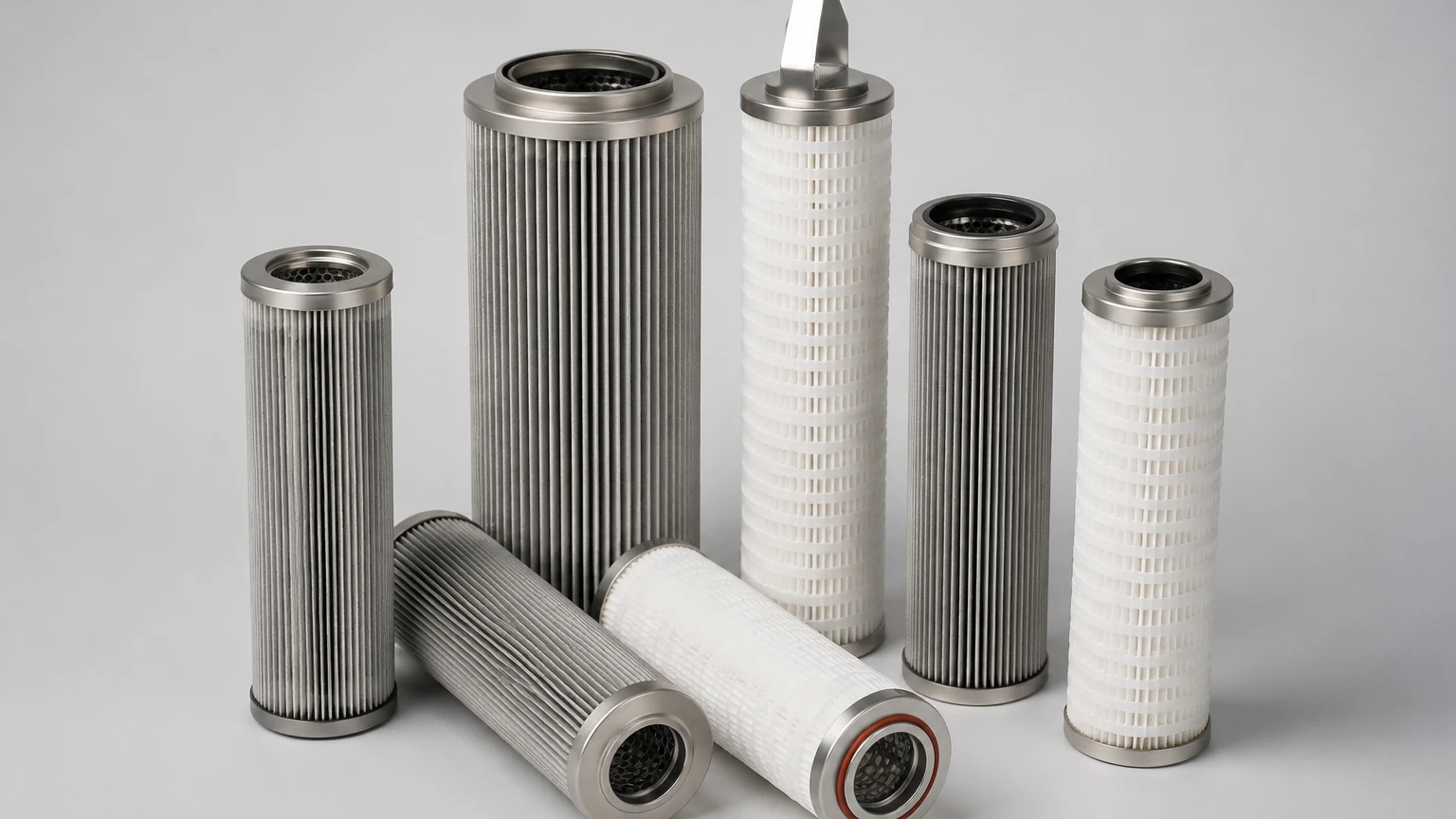
The primary advantage of a pleated cartridge filter is its geometric configuration. In a standard cylindrical filter, the filtration surface is limited to the outer circumference of the media. In contrast, a pleated design utilizes a series of folds to pack a much larger surface area into the same volume.
This increased surface area has several direct technical benefits:
1. Reduced Flux Rate: Flux is defined as the flow rate per unit area of the filter media. By increasing the area, the velocity of the fluid passing through the media decreases. Lower velocity reduces the mechanical stress on the particles being captured, improving the retention efficiency of the filter.
2. Lower Initial Pressure Drop: Because the fluid has more paths to travel through, the resistance to flow (pressure drop or ΔP) is lower at the start of the cycle compared to non-pleated filters of the same size.
3. Extended Dirt-Holding Capacity: With more surface area available to trap contaminants, the filter can operate for longer periods before reaching its terminal pressure drop, thereby extending the service life between cleaning or replacement cycles.
4. Compact System Design: Because pleated filters are more efficient per unit of volume, engineers can often specify smaller filter housings, saving floor space and reducing the initial capital expenditure of the filtration system.
Material Selection and Structural Integrity
For industrial applications involving high temperatures, corrosive chemicals, or high-pressure differentials, material selection is the most critical factor in filter design. Stainless steel is the industry standard for these environments due to its mechanical strength and inert nature.
Stainless Steel Grades
Most industrial pleated filters are constructed from either 304 or 316L stainless steel.
* 304 Stainless Steel: Suitable for general industrial use, water treatment, and applications where corrosion resistance is required but chemical aggressiveness is moderate.
* 316L Stainless Steel: The "L" stands for low carbon, which improves weldability and resistance to intergranular corrosion. This grade is preferred in pharmaceutical and chemical processing where exposure to chlorides or acidic solutions is common.
Filter Media Types
Within the pleated structure, the media itself can vary based on the required filtration accuracy:
* Stainless Steel Wire Mesh: Available in various weaves (such as plain, twill, or dutch weave), wire mesh provides precise surface filtration. It is ideal for removing rigid particles and is the easiest type of media to clean via backwashing or ultrasonic methods.
* Sintered Metal Fiber Felt: This media consists of stainless steel fibers that are non-woven and sintered together. It provides a degree of depth filtration within the pleated structure, offering high porosity and excellent dirt-holding capacity for irregular or deformable particles.
Performance Metrics: Filtration Accuracy and Flow Dynamics
When evaluating a pleated cartridge filter, engineers must distinguish between nominal and absolute filtration ratings. A nominal rating refers to the filter's ability to retain a majority percentage of particles of a specific size, whereas an absolute rating indicates that 99.9% (or higher) of particles at that micron size will be captured.
Pressure Drop Considerations
The relationship between flow rate and pressure drop is non-linear. As contaminants build up on the surface of the pleats, the pressure drop increases. In a pleated design, the "bridging" of particles across the peaks of the pleats must be managed. If the pleats are too tightly packed, the effective area is actually reduced because the fluid cannot reach the bottom of the folds. Professional manufacturers like Kaifil optimize the pleat count and depth to ensure maximum utilization of the media.
Temperature and Pressure Limits
Stainless steel pleated filters are capable of operating in temperatures exceeding 300°C (572°F) and can withstand high differential pressures that would cause polymer filters to collapse or bypass. This makes them indispensable in steam filtration, polymer melt filtration, and high-pressure hydraulic systems.
Customization Options for Industrial Applications
No two industrial processes are identical, and off-the-shelf filtration products often fall short of specific engineering requirements. Customization is a core strength of the Main Page offerings, allowing for precise alignment with existing hardware and process parameters.
End Cap Configurations
The interface between the filter cartridge and the housing is a common point of failure if not specified correctly. Common end cap styles include:
* DOE (Double Open End): Uses flat gaskets at both ends to create a seal against the housing's knife-edge.
* SOE (Single Open End): Often features a 222 or 226 O-ring configuration with a fin or flat top. The 226 style usually includes a locking tab to ensure the filter remains seated during high-flow surges.
* Threaded Connections: For high-pressure applications, NPT or BSP threaded end caps provide a secure, leak-proof mechanical connection.
Reinforcement and Support
In applications with high viscosity fluids or frequent pressure pulsations, the pleated media may require internal support cores or external cages. These components prevent the pleats from deforming or bunching, which would otherwise lead to premature clogging or structural failure of the media.
Maintenance, Cleaning, and Total Cost of Ownership
One of the primary drivers for switching to stainless steel pleated cartridge filters is the reduction in the Total Cost of Ownership (TCO). While the initial purchase price of a metal filter is higher than a disposable plastic or paper cartridge, the long-term savings are substantial.
Cleaning Methodologies
Because stainless steel is robust, these filters can be cleaned multiple times. Common methods include:
* Backwashing: Reversing the flow of the fluid to dislodge particles from the surface of the pleats.
* Ultrasonic Cleaning: Using high-frequency sound waves in a cleaning solvent to remove fine particles trapped deep within the mesh or fiber felt.
* Chemical Cleaning: Using acids, alkalis, or solvents to dissolve organic or inorganic deposits without damaging the stainless steel structure.
* Burn-off/Pyrolysis: For filters used in polymer processing, heating the filter in a controlled environment can carbonize and remove organic build-up.
Replacement Cycles
Determining when to clean or replace a filter is typically based on the differential pressure across the unit. Once the ΔP reaches a pre-defined limit (often 1.5 to 2.5 bar, depending on the system), the filter should be serviced. Repeated cleaning will eventually lead to a gradual increase in the "clean" pressure drop; when this baseline pressure drop becomes too high, the cartridge has reached the end of its functional life.
Selecting the Right Pleated Filter for Your Process
To ensure the successful integration of a pleated cartridge filter into your system, engineers should confirm several key variables before procurement:
1. Fluid Compatibility: Ensure the stainless steel grade and gasket materials (Viton, EPDM, PTFE, or Silicone) are compatible with the process fluid and any cleaning chemicals used.
2. Particle Characteristics: Are the contaminants rigid, gelatinous, or fibrous? This determines whether a wire mesh or a sintered fiber felt is more appropriate.
3. Flow Rate and Viscosity: High-viscosity fluids require larger surface areas and more robust support structures to manage the higher pressure drops.
4. Operating Conditions: Confirm the maximum operating temperature and the maximum allowable differential pressure for the application.
By focusing on these technical parameters, purchasing teams can avoid the risks of bypass, media migration, or premature failure. Reliability in filtration is not just about capturing particles; it is about maintaining consistent flow and protecting downstream equipment from damage.
Conclusion
The pleated cartridge filter is an essential component for any industrial operation seeking to balance high-efficiency filtration with long-term cost-effectiveness. The transition from disposable media to customized stainless steel solutions provides the durability and performance required by modern manufacturing standards.
Whether you are designing a new system or looking to optimize an existing process, selecting a manufacturer with deep technical expertise is vital. For more information on customized stainless steel filtration components and to explore the full range of industrial solutions, visit the Main Page. Through precise engineering and quality manufacturing, Kaifil supports global industries in achieving reliable, high-performance filtration.
