


Spin on Coolant Filter
In industrial thermal management and engine protection, the spin on coolant filter serves as a critical component for maintaining the integrity of cooling systems. These filters are designed to remove contaminants such as rust, scale, and particulate matter that accumulate within the coolant loop over time. By ensuring the purity of the cooling medium, these components prevent the degradation of heat exchangers, water pumps, and internal engine surfaces. For engineers and procurement professionals, understanding the technical nuances of these filters—from media composition to structural integrity—is essential for optimizing equipment uptime and reducing long-term maintenance costs.
Structural Components of a Spin-on Coolant Filter
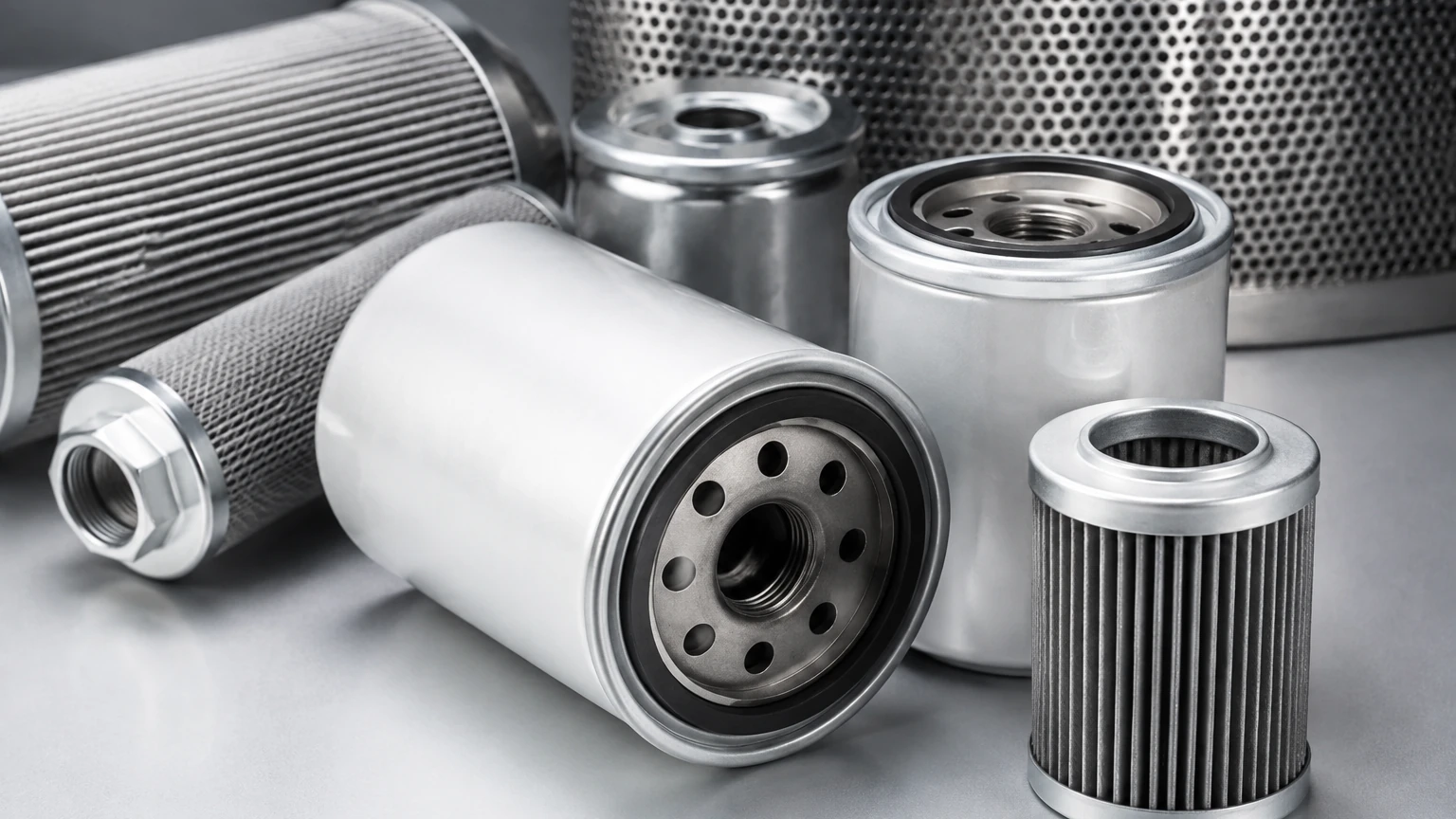
A spin on coolant filter is a self-contained unit consisting of several precision-engineered parts housed within a metal canister. The design is intended for ease of replacement, allowing for a "spin-on, spin-off" maintenance procedure that minimizes system downtime.
The Canister and Base Plate
The outer shell, or canister, is typically constructed from heavy-duty steel or stainless steel to withstand the internal pressures of the cooling system. The base plate is the interface between the filter and the mounting head. It includes the threaded center hole and several inlet holes. Precision in the threading and the flatness of the base plate are vital to ensure a leak-proof seal under varying temperature and pressure conditions.
Filtration Media
The heart of the filter is the media. Depending on the application, this can range from cellulose and synthetic fibers to advanced stainless steel wire mesh. In demanding industrial environments where chemical resistance and durability are paramount, stainless steel filter cartridges or mesh components are often preferred. These materials offer superior resistance to the corrosive nature of certain industrial coolants and can maintain their structural integrity at higher temperatures than traditional paper-based media.
Internal Support and Valves
To prevent the media from collapsing under high differential pressure, a perforated center tube provides internal support. Additionally, many spin on coolant filters incorporate a bypass valve. This safety feature ensures that if the filter becomes completely clogged, coolant can still circulate to prevent immediate overheating, although this unfiltered coolant carries the risk of damaging downstream components.
Performance Evaluation: Micron Ratings and Flow Dynamics
When selecting a spin on coolant filter, engineers must balance filtration efficiency with the required flow rate of the system. A filter that is too restrictive will cause a significant pressure drop, potentially starving the water pump and reducing cooling efficiency.
Micron Ratings: Nominal vs. Absolute
Filtration accuracy is measured in microns. A nominal rating indicates the filter's ability to capture a major percentage of particles of a given size, while an absolute rating signifies the diameter of the largest spherical particle that can pass through the filter. For precision industrial applications, understanding the beta ratio—a more detailed measure of filtration efficiency—is often necessary to predict how the filter will perform under actual operating conditions.
Pressure Drop and Flow Capacity
Every filter introduces a degree of resistance to the fluid flow, known as pressure drop (ΔP). As the filter accumulates contaminants, this pressure drop increases. Engineers must specify filters that offer a low initial pressure drop to ensure the cooling system operates within its designed parameters. The surface area of the filtration media is a primary factor here; a larger surface area generally allows for higher flow rates and a longer service life before the pressure drop becomes excessive.
Material Considerations for Harsh Industrial Environments
Industrial cooling systems often utilize specialized fluids that can be chemically aggressive. This makes material compatibility a primary concern during the selection process. While standard automotive filters may use basic carbon steel and cellulose, industrial-grade solutions often turn to stainless steel.
The Advantage of Stainless Steel
Using stainless steel for the filter housing and internal components provides several benefits:
- Corrosion Resistance: Stainless steel is inherently resistant to the oxidation and chemical degradation caused by water-glycol mixtures and various coolant additives.
- Thermal Stability: In high-temperature industrial processes, stainless steel maintains its mechanical properties far better than plastics or treated papers.
- Cleanability and Reusability: In some specialized designs, stainless steel mesh filters can be cleaned and reused, providing a lower total cost of ownership compared to disposable units, although most spin-on designs remain single-use for convenience.
Gasket and Seal Integrity
The seal between the filter and the mounting head is a common point of failure. High-quality spin on coolant filters utilize gaskets made from elastomers like Nitrile (Buna-N) or Viton, depending on the temperature and chemical exposure. A failure in the gasket can lead to coolant loss, system depressurization, and catastrophic equipment failure.
The Role of Supplemental Coolant Additives (SCAs)
In many heavy-duty industrial and marine engines, the spin on coolant filter does more than just mechanical filtration. These filters often contain a chemical payload known as Supplemental Coolant Additives (SCAs).
Chemical Balancing
As coolant circulates, its chemical protection—which prevents cavitation, liner pitting, and scale formation—depletes. SCA-enriched filters are designed to release these chemicals slowly into the coolant stream over the life of the filter. This maintains the chemical balance of the coolant without requiring manual dosing.
Selection Based on SCA Requirements
It is crucial for purchasing teams to confirm whether a system requires a "pre-charged" filter (containing SCAs) or a "blank" filter (filtration only). Using an SCA filter in a system that uses Long Life Coolant (LLC) or Organic Acid Technology (OAT) can lead to chemical imbalances and the formation of "gel" or solids that can clog the radiator and heater cores.
Identifying and Avoiding Common Filtration Failures
Understanding why filters fail is essential for developing an effective maintenance strategy. Beyond simple clogging, several factors can compromise the performance of a spin on coolant filter.
1. Installation Torque: Over-tightening a filter can damage the gasket or the base plate threads, while under-tightening can lead to leaks under pressure. Most manufacturers provide specific rotation instructions (e.g., "3/4 turn after gasket contact").
2. Media Migration: In low-quality filters, the filtration fibers can break loose and enter the cooling stream, potentially blocking narrow passages in heat exchangers.
3. Canister Fatigue: Constant pressure cycling can cause metal fatigue in the canister, eventually leading to cracks or a complete burst. This is why choosing a manufacturer with high burst-pressure ratings is critical for high-pressure hydraulic or cooling circuits.
4. Chemical Attack: If the filter media or seals are not compatible with the specific coolant chemistry, they may soften, swell, or disintegrate, leading to a total loss of filtration and potential system contamination.
Selection Guide for Engineers and Purchasing Teams
To ensure the procurement of the correct filtration solution, technical professionals should evaluate potential suppliers based on their manufacturing capabilities and engineering support. When a standard off-the-shelf component does not meet the specific rigors of a new machine design, customization becomes necessary.
Customization and OEM Integration
Manufacturers specializing in custom stainless steel filtration solutions, such as Kaifil, provide the expertise needed to develop filters tailored to unique industrial requirements. This includes:
- Custom Threading and Sizing: Ensuring the filter fits perfectly into proprietary mounting heads.
- Advanced Media Selection: Utilizing specific grades of stainless steel wire mesh to achieve precise filtration levels in high-pressure or high-temperature environments.
- Durability Testing: Providing data on burst pressure, vibration resistance, and chemical compatibility.
When evaluating a supplier, it is important to look at their ability to handle the entire process from material selection and filtration accuracy to the final production of customized designs. This ensures that the resulting filter is not just a commodity part, but a precision-engineered component that contributes to the reliability of the overall system.
Conclusion: Optimizing Filtration Performance
The spin on coolant filter is a small but vital part of industrial infrastructure. By removing physical contaminants and, in some cases, managing the chemical health of the coolant, these filters protect expensive machinery from premature wear and failure. For engineers, the focus should remain on the technical specifications—micron ratings, material compatibility, and structural integrity—rather than just the initial purchase price.
Investing in high-quality filtration components, particularly those utilizing durable materials like stainless steel, can significantly extend the life of water pumps, seals, and heat exchangers. For those looking to explore a wide range of industrial filtration solutions or seeking support for custom OEM projects, visiting the Main Page provides access to professional product information and engineering guidance tailored to demanding industrial applications.
