


Pneumatic Silence
In industrial automation and manufacturing environments, the management of compressed air exhaust is a critical factor in both operational safety and equipment longevity. Pneumatic systems, while efficient and reliable, are inherently noisy due to the high-velocity release of air into the atmosphere. Achieving pneumatic silence is not merely a matter of acoustic comfort; it is a technical requirement governed by occupational health standards and the need to protect sensitive pneumatic components from environmental contaminants. This guide examines the engineering principles of pneumatic noise reduction, the role of sintered metal filtration media, and the selection criteria essential for maintaining system efficiency.
The Engineering Challenge of Pneumatic Noise
Pneumatic noise is primarily generated at the exhaust ports of directional control valves, air cylinders, and vacuum generators. When compressed air is released, it undergoes rapid expansion, creating high-velocity turbulent flow. This turbulence generates sound waves across a broad frequency spectrum, often exceeding 100 decibels (dB) in proximity to the exhaust port. Without intervention, these noise levels can lead to permanent hearing loss for operators and interfere with communication in the workspace.
From a technical perspective, achieving pneumatic silence involves diffusing the exhaust air to reduce its velocity and breaking up the large-scale turbulent structures into smaller, less energetic eddies. However, the introduction of a silencing device creates a potential bottleneck. Engineers must balance the need for sound attenuation with the requirement to minimize backpressure, which can impede the stroke speed of cylinders and reduce the overall cycle time of the machinery.
Sintered Stainless Steel: The Standard for Industrial Silencing
To achieve effective pneumatic silence in demanding industrial environments, material selection is paramount. While plastic or brass silencers are common in light-duty applications, heavy industrial sectors—such as chemical processing, food and beverage, and pharmaceutical manufacturing—require the durability of stainless steel.
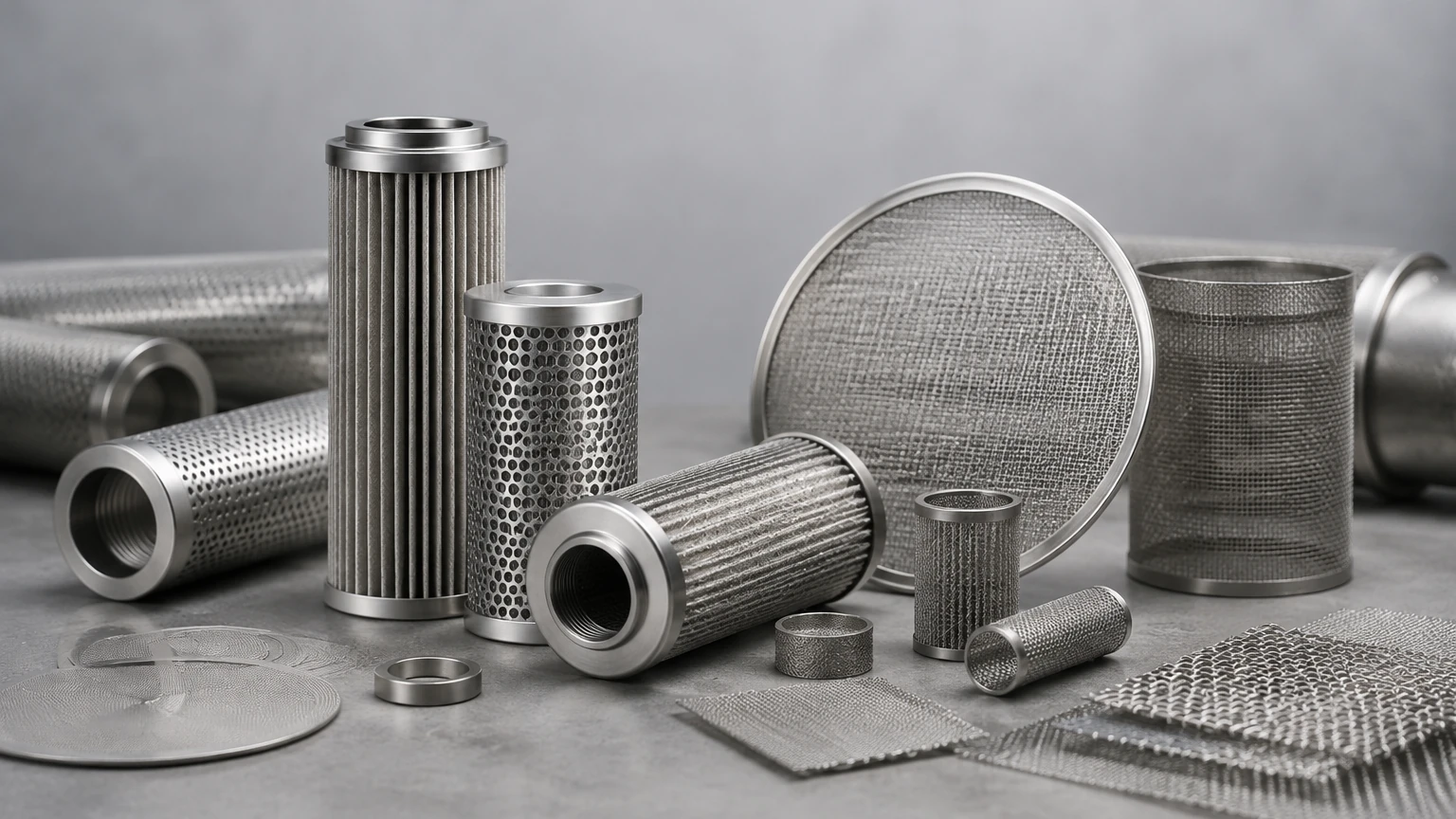
Sintered stainless steel wire mesh and powder media are the preferred choices for high-performance pneumatic silencers. These materials offer several distinct advantages:
1. Structural Integrity: Sintered metal can withstand high pressure spikes and mechanical vibrations without shedding particles or deforming.
2. Corrosion Resistance: In environments where moisture, oils, or chemicals are present in the compressed air stream, stainless steel prevents premature failure due to oxidation.
3. Thermal Stability: Sintered components maintain their filtration and silencing properties across a wide temperature range, essential for processes involving steam or high-heat sterilization.
4. Controlled Porosity: The sintering process allows for precise control over pore size and distribution, enabling engineers to specify the exact balance between noise reduction and flow capacity.
Mechanisms of Sound Attenuation in Filter Media
Pneumatic silence is achieved through three primary mechanisms within the filter media: diffusion, absorption, and interference.
Diffusion
As the compressed air enters the porous structure of a sintered stainless steel filter, it is forced through a tortuous path of interconnected pores. This path forces the air to expand gradually rather than abruptly, significantly reducing the exit velocity. By the time the air reaches the outer surface of the silencer, the flow is more laminar and less acoustic energy is radiated into the environment.
Absorption
The complex internal geometry of sintered wire mesh acts as a friction-based absorber. Sound energy is converted into minute amounts of heat as the air molecules vibrate against the metal surfaces. This is particularly effective for high-frequency noise, which is often the most irritating and damaging to human hearing.
Interference
Multiple layers of wire mesh or varying densities of sintered powder can create destructive interference patterns. As sound waves reflect off the internal structures of the silencer, they partially cancel each other out, further lowering the total sound pressure level (SPL).
Selection Criteria for Pneumatic Silencers
When specifying a solution for pneumatic silence, engineers must look beyond the thread size. A comprehensive evaluation includes several performance metrics that impact the total cost of ownership and system reliability.
Backpressure and Flow Rate (Cv Factor)
Every silencer introduces a degree of resistance to the exhaust flow. This resistance is measured as backpressure. If the backpressure is too high, the pressure differential across the pneumatic actuator decreases, leading to sluggish performance or failure to complete a cycle. Engineers should consult the flow coefficient (Cv) of the silencer to ensure it matches the requirements of the valve and cylinder. High-quality sintered filters are designed to maximize the surface area, allowing for high flow rates even with fine filtration ratings.
Filtration Efficiency
While the primary goal is noise reduction, silencers also act as filters. They prevent ambient dust, debris, and contaminants from entering the exhaust ports of valves when the system is not under pressure. In cleanroom environments or food processing, the silencer must also ensure that any oil mist or particulates from the compressed air system are captured before they can contaminate the production area. For specialized requirements, reviewing the Main Page of a technical manufacturer can provide data on micron ratings and material compatibility.
Connection and Housing Design
The mechanical connection must be robust enough to handle the vibration of the system. Common options include NPT, BSPP, and BSPT threads. For integrated systems, custom-designed silencers can be manufactured to fit specific manifold configurations, reducing the overall footprint of the pneumatic assembly.
Managing Clogging and Maintenance Cycles
A common risk in pneumatic silence applications is the gradual clogging of the filter media. Compressed air often contains trace amounts of lubricating oils, water vapor, and solid particulates from the compressor or piping. Over time, these substances accumulate within the pores of the silencer.
As a silencer clogs, the backpressure increases. This can manifest as a subtle decrease in machine speed or, in extreme cases, cause the exhaust port to blow out or the valve to malfunction. To mitigate this risk, maintenance teams should implement a monitoring schedule.
One of the primary benefits of sintered stainless steel silencers is their cleanability. Unlike disposable plastic units, stainless steel components can often be cleaned using ultrasonic baths or chemical solvents, restoring their original flow characteristics. This longevity significantly reduces the long-term cost of consumables in a large-scale manufacturing facility.
Application-Specific Requirements
Different industries impose unique constraints on pneumatic silencing solutions.
* Food and Beverage: Silencers must be made from FDA-compliant materials and be resistant to aggressive cleaning agents used in washdown procedures. Sintered 316L stainless steel is the industry standard here due to its superior corrosion resistance.
* Pharmaceutical and Biotech: These applications often require high levels of cleanliness and the ability to withstand sterilization processes like autoclaving without losing structural integrity.
* Chemical Processing: In environments with corrosive vapors, the silencer must be chemically inert. Engineers must verify that the filter media and the housing materials are compatible with the specific chemicals present in the facility.
* Heavy Industrial/Hydraulic: In these sectors, silencers may be subjected to extreme pressure surges. The mechanical strength of the sintered bond is critical to prevent the media from bursting under load.
Customization and OEM Integration
For many original equipment manufacturers (OEMs), standard off-the-shelf silencers may not meet the specific spatial or performance requirements of a new machine design. Customization allows for the optimization of the silencer’s geometry to fit into tight enclosures while maintaining the necessary surface area for noise attenuation.
Customization options often include:
* Bespoke Micron Ratings: Tailoring the pore size to balance noise reduction with the specific particulate load of the system.
* Integrated Fittings: Combining the silencer with other components, such as flow control valves, to simplify assembly.
* Material Variations: Utilizing different grades of stainless steel or specialized alloys for extreme environmental conditions.
By working with a specialized manufacturer like Kaifil, engineers can develop filtration components that are precisely engineered for their application, ensuring that pneumatic silence is achieved without compromising the performance of the air-driven system.
Conclusion
Pneumatic silence is an essential aspect of modern industrial design, impacting worker safety, environmental compliance, and machine reliability. By understanding the physics of noise generation and the technical advantages of sintered stainless steel media, engineers can select silencers that provide long-term performance in even the most demanding conditions. Prioritizing factors such as backpressure management, material durability, and cleanability ensures that the pneumatic system remains efficient throughout its operational life. For those seeking precision-engineered components, exploring the technical specifications available on the Main Page is the first step toward optimizing industrial filtration and noise control strategies.
