


Pocket Air Filter
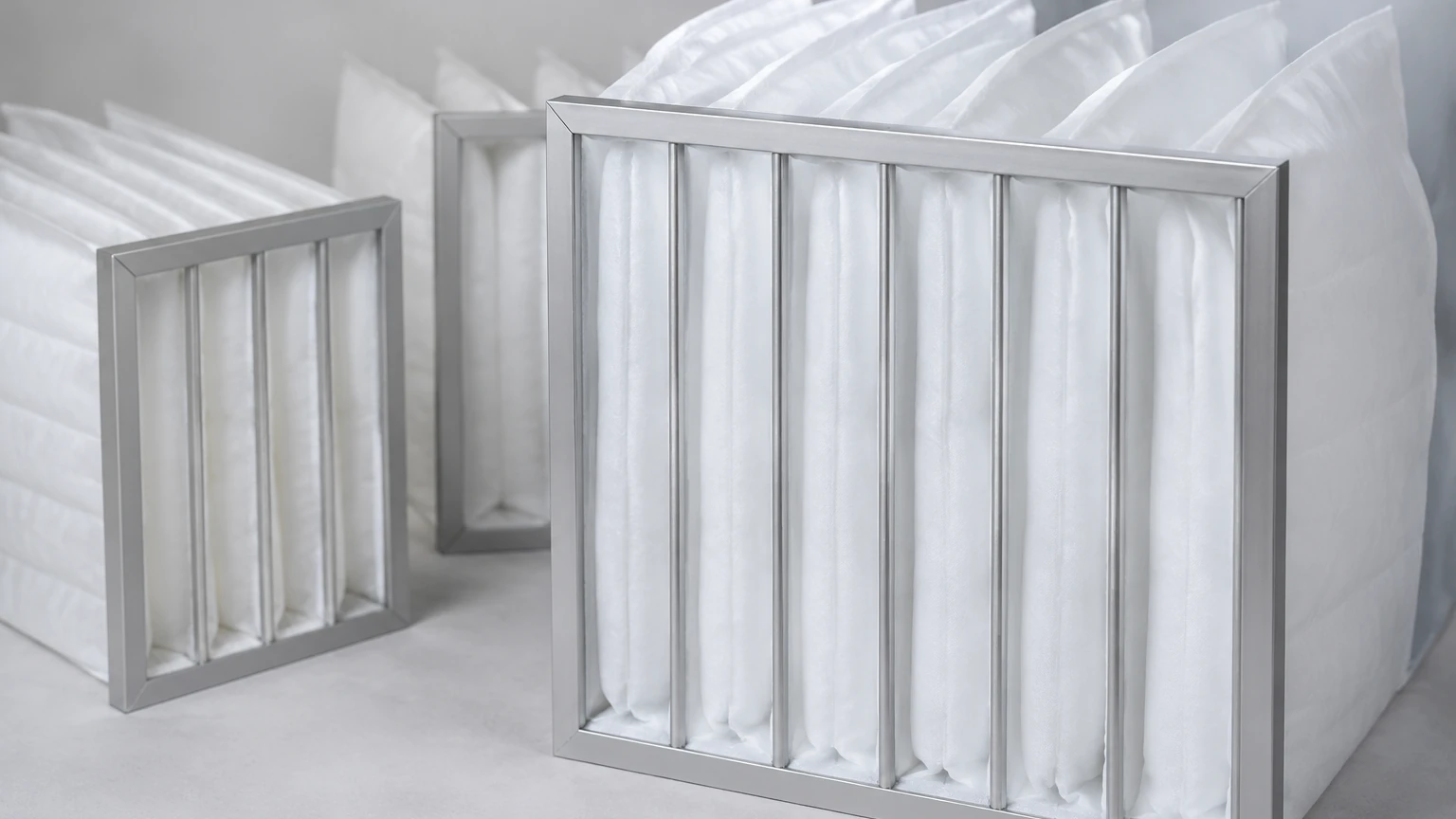
In the landscape of industrial air filtration, the pocket air filter—commonly referred to as a bag filter—serves as a critical component for maintaining air quality and protecting downstream equipment. These filters are characterized by their multi-pocket design, which significantly increases the surface area of the filtration media without expanding the face dimensions of the filter frame. This design allows for high dust-holding capacity, low initial resistance, and extended service intervals, making them a staple in high-volume air handling units (AHUs), cleanrooms, and industrial process intake systems.
For engineers and procurement professionals, selecting the appropriate pocket air filter requires a deep understanding of media composition, efficiency ratings, and the specific aerodynamic requirements of the application. While many industrial systems rely on high-precision stainless steel components for final-stage filtration, the pocket filter often acts as the primary or secondary barrier, ensuring that the total cost of ownership for the entire filtration system remains optimized.
Understanding the Design and Functionality of Pocket Air Filters
The fundamental advantage of a pocket air filter lies in its geometry. By utilizing a series of deep pockets (typically ranging from 300mm to 900mm in depth), the filter provides a much larger filtration area compared to flat-panel or pleated filters. This expanded surface area reduces the face velocity of the air as it passes through the media, which directly correlates to a lower pressure drop and higher particle capture efficiency.
In industrial settings, these pockets are engineered to remain open during operation. Aerodynamic spacers or specialized stitching techniques are used to ensure that the air is distributed evenly across the entire pocket surface. If the pockets were to collapse or "blind" each other, the effective filtration area would decrease, leading to a spike in differential pressure and a reduction in the filter's lifespan. High-quality pocket filters utilize ultrasonic welding or reinforced stitching to maintain structural integrity under varying airflow loads, preventing leaks and ensuring that no bypass occurs at the seams.
Media Options: Synthetic vs. Fiberglass in Industrial Filtration
Selecting the right media is the most critical decision when specifying a pocket air filter. The two most common materials are synthetic fibers and glass fiber (fiberglass). Each has distinct performance characteristics suitable for different industrial environments.
Synthetic Media
Synthetic pocket filters are often constructed from melt-blown polypropylene or polyester. These fibers are inherently durable and resistant to shedding, which is a vital requirement in food and beverage or pharmaceutical applications where fiber migration into the airstream must be avoided. Synthetic media is also moisture-resistant, making it ideal for high-humidity environments or intake systems where mist might be present. Many modern synthetic filters use an electrostatic charge to enhance the capture of fine sub-micron particles, although it is important to note that this charge can dissipate over time.
Glass Fiber Media
Glass fiber media has been the industry standard for decades due to its stable mechanical filtration properties. Unlike synthetic media, glass fiber does not rely on electrostatic charges; its efficiency remains constant throughout its service life. It is particularly effective in capturing fine atmospheric dust and is often preferred in applications where high-efficiency (MERV 15 or 16) is required. However, glass fiber can be more fragile than synthetic alternatives and may require a protective scrim to prevent fiber shedding.
Evaluating Efficiency Standards: ISO 16890 and MERV Ratings
To ensure a pocket air filter meets the technical requirements of a facility, engineers must reference standardized testing protocols. The two primary standards are ASHRAE 52.2 (MERV ratings) and the more recent ISO 16890.
* MERV (Minimum Efficiency Reporting Value): This scale ranges from 1 to 16. For most industrial pre-filtration and secondary filtration, pocket filters typically fall within the MERV 11 to MERV 15 range. A MERV 13 filter, for instance, is highly effective at capturing bacteria, tobacco smoke, and fine dust, making it a common choice for protecting sensitive industrial processes.
* ISO 16890: This global standard categorizes filters based on their ability to capture specific particle size fractions: ePM1, ePM2.5, and ePM10. This provides a more granular look at performance. For example, an ISO ePM1 60% filter is tested specifically for its ability to capture particles smaller than 1 micron, which is crucial for protecting high-precision machinery and ensuring cleanroom standards.
Understanding these ratings allows procurement teams to match the filter's performance to the specific contaminants present in their environment, avoiding both under-filtration (which risks equipment damage) and over-filtration (which leads to unnecessary energy costs).
Operational Impact: Pressure Drop and Energy Consumption
In any industrial filtration system, the resistance to airflow—measured as pressure drop or differential pressure—is a primary driver of operational costs. As a pocket air filter loads with dust, the resistance increases, requiring the system's fans to work harder to maintain the required CFM (Cubic Feet per Minute).
Engineers must distinguish between Initial Resistance (the pressure drop of a clean filter) and Final Resistance (the point at which the filter must be replaced). A pocket filter with a high dust-holding capacity will have a slower rate of pressure increase, extending the time between replacements.
Energy consumption typically accounts for approximately 70-80% of the total cost of ownership of an air filter. Therefore, selecting a pocket filter with an aerodynamic design and high-quality media that maintains a low pressure drop can result in significant annual energy savings. Many facilities now use differential pressure gauges with automated alerts to ensure filters are changed at the precise economic break-even point—where the cost of the energy required to push air through a dirty filter exceeds the cost of a new filter.
Integrating Pocket Filters with Stainless Steel Filtration Systems
While pocket air filters are excellent for handling high volumes of atmospheric dust, many industrial processes require the specialized capabilities of stainless steel filtration. As a professional manufacturer, Kaifil provides custom stainless steel filtration solutions that often work in tandem with these air filters. For more information on integrated filtration components, you can visit the Kaifil Main Page.
In applications such as chemical processing, steam filtration, or high-temperature gas exhaust, stainless steel wire mesh filters and sintered metal cartridges are used for their durability and chemical resistance. In these systems, a pocket air filter often serves as a crucial pre-filter. By removing the bulk of the particulate matter from the intake air, the pocket filter prevents the more expensive, precision-engineered stainless steel elements from premature clogging.
For example, in a hydraulic power unit or a large-scale compressor, the air intake might first pass through a MERV 14 pocket filter to remove ambient dust. This ensures that the air reaching the internal stainless steel mesh filters is already highly refined, allowing the metal filters to focus on removing trace contaminants or protecting the system from internal wear particles. This multi-stage approach maximizes the lifespan of the entire filtration circuit.
Critical Selection Factors for Industrial Procurement
When specifying a pocket air filter for an industrial application, several technical factors beyond simple efficiency must be confirmed with the manufacturer:
1. Frame Construction: Industrial frames are typically made from galvanized steel, aluminum, or high-impact plastic. For environments with high vibration or heavy moisture, a rigid metal header is often necessary to prevent the filter from blowing out of its housing.
2. Temperature and Chemical Resistance: Standard pocket filters are rated for temperatures up to 70°C (158°F). If the application involves higher temperatures or exposure to volatile organic compounds (VOCs), specialized media and adhesives must be specified.
3. Pocket Count and Depth: Increasing the number of pockets or the depth of the pockets increases the surface area. However, it also increases the physical footprint. Procurement teams must ensure the pocket depth does not interfere with other components inside the AHU, such as cooling coils or dampers.
4. Gasket and Sealing: To prevent air bypass, filters should be equipped with high-quality gaskets (such as EPDM or neoprene). Even a small gap between the filter frame and the housing can allow unfiltered air to contaminate the downstream system, rendering the filter's efficiency rating irrelevant.
5. Customization Requirements: Many industrial OEM applications require non-standard sizes or specific pocket configurations. Working with a manufacturer that understands custom filtration allows for the development of solutions tailored to unique housing constraints or specific airflow requirements.
Conclusion
The pocket air filter is a workhorse of industrial air management, providing a balance of efficiency, capacity, and cost-effectiveness. By understanding the technical nuances of media selection, aerodynamic design, and the relationship between pressure drop and energy consumption, engineers can significantly improve the performance of their air handling systems. Furthermore, recognizing how these filters complement high-precision stainless steel filtration components allows for the design of robust, multi-stage systems that protect critical industrial assets and ensure process purity. For those seeking to optimize their industrial filtration strategy, focusing on the synergy between pre-filtration stages and final-stage metal components is the key to achieving long-term operational efficiency.
