


Polypropylen Filter
In industrial filtration, the selection of the correct media is a critical engineering decision that impacts process efficiency, product purity, and operational costs. The polypropylen filter is one of the most widely utilized components in liquid and gas processing due to its versatile chemical resistance and cost-effectiveness. As a thermoplastic polymer, polypropylene (PP) offers a unique set of characteristics that make it suitable for a broad spectrum of applications, ranging from simple water treatment to complex chemical processing.
For engineers and procurement professionals, understanding the technical nuances of a polypropylen filter is essential for optimizing system performance. This guide explores the material science, structural configurations, and engineering trade-offs associated with polypropylene media, while also comparing its performance to high-durability alternatives like stainless steel filtration systems.
Understanding the Role of Polypropylen Filter in Industrial Systems
A polypropylen filter serves as a primary or secondary barrier designed to remove suspended solids, particulates, and certain contaminants from a fluid stream. Because polypropylene is naturally hydrophobic and chemically inert to a wide range of acids and bases, it is often the first choice for general-purpose industrial filtration.
In many systems, these filters act as "sacrificial" components. They are designed to protect more expensive downstream equipment, such as reverse osmosis (RO) membranes, high-pressure pumps, or precision stainless steel filter cartridges. By capturing the bulk of the particulate load, the polypropylen filter ensures that the final stages of a filtration sequence can operate under optimal conditions without premature fouling.
Technical Specifications and Material Properties
The effectiveness of a polypropylen filter is derived from the inherent properties of the polymer itself. When evaluating these filters for industrial use, several technical parameters must be considered:
Chemical Compatibility
Polypropylene is renowned for its excellent resistance to chemical solvents, acids, and alkalis. It is particularly effective in environments where metallic filters might suffer from corrosion. However, it is susceptible to degradation when exposed to strong oxidizing agents, aromatic hydrocarbons, and chlorinated solvents. Engineers must verify the specific chemical concentration and temperature to ensure the structural integrity of the filter housing and media.
Thermal Limits
Unlike stainless steel, which can withstand extreme temperatures, polypropylene has a relatively low melting point. Most industrial polypropylen filter elements are rated for continuous operation at temperatures up to 60°C to 80°C (140°F to 176°F). Exceeding these limits can lead to media softening, pore deformation, and eventual bypass of contaminants.
Hydrophobicity and Surface Tension
Polypropylene is naturally hydrophobic, meaning it repels water. In aqueous applications, this property is usually managed through surface treatments or by ensuring sufficient differential pressure to overcome the initial resistance. In oil-and-gas applications, this hydrophobicity can be an advantage, allowing the media to coalesce or separate water from hydrocarbon streams.
Comparison of Filter Media: Polypropylen vs. Stainless Steel
When designing a filtration system, one of the most common dilemmas is choosing between disposable plastic media and cleanable metal media. While the polypropylen filter is excellent for many standard tasks, specialized manufacturers like Kaifil often recommend stainless steel for more demanding environments.
| Feature | Polypropylen Filter | Stainless Steel Filter |
| :— | :— | :— |
| Durability | Disposable / Limited Life | Permanent / Cleanable |
| Temperature Range | Low (Up to 80°C) | High (Up to 500°C+) |
| Pressure Resistance | Moderate | Very High |
| Chemical Resistance | High (Acids/Bases) | Excellent (Solvents/High Temp) |
| Initial Cost | Low | High |
| Total Cost of Ownership | High (due to replacement) | Low (due to longevity) |
For applications involving high-viscosity fluids or high-pressure differentials, a polypropylen filter may deform or collapse. In such cases, switching to a precision-engineered stainless steel mesh or sintered metal cartridge from the Main Page provides the necessary structural rigidity and long-term reliability.
Key Engineering Considerations for Filter Selection
Selecting the right polypropylen filter requires more than just matching a micron rating. Engineers must analyze the particle size distribution, flow rate, and the nature of the contaminants.
Nominal vs. Absolute Micron Ratings
Many polypropylen filters, particularly melt-blown varieties, are sold with "nominal" ratings. This means they can trap a certain percentage (often 60% to 80%) of particles at the specified size. For critical applications where 99.9% retention is required, an "absolute" rated pleated polypropylen filter is necessary. Understanding the Beta Ratio of the filter is the only way to accurately predict its performance in a live system.
Depth Filtration vs. Surface Filtration
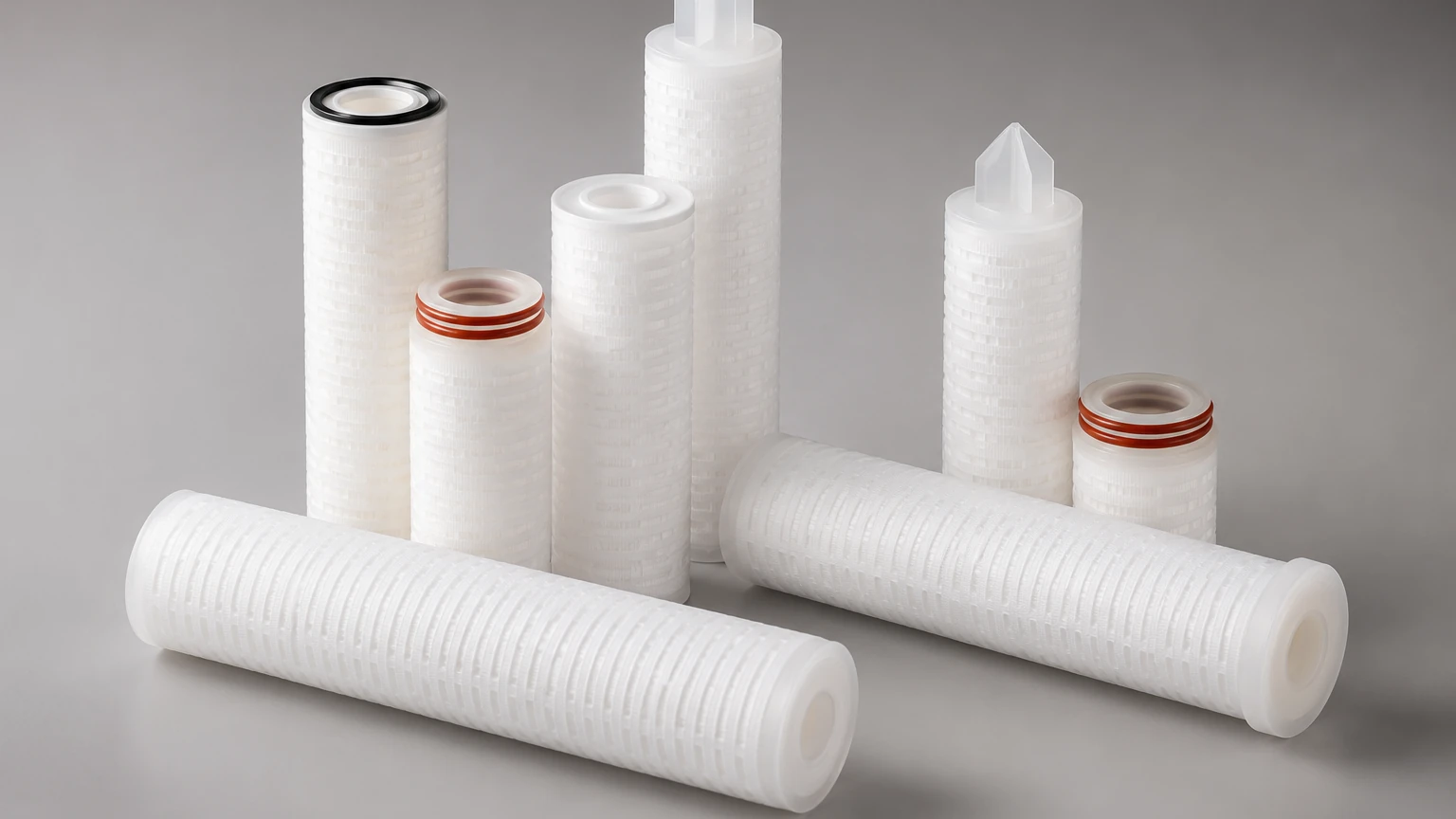
* Depth Filters (Melt-blown/String Wound): These filters trap particles throughout the entire thickness of the media. They have a high dirt-holding capacity and are ideal for fluids with a wide range of particle sizes.
* Surface Filters (Pleated): These use a thin sheet of pleated media to maximize surface area. They provide very precise filtration and higher flow rates but can clog quickly if the fluid has a high concentration of large solids.
Pressure Drop (Delta P)
The clean pressure drop is the initial resistance the filter offers to the flow. As the polypropylen filter collects debris, the pressure drop increases. Systems must be designed with gauges to monitor this change; typically, a filter is considered spent when the differential pressure reaches 1.5 to 2.5 bar (20-35 psi).
Industrial Applications and Operational Environments
The polypropylen filter is a staple in various industries due to its FDA-compliant material options and broad utility.
Water Treatment and Desalination
In municipal and industrial water treatment, PP filters are used for silt density index (SDI) reduction. They protect sensitive membranes from sand, scale, and organic matter. Their low cost makes them ideal for the high-volume throughput required in desalination plants.
Food and Beverage Processing
Because polypropylene can be manufactured without binders, resins, or adhesives, it is frequently used in food-grade applications. It is used to clarify juices, filter bottled water, and remove yeast or sediment in microbreweries. Compliance with FDA Title 21 is a standard requirement for filters in this sector.
Chemical and Petrochemical Industry
The chemical inertness of the polypropylen filter allows it to handle aggressive reagents, including plating solutions, photographic chemicals, and various acids used in semiconductor manufacturing. In these environments, the filter must be checked regularly for signs of chemical embrittlement.
Maintenance, Disposal, and Life Cycle Management
One of the primary drawbacks of the polypropylen filter is that it is typically a single-use item. Unlike stainless steel filters, which can be backwashed or ultrasonically cleaned, a clogged PP filter must be replaced.
Replacement Cycles
The frequency of replacement depends on the contaminant load. In a stable process, replacement cycles can be predicted based on historical data. However, sudden spikes in turbidity or changes in fluid chemistry can lead to premature clogging. Implementing a redundant filter housing (duplex system) allows for filter changes without shutting down the production line.
Environmental Impact and Disposal
As global industries move toward sustainability, the disposal of spent plastic filters is becoming a concern. While polypropylene is recyclable, filters contaminated with hazardous chemicals or oils must be disposed of as industrial waste. For companies looking to reduce their environmental footprint, transitioning to cleanable metal filtration solutions is often a more sustainable long-term strategy.
Custom Filtration Solutions and OEM Support
While standard off-the-shelf polypropylen filters meet many needs, specialized industrial processes often require custom-engineered solutions. Factors such as non-standard housing dimensions, extreme flow requirements, or the need for integrated support cores (to prevent collapse) necessitate a partnership with an experienced manufacturer.
Kaifil specializes in bridging the gap between standard plastic filtration and high-performance metal solutions. By providing custom stainless steel components that can replace or augment polypropylen filter systems, Kaifil helps industrial operators achieve higher precision and durability. Whether you require a custom wire mesh support for a PP bag filter or a complete transition to sintered metal cartridges for high-temperature resistance, technical expertise is vital.
For engineers looking to evaluate their current filtration efficiency or explore the benefits of upgrading to precision metal components, visiting the Main Page offers a comprehensive look at available technologies and customization capabilities.
Conclusion
The polypropylen filter remains a foundational component in modern industrial filtration. Its balance of chemical resistance, variety of configurations, and low initial cost makes it indispensable for a multitude of liquid and gas applications. However, the limitations regarding temperature, pressure, and disposability mean that it is not a universal solution. By carefully weighing the material properties and performance metrics against the specific demands of the application, engineering teams can ensure they select the most effective and cost-efficient filtration media for their needs.
