


Polypropylene Bag Filter Housing
In the landscape of industrial liquid filtration, selecting the appropriate vessel material is as critical as the filter media itself. While stainless steel is often the default choice for high-pressure and high-temperature applications, the polypropylene bag filter housing has established itself as an indispensable solution for corrosive environments, chemical processing, and water treatment applications where metal compatibility is a concern. This guide provides a technical overview of polypropylene (PP) housings, evaluating their engineering properties, selection criteria, and operational considerations for B2B procurement and engineering teams.
Engineering Characteristics of Polypropylene Bag Filter Housings
Polypropylene is a thermoplastic polymer known for its exceptional chemical resistance and mechanical toughness. When utilized in the construction of filter housings, it offers a unique set of properties that distinguish it from metallic counterparts. Most industrial-grade polypropylene bag filter housings are manufactured through high-pressure injection molding. This process ensures a seamless, one-piece construction for the body, which eliminates the risks associated with weld corrosion or mechanical joint failure often found in fabricated metal vessels.
From a material science perspective, the "virgin" polypropylene used in high-quality housings is chemically inert. It does not leach ions into the process stream, making it a preferred choice for deionized water systems, electronic-grade chemical filtration, and sensitive pharmaceutical intermediates. Furthermore, the smooth internal surfaces of a molded polypropylene bag filter housing minimize particle entrapment and bacterial colonization, facilitating easier cleaning and sterilization compared to the microscopic surface irregularities of unfinished cast metal.
Temperature and pressure ratings are the primary constraints for PP housings. Unlike stainless steel, the mechanical strength of polypropylene decreases as temperature increases. Most standard PP housings are rated for pressures up to 100-125 PSI at ambient temperatures (approx. 25°C), but these ratings must be derated significantly as the process temperature approaches the material’s limit, typically around 60°C to 80°C depending on the specific resin grade and glass-fiber reinforcement.
Key Design Components and Variations
The utility of a polypropylene bag filter housing is defined by its structural design and how it manages the fluid dynamics of the filtration process. Engineers must evaluate several design elements before integration:
Closure Mechanisms
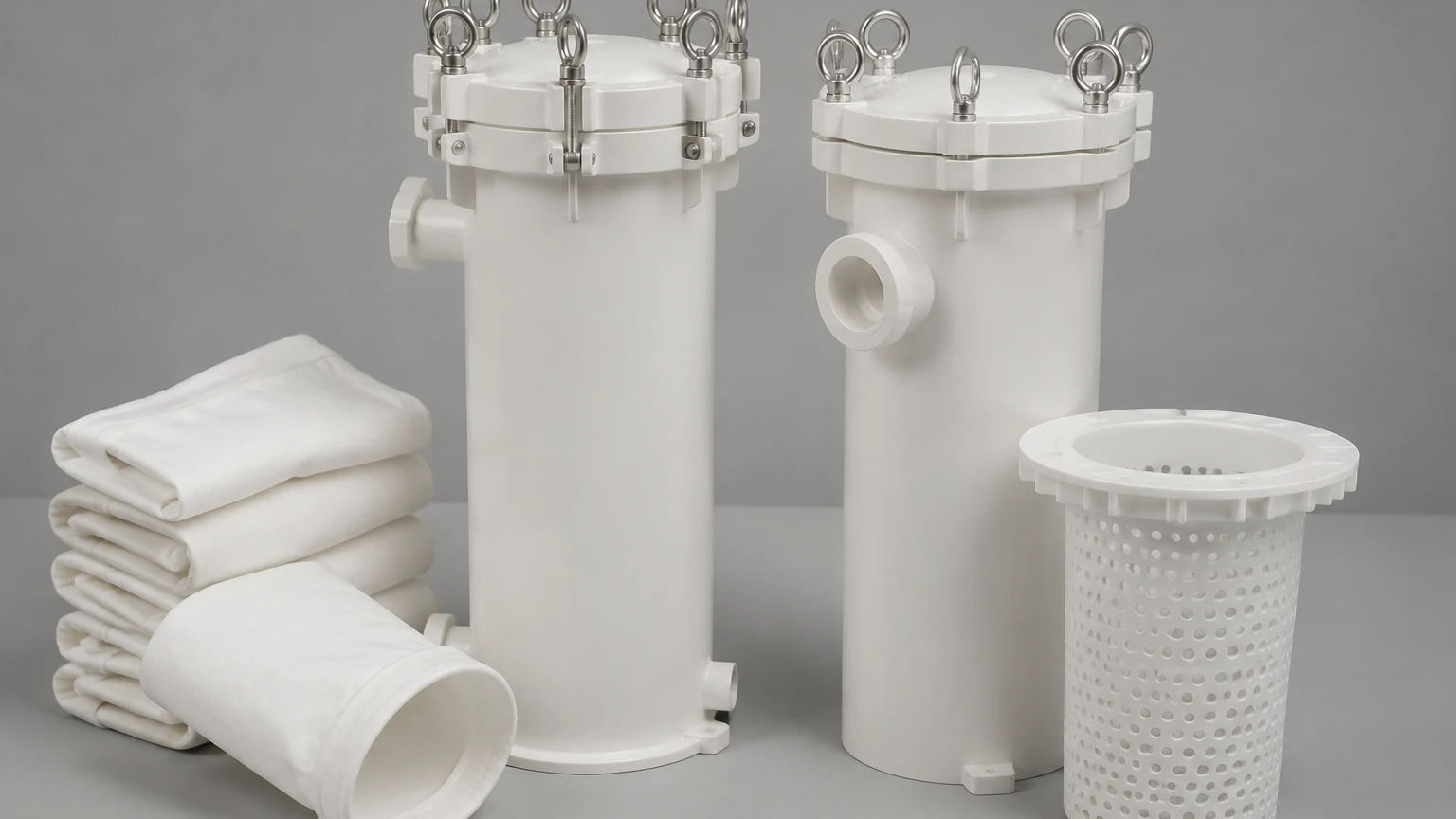
Most PP housings utilize a threaded cover or a bolted flange design. Threaded covers are common in smaller, single-bag units and often feature a hand-removable lid with an O-ring seal, requiring no specialized tools for bag change-outs. For higher-flow applications or systems subject to frequent pressure cycling, bolted lids provide a more robust mechanical seal, though they increase the time required for maintenance.
Inlet and Outlet Configurations
Standard configurations include side-inlet/bottom-outlet or "loop" piping arrangements. In a polypropylene bag filter housing, the inlet is often designed to create a tangential flow that helps distribute solids evenly within the filter bag, preventing premature blinding of the media. Connection types typically range from NPT or BSP threads to RF flanges, allowing for easy integration into existing plastic or metal piping systems.
Internal Support Baskets
Because the filter bag must withstand the differential pressure of the fluid, it requires a rigid support basket. In a PP housing, these baskets are usually made of the same polypropylene material or, in cases where higher structural integrity is needed, a high-grade stainless steel. The basket's perforation pattern is engineered to maximize open area, ensuring that the housing itself does not contribute significantly to the system's total pressure drop.
Comparative Analysis: Polypropylene vs. Stainless Steel Housings
Deciding between a polypropylene bag filter housing and a stainless steel vessel requires a balance of chemical compatibility, cost, and longevity.
1. Chemical Resistance: Polypropylene excels in handling aggressive acids (such as hydrochloric or sulfuric acid), bases, and salts that would rapidly corrode 304 or even 316L stainless steel. Conversely, stainless steel is superior for handling high concentrations of oxidizing agents and certain organic solvents that can cause polypropylene to swell or soften.
2. Weight and Installation: A polypropylene bag filter housing is significantly lighter than a metal vessel of the same volume. This reduces the structural support requirements for piping and makes installation and relocation much simpler for maintenance crews.
3. Cost Efficiency: For low-to-medium pressure applications, PP housings are generally more cost-effective than stainless steel. They offer a lower initial capital expenditure while providing a longer service life in corrosive environments where metal would require frequent replacement or expensive specialized coatings.
For organizations looking to compare these plastic solutions with high-performance metal alternatives, visiting the Kaifil Main Page offers a comprehensive look at how different materials are utilized across various industrial filtration tiers.
Selection Criteria for Industrial Applications
When specifying a polypropylene bag filter housing, engineers should follow a structured evaluation process to ensure the equipment meets the application's demands.
Flow Rate and Viscosity
The housing size must be matched to the maximum expected flow rate. It is a common engineering mistake to size the housing based only on the pipe diameter. Instead, one must account for the fluid's viscosity; higher viscosity liquids require larger housings or multiple units in parallel to maintain an acceptable pressure drop. A standard #2 size bag housing is typically rated for up to 100-150 GPM for water-like viscosities, but this must be adjusted downward as the fluid thickens.
Chemical Concentration and Temperature
Always consult a chemical resistance chart specifically for the grade of polypropylene used in the housing. While PP is generally resistant to many chemicals, the presence of certain surfactants or trace solvents can accelerate environmental stress cracking. Furthermore, the maximum operating pressure must be adjusted based on the process temperature. If the process operates at 50°C, the safe working pressure might be only 60% of the ambient temperature rating.
Filtration Accuracy (Micron Rating)
The housing must be compatible with the required filter bag. Ensure that the internal sealing arrangement (typically a V-ring or a snap-fit flange) provides a positive seal to prevent bypass. In critical applications, a polypropylene bag filter housing with a precision-engineered sealing seat is vital to ensure that 100% of the fluid passes through the media.
Common Risks and Failure Modes
Despite their durability, polypropylene housings are susceptible to specific failure modes that differ from metal vessels. Understanding these risks is essential for safe operation.
* UV Degradation: Standard polypropylene can become brittle when exposed to direct sunlight over long periods. If the polypropylene bag filter housing is installed outdoors, it should be specified with UV inhibitors or protected by a physical enclosure to prevent structural degradation.
* Water Hammer and Pressure Spikes: Plastic housings have less elasticity than metal. Sudden pressure surges, often caused by the rapid closing of downstream valves (water hammer), can lead to catastrophic cracking of the housing body. Installing surge suppressors or slow-closing valves is a recommended practice for plastic filtration systems.
* Creep Rupture: Under constant high pressure and elevated temperature, polymers can undergo "creep," where the material slowly deforms over time. This can lead to thinning of the walls or distortion of the sealing surfaces. Regular dimensional inspections are necessary for housings operating near their design limits.
* O-ring Incompatibility: While the housing body may be resistant to a chemical, the elastomeric O-rings (Buna-N, EPDM, Viton) might not be. A failure in the O-ring will result in external leaks or internal bypass, compromising the entire filtration process.
Maintenance and Replacement Cycles
Maintaining a polypropylene bag filter housing involves more than just changing the filter bag. A proactive maintenance schedule ensures system integrity and prevents unplanned downtime.
Inspection of Sealing Surfaces
During every bag change, the O-ring and the sealing seat should be inspected for nicks, debris, or permanent deformation. Even a minor scratch on a plastic sealing surface can lead to a bypass that is difficult to stop without replacing the entire lid or body. Lubricating O-rings with a compatible silicone-based lubricant can extend their life and ensure a better seal.
Cleaning Protocols
If the housing is used in a batch process where cross-contamination must be avoided, the smooth interior of the PP housing should be cleaned with compatible detergents. Avoid using abrasive brushes or scouring pads, as these can create scratches that harbor bacteria or fine particulates.
Monitoring Differential Pressure
Operating a polypropylene bag filter housing at excessive differential pressures (DP) puts unnecessary stress on the support basket and the housing walls. Most bags should be replaced when the DP reaches 15-20 PSI. Allowing the DP to climb higher risks rupturing the bag or deforming the internal basket, which may then become stuck inside the housing.
Integration with Custom Stainless Steel Filtration Systems
In many complex industrial setups, a polypropylene bag filter housing serves as one component of a larger, multi-stage filtration strategy. For instance, a PP housing might be used for primary corrosive chemical filtration, followed by high-precision stainless steel cartridges for final polishing.
Kaifil specializes in these high-precision metal components, providing the necessary durability and filtration accuracy that plastic sometimes cannot reach in extreme conditions. By combining the chemical resilience of a polypropylene bag filter housing with the structural integrity of custom stainless steel internals or secondary stages, engineers can create a hybrid system that optimizes both cost and performance.
When designing these systems, it is important to ensure that the transition between plastic and metal piping is handled correctly to avoid stress concentrations. Using flexible couplings or reinforced plastic flanges can help manage the different thermal expansion rates of the two materials. For more information on integrating various filtration technologies, technical professionals can review product options and application support on the Main Page of the Kaifil website.
Final Considerations for Procurement
Selecting a polypropylene bag filter housing requires a thorough understanding of the fluid chemistry, thermal profile, and mechanical requirements of the system. While the lower cost and high chemical resistance make PP an attractive option, it is not a universal replacement for metal.
Before finalizing a purchase, confirm the following with the manufacturer:
1. The specific grade of polypropylene and any reinforcements (e.g., glass fiber) used.
2. The exact pressure-temperature derating curve for the model in question.
3. The availability of replacement parts, specifically baskets and specialized O-rings.
4. Compliance with industry-specific standards, such as FDA or NSF requirements for food and water applications.
By adhering to these technical boundaries and selection criteria, engineers can ensure that their chosen polypropylene bag filter housing provides reliable, efficient service throughout its operational lifespan.
