


Steam Spargers
In industrial process engineering, the efficient transfer of heat and mass is a primary objective for optimizing production cycles and reducing energy consumption. Steam spargers represent a critical component in achieving these goals, particularly in applications requiring direct steam injection into liquids. Unlike indirect heating methods, such as heat exchangers or external jackets, steam sparging involves the direct introduction of steam into a process fluid, allowing for rapid heating and agitation.
For engineers and procurement specialists, selecting the appropriate steam sparger requires a deep understanding of fluid dynamics, material science, and the specific thermal requirements of the application. This guide examines the technical nuances of steam spargers, focusing on the advantages of sintered metal media, design considerations, and the operational factors that influence long-term performance in demanding industrial environments.
Understanding the Fundamentals of Steam Sparging
Steam sparging is the process of injecting pressurized steam into a liquid through a submerged distribution element. The primary purpose is usually to heat the liquid, though it may also serve to strip volatile organic compounds (VOCs), provide agitation, or facilitate chemical reactions.
When steam is injected directly, the latent heat of vaporization is transferred almost instantaneously as the steam condenses into the cooler liquid. This results in nearly 100% thermal efficiency, as there are no heat transfer barriers like tube walls or plate surfaces found in indirect systems. However, the efficiency of this process is heavily dependent on the "bubble dynamics"—specifically, the size and distribution of the steam bubbles.
Smaller bubbles provide a significantly higher surface-area-to-volume ratio, which accelerates the condensation process and ensures more uniform heat distribution. Conversely, large bubbles tend to rise rapidly to the surface and collapse violently, leading to energy loss, localized overheating, and mechanical stress on the vessel. This is where the choice of sparger design becomes paramount.
The Advantages of Porous Metal Spargers over Drilled Pipes
Traditionally, many industrial facilities utilized "drilled pipe" spargers—simple lengths of tubing with holes drilled at intervals. While inexpensive and easy to fabricate, drilled pipes often suffer from poor efficiency and mechanical instability.
Bubble Size and Distribution
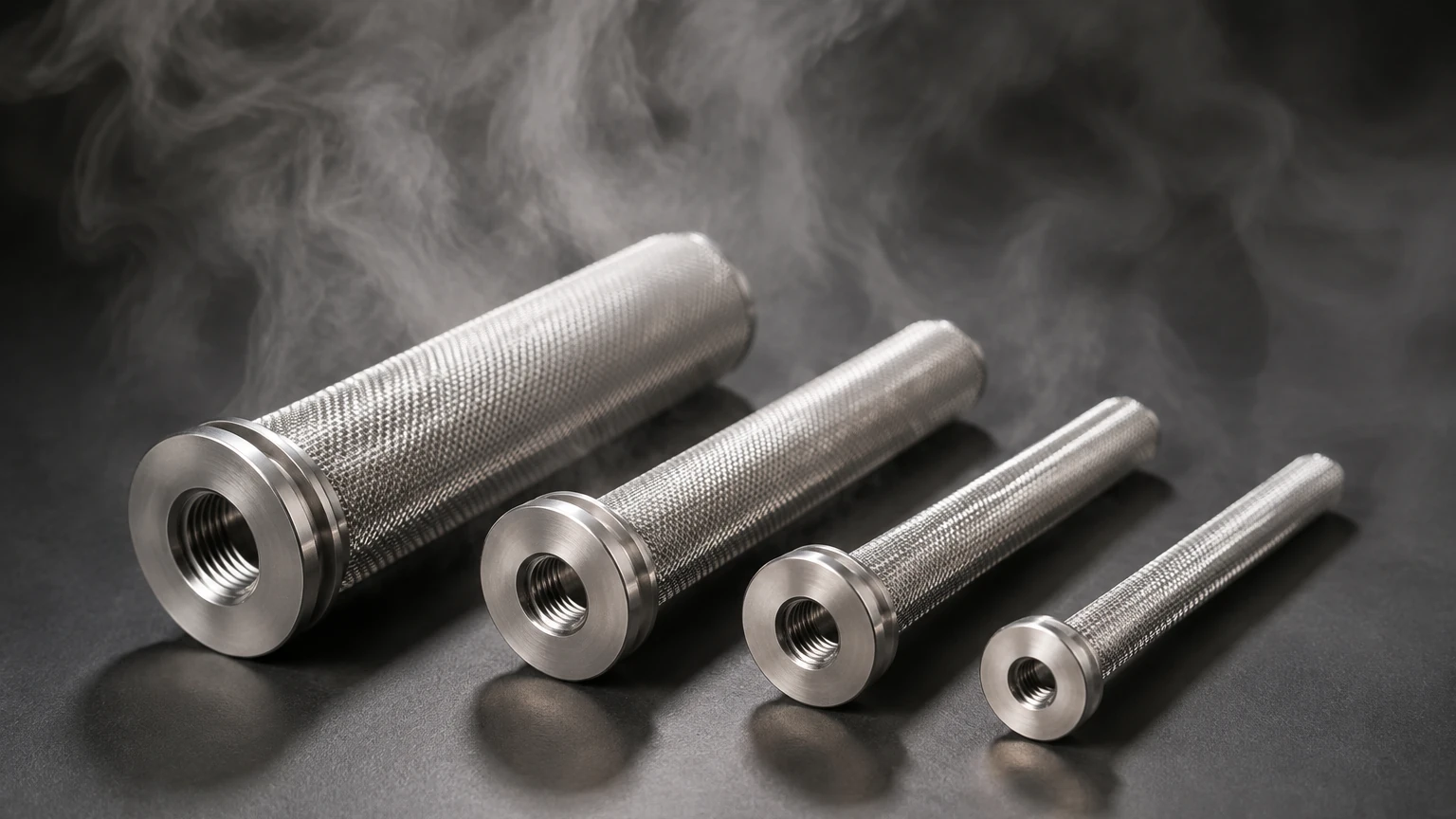
Porous metal spargers, typically constructed from sintered stainless steel, utilize a matrix of interconnected pores to distribute steam. While a drilled pipe might have holes ranging from 3mm to 6mm, a sintered metal sparger can have pore sizes ranging from 0.5 to 100 micrometers. This creates millions of tiny bubbles rather than a few large ones. The result is a much faster rate of condensation and a more stable process environment.
Noise and Vibration Reduction
One of the most significant issues with direct steam injection is noise and vibration, often caused by the rapid collapse of large steam bubbles (cavitation). This phenomenon can lead to "steam hammer," which is capable of damaging tank linings, sensors, and the sparger itself. Because porous metal spargers produce micro-bubbles that condense almost immediately, the acoustic energy released is significantly lower, leading to quieter operation and reduced mechanical fatigue.
Uniform Heating
In large-scale chemical reactors or food processing vats, maintaining a uniform temperature gradient is essential for product quality. The diffused flow provided by porous media ensures that heat is distributed evenly throughout the liquid volume, preventing "hot spots" that can degrade heat-sensitive materials.
Material Engineering for High-Temperature Steam Applications
The selection of materials for steam spargers is dictated by the corrosive nature of the process fluid and the thermal stresses of the steam. Stainless steel, particularly Grade 316L, is the industry standard for these components due to its excellent balance of mechanical strength and corrosion resistance.
Corrosion Resistance
In many chemical and pharmaceutical applications, the process fluid may be acidic or alkaline. 316L stainless steel contains molybdenum, which enhances its resistance to pitting and crevice corrosion in chloride-rich environments. For highly aggressive media, specialized alloys like Hastelloy® or Inconel® may be used, though 316L remains the most cost-effective solution for the majority of steam applications.
Thermal Shock and Mechanical Integrity
Steam spargers are subject to frequent thermal cycling. As steam is turned on and off, the sparger expands and contracts. Sintered metal components are engineered to withstand these cycles without cracking. The structural integrity of the sintered matrix allows for a degree of flexibility that more brittle materials lack. Furthermore, the manufacturing process—where metal powders are fused under high heat and pressure—ensures that the sparger can handle the high differential pressures required to force steam through the porous structure.
Critical Design Parameters for Industrial Spargers
When specifying a steam sparger, engineers must confirm several technical parameters to ensure the component meets the process requirements. Failure to account for these variables can lead to premature failure or inefficient operation.
1. Steam Flow Rate (Mass Flow): The amount of steam required to reach the target temperature within a specific timeframe. This determines the total surface area of the sparger needed.
2. Operating Pressure: The sparger must be designed to handle the pressure of the incoming steam while overcoming the hydrostatic head of the liquid in the tank.
3. Pore Size (Micron Rating): Smaller pores create smaller bubbles but result in a higher pressure drop across the sparger. Balancing filtration/diffusion efficiency with available steam pressure is a key engineering trade-off.
4. Sparger Geometry: Spargers can be designed as single elements, manifolds, or ring-shaped configurations. The choice depends on the tank dimensions and whether the tank is agitated by a mechanical mixer.
5. Connection Type: Standard NPT threads, flanges, or sanitary Tri-Clamp fittings are used depending on the industry (e.g., food and beverage vs. general chemical processing).
For a comprehensive look at the various configurations and technical specifications available for industrial filtration and diffusion components, engineers can visit the Main Page of the manufacturer’s site to evaluate custom design capabilities.
Mitigating Operational Risks: Steam Hammer and Erosion
Even with a well-designed sparger, certain operational risks must be managed. Steam hammer, as mentioned previously, is the most common risk. It occurs when steam enters a cold pipe or when steam bubbles collapse too quickly in a cold liquid.
To mitigate this, many systems employ a "soft start" procedure, gradually increasing steam pressure. Additionally, the use of sintered metal spargers inherently reduces the risk by preventing the formation of the large, unstable bubbles that drive the most violent collapses.
Erosion is another concern. High-velocity steam carrying particulates or water droplets (wet steam) can act like a sandblaster on the internal surfaces of the sparger. Ensuring high-quality, dry steam and using erosion-resistant sintered materials can significantly extend the service life of the equipment. If the steam source is known to have high particulate content, installing a pre-filter upstream of the sparger is a recommended best practice.
Selection Criteria for Custom Steam Sparging Solutions
Because every industrial process is unique, off-the-shelf sparging solutions often fall short of performance expectations. Customization is frequently necessary to match the sparger to the specific vessel geometry and fluid characteristics.
Viscosity and Surface Tension
The viscosity of the liquid significantly impacts bubble formation. In high-viscosity fluids, bubbles tend to coalesce (merge) more easily. In such cases, a larger sparger surface area or a specific pore distribution may be required to maintain the desired bubble size. Surface tension also affects how easily a bubble detaches from the sparger surface; lower surface tension generally allows for smaller bubbles.
Tank Depth and Hydrostatic Pressure
The depth at which the sparger is submerged determines the back-pressure the steam must overcome. For every foot of water (or equivalent liquid), approximately 0.433 psi of pressure is added to the required steam pressure. Designers must ensure that the steam supply pressure is sufficiently higher than the sum of the hydrostatic head and the pressure drop across the porous media.
Maintenance and Cleaning of Sintered Metal Spargers
One common question among maintenance engineers is whether sintered metal spargers will clog over time. While the porous structure is designed for diffusion, it can act as a filter for any contaminants in the liquid or the steam supply.
Cleaning Procedures
Fortunately, stainless steel sintered spargers are highly cleanable. Common methods include:
* Backpulsing: Reversing the flow of fluid or gas to dislodge particles from the pores.
* Chemical Cleaning: Soaking the sparger in compatible solvents or acids to dissolve mineral scaling or organic deposits.
* Ultrasonic Cleaning: Using high-frequency sound waves in a cleaning bath to remove deeply embedded particulates.
Because these components are made of robust 316L stainless steel, they can withstand aggressive cleaning cycles that would destroy synthetic or ceramic alternatives.
Replacement Cycles
With proper maintenance and high-quality steam, a sintered metal sparger can last for several years. Replacement is typically only necessary if the component suffers mechanical damage or if the pores become irreversibly blinded due to improper cleaning or unexpected process changes.
Conclusion
Steam spargers are essential tools for modern industrial processing, offering a high-efficiency alternative to traditional heating methods. By utilizing sintered metal technology, facilities can achieve more uniform heating, reduce noise and vibration, and lower energy costs. However, the success of a sparging system depends on precise engineering—matching the material, pore size, and configuration to the specific demands of the application.
When evaluating options for new installations or upgrades to existing systems, it is vital to partner with a manufacturer that understands the complexities of metal filtration and diffusion. For detailed technical support and to explore custom manufacturing options for stainless steel filtration components, professionals are encouraged to review the resources and product options available on the Main Page. By focusing on quality materials and precise design, engineers can ensure their steam sparging systems deliver reliable, long-term performance in even the most demanding industrial environments.
