


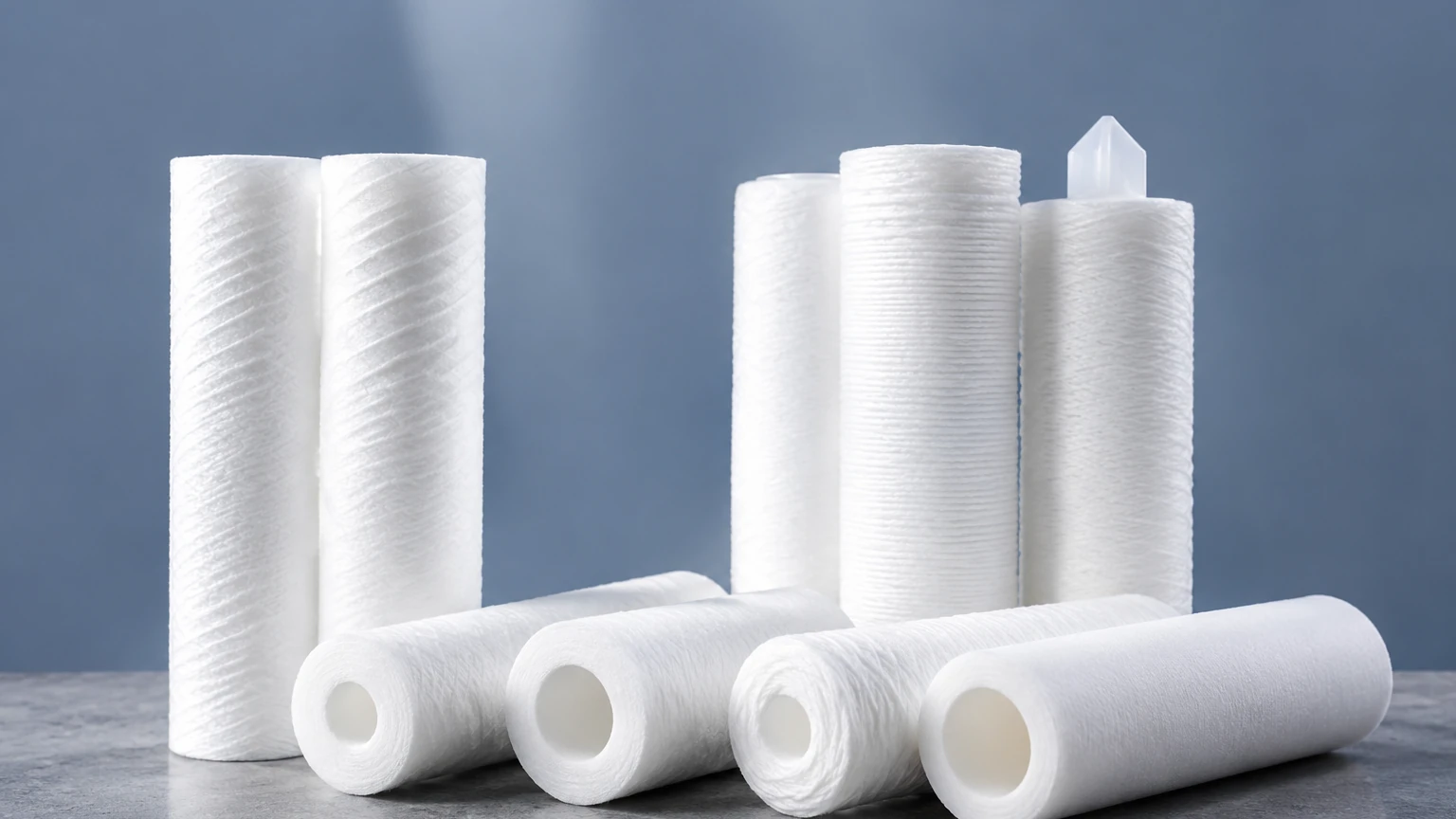
Polypropylene Water Filter
In industrial water treatment and fluid processing, the selection of filtration media is a critical engineering decision that directly impacts operational efficiency, product purity, and equipment longevity. The polypropylene water filter stands as one of the most widely utilized solutions for sediment removal and pre-filtration across a diverse range of sectors, including chemical processing, food and beverage production, and pharmaceutical manufacturing.
Polypropylene (PP), a thermoplastic polymer, is favored in industrial environments due to its inherent chemical resistance, hydrophobic properties, and cost-effectiveness. However, for engineers and procurement teams, understanding the technical nuances of these filters—ranging from fiber construction to micron efficiency—is essential for optimizing a filtration system. This guide examines the technical specifications, performance variables, and selection criteria associated with polypropylene filtration media in industrial contexts.
Understanding the Role of Polypropylene in Industrial Water Filtration
Polypropylene is a high-purity material that does not impart taste, odor, or color to the fluid being processed, making it an industry standard for applications requiring high levels of cleanliness. As a filtration medium, it is primarily used for depth filtration, where contaminants are trapped throughout the thickness of the material rather than just on the surface.
In a typical industrial water treatment train, a polypropylene water filter serves as a sacrificial or protective stage. By removing suspended solids, silt, and rust, these filters protect more sensitive downstream components, such as reverse osmosis (RO) membranes, ultrafiltration (UF) modules, and high-precision stainless steel filter cartridges. The ability of PP to handle high dirt-loading capacities without significant pressure drops makes it a versatile choice for bulk solids removal.
Engineering Characteristics and Material Compatibility
When specifying a polypropylene water filter, engineers must evaluate the material's performance against the specific chemical and thermal profile of the process fluid.
Chemical Resistance
Polypropylene exhibits excellent resistance to a wide array of chemicals, including most organic acids, alkalis, and salts. It is particularly effective in applications involving aggressive water chemistries where metallic components might be prone to corrosion. However, it is susceptible to degradation when exposed to strong oxidizing agents, such as highly concentrated nitric acid or certain chlorinated hydrocarbons. Before deployment, chemical compatibility charts must be consulted to ensure the polymer integrity remains intact over the filter's service life.
Thermal Limitations
Unlike metallic filtration solutions, polypropylene has a relatively low thermal ceiling. Most industrial PP filters are rated for continuous operation at temperatures up to 60°C (140°F), with some specialized high-temperature variants reaching 80°C (176°F). Exceeding these limits can lead to structural softening of the fibers, resulting in "pore migration" or complete structural failure, which allows contaminants to bypass the filter medium.
Structural Integrity
Industrial PP filters are often constructed using thermal bonding techniques. This eliminates the need for adhesives or surfactants that could potentially leach into the process stream (extractables). For high-purity applications, such as those in the semiconductor or pharmaceutical industries, ensuring the filter is made from FDA-compliant, virgin polypropylene is a standard requirement.
Comparative Analysis of PP Filter Structures: Melt-Blown, Wound, and Pleated
The performance of a polypropylene water filter is largely dictated by its manufacturing method. There are three primary structures used in industrial settings:
1. Melt-Blown Depth Cartridges
Melt-blown filters are produced by extruding molten polypropylene and blowing it onto a rotating mandrel. This process creates a complex, three-dimensional matrix of thermally bonded microfibers. High-quality melt-blown filters feature a "graded density" structure, where the outer layers have larger pores to catch coarse particles, while the inner layers have finer pores for precision filtration. This design maximizes the dirt-holding capacity and extends the time between change-outs.
2. String-Wound Filters
String-wound filters are manufactured by winding a polypropylene yarn around a central core. The winding pattern creates diamond-shaped openings that become progressively smaller toward the center. While these are traditional and cost-effective, they can sometimes suffer from "media migration," where fibers or yarn particles shed into the filtrate. They are best suited for heavy sediment applications where high flow rates and low costs are prioritized over absolute precision.
3. Pleated Polypropylene Filters
Pleated filters utilize a thin sheet of polypropylene media that is folded to increase the total surface area. Unlike depth filters, pleated filters provide surface filtration. This design allows for significantly higher flow rates and lower initial pressure drops. Because of the increased surface area, they are often used in applications requiring absolute micron ratings and high-efficiency particle removal.
Performance Metrics: Micron Ratings and Flow Dynamics
To ensure a polypropylene water filter meets process requirements, engineers must look beyond the basic dimensions and focus on performance metrics such as micron ratings and differential pressure.
Nominal vs. Absolute Ratings
Most polypropylene depth filters are "nominally" rated, meaning they are designed to catch a high percentage (typically 80% to 90%) of particles at a specific micron size. In contrast, "absolute" rated filters (often pleated) are tested to ensure they capture 99.9% or more of particles at the specified size. For critical protection of downstream equipment, absolute ratings are preferred, whereas nominal ratings are sufficient for general sediment reduction.
Differential Pressure (ΔP)
Differential pressure is the difference between the inlet and outlet pressure of the filter housing. A new polypropylene water filter should ideally operate with an initial ΔP of less than 2 PSI. As the filter accumulates debris, the ΔP increases. In industrial settings, filters are typically scheduled for replacement once the ΔP reaches 20 to 30 PSI. Operating beyond this point risks "unloading," where the pressure forces trapped contaminants through the media and into the clean stream.
Flux and Flow Rates
The flow rate per unit of surface area, known as flux, is a vital calculation. High flux rates can lead to premature clogging and reduced filtration efficiency. Properly sizing the filter housing to accommodate multiple cartridges can distribute the flow, lowering the flux and extending the life of each polypropylene water filter.
Polypropylene vs. Stainless Steel: Selection Criteria for Demanding Applications
While polypropylene is an excellent general-purpose material, it is not suitable for every industrial environment. Engineers must often decide between disposable polymer filters and cleanable metal filters.
For facilities requiring more robust, cleanable solutions beyond standard polymer cartridges, exploring the Main Page of specialized manufacturers reveals advanced stainless steel alternatives. Stainless steel filters, such as those produced by Kaifil, offer several advantages over polypropylene in specific scenarios:
* Temperature Extremes: Stainless steel can operate in environments exceeding 250°C, far beyond the limits of PP.
* High Pressure: Metal filters maintain structural integrity under high-pressure surges that would crush a polymer cartridge.
* Sustainability and Reusability: While a polypropylene water filter is a consumable item that must be disposed of after use, stainless steel filters can be backwashed or ultrasonically cleaned and reused, reducing long-term waste and total cost of ownership.
* Precision and Durability: In high-viscosity fluids or aggressive chemical environments, stainless steel wire mesh provides a fixed pore structure that does not deform under load.
In many integrated systems, a polypropylene water filter is used as a low-cost pre-filter, while a stainless steel cartridge provides the final, high-integrity barrier.
Operational Maintenance and Replacement Cycles
Maintaining an industrial filtration system requires a proactive approach to filter replacement. Because polypropylene filters are depth-loading, their internal state cannot be determined by visual inspection alone.
Monitoring Systems
Automated pressure transducers are the most reliable way to monitor filter health. By tracking the ΔP across the filter bank, maintenance teams can identify the exact moment a filter reaches its capacity. This prevents both premature replacement (which wastes money) and late replacement (which risks downstream contamination).
Handling and Installation
Polypropylene is a relatively soft material. During installation, it is important to ensure that the cartridge is seated correctly within the housing's knife-edge or O-ring seal. Improper seating leads to bypass, rendering the filtration process ineffective. Furthermore, because PP can be sensitive to UV light and certain environmental factors, spare filters should be stored in their original packaging in a cool, dry place.
Technical Verification Before Procurement
Before finalizing a purchase order for a polypropylene water filter, engineering and purchasing teams should confirm several technical details with the supplier:
1. Micron Efficiency: Is the rating nominal or absolute? Request the Beta Ratio if high precision is required.
2. Chemical Compatibility: Confirm the filter, including any core or end-cap materials, is compatible with the specific process fluid and any cleaning agents used in the system.
3. Certifications: For food, beverage, or pharmaceutical use, ensure the filters meet FDA, USP Class VI, or NSF/ANSI standards.
4. Flow vs. Pressure Drop Curves: Review the manufacturer’s data to ensure the filter can handle the required flow rate without exceeding the initial ΔP limits of the system.
5. Total Cost of Ownership: Evaluate the frequency of change-outs. In high-sediment applications, a more expensive pleated filter or a cleanable stainless steel solution may be more cost-effective over a 12-month period than frequent replacements of low-cost melt-blown cartridges.
By focusing on these technical parameters, industrial operators can ensure that their choice of a polypropylene water filter provides the necessary protection for their processes while maintaining a balance between performance and operational expenditure. Whether utilizing disposable polymer media or transitioning to high-performance metal filtration solutions, the goal remains the same: achieving consistent, reliable fluid purity.
