


Porous Frit
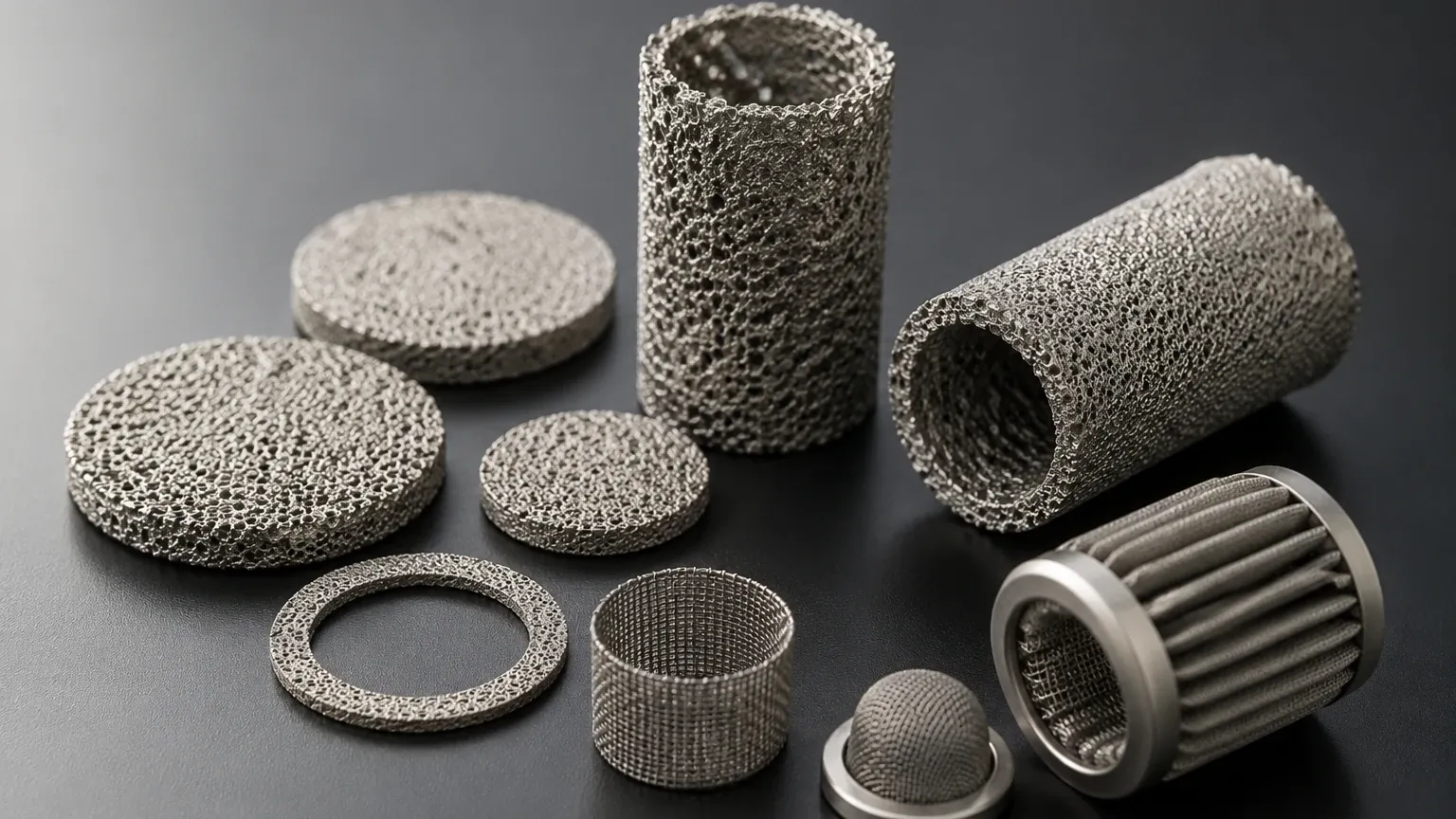
In industrial filtration and fluid dynamics, a porous frit serves as a critical component for precise separation, flow control, and gas-liquid distribution. Typically manufactured through powder metallurgy, a porous frit is a sintered metal structure—most commonly stainless steel—that provides a rigid, porous medium with a controlled pore size distribution. Unlike traditional wire mesh, which relies on a woven structure, a sintered porous frit offers a three-dimensional tortuous path that ensures high filtration efficiency and mechanical integrity under significant pressure differentials.
For engineers and procurement professionals, selecting the appropriate porous frit requires a deep understanding of material properties, pore morphology, and the specific demands of the operating environment. Whether utilized in high-performance liquid chromatography (HPLC), chemical reactors, or gas sparging systems, the performance of the frit directly impacts the efficiency and longevity of the entire industrial process.
The Fundamentals of Porous Frit Engineering
The production of a porous frit begins with the selection of high-purity metal powders. These powders are placed into a mold and subjected to a sintering process—heating the material below its melting point in a controlled atmosphere. This causes the particles to bond at their contact points (necking), creating a solid structure with an interconnected network of voids.
The resulting "tortuous path" is the defining characteristic of a porous frit. As fluid passes through the medium, particles are trapped not only on the surface but also within the depth of the frit. This depth filtration capability allows for higher dirt-holding capacity compared to surface-loading filters. Engineering teams must specify the required mean pore size, which typically ranges from 0.2 microns to 100 microns, depending on the sensitivity of the downstream components.
Material Selection and Metallurgical Considerations
Material compatibility is the primary safeguard against premature component failure. Most industrial porous frits are manufactured from 316L stainless steel due to its excellent corrosion resistance and mechanical strength. However, in highly aggressive chemical environments, alternative alloys may be necessary.
1. 316L Stainless Steel: The standard for most industrial applications, offering resistance to oxidation and a wide range of organic and inorganic chemicals. Its low carbon content minimizes carbide precipitation during welding, maintaining corrosion resistance in heat-affected zones.
2. Hastelloy C-22/C-276: Utilized in environments involving high concentrations of chlorides or strong mineral acids where 316L might experience pitting or stress corrosion cracking.
3. Titanium: Preferred for its high strength-to-weight ratio and exceptional resistance to seawater and chlorine-based bleaching agents.
4. Nickel Alloys: Chosen for high-temperature applications or specific catalytic processes where material inertness is paramount.
When evaluating materials, engineers must consider the pH levels, operating temperatures, and the presence of any oxidizing or reducing agents in the process stream to ensure the porous frit maintains its structural integrity over thousands of cycles.
Performance Metrics: Pore Size, Porosity, and Permeability
To optimize a filtration system, three technical metrics must be balanced: pore size, porosity, and permeability.
Pore Size and Filtration Rating
The pore size of a porous frit is often defined as the "mean flow pore size." It is important to distinguish between nominal and absolute ratings. A nominal rating indicates the ability to retain a majority of particles of a specific size, while an absolute rating refers to the diameter of the largest hard spherical particle that will pass through the frit under specified test conditions. For precision applications like analytical chemistry, absolute ratings are required to prevent downstream contamination.
Porosity
Porosity refers to the percentage of the total volume of the frit that is occupied by open space (voids). Higher porosity generally leads to lower pressure drops and higher flow rates but may compromise the mechanical strength of the component. Industrial frits typically maintain a porosity range of 30% to 50%, providing a balance between flow efficiency and structural durability.
Permeability and Pressure Drop
Permeability is a measure of how easily a fluid can pass through the porous medium. It is governed by Darcy’s Law, which relates flow rate to the pressure drop across the frit, the viscosity of the fluid, and the thickness of the material. Engineers must calculate the expected pressure drop (ΔP) to ensure that the system's pump or compressor can maintain the required flow rate as the frit begins to load with contaminants.
Industrial Applications and Operational Integration
Porous frits are integrated into various systems where fluid purity and flow stability are non-negotiable. Their rigidity allows them to be used in high-pressure environments where polymer-based filters would deform or fail.
Chromatography and Analytical Instrumentation
In HPLC and UHPLC systems, porous frits are used to protect sensitive columns from particulate matter and to ensure uniform solvent distribution. These frits must be extremely clean and chemically inert to prevent leaching, which could interfere with analytical results. Stainless steel frits are often pressed into PEEK (Polyether ether ketone) rings to facilitate a leak-free seal within the column hardware.
Gas Sparging and Carbonation
In the food, beverage, and pharmaceutical industries, porous frits are used as spargers to introduce gases into liquids. The fine pore structure creates millions of tiny bubbles, maximizing the surface area for gas-liquid interface. This results in faster and more efficient gas absorption, whether for carbonation, aeration, or pH adjustment via CO2 injection.
Flame and Spark Arresting
The high thermal mass and tortuous path of a metal porous frit make it an effective flame arrestor. In systems handling flammable gases, a frit can quench a flame front by absorbing heat and breaking the combustion chain, preventing catastrophic explosions in upstream piping.
Maintenance Strategies for Extended Service Life
While porous frits are durable, they are susceptible to fouling over time. Implementing a proactive maintenance schedule is essential for minimizing downtime and maintaining process efficiency.
* Differential Pressure Monitoring: The most reliable indicator of frit fouling is an increase in differential pressure. Once the ΔP reaches a predetermined threshold, the frit should be cleaned or replaced.
* Cleaning Protocols: Sintered metal frits are often cleanable. Common methods include ultrasonic cleaning, which uses high-frequency sound waves to dislodge particles from deep within the pores, and chemical cleaning (CIP), where solvents or acids are circulated through the frit to dissolve organic or inorganic deposits.
* Backwashing: In some liquid applications, reversing the flow (backwashing) can effectively remove surface-loaded contaminants. However, this is less effective for particles trapped deep within the sintered structure.
When cleaning is no longer effective in restoring the original pressure drop, the frit has reached its end-of-life. In critical applications, it is often more cost-effective to replace the frit than to risk process contamination or pump strain.
Procurement and Customization Framework for Engineers
Standard off-the-shelf frits may not meet the exacting requirements of specialized industrial equipment. Customization is often necessary to ensure seamless integration. When working with a manufacturer like Kaifil, engineers should provide a detailed specification sheet that includes:
* Dimensional Tolerances: Precise outer diameter (OD), inner diameter (ID), and thickness are required for a proper fit in housings or assemblies.
* Filtration Grade: Specified in microns, based on the smallest particle that must be excluded.
* Operating Conditions: Maximum temperature, maximum operating pressure, and the chemical composition of the fluid.
* Connection Type: Whether the frit needs to be welded into a fitting, pressed into a sleeve, or provided as a standalone disk.
By focusing on these technical parameters, purchasing teams can ensure they receive components that deliver reliable performance in demanding environments. For those seeking high-performance filtration components tailored to specific industrial needs, you can Review product options and application support to find the optimal configuration for your system.
Conclusion
The porous frit is a foundational element in modern industrial filtration, providing a level of precision and durability that other media cannot match. By understanding the nuances of sintering, material science, and fluid dynamics, engineers can select frits that not only protect sensitive equipment but also optimize the efficiency of their entire operation. As industrial processes become increasingly complex and demanding, the role of high-quality, customized porous metal components will continue to be a cornerstone of reliable engineering design.
