


Portable Filter Cart
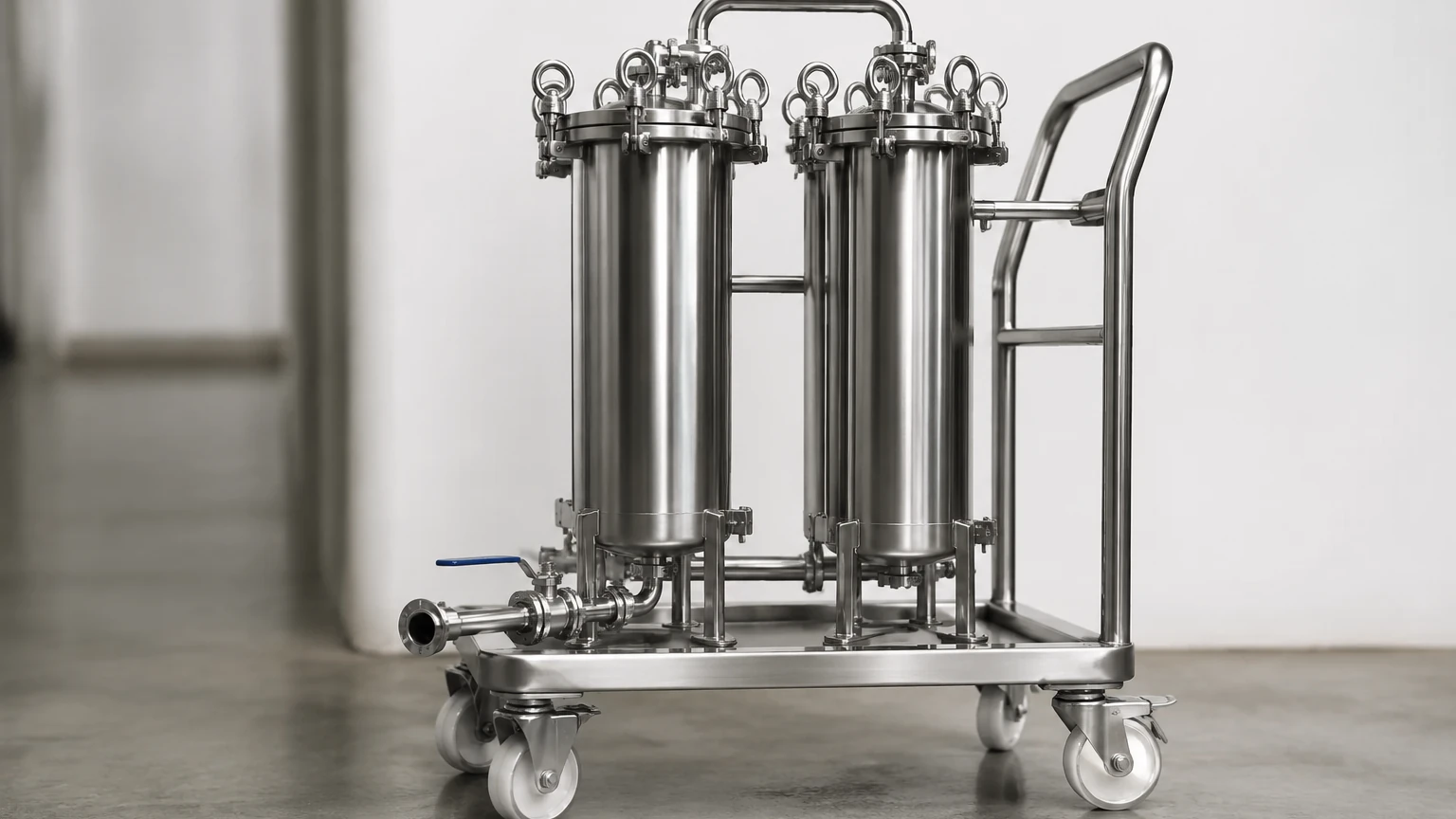
In modern industrial operations, maintaining fluid cleanliness is not merely a maintenance task; it is a critical engineering requirement for ensuring the longevity and reliability of hydraulic systems, lubrication circuits, and chemical process lines. A portable filter cart serves as a mobile, self-contained filtration system designed to remove particulate contamination and, in some configurations, moisture from industrial fluids. By employing "kidney-loop" filtration—drawing fluid from a reservoir, passing it through high-efficiency filters, and returning it to the same reservoir—these units allow for offline cleaning without interrupting primary operations.
For engineers and plant managers, selecting a portable filter cart requires a deep understanding of fluid dynamics, material compatibility, and the specific cleanliness levels required by sensitive components like servo valves or high-pressure pumps. This guide explores the technical architecture of filter carts and the engineering considerations necessary for optimizing fluid health.
The Role of Portable Filter Carts in Industrial Fluid Management
Fluid contamination is the leading cause of failure in hydraulic and lubrication systems. Even new oil, straight from the drum, often fails to meet the stringent ISO 4406 cleanliness standards required by high-performance machinery. A portable filter cart is utilized in several key scenarios to mitigate these risks:
1. Offline Filtration (Kidney-Looping): When a system’s primary filters are insufficient to maintain the desired cleanliness level, a filter cart can be attached to the reservoir to provide continuous, supplemental cleaning. This is particularly effective for removing the "silt" or fine particles that standard full-flow filters might miss.
2. Fluid Transfer and Top-ups: Using a filter cart to transfer fluid from a storage drum to a machine reservoir ensures that no external contaminants are introduced during the process. The fluid is filtered as it is pumped, providing a critical barrier against "new oil" contamination.
3. System Flushing: Following a component failure or a major repair, a portable filter cart is used to flush the lines and reservoir, capturing debris before the system is restarted.
4. Oil Reclamation: In some instances, fluids that have become moderately contaminated can be processed through a cart to extend their service life, reducing disposal costs and environmental impact.
Engineering Components and Design Considerations
The effectiveness of a portable filter cart is determined by the synergy of its internal components. Unlike standard stationary filtration, a mobile unit must be robust enough to handle varying environments while remaining light enough for manual transport.
Pump and Motor Assembly
The heart of the cart is the pump-motor combination. Positive displacement pumps, such as gear pumps or vane pumps, are typically preferred because they provide a consistent flow rate regardless of the pressure drop across the filter media. The motor must be sized to handle the fluid's viscosity; high-viscosity lubricants require more torque and lower RPMs to prevent cavitation and ensure efficient throughput.
Filter Housings and Media
The choice of filter media is where the filtration performance is defined. While many standard carts use disposable synthetic or cellulose elements, industrial applications involving aggressive chemicals, high temperatures, or food-grade requirements often necessitate stainless steel filter cartridges. These metal elements offer superior structural integrity and can be cleaned and reused, providing a lower total cost of ownership in specific process environments.
Monitoring Instrumentation
Technical professionals rely on data to determine when a filter element has reached its dirt-holding capacity. Differential pressure gauges are essential, indicating the pressure drop (∆P) between the inlet and outlet of the filter housing. Advanced carts may also include integrated particle counters that provide real-time ISO 4406 cleanliness codes.
Key Evaluation Criteria for Selecting a Filter Cart
When evaluating a portable filter cart for a specific facility, engineers must look beyond the basic flow rate. Several technical parameters dictate whether a unit will succeed in its intended application.
Viscosity Handling
Fluid viscosity changes with temperature. A cart designed for thin hydraulic oil (ISO VG 32) may struggle or even fail when used with heavy gear oil (ISO VG 460) at room temperature. It is vital to confirm the maximum viscosity the pump can handle without causing the internal bypass valve to open, which would allow unfiltered fluid to circulate.
Filtration Efficiency (Beta Ratio)
Filtration accuracy is measured by the Beta Ratio (β). An absolute-rated filter (βx[c] ≥ 1000) is necessary for critical systems where 99.9% of particles at a specific micron size must be removed. For general-purpose transfer, a nominal rating may suffice, but for high-precision manufacturing, absolute filtration is the standard.
Material Compatibility
The seals (Viton, Nitrile, EPDM) and the cart frame must be compatible with the fluids being processed. For example, phosphate ester-based hydraulic fluids require specific seal materials that differ from those used with mineral oils. In the chemical and pharmaceutical industries, the entire fluid path often requires 304 or 316L stainless steel to prevent corrosion and contamination.
To explore specific filtration components and technical specifications for custom builds, engineers can visit the Main Page of specialized manufacturers to review material options and performance charts.
Customization Options for Demanding Environments
Off-the-shelf filter carts may not meet the requirements of specialized industrial sectors. Customization is often necessary to ensure the unit survives the operating environment and achieves the desired results.
* High-Temperature Applications: Standard carts often have temperature limits of approximately 150°F (65°C). For processing hot oils or chemical resins, specialized high-temperature seals and stainless steel wire mesh filters are required to maintain structural integrity.
* Explosion-Proof Designs: In refineries or chemical plants where volatile vapors are present, the motor and electrical switchgear must be ATEX or UL-certified explosion-proof.
* Food and Beverage Compliance: For applications involving potable water or food processing, the filter cart must utilize FDA-compliant materials and sanitary fittings to prevent bacterial growth and ensure product safety.
* Multi-Stage Filtration: Some carts are designed with two filter housings in series. The first stage uses a coarse pre-filter (e.g., 25 microns) to remove large debris, while the second stage uses a high-efficiency fine filter (e.g., 3 microns). This staged approach extends the life of the more expensive fine filter element.
Common Risks and Operational Challenges
While a portable filter cart is a powerful tool, improper use can lead to equipment damage or ineffective filtration. Understanding these risks is part of a robust maintenance strategy.
Pump Cavitation
If the suction line is too long, too small in diameter, or if the fluid is too viscous, the pump may experience cavitation. This creates vacuum bubbles that implode, causing significant internal damage to the pump and introducing metal shavings into the fluid—defeating the purpose of the filtration process.
Element Clogging and Bypass
As the filter captures contaminants, the pressure drop increases. If the operator ignores the pressure gauge, the cart’s internal bypass valve will eventually open to protect the pump. Once in bypass mode, the fluid is no longer being filtered. Regular monitoring and timely element replacement are mandatory.
Moisture Saturation
Standard particulate filters do not remove dissolved water. If a system has high water contamination, using a standard cart may only solve half the problem. In these cases, water-absorbing elements or vacuum dehydration units should be considered as part of the mobile filtration strategy.
Maintenance and Best Practices for Longevity
To ensure the portable filter cart remains a reliable asset, a scheduled maintenance program should be implemented. This includes:
* Regular Seal Inspection: Check for leaks around the pump shaft and housing lids, especially after changing filter elements.
* Hose Integrity: Industrial hoses are subject to wear and chemical degradation. Inspect for cracks or softening that could lead to a catastrophic burst under pressure.
* Element Inventory: Maintain a stock of replacement cartridges with the correct micron ratings. Using an incorrect "substitute" element can compromise the cleanliness of the entire hydraulic system.
* Fluid Sampling: The only way to verify the cart's performance is through periodic fluid analysis. Taking a sample before and after a filtration cycle provides empirical evidence of the unit's effectiveness.
Conclusion: Confirming Requirements Before Procurement
Before investing in a portable filter cart, engineering teams should confirm several key details with their supplier. This includes the specific ISO cleanliness target, the chemical composition of the fluid, the typical operating temperature, and the required flow rate for the volume of the reservoirs being serviced. By focusing on high-quality components, such as precision-engineered stainless steel filter media and robust pump assemblies, facilities can significantly reduce downtime and repair costs. For comprehensive technical data and customization support regarding industrial filtration components, visiting the Main Page of an experienced manufacturer is the recommended next step for procurement and technical planning.
