


Type 1 Filter Cartridge
In industrial filtration, the term "Type 1 filter cartridge" typically refers to a specific size and configuration standard used in small-scale pressurized systems, pre-filtration stages, and specialized equipment housings. While the designation is common in consumer-grade pool and spa applications, industrial engineers frequently seek the technical equivalent in high-performance materials like stainless steel to handle demanding process conditions. For professionals managing chemical processing, pharmaceutical manufacturing, or high-temperature fluid handling, transitioning from standard disposable media to a precision-engineered stainless steel Type 1 filter cartridge offers significant advantages in durability, chemical compatibility, and long-term cost efficiency.
Selecting the right filtration component requires a deep understanding of the mechanical properties, flow dynamics, and material science behind the cartridge. This guide explores the technical specifications of Type 1 filter cartridges from an industrial perspective, focusing on why stainless steel construction is often the preferred choice for critical applications.
Technical Specifications and Dimensions
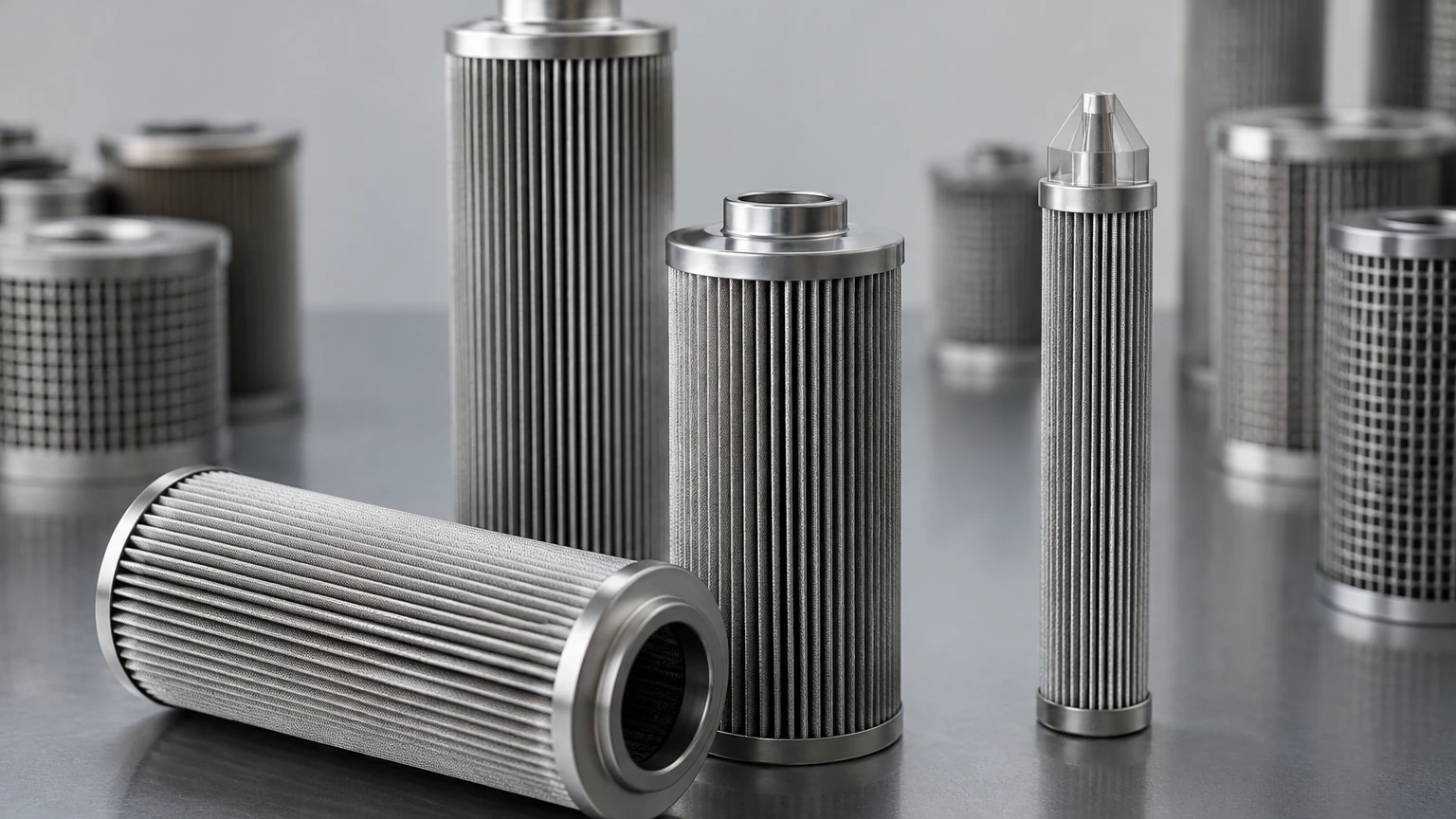
The standard Type 1 filter cartridge is characterized by its compact dimensions, usually featuring an outer diameter of approximately 3 to 3.5 inches and a length of roughly 3.1 to 3.4 inches. In an industrial context, these dimensions must be manufactured to tight tolerances to ensure a bypass-free seal within the filter housing. Unlike disposable paper or polyester variants, a stainless steel Type 1 filter cartridge utilizes a rigid internal core and a precision-woven wire mesh or sintered metal exterior.
Geometric Integrity
For engineers, the structural integrity of the cartridge is paramount. Under high differential pressure ($ΔP$), disposable cartridges can collapse or deform, leading to catastrophic bypass where unfiltered fluid enters the downstream process. A stainless steel Type 1 cartridge, manufactured by specialists like Kaifil, is designed to withstand significant mechanical stress. The use of longitudinal welding and reinforced end caps ensures that the cartridge maintains its shape even during pressure surges or backwashing cycles.
End Cap Configurations
Type 1 cartridges often feature an open-ended design on both sides (DOE – Double Open End). However, industrial variants can be customized with specific gasket materials—such as Viton, EPDM, or PTFE—to ensure compatibility with the process fluid. The choice of seal is just as critical as the filter media itself, as a failure at the gasket interface renders the entire filtration stage ineffective.
Material Selection: The Case for Stainless Steel
When evaluating a Type 1 filter cartridge for industrial use, material selection is the primary factor determining the component's lifespan and performance. While synthetic fibers are adequate for ambient-temperature water filtration, they fail in the presence of solvents, high heat, or corrosive chemicals.
SS304 vs. SS316L
Most industrial metal filters are constructed from either Grade 304 or Grade 316L stainless steel.
- Grade 304: Suitable for general industrial applications, providing excellent strength and basic corrosion resistance for water and mild chemical solutions.
- Grade 316L: The "L" denotes low carbon content, which is essential for preventing intergranular corrosion during welding. SS316L contains molybdenum, making it highly resistant to chlorides and acidic environments common in pharmaceutical and chemical processing.
Temperature and Pressure Resistance
One of the most compelling reasons to specify a stainless steel Type 1 filter cartridge is its thermal stability. Synthetic filters often lose structural integrity above 60°C (140°F). In contrast, stainless steel components can operate at temperatures exceeding 300°C (572°F), depending on the seal material used. This makes them indispensable for steam filtration, hot oil systems, and polymer melt applications.
Filtration Mechanics: Surface vs. Depth Filtration
Understanding how a Type 1 filter cartridge captures particles is essential for predicting its service life and cleaning frequency. Industrial metal filters generally fall into two categories: wire mesh (surface filtration) and sintered metal felt (depth filtration).
Precision Wire Mesh
Stainless steel wire mesh provides a precise, two-dimensional filtration surface. This is ideal for applications where the particle size distribution is known and consistent. Because the particles are trapped on the surface of the mesh, these cartridges are exceptionally easy to clean through backpulsing or ultrasonic baths. Common weave types include:
- Plain Weave: Standard square openings for general-purpose filtration.
- Dutch Weave: A denser weave that allows for finer micron ratings while maintaining high mechanical strength.
Sintered Metal Media
For applications requiring higher dirt-holding capacity, sintered metal fiber felt provides a three-dimensional depth filtration structure. This media consists of thin stainless steel fibers that are randomly laid and then bonded through a high-temperature sintering process. This creates a labyrinthine path for the fluid, trapping contaminants throughout the thickness of the media rather than just on the surface. While more difficult to clean than simple mesh, sintered Type 1 cartridges offer superior protection for sensitive downstream equipment.
Key Engineering Considerations for Selection
When integrating a Type 1 filter cartridge into a system, engineers must look beyond the basic dimensions. Several performance metrics dictate whether a cartridge is fit for purpose.
Micron Rating: Absolute vs. Nominal
A common pitfall in filter procurement is the confusion between nominal and absolute micron ratings.
- Nominal Rating: An approximate value indicating that the filter will trap a large percentage of particles of a certain size (e.g., 90% of 10-micron particles).
- Absolute Rating: A verified value indicating the largest particle that can pass through the filter under specific test conditions (e.g., 99.9% efficiency).
For critical industrial processes, such as protecting a high-pressure pump or a spray nozzle, an absolute-rated stainless steel cartridge is required to ensure process consistency.
Flow Rate and Pressure Drop
Every filter introduces a pressure drop into the system. A well-designed Type 1 filter cartridge maximizes the effective filtration area (EFA) to minimize initial pressure drop. In stainless steel designs, this is often achieved through pleating. By pleating the wire mesh, manufacturers can increase the surface area by 2x to 3x compared to a smooth cylindrical cartridge, allowing for higher flow rates within the same compact footprint.
Industrial Applications for Type 1 Filter Cartridges
Because of their compact size and high-pressure capabilities, these cartridges are found in diverse sectors:
1. Chemical Processing: Used for the filtration of catalysts, solvents, and aggressive reagents where polymer-based filters would dissolve or degrade.
2. Food and Beverage: Employed in the filtration of edible oils, syrups, and steam used for sterilization. Stainless steel is naturally inert and meets stringent hygiene standards.
3. Hydraulic Systems: Acting as a "last chance" filter to protect sensitive valves and actuators from metallic wear particles.
4. Water Treatment: Specifically in desalination and high-purity water systems where they serve as pre-filters for RO (Reverse Osmosis) membranes, preventing premature fouling.
Maintenance, Cleaning, and Total Cost of Ownership
One of the primary drivers for choosing a stainless steel Type 1 filter cartridge is the reduction in Total Cost of Ownership (TCO). While the initial purchase price of a metal cartridge is significantly higher than a disposable one, the long-term economics favor the permanent solution.
Cleaning Procedures
Unlike disposable filters that must be sent to a landfill once fouled, stainless steel cartridges can be regenerated. Common cleaning methods include:
- Backwashing: Reversing the flow of fluid to dislodge surface contaminants.
- Chemical Cleaning: Using acids or alkalis to dissolve organic or inorganic scaling (provided the chemical is compatible with the stainless steel grade).
- Ultrasonic Cleaning: Using high-frequency sound waves in a solvent bath to remove fine particles trapped deep within the mesh or sintered fibers.
Replacement Cycles
In a continuous production environment, the downtime required to change a filter cartridge can cost thousands of dollars in lost productivity. A durable Type 1 filter cartridge reduces the frequency of replacements. Engineers should monitor the differential pressure across the filter; once the $ΔP$ reaches a predetermined setpoint, the cartridge is cleaned rather than discarded. This sustainability aspect is increasingly important for companies aiming to reduce their environmental footprint and waste output.
Customization and OEM Solutions
In many industrial setups, a "standard" Type 1 filter cartridge may not perfectly meet the requirements of a unique housing or a specific fluid dynamic. This is where the value of a specialized manufacturer like Kaifil becomes evident. Customization options often include:
- Bespoke Micron Ratings: Engineering a specific weave pattern to target a unique contaminant profile.
- Reinforced Cores: Adding extra thickness to the internal support tube for high-viscosity fluids or high-pressure differentials.
- Specialized End Fittings: Modifying the end caps to include threaded connections, bayonet mounts, or custom flange interfaces.
By working closely with an experienced manufacturer, purchasing teams can ensure that the filtration component is not just a commodity, but a precision-engineered part of the production asset. For more information on custom filtration engineering and product specifications, visit the Main Page to explore the full range of metal filtration solutions.
Conclusion: Making an Informed Decision
The Type 1 filter cartridge is a versatile component that, when specified in high-grade stainless steel, becomes a robust solution for the most challenging industrial environments. By focusing on material science, absolute filtration ratings, and cleanability, engineers can optimize their processes for higher purity and lower operational costs. Whether you are retrofitting an existing system or designing a new process line, confirming the compatibility of the cartridge with your specific temperature, pressure, and chemical requirements is the essential first step toward reliable filtration performance.
