


Portable Oil Filter Machine
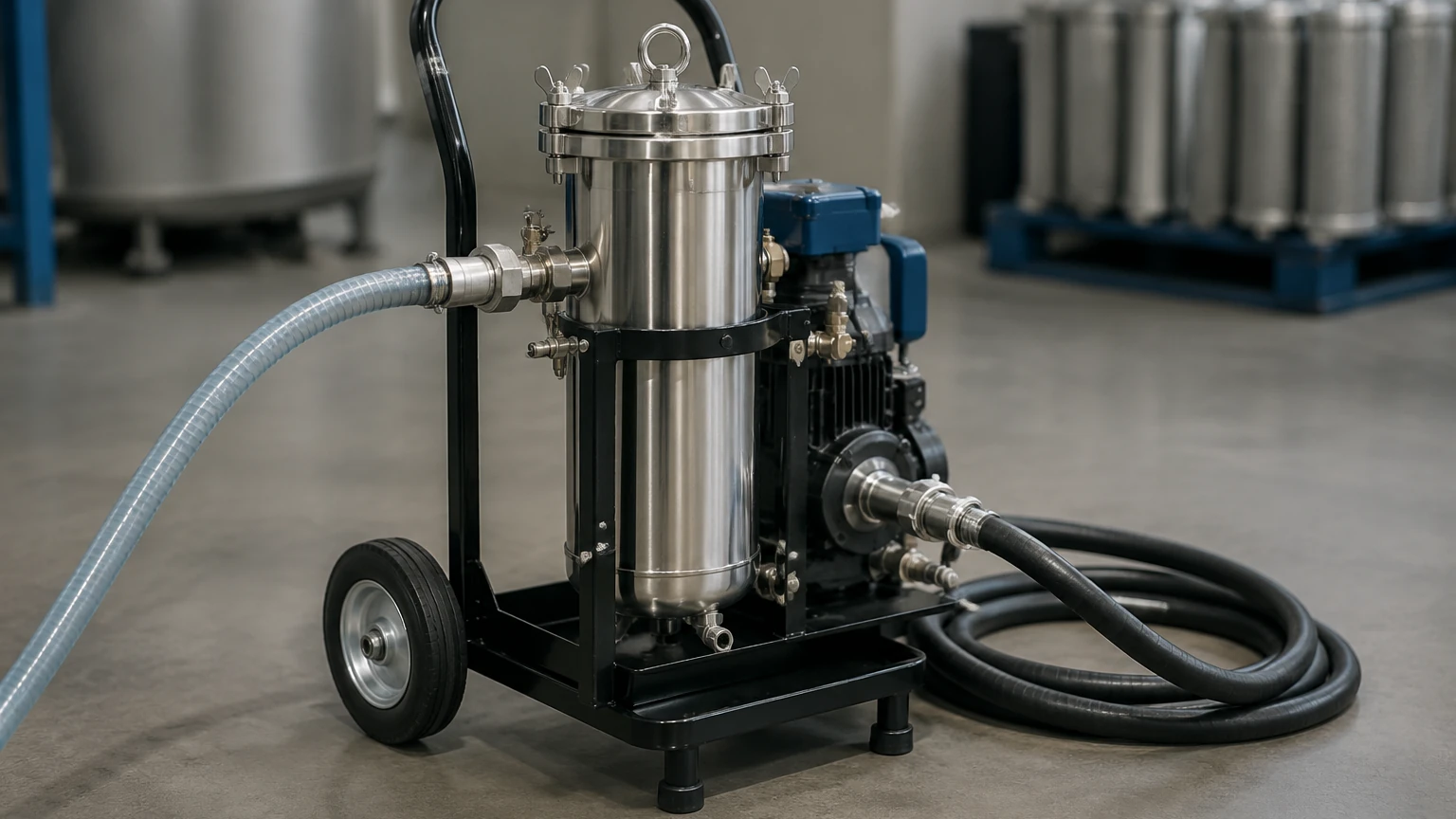
In industrial maintenance, fluid cleanliness is the primary determinant of component longevity and system reliability. A portable oil filter machine, frequently referred to as a filter cart or kidney-loop system, serves as a critical tool for off-line filtration, fluid transfer, and system flushing. Unlike dedicated in-line filters that are integrated into a machine’s hydraulic or lubrication circuit, these portable units provide the flexibility to treat multiple reservoirs and address contamination issues that standard system filters might not be equipped to handle.
For engineers and maintenance professionals, selecting or designing a portable oil filter machine requires a deep understanding of filtration mechanics, material compatibility, and the specific demands of the operating environment. This guide examines the technical considerations of portable filtration systems, focusing on the role of high-performance stainless steel filter elements and the engineering criteria necessary for effective fluid conditioning.
The Engineering Principle of Off-Line Filtration
The fundamental operation of a portable oil filter machine is based on the "kidney loop" principle. The machine draws fluid from a reservoir, passes it through one or more high-efficiency filter elements, and returns the cleaned fluid back to the same reservoir. This process occurs independently of the main system's operation, allowing for continuous decontamination without affecting system pressure or flow dynamics.
Benefits of Off-Line Fluid Conditioning
1. Continuous Decontamination: Portable units can run while the primary machinery is offline or during standard operation, providing supplemental cleaning that reduces the load on primary filters.
2. Fluid Transfer and Pre-Filtration: New oil is rarely "clean" oil. Using a portable oil filter machine to transfer fluid from drums to a reservoir ensures that contaminants introduced during manufacturing or transport are removed before they enter the system.
3. System Flushing: After a component failure or a major repair, portable machines are used to flush the circuit, capturing wear debris that could otherwise cause secondary damage.
Critical Components and Material Selection
The performance of a portable oil filter machine is largely dictated by the quality and configuration of its internal filtration components. While the pump and motor provide the motive force, the filter cartridge is the functional core of the unit.
Stainless Steel Filter Media
In demanding industrial applications—such as chemical processing, high-temperature lubrication, or food-grade environments—stainless steel filter media is often preferred over cellulose or synthetic glass fibers. Manufacturers like Kaifil specialize in custom stainless steel filtration solutions that offer several technical advantages:
* Structural Integrity: Stainless steel wire mesh and pleated metal cartridges can withstand high differential pressures without collapsing, a common risk when dealing with high-viscosity oils or cold-start conditions.
* Chemical and Thermal Resistance: In environments involving aggressive additives or high-temperature fluids, stainless steel remains inert and maintains its pore geometry.
* Cleanability: Unlike disposable depth filters, certain grades of stainless steel mesh can be cleaned and reused, providing a lower total cost of ownership in specific high-contaminant load scenarios.
Multi-Stage Filtration Architecture
Effective portable oil filter machines often utilize a multi-stage approach. A typical configuration includes a coarse suction strainer (often 40 to 100 microns) to protect the pump from large debris, followed by one or more high-efficiency pressure-side filters. These secondary stages utilize pleated stainless steel cartridges or high-capacity depth media to achieve the desired ISO 4406 cleanliness codes.
Evaluating Filtration Performance Metrics
When specifying a portable oil filter machine, engineers must look beyond nominal micron ratings. Nominal ratings are often misleading as they do not define the percentage of particles captured. Instead, technical evaluations should focus on the following metrics:
Beta Ratio (β)
High-performance filtration is defined by the Beta Ratio, which compares the number of particles upstream of the filter to the number of particles downstream. For example, a filter with a β10[c] ≥ 200 rating means that for every 200 particles of 10 microns or larger entering the filter, only one passes through. This equates to 99.5% efficiency. For critical hydraulic systems, filters with Beta ratios of 1000 (99.9% efficiency) are often required.
Dirt-Holding Capacity (DHC)
The DHC determines how much contaminant a filter can retain before the differential pressure reaches the bypass or terminal limit. In portable applications where the machine may be left to run unattended, a high DHC is essential to minimize maintenance intervals and maximize the volume of fluid processed per element.
Flow Rate vs. Viscosity
The flow rate of a portable oil filter machine must be balanced against the fluid's viscosity. Pumping high-viscosity gear oil (ISO VG 320 or 460) through a fine 3-micron filter requires significant torque and can lead to high pressure drops. Engineers must ensure the pump's displacement and the filter's surface area are matched to the fluid's rheological properties at the lowest expected operating temperature.
Customization for Industry-Specific Applications
No single portable oil filter machine configuration is suitable for all industrial sectors. Customization of the filter housing and the internal elements is necessary to meet specific regulatory and operational standards.
* Food and Beverage: Machines used in this sector require 304 or 316L stainless steel housings and FDA-compliant seals. The filter elements must be capable of removing fine particulates while resisting corrosion from wash-down chemicals.
* Chemical and Petrochemical: These environments often involve corrosive fluids. Stainless steel filter cartridges with specialized welding techniques (rather than adhesives) ensure that the filter does not degrade or leach contaminants into the process stream.
* Power Generation: In turbine oil conditioning, removing water is as important as removing particulates. Portable units for this application may incorporate water-absorbing elements or vacuum dehydration stages alongside standard particulate filtration.
Operational Considerations and Maintenance
To ensure a portable oil filter machine remains an asset rather than a liability, several operational factors must be managed:
1. Differential Pressure Monitoring: Every machine should be equipped with a visual or electrical differential pressure indicator. This tells the operator exactly when the filter element is saturated and needs replacement or cleaning.
2. Bypass Valves: To protect the system and the pump, a bypass valve is often integrated into the filter head. However, in high-precision applications, a "no-bypass" housing may be used to ensure that unfiltered oil never returns to the reservoir, though this requires robust stainless steel elements that can handle the full system pressure.
3. Sampling Ports: High-quality portable units include upstream and downstream sampling ports. This allows maintenance teams to perform oil analysis and verify that the machine is achieving the target ISO cleanliness code.
Selection Criteria for Engineers and Purchasing Teams
Before investing in a portable oil filter machine or ordering custom replacement elements, technical teams should confirm several key specifications with their manufacturer:
* Target Cleanliness Level: What is the required ISO 4406 code for the equipment being serviced?
* Fluid Compatibility: Are the seals (Viton, Nitrile, EPDM) and the filter media (Stainless steel, microglass) compatible with the specific oil or chemical being filtered?
* Viscosity Range: What is the maximum viscosity at the lowest start-up temperature? This will dictate the pump size and the required surface area of the pleated filter element.
* Portability Requirements: Does the unit need to be man-portable, mounted on a heavy-duty cart, or integrated into a stationary skid?
For organizations looking to optimize their fluid maintenance programs, partnering with a manufacturer that understands the nuances of metal filtration is essential. High-quality stainless steel components ensure that the filtration process is both reliable and repeatable, even in the most demanding industrial environments.
To explore specific technical data on filter cartridges and custom metal mesh solutions for industrial applications, Review product options and application support on the Kaifil Main Page. Understanding the intersection of material science and fluid dynamics is the first step toward achieving superior machinery reliability through effective portable filtration.
