


Portable Oil Purifier
In modern industrial operations, the longevity and reliability of hydraulic systems, turbines, and gearboxes depend heavily on the cleanliness of the lubricating and hydraulic fluids. Contamination, primarily in the form of solid particulates and moisture, is the leading cause of component wear and system failure. A portable oil purifier serves as a critical maintenance tool, providing off-line filtration to restore oil to its specified ISO cleanliness levels without requiring system downtime.
For engineers and maintenance managers, selecting the right purification technology involves understanding the interaction between the fluid’s physical properties, the nature of the contaminants, and the engineering of the filtration media. As a specialist in precision metal filtration, Kaifil provides the high-performance stainless steel filter elements that form the heart of these mobile purification systems, ensuring durability and precise filtration accuracy in demanding environments.
The Role of Portable Oil Purifiers in Industrial Fluid Management
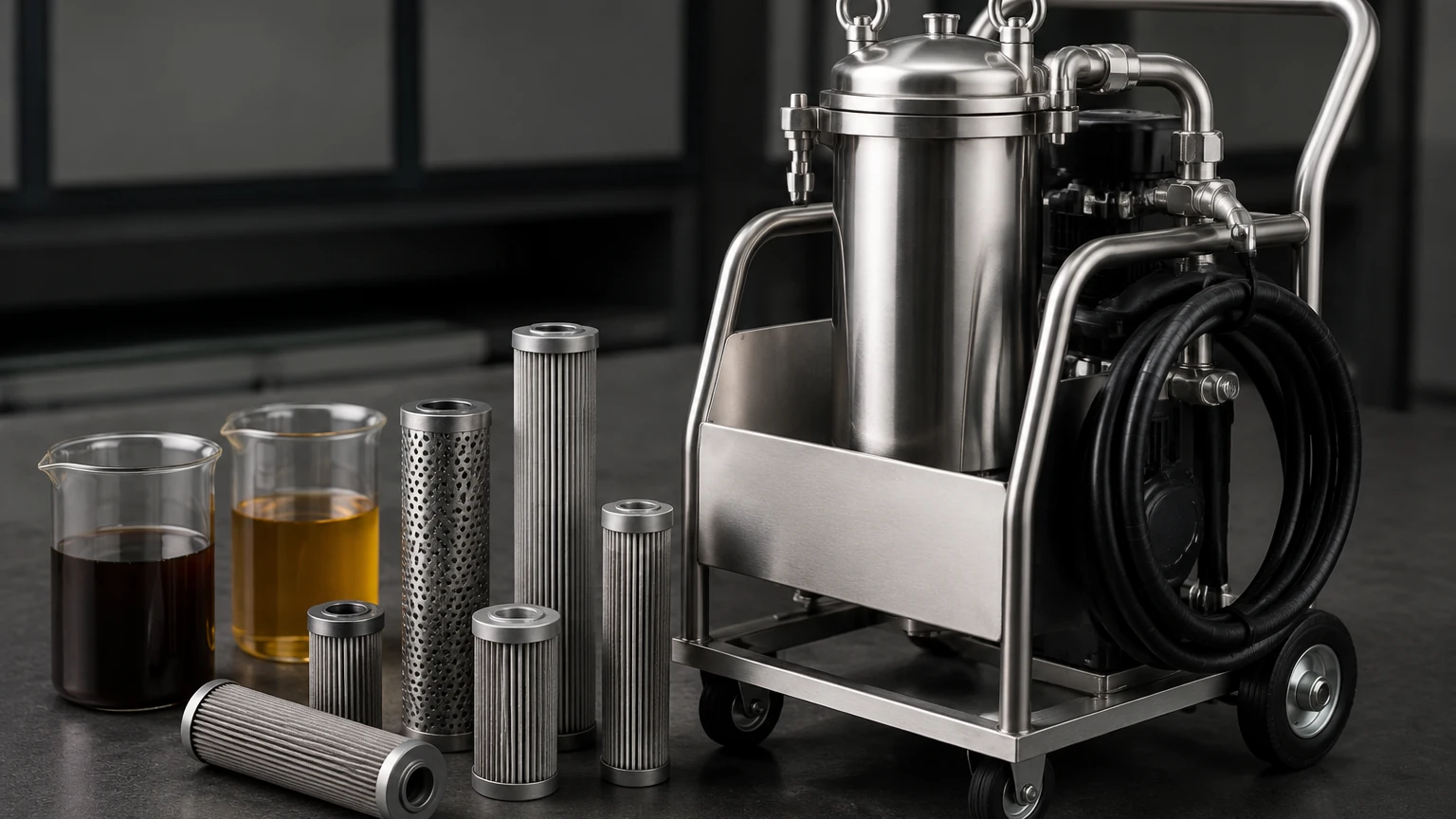
Industrial fluids are often subjected to harsh operating conditions, including high temperatures, varying pressures, and exposure to environmental pollutants. Over time, these factors lead to the accumulation of metallic wear particles, dust, and water. A portable oil purifier, often referred to as a filter cart or oil reclamation unit, is a self-contained mobile system designed to circulate oil through high-efficiency filter elements to remove these impurities.
Unlike in-line filters, which are integrated into the main system flow and must handle full system pressure, portable purifiers operate on a "kidney loop" or off-line basis. This allows for slower, more controlled flow rates, which often results in higher filtration efficiency. These units are versatile, used for transferring new oil from drums to reservoirs (pre-filtering), cleaning oil already in service, and flushing systems after repairs or component replacements.
Core Filtration Technologies and Component Engineering
The effectiveness of a portable oil purifier is fundamentally determined by its internal filtration components. In industrial settings where fluids may be chemically aggressive or subjected to high temperatures, stainless steel wire mesh and sintered metal filters are the preferred choice over traditional cellulose or fiberglass media.
Stainless Steel Wire Mesh Filters
Stainless steel wire mesh offers a robust solution for primary and secondary filtration stages. These elements are engineered with precise aperture sizes to ensure consistent particulate capture. For portable units, pleated stainless steel mesh is frequently utilized to maximize the effective filtration surface area within a compact cartridge. This design reduces the initial pressure drop across the filter and extends the service interval before cleaning or replacement is required.
Sintered Metal Filter Elements
For applications requiring extremely fine filtration or high structural integrity, sintered metal components are employed. Sintering bonds multiple layers of stainless steel mesh or metal fibers together, creating a porous structure that can withstand high differential pressures without deformation. This is particularly important in portable oil purifiers used for high-viscosity lubricants, where the force required to push the fluid through the media is significantly higher.
Critical Selection Criteria for Engineers
When evaluating a portable oil purifier for a specific industrial application, several engineering parameters must be confirmed to ensure the unit meets performance expectations.
Fluid Viscosity and Temperature
The viscosity of the oil is perhaps the most significant factor in purifier selection. High-viscosity gear oils (ISO VG 220, 320, or 460) require heavy-duty pumps and filter elements with lower flow resistance. Using a unit designed for light hydraulic oil on a heavy gear oil system will result in frequent bypass events or pump cavitation. Engineers must specify the operating temperature range, as oil viscosity decreases as temperature rises, affecting both pumpability and filtration efficiency.
Filtration Rating: Absolute vs. Nominal
It is essential to distinguish between nominal and absolute micron ratings. A nominal rating is an electronic estimate of the smallest particle size the filter can capture, often at an efficiency of 50% to 90%. In contrast, an absolute rating signifies that 99.9% (Beta ratio ≥ 1000) of particles at that micron size are retained. For critical systems, such as servo-valves or high-speed bearings, absolute-rated stainless steel cartridges are necessary to maintain the required ISO 4406 cleanliness codes.
Flow Rate and Retention Time
While high flow rates allow for faster processing of large reservoirs, they can also reduce the efficiency of water removal technologies, such as vacuum dehydration or coalescing stages. A balanced flow rate ensures that the fluid has sufficient contact time with the filter media or the dehydration chamber to achieve the target moisture and particulate levels.
Addressing Contamination: Particulate and Water Removal
Most portable oil purifiers utilize a multi-stage approach to fluid restoration. Understanding these stages helps in selecting the appropriate configuration for the specific contamination challenges present in the facility.
1. Coarse Pre-Filtration: The first stage typically involves a coarse stainless steel wire mesh filter (e.g., 40 to 100 microns). This stage protects the pump and the finer downstream filters from large debris, such as metal chips or scale.
2. Fine Particulate Filtration: The second stage utilizes high-precision stainless steel filter cartridges (e.g., 3, 5, or 10 microns absolute). This stage is responsible for removing the microscopic silt and wear particles that cause abrasive wear in hydraulic components.
3. Water Removal: Water can exist in oil in three states: dissolved, emulsified, and free. Portable units may use water-absorbing (hygroscopic) elements for small amounts of moisture or coalescing filters and vacuum dehydrators for bulk water removal. Stainless steel housings are critical here to prevent corrosion within the purifier itself during the water separation process.
Material Compatibility and Durability
In the chemical processing, pharmaceutical, and food and beverage industries, material compatibility is non-negotiable. Standard carbon steel components in an oil purifier may react with certain additives or synthetic fluids, leading to fluid degradation or the introduction of rust into the system.
Utilizing 304 or 316L stainless steel for all wetted parts—including the filter mesh, support cores, and end caps—ensures that the portable oil purifier remains inert and durable. Stainless steel’s resistance to corrosion and its ability to withstand rigorous cleaning cycles make it the most cost-effective material for long-term industrial use. To explore specific material grades and configurations, engineers should Review product options and application support to match the filtration media to their specific chemical environment.
Total Cost of Ownership and Maintenance Cycles
While the initial investment in a portable oil purifier equipped with high-quality stainless steel elements may be higher than units using disposable media, the total cost of ownership (TCO) is often significantly lower.
Cleanability and Reuse
One of the primary advantages of stainless steel filtration components is their ability to be cleaned and reused. Unlike fiberglass or paper elements, which must be discarded once they reach their dirt-holding capacity, stainless steel mesh can be backwashed, ultrasonically cleaned, or chemically treated. This eliminates the recurring cost of replacement filters and reduces the environmental impact of waste disposal.
Reducing Component Wear
By consistently maintaining oil at or below the manufacturer’s recommended ISO cleanliness levels, a portable oil purifier extends the life of pumps, valves, and actuators. The cost of a single hydraulic pump failure often exceeds the price of a high-end portable filtration system. Furthermore, clean oil lasts longer, reducing the frequency of oil changes and the associated costs of purchasing new fluid and disposing of used oil.
Engineering Customization for OEM Integration
Every industrial environment presents unique challenges, from space constraints on a factory floor to specific fluid chemistry requirements. Kaifil specializes in providing customized filtration solutions that allow OEM manufacturers of portable oil purifiers to optimize their designs.
Customization options include:
* Variable Micron Ratings: Tailoring the mesh weave to achieve specific filtration ratios.
* Custom Dimensions: Engineering filter cartridges to fit proprietary housing designs while maximizing surface area.
* Structural Reinforcement: Adding internal support cores or external shrouds to handle high-pressure surges or high-viscosity fluids.
* End Cap Configurations: Providing various seal and connection types (e.g., 222, 226, or threaded) to ensure leak-free operation.
Conclusion: Making Informed Purchasing Decisions
A portable oil purifier is an indispensable asset for any facility relying on fluid power or lubrication systems. However, the performance of the unit is only as good as the filters inside it. Engineers must look beyond the pump's flow rate and consider the material science and engineering precision of the filtration elements.
By prioritizing stainless steel wire mesh and precision-engineered cartridges, maintenance teams can ensure that their portable purification units provide reliable, repeatable results even in the most demanding industrial conditions. For technical professionals seeking to optimize their filtration strategy or source high-performance components for custom purification projects, the Main Page offers comprehensive resources on material selection, filtration accuracy, and industrial application support.
