


Porus Metal
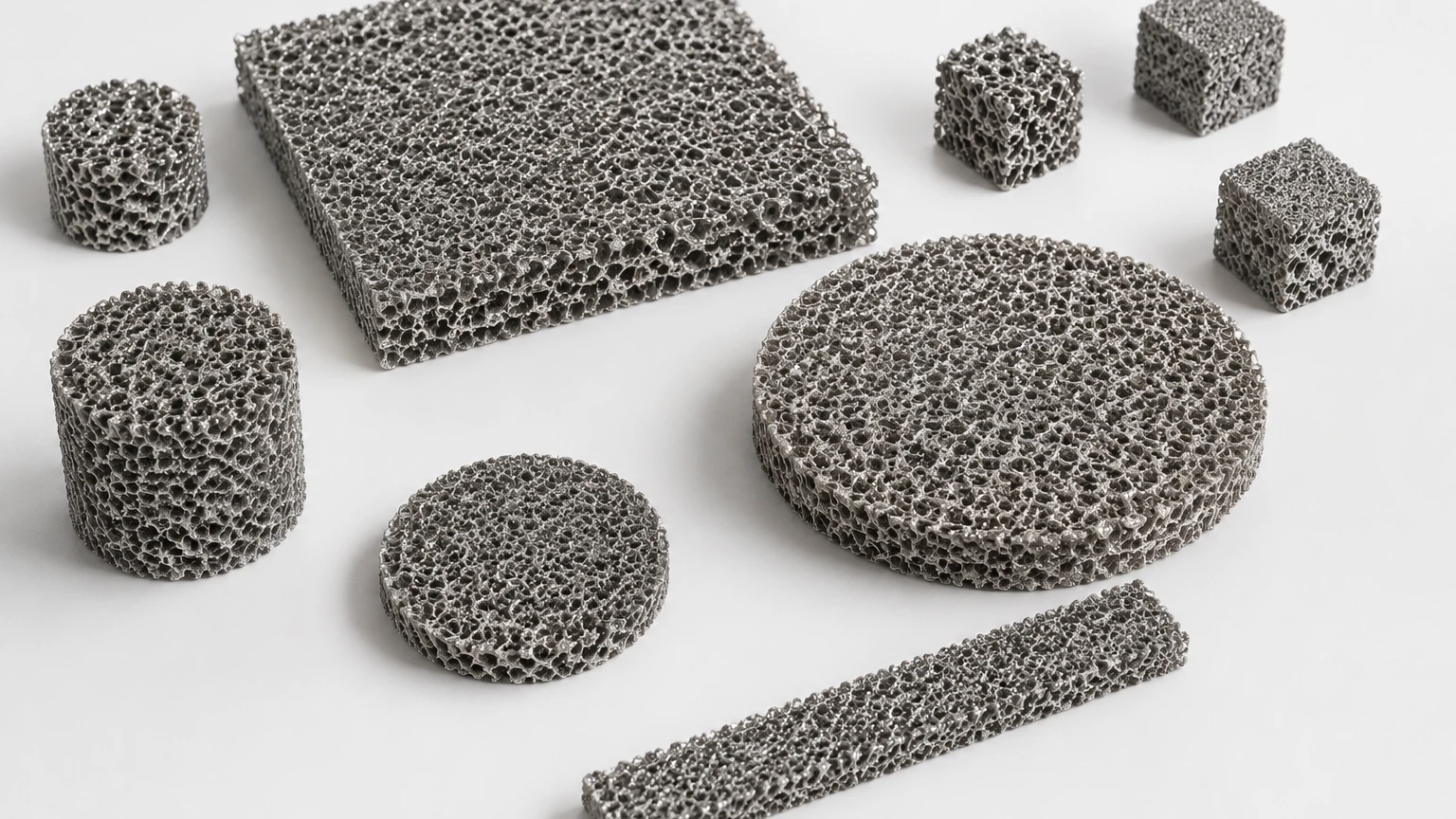
In industrial filtration, the selection of media is a critical engineering decision that directly impacts process efficiency, equipment longevity, and product purity. Porous metal, often referred to in procurement specifications as porus metal, represents a category of high-strength, heat-resistant materials designed to operate where polymers and fabrics fail. These materials are engineered through sintering processes that fuse metal particles or wires together, creating a rigid structure with interconnected porosity.
For engineers and purchasing teams, understanding the technical nuances of these materials is essential. Whether the application involves high-pressure hydraulic systems, corrosive chemical processing, or sterile pharmaceutical manufacturing, the physical properties of the metal media determine the system's total cost of ownership. This guide examines the engineering characteristics, manufacturing methods, and selection criteria for industrial-grade filtration components, highlighting how specialized manufacturers like Kaifil support these demanding requirements. For a comprehensive overview of available solutions, professionals can visit the Main Page of the Kaifil technical resource center.
The Engineering Fundamentals of Porous Metal Media
Porous metal media are defined by their ability to provide precise filtration while maintaining structural integrity under mechanical stress. Unlike soft media, these components do not deform under high differential pressure, ensuring that the pore geometry remains constant throughout the filtration cycle.
Porosity and Permeability
Porosity refers to the volume of void space within the metal structure, typically expressed as a percentage. High porosity is desirable to minimize pressure drop, but it must be balanced against the mechanical strength required for the application. Permeability, on the other hand, is the measure of how easily a fluid (liquid or gas) can pass through the media. In porus metal design, engineers must calculate the permeability coefficient to predict flow rates at specific pressures. Factors influencing this include pore size distribution, the thickness of the media, and the tortuosity of the path the fluid must take.
Filtration Mechanisms
Metal filters utilize two primary mechanisms: surface filtration and depth filtration.
1. Surface Filtration: Typically achieved using sintered wire mesh, where particles are trapped on the upstream surface of the media. This is ideal for applications requiring frequent backwashing or cake filtration.
2. Depth Filtration: Often associated with sintered metal powder components, where particles are trapped within the complex, multi-layered internal structure. This provides high dirt-holding capacity and is effective for removing fine contaminants from gas or liquid streams.
Manufacturing Processes: Sintering and Structure
The performance of porus metal is a direct result of the sintering process. Sintering involves heating metal powders or layered wire meshes to a temperature just below their melting point under a controlled atmosphere. This causes the contact points of the metal particles or wires to fuse through atomic diffusion, creating a monolithic structure.
Sintered Wire Mesh
Sintered wire mesh is produced by layering multiple sheets of woven stainless steel wire mesh. These layers are bonded together to create a material with predictable pore sizes and high mechanical strength. Engineers often specify multi-layer laminates (e.g., 5-layer or 7-layer) to combine a fine filtration layer with thicker, protective support layers. This structure is particularly resistant to pressure surges and is widely used in hydraulic and polymer filtration.
Sintered Metal Powder
Sintered powder media are formed by compacting metal powders into a shape (such as a cylinder or disc) and then sintering it. The resulting material has a highly complex internal pore structure. By carefully controlling the particle size of the starting powder, manufacturers can achieve very fine micron ratings, often down to 0.5 microns. This type of porus metal is frequently used in gas sparging, flame arrestors, and catalyst recovery.
Material Selection and Chemical Compatibility
The choice of alloy is the most significant factor in determining the filter's lifespan in aggressive environments. While stainless steel is the industry standard, specific grades are chosen based on the chemical composition of the process fluid and the operating temperature.
Stainless Steel 304 and 316L
304 stainless steel is suitable for general industrial applications where moisture and mild chemicals are present. However, for most B2B industrial filtration needs, 316L is preferred. The "L" denotes low carbon content, which prevents carbide precipitation during welding, maintaining corrosion resistance at the joints. 316L offers superior resistance to chlorides and organic acids, making it the standard for food, beverage, and pharmaceutical applications.
Advanced Alloys
In environments where 316L may suffer from pitting or stress corrosion cracking, specialized alloys are utilized:
* Hastelloy®: Used in highly acidic environments or where high-temperature oxidation is a concern.
* Inconel®: Ideal for extreme temperature applications, such as hot gas filtration in power plants or chemical reactors.
* Monel®: Often specified for applications involving seawater or hydrofluoric acid.
Performance Evaluation and Micron Ratings
When evaluating porus metal components, engineers must distinguish between absolute and nominal micron ratings. A nominal rating refers to the ability of the filter to retain a certain percentage (usually 60-90%) of particles of a specific size. An absolute rating, however, indicates the size of the largest spherical particle that can pass through the media under laboratory conditions.
Bubble Point Testing
The integrity and pore size of a metal filter are often verified using the Bubble Point Test (ASTM E128). The filter is submerged in a liquid, and air pressure is gradually increased. The pressure at which the first bubble appears indicates the largest pore size. This non-destructive test is vital for ensuring that custom-manufactured filters meet the strict tolerances required in pharmaceutical and aerospace sectors.
Pressure Drop and Flow Curves
Every filtration system experiences a pressure drop ($ΔP$) across the media. As the filter accumulates contaminants, the $ΔP$ increases. Engineers must select a filter with a low initial clean pressure drop to maximize the duration of the filtration cycle before cleaning or replacement is required. Factors such as fluid viscosity, flow velocity, and the total surface area of the porus metal element all contribute to this calculation.
Customization and OEM Integration
Most industrial applications require more than a standard off-the-shelf filter. Customization is often necessary to fit existing housing dimensions or to meet specific flow dynamics. Kaifil specializes in providing these tailored solutions, working from material selection through to the final assembly of complex filter cartridges.
Engineering Design Considerations
When requesting a custom porus metal solution, engineers should provide the following data:
* Fluid Properties: Chemical composition, viscosity, and density.
* Operating Conditions: Minimum and maximum temperature and pressure.
* Contaminant Characteristics: Particle size distribution, concentration, and nature (deformable vs. rigid).
* Target Performance: Desired micron rating and maximum allowable pressure drop.
* Interface Requirements: End cap configurations (e.g., 222, 226, NPT, or flange mounts).
By addressing these variables during the design phase, manufacturers can optimize the filter structure to balance filtration efficiency with mechanical durability. For more details on customization capabilities, visit the Main Page.
Maintenance, Cleaning, and Total Cost of Ownership
One of the primary advantages of porus metal over disposable media is cleanability. While the initial acquisition cost of a stainless steel filter is higher than a polymer or paper equivalent, the ability to reuse the component multiple times significantly reduces the total cost of ownership (TCO).
Cleaning Methodologies
Depending on the nature of the contaminant, several methods can be used to restore the filter's performance:
* Backpulsing/Backwashing: Using a reverse flow of clean fluid or gas to dislodge surface-trapped particles. This is common in continuous process systems.
* Ultrasonic Cleaning: Using high-frequency sound waves in a cleaning solvent to remove fine particles embedded deep within the pores of the metal powder media.
* Chemical Cleaning: Utilizing acids, caustic solutions, or solvents to dissolve organic or inorganic deposits. This requires careful consideration of the filter's alloy compatibility.
* Thermal Cleaning (Burn-off): In applications like polymer filtration, high temperatures are used to carbonize organic residues, which are then flushed out.
Replacement Cycles
Despite their durability, metal filters are not infinite. Repeated cleaning cycles and mechanical stress can eventually lead to fatigue or permanent pore blockage. Monitoring the "clean" pressure drop after each maintenance cycle allows engineers to track the filter's health. When the clean $ΔP$ reaches a predetermined threshold (e.g., 50% higher than the original value), the element should be replaced to prevent process inefficiencies.
Application-Specific Requirements
Chemical Processing
In the chemical industry, filters must withstand aggressive solvents and high temperatures. Porous metal is used for catalyst recovery, where fine precious metal catalysts must be captured from a process stream and returned to the reactor. The high mechanical strength of sintered mesh allows these filters to handle the abrasive nature of catalyst particles.
Food and Beverage
Filtration in this sector requires compliance with food safety standards (such as FDA or EC 1935/2004). Stainless steel 316L is the preferred material due to its inert nature. Common applications include steam filtration (to remove pipe scale and rust before culinary use) and the carbonation of beverages using porous metal spargers, which create fine, uniform bubbles for efficient gas absorption.
Pharmaceutical and Biotechnology
Sterility and high-purity are the drivers in pharmaceutical manufacturing. Porus metal filters are used for nitrogen blanketing, sterile air venting of storage tanks, and the filtration of active pharmaceutical ingredients (APIs). The ability of these filters to be sterilized in place (SIP) using high-pressure steam is a critical advantage over polymer-based alternatives.
Conclusion: Selecting the Right Partner
Choosing a porus metal solution involves a detailed analysis of the physical, chemical, and economic factors of a process. For engineers, the goal is to find a balance between filtration precision and the robustness required for industrial environments. By focusing on high-quality materials like sintered wire mesh and metal powders, and by leveraging the expertise of specialized manufacturers, companies can ensure their filtration systems operate at peak efficiency.
Kaifil provides the technical support and manufacturing precision necessary to develop these high-performance components. From initial material selection to the production of complex, custom-engineered filter cartridges, the focus remains on reliability and performance. To explore the full range of stainless steel filtration solutions and to consult with engineering experts, visit the Main Page.
