


Pressure Vessal
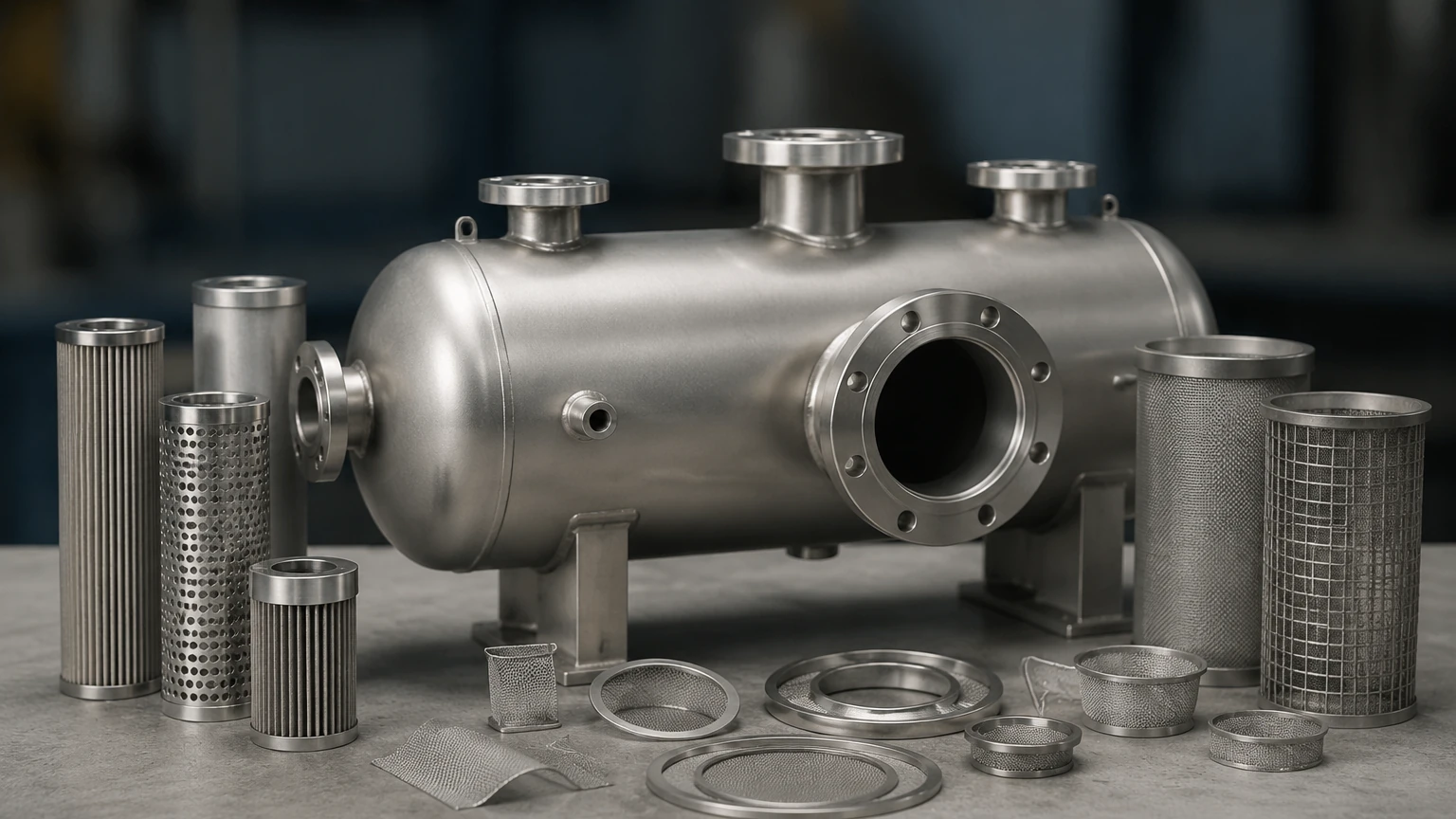
In the landscape of industrial fluid processing, the integration of high-performance filtration within a pressure vessal is a fundamental requirement for maintaining system integrity and product purity. A pressure vessel is engineered to hold liquids or gases at pressures significantly different from the ambient environment. When these vessels serve as housings for filtration systems, the internal components—specifically the stainless steel filter cartridges and wire mesh elements—must meet stringent mechanical and chemical standards to ensure operational safety and efficiency.
For engineers and procurement specialists, understanding the synergy between the vessel's structural design and the internal filtration media is critical. This guide explores the technical considerations, material requirements, and engineering benchmarks necessary to optimize filtration performance within a pressurized environment. To explore specific component specifications, you may refer to our Main Page for detailed technical data on custom filtration solutions.
Engineering Standards and Structural Integrity
The design and fabrication of a pressure vessal are governed by strict international codes, such as the ASME Boiler and Pressure Vessel Code (BPVC) in North America or the Pressure Equipment Directive (PED) in Europe. These standards dictate the minimum wall thickness, material grades, and welding procedures required to prevent catastrophic failure under high-pressure conditions.
However, the structural integrity of the vessel is only one part of the equation. The internal filtration components must also be engineered to withstand the differential pressure (ΔP) that occurs as contaminants accumulate on the filter surface. If a filter element is not designed to match the vessel's operating parameters, it may collapse or bypass, leading to downstream contamination and potential damage to sensitive equipment like pumps and turbines.
Key engineering considerations for internal components include:
* Collapse Pressure: The maximum differential pressure a filter cartridge can withstand before structural failure.
* Flow Distribution: Ensuring even fluid distribution across the filter media to prevent localized high-velocity zones that can cause erosion.
* Sealing Mechanisms: Utilizing high-grade gaskets and O-rings (such as Viton, EPDM, or PTFE) to ensure that no fluid bypasses the filtration media within the vessel housing.
Material Selection for Corrosive and High-Temperature Environments
One of the primary reasons stainless steel is the preferred material for filtration components within a pressure vessal is its exceptional resistance to corrosion and thermal stress. In industries such as chemical processing and oil and gas, the fluids being processed are often aggressive or handled at elevated temperatures.
304 vs. 316L Stainless Steel
At Kaifil, we prioritize the use of high-grade alloys to match the specific demands of the application:
* Grade 304 Stainless Steel: Suitable for general industrial applications where basic corrosion resistance is required. It is commonly used in water treatment and food and beverage sectors.
* Grade 316L Stainless Steel: Contains molybdenum, which provides superior resistance to chlorides and pitting. This is the standard for pharmaceutical, marine, and heavy chemical applications where the pressure vessel operates in a highly corrosive environment.
Beyond basic alloy selection, the manufacturing process—such as sintering or precision weaving of wire mesh—plays a vital role in the filter's durability. Sintered metal filters, for instance, offer a robust porous structure that can be cleaned and reused, significantly reducing the total cost of ownership compared to disposable polymer alternatives.
Filtration Accuracy and Flow Dynamics
The primary function of a pressure vessal configured for filtration is to remove particulates of a specific size while maintaining a required flow rate. This requires a precise balance between filtration accuracy (micron rating) and the available surface area.
Micron Ratings and Mesh Geometry
Filtration accuracy is typically defined in two ways:
1. Nominal Rating: Indicates the ability of the filter to retain a major percentage of particles of a certain size (e.g., 95% of 10-micron particles).
2. Absolute Rating: Refers to the diameter of the largest hard spherical particle that will pass through the filter under specified test conditions. In critical applications like pharmaceutical manufacturing, absolute-rated stainless steel mesh is often mandatory.
Managing Pressure Drop (ΔP)
As fluid passes through the filtration media inside the vessel, a natural drop in pressure occurs. An efficiently designed system minimizes this initial "clean" pressure drop to maximize the available "dirt-holding capacity." Engineers must calculate the total system pressure to ensure that the pump capacity can overcome the resistance of the filter as it becomes loaded with contaminants.
Customization and OEM Integration
No two industrial processes are identical, and often, a standard off-the-shelf filter will not suffice for a specialized pressure vessal design. Customization is essential when dealing with unique flow rates, non-standard vessel dimensions, or specific chemical compatibilities.
Kaifil specializes in providing OEM solutions where the filtration elements are tailored to the exact specifications of the vessel manufacturer. This includes:
* Custom End Fittings: Designing specialized flanges, threads, or bayonet mounts to ensure a secure fit within the vessel's internal manifold.
* Variable Lengths and Diameters: Adjusting the physical dimensions of filter cartridges to maximize surface area within a constrained vessel footprint.
* Reinforced Cores: Adding internal or external support cages to handle high-viscosity fluids or extreme pressure surges.
By working closely with engineering teams during the design phase, we ensure that the filtration component enhances the overall performance of the pressure vessel system rather than becoming a bottleneck.
Maintenance, Cleaning, and Replacement Cycles
Maintaining a pressure vessal system involves regular monitoring of the differential pressure. Once the ΔP reaches a predetermined terminal limit, the filter elements must be either cleaned or replaced. Unlike plastic or paper filters, stainless steel components offer the advantage of being cleanable, which is a significant factor in industrial sustainability and cost management.
Cleaning Protocols
Common cleaning methods for stainless steel filter elements include:
* Backwashing: Reversing the flow of fluid to dislodge particles from the surface of the mesh.
* Ultrasonic Cleaning: Using high-frequency sound waves in a solvent bath to remove fine particulates trapped within the pores of sintered media.
* Chemical Cleaning: Utilizing specific acids or alkalis to dissolve organic or inorganic scaling, provided the chemicals are compatible with the stainless steel grade.
Establishing a rigorous maintenance schedule prevents the risk of "media migration" or element rupture, which can occur if a filter is left in service far beyond its rated capacity. For technical guidance on maintenance intervals, engineers should consult the performance curves provided on our Main Page.
Risk Mitigation and Safety Considerations
Operating a pressure vessal inherently involves risks that must be mitigated through precise engineering and high-quality components. In filtration applications, the most common risks include:
1. Bypass Leakage: If the filter element does not seat perfectly within the vessel, unfiltered fluid will take the path of least resistance. This is often caused by poor-quality seals or incorrect installation torque.
2. Fatigue Failure: Continuous pressure cycling (fluctuating between high and low pressure) can lead to metal fatigue in the filter mesh or support structure. Selecting materials with high fatigue strength is essential for long-term reliability.
3. Chemical Incompatibility: Even stainless steel can fail if exposed to incompatible chemicals at high temperatures. For example, high concentrations of hydrochloric acid can cause rapid stress corrosion cracking in certain stainless grades.
To mitigate these risks, it is recommended to conduct a thorough fluid analysis and pressure profile review before selecting the filtration media. Ensuring that all components are sourced from a manufacturer with a robust quality management system (QMS) is the best defense against unexpected system downtime.
Conclusion: Optimizing Your Filtration System
The selection of filtration components for a pressure vessal is a technical decision that impacts the safety, efficiency, and longevity of an entire industrial process. By focusing on high-grade stainless steel materials, precise micron ratings, and robust structural designs, engineers can ensure that their pressurized systems operate at peak performance.
Whether you are designing a new system or retrofitting an existing vessel, the goal remains the same: achieving reliable separation with minimal operational disruption. For more information on how custom stainless steel wire mesh and filter cartridges can be integrated into your specific application, visit our Main Page to connect with our technical engineering team.
