


Pressure Vessels Tanks
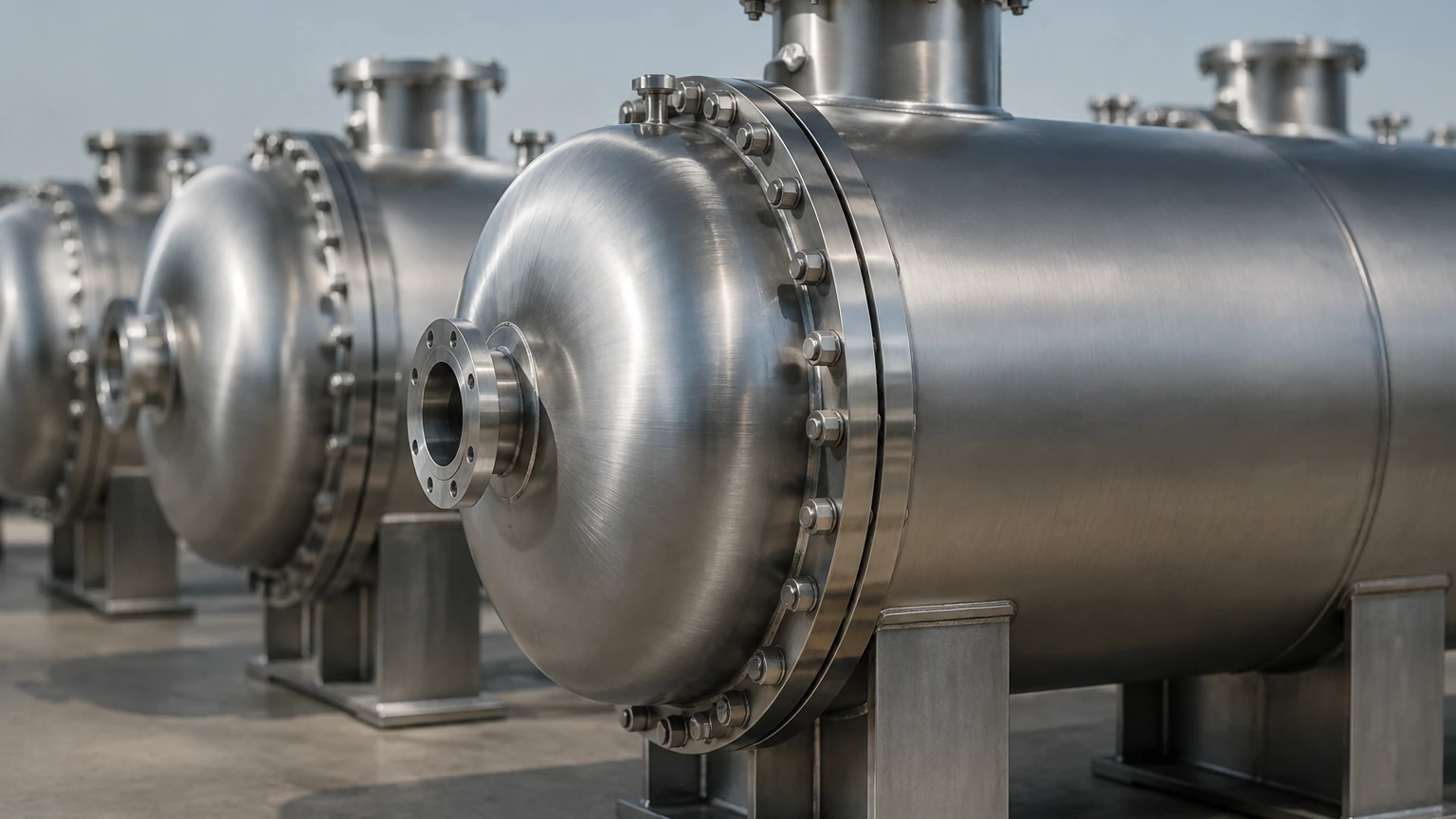
In industrial process engineering, pressure vessels tanks serve as the primary containment structures for fluids under high pressure or vacuum. These components are essential in sectors ranging from chemical processing and pharmaceuticals to food and beverage production. For engineers and procurement teams, understanding the technical nuances of these vessels—particularly how they integrate with internal filtration systems—is critical for ensuring operational safety, process efficiency, and long-term durability.
As a professional manufacturer of custom stainless steel filtration solutions, Kaifil provides the precision components that operate within these environments. Whether the application involves high-flow liquid filtration or gas separation, the synergy between the pressure vessel design and the internal filter media determines the overall performance of the system.
Understanding the Role of Pressure Vessels and Tanks in Industrial Filtration
Pressure vessels tanks are engineered to hold gases or liquids at a pressure substantially different from the ambient pressure. In the context of industrial filtration, these tanks often function as filter housings. The vessel provides the structural integrity required to withstand internal pressures, while the internal filter cartridges or wire mesh elements perform the actual separation task.
When a fluid enters a pressure vessel, it is directed through a filtration medium. The design of the tank must account for flow distribution to prevent "channeling," where the fluid takes the path of least resistance, thereby bypassing portions of the filter and reducing efficiency. Engineers must evaluate the vessel's volume, port sizes, and internal geometry to ensure that the flow velocity remains within the optimal range for the specific filtration media being used.
Engineering Standards and Material Selection
The construction of pressure vessels tanks is governed by strict engineering codes, most notably the ASME (American Society of Mechanical Engineers) Boiler and Pressure Vessel Code (BPVC), specifically Section VIII. Compliance with these standards ensures that the vessel can safely handle its rated pressure without the risk of mechanical failure.
Material Compatibility
Material selection is perhaps the most critical factor in vessel engineering. Stainless steel is the industry standard for high-performance applications due to its corrosion resistance and mechanical strength.
* 304 Stainless Steel: Suitable for general industrial applications, water treatment, and mild chemical environments. It offers excellent weldability and cost-effectiveness.
* 316L Stainless Steel: Preferred for pharmaceutical, food and beverage, and highly corrosive chemical applications. The addition of molybdenum provides superior resistance to pitting and crevice corrosion, particularly in chloride-rich environments.
* Specialty Alloys: In extreme cases involving highly aggressive acids or ultra-high temperatures, alloys like Hastelloy or Monel may be required for the internal filtration components to match the vessel's longevity.
Surface Finish
In industries like pharmaceuticals and biotechnology, the internal surface finish of the tank (measured in Ra) is vital. A smooth, polished surface prevents bacterial growth and facilitates Clean-in-Place (CIP) procedures. Kaifil specializes in providing filter components that align with these high-purity requirements, ensuring that the entire filtration assembly meets the necessary sanitary standards.
Filtration Integration: Optimizing Vessel Design for Filter Cartridges
A pressure vessel is only as effective as the filtration elements it contains. Integrating stainless steel filter cartridges or wire mesh filters into pressure vessels tanks requires precise engineering of the internal supports and sealing mechanisms.
Flow Dynamics and Pressure Drop
Every filtration system introduces a pressure drop ($ΔP$). This is the difference in pressure between the inlet and the outlet of the vessel. An optimized vessel design minimizes the "clean pressure drop" by ensuring that the inlet and outlet ports are sized correctly relative to the flow rate. If the tank is too small for the required flow, the velocity increases, leading to turbulence and premature clogging of the filter media.
Sealing and Gaskets
To prevent bypass—where unfiltered fluid leaks around the filter element—the interface between the filter and the vessel must be perfectly sealed. Common sealing methods include:
* O-Rings: Typically made of EPDM, Viton, or PTFE, depending on chemical compatibility.
* Compression Seals: Used for heavy-duty wire mesh filters where high mechanical force is required to maintain a seal.
* Threaded or Flanged Connections: For permanent or high-pressure installations where leak prevention is paramount.
Technical Evaluation Criteria for Purchasing Decisions
When specifying pressure vessels tanks for a new project or as part of a facility upgrade, engineering teams should confirm several key parameters before finalizing a purchase.
1. Maximum Allowable Working Pressure (MAWP): The vessel must be rated for the highest possible pressure the system might encounter, including surges.
2. Temperature Range: High temperatures can reduce the tensile strength of stainless steel. The design must account for the maximum operating temperature to ensure the safety factor remains intact.
3. Filtration Micron Rating: The internal filter elements must be selected based on the required particle retention. Kaifil offers a range of precision metal filter components that can be customized to specific micron levels, ensuring the vessel performs its intended separation task.
4. Chemical Compatibility: It is essential to verify that both the vessel shell and the internal filtration media are compatible with the process fluid. This includes considering the pH levels, the presence of solvents, and the potential for galvanic corrosion.
For a comprehensive look at how these components integrate into a complete industrial setup, technical teams can refer to the Main Page for detailed specifications on filtration media and custom housing capabilities.
Operational Maintenance and Safety Protocols
Maintaining the integrity of pressure vessels tanks is a continuous process that extends beyond the initial installation. Because these systems operate under high pressure, failure to follow maintenance protocols can result in significant safety risks and production downtime.
Inspection Cycles
Regular inspections should be conducted to check for signs of stress corrosion cracking, pitting, or mechanical wear at the weld joints. In filtration applications, the pressure drop across the vessel should be monitored constantly. A sudden increase in $ΔP$ indicates that the internal filter elements are loaded with contaminants and require cleaning or replacement.
Cleaning and Regeneration
One of the primary advantages of using stainless steel filtration elements within pressure vessels is their ability to be cleaned and reused. Unlike disposable plastic or paper filters, stainless steel wire mesh and sintered metal cartridges can be regenerated using ultrasonic cleaning, backwashing, or chemical soaking. This significantly reduces the total cost of ownership by extending the life of the filtration media.
Safety Relief Systems
Every pressure vessel must be equipped with a safety relief valve (SRV) or a rupture disk. These devices are designed to vent pressure automatically if it exceeds the vessel's design limits, preventing catastrophic failure. Engineers must ensure that the relief capacity of the valve matches the potential energy input of the system.
Customization and OEM Solutions for Specialized Applications
Standard off-the-shelf pressure vessels tanks often fail to meet the specific requirements of complex industrial processes. Customization is frequently necessary to accommodate unique flow patterns, space constraints, or specialized filtration media.
Kaifil works closely with global customers to develop customized filtration components that fit perfectly within bespoke pressure vessel designs. Customization options include:
* Bespoke Micron Ratings: Engineering the wire mesh weave to capture specific particle sizes while maintaining high flow rates.
* Reinforced Structures: Adding internal support cores to filter cartridges to withstand high differential pressures without collapsing.
* Custom End-Cap Configurations: Designing the attachment points of the filter to match the specific internal manifold of a custom tank.
By focusing on OEM capabilities, manufacturers can provide solutions that are optimized for the specific application rather than relying on generic components that may underperform in demanding environments.
Total Cost Considerations in Filtration Systems
While the initial capital expenditure (CAPEX) for high-quality stainless steel pressure vessels tanks and precision filters may be higher than alternative materials, the long-term operational expenditure (OPEX) is often much lower.
Durability and Longevity
Stainless steel vessels are built to last for decades. When paired with cleanable metal filters, the need for frequent consumables is eliminated. This reduces waste and lowers the logistical costs associated with storing and disposing of used filter cartridges.
Energy Efficiency
An efficiently designed vessel with a low pressure drop requires less pumping power. Over the lifespan of the equipment, the energy savings gained from a well-engineered filtration system can offset a significant portion of the initial investment.
Downtime Reduction
Systems designed for easy access and quick filter changes minimize maintenance downtime. Features such as swing-bolt closures on the vessel head allow operators to access the internal filters rapidly, ensuring that the process remains online for the maximum possible time.
Conclusion
Pressure vessels tanks are the backbone of many industrial filtration processes. Their design, material composition, and integration with internal filtration media are critical factors that determine the success of a processing facility. By prioritizing engineering standards, material compatibility, and customization, companies can achieve reliable and cost-effective filtration performance.
For engineers and technical professionals looking to optimize their filtration systems, selecting a partner with deep expertise in stainless steel components is essential. To explore the full range of custom filtration solutions and technical support, visit the Main Page to learn how precision-engineered components can enhance your industrial operations.
