


Process Gas Filter
In industrial environments, the integrity of gaseous streams is paramount to both the longevity of downstream equipment and the quality of the final product. A process gas filter is a critical component designed to remove solid particulates, liquid aerosols, and other contaminants from gas streams used in chemical processing, power generation, and pharmaceutical manufacturing. Unlike standard air filters, these specialized components must withstand extreme pressures, high temperatures, and often corrosive chemical environments.
For engineers and procurement teams, selecting the correct filtration solution requires a deep understanding of fluid dynamics, material science, and the specific operational parameters of the gas being processed. This guide explores the technical foundations of process gas filtration, the advantages of stainless steel media, and the engineering considerations necessary for optimizing system performance.
The Critical Function of Process Gas Filtration
Process gas filtration serves two primary purposes: equipment protection and process purity. In many industrial cycles, gases such as nitrogen, hydrogen, carbon dioxide, or specialized hydrocarbons act as reactants, catalysts, or inerting agents. If these gases carry contaminants, the entire production line is at risk.
Equipment Protection
High-speed rotating equipment, such as compressors and turbines, is highly sensitive to particulate matter. Even microscopic particles can cause erosion of turbine blades or mechanical wear in compressor cylinders, leading to premature failure and costly downtime. By implementing a robust process gas filter, facilities can extend the Mean Time Between Failures (MTBF) for their most expensive assets.
Product Purity and Quality Control
In the pharmaceutical and food and beverage sectors, gas purity is non-negotiable. Nitrogen used for blanketing or CO2 used in carbonation must be free of oil carryover and microbial contaminants. Stainless steel filtration elements are often preferred here due to their ability to be sterilized and their resistance to shedding fibers, which can occur with lower-quality synthetic media.
Technical Mechanisms of Gas Filtration
To select an effective process gas filter, it is essential to understand how particles are actually captured within the filter media. Gas filtration does not rely solely on a "sieving" effect; rather, it utilizes several physical principles depending on the particle size and gas velocity.
1. Inertial Impaction: This occurs when larger particles (typically greater than 1 micron) cannot follow the fluid streamlines as they curve around a filter fiber. Due to their inertia, these particles strike the fiber directly and become trapped. This is the dominant mechanism in high-velocity gas streams.
2. Interception: This happens when a particle follows a gas streamline but comes within one particle radius of a fiber. The particle touches the fiber and is captured. This mechanism is most effective for mid-sized particles.
3. Brownian Diffusion: For extremely small particles (less than 0.1 microns), the random motion caused by gas molecules bumping into them (Brownian motion) increases the likelihood that they will contact a filter fiber. Diffusion is most effective at lower gas velocities.
By balancing these mechanisms through the selection of specific wire mesh weaves or sintered metal structures, manufacturers like Kaifil can engineer filters that achieve high efficiency across a broad spectrum of particle sizes.
Material Selection: The Case for Stainless Steel
While polymer-based filters are common in light-duty applications, industrial process gases often demand the durability of metal. Stainless steel, particularly grades 304 and 316L, is the industry standard for process gas filter elements for several technical reasons.
Thermal Stability
Many chemical processes involve gases at temperatures exceeding 200°C (392°F), where synthetic materials would melt or lose structural integrity. Stainless steel maintains its mechanical properties across a wide temperature range, from cryogenic levels to high-heat industrial exhausts.
Chemical Compatibility
Process gases can be highly acidic, alkaline, or reactive. 316L stainless steel, which contains molybdenum, offers superior resistance to pitting and crevice corrosion, making it suitable for hydrogen sulfide (H2S) removal or acidic gas processing in refineries.
Structural Rigidity
High-pressure gas systems can experience sudden pressure surges or high differential pressures (Delta P). Stainless steel wire mesh and sintered metal cartridges provide the structural strength necessary to prevent media migration or collapse under these stresses. This rigidity ensures that the micron rating remains consistent throughout the filter's service life.
Engineering Specifications for Filter Selection
When consulting a manufacturer for a custom filtration solution, engineers must provide specific data points to ensure the filter meets the application's demands. On the Main Page of technical documentation, these parameters are often categorized as follows:
Micron Rating: Absolute vs. Nominal
It is vital to distinguish between absolute and nominal ratings. A nominal rating indicates the filter's ability to retain a majority of particles of a certain size, while an absolute rating (often defined by a Beta Ratio) signifies the size of the largest particle that can pass through the media. For critical process gas applications, absolute-rated stainless steel mesh is typically required to ensure consistent downstream purity.
Flow Rate and Pressure Drop
The relationship between flow rate and pressure drop is a primary design constraint. A filter that is too small for the required flow will create an excessive pressure drop, forcing the system's compressors to work harder and increasing energy costs. Conversely, an oversized filter may be unnecessarily expensive. Engineers must calculate the "clean pressure drop" and determine the maximum allowable "dirty pressure drop" before the filter element requires cleaning or replacement.
Filtration Surface Area
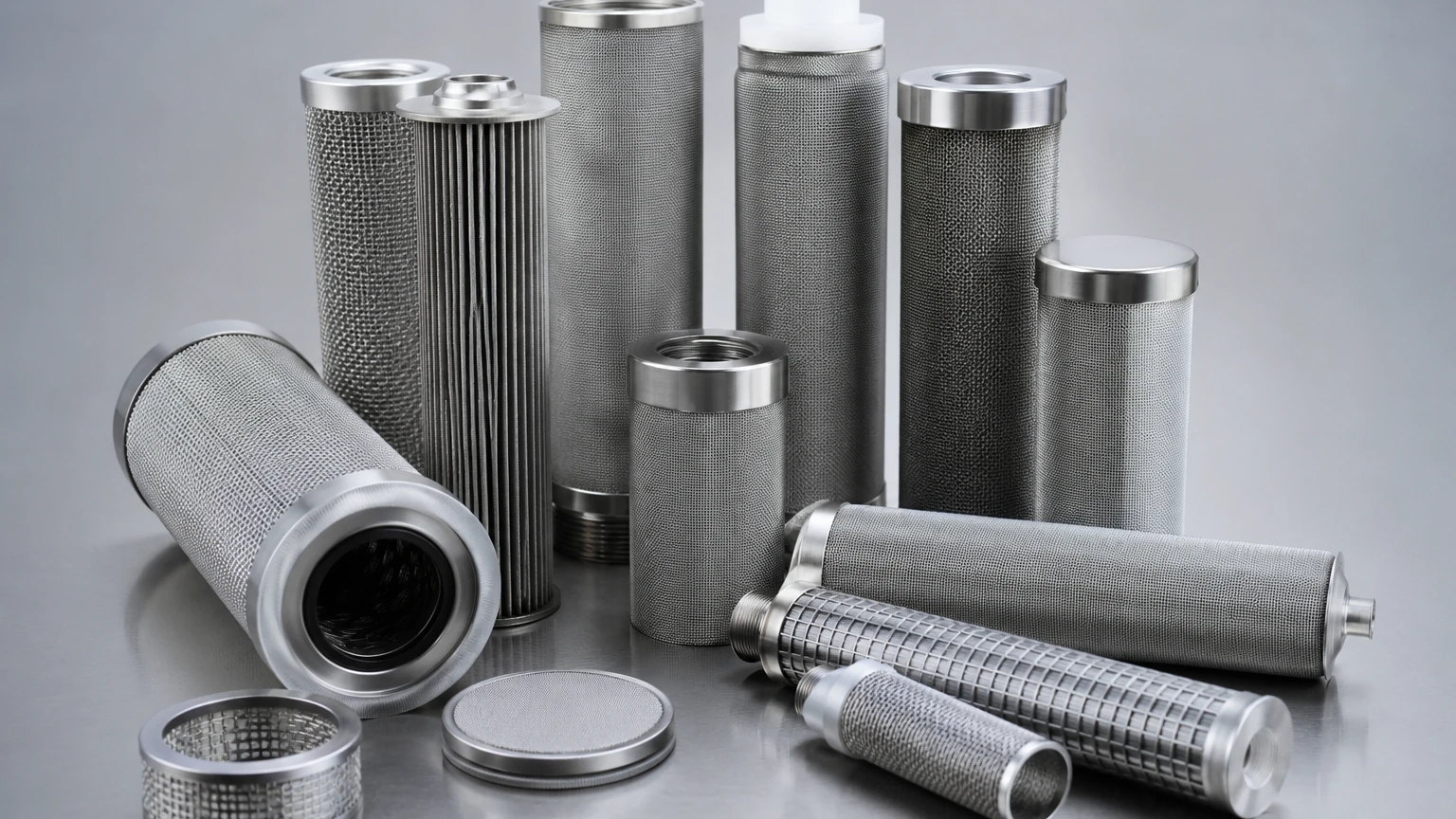
To maximize the intervals between maintenance, increasing the effective filtration area is key. This is often achieved through pleating the stainless steel mesh. Pleated cartridges provide significantly more surface area than cylindrical elements of the same footprint, allowing for higher dirt-holding capacity and lower face velocities.
Common Applications in Industry
The versatility of the process gas filter allows it to be utilized in diverse industrial sectors, each with unique challenges.
* Chemical and Petrochemical: Used for the filtration of catalyst recovery gases, vent gas treatment, and protecting instrumentation from fine particulates in hydrocarbon streams.
* Food and Beverage: Ensuring the sterility of compressed air or CO2 used in packaging and carbonation. Stainless steel filters are ideal here because they can withstand Clean-in-Place (CIP) and Steam-in-Place (SIP) procedures.
* Power Generation: Filtering fuel gas for gas turbines to prevent nozzle plugging and blade erosion. These filters must handle high flow rates and high pressures simultaneously.
* Hydraulic and Pneumatic Systems: Removing moisture and particulates from control gases to prevent valve sticking and seal wear.
Customization and OEM Solutions
Standard off-the-shelf filters rarely meet the precise needs of specialized industrial processes. Customization is often necessary regarding the end-cap configuration, seal materials (such as Viton, PTFE, or EPDM), and the specific weave of the wire mesh.
Kaifil specializes in providing these customized filtration solutions, working closely with engineering teams to develop filter cartridges and components that fit existing housings or meet new system designs. Whether it is a precision-machined metal filter component or a high-capacity pleated wire mesh cartridge, the focus remains on durability and repeatable performance in demanding environments.
Maintenance, Cleaning, and Total Cost of Ownership
One of the most significant advantages of stainless steel process gas filters is that they are often cleanable and reusable. Unlike disposable glass fiber or paper cartridges, stainless steel elements can be cleaned using ultrasonic baths, back-pulsing with gas, or chemical solvent cleaning.
Determining Replacement Cycles
The decision to clean or replace a filter is usually driven by the differential pressure. Once the pressure drop reaches a predetermined limit (the "terminal Delta P"), the element must be serviced. While the initial capital expenditure for a stainless steel filter is higher than for a disposable one, the total cost of ownership (TCO) is often lower over the long term due to the elimination of frequent replacement costs and the reduction in waste disposal.
Risk Mitigation
A common risk in gas filtration is "bypass," where gas flows around the filter media rather than through it due to poor sealing. Ensuring that the filter element has high-quality, precision-engineered end caps and compatible gaskets is essential to prevent this. Furthermore, engineers should confirm the structural collapse pressure of the filter to ensure it can handle system upsets without failing catastrophically.
Conclusion
Selecting a process gas filter is a technical decision that impacts the efficiency, safety, and profitability of industrial operations. By prioritizing high-grade materials like stainless steel and focusing on precise engineering specifications—such as absolute micron ratings and optimized surface area—facilities can ensure their gas streams remain pure and their equipment remains protected.
For those seeking reliable, high-performance filtration components tailored to specific industrial requirements, reviewing technical options and application support is the next logical step in system optimization. To explore the full range of custom stainless steel filtration solutions and engineering capabilities, visit the Main Page for detailed product specifications and manufacturing expertise.
