


Pulse Jet Filter Bags
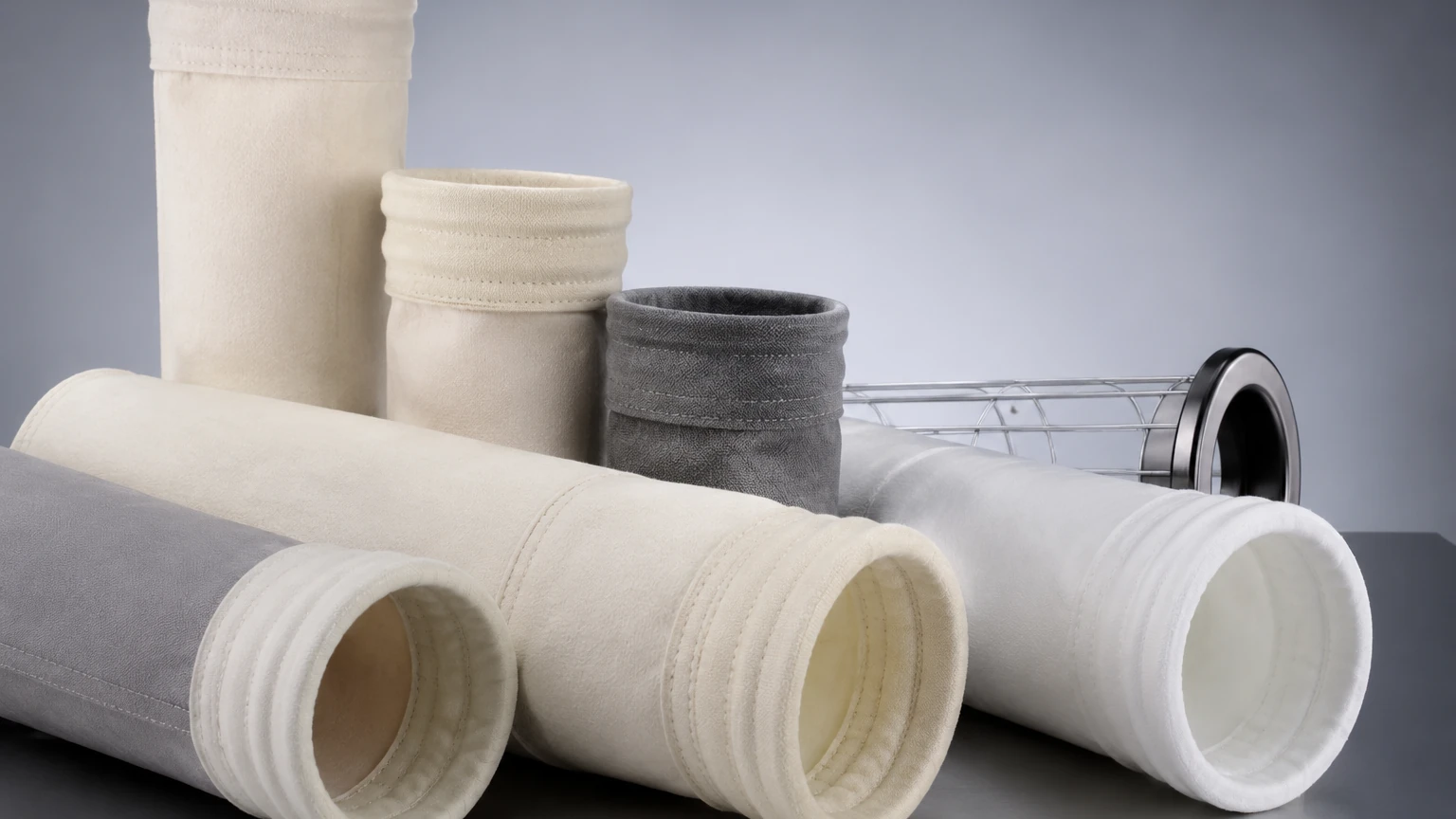
In the landscape of industrial air pollution control, pulse jet dust collectors stand as the most prevalent technology for managing particulate matter across diverse sectors, from cement manufacturing to chemical processing. At the heart of these systems are pulse jet filter bags—critical components engineered to capture airborne contaminants while maintaining high airflow and operational efficiency. For engineers and facility managers, understanding the technical nuances of bag selection, material science, and mechanical compatibility is essential for optimizing system performance and minimizing the total cost of ownership.
Pulse jet systems operate on a high-pressure, low-volume cleaning principle. Unlike shaker or reverse-air systems, pulse jet collectors clean the filter media by injecting a short burst of compressed air down the center of the bag. This creates a shockwave that causes the bag to expand rapidly and then snap back against its support cage, dislodging the accumulated dust cake. Because the cleaning happens while the system remains online, pulse jet filter bags must be exceptionally durable and precisely fitted to withstand constant mechanical stress.
Understanding the Pulse Jet Cleaning Mechanism
The efficacy of pulse jet filter bags is inextricably linked to the physics of the pulse. When compressed air is released through a pulse valve and directed via a blowpipe into the bag, it induces a secondary flow of air through a venturi. This combined air mass travels down the length of the bag, creating a pressure ripple.
From an engineering perspective, the filter bag must possess enough flexibility to expand but sufficient structural integrity to prevent permanent deformation. If the pulse is too weak, the dust cake is not fully removed, leading to a high pressure drop and reduced suction at the source. Conversely, if the pulse is too aggressive or the bag material is poorly matched to the application, the media can suffer from premature mechanical wear or "blinding," where fine particles become deeply embedded in the fabric fibers and cannot be dislodged.
Material Engineering: Selecting the Right Media
Selecting the correct media for pulse jet filter bags is a complex decision involving temperature, chemical environment, and moisture levels. Most industrial filter bags are constructed from needle-punched felts, which provide a three-dimensional filtration matrix. Unlike woven fabrics, needle felts offer higher efficiency and better airflow at lower pressure drops.
Common Synthetic Fibers
1. Polyester: The most common and cost-effective material, suitable for dry applications where temperatures do not exceed 275°F (135°C). It offers excellent dimensional stability and good resistance to most organic solvents.
2. Polypropylene: Used primarily in low-temperature applications (up to 190°F or 88°C) where high chemical resistance to acids and alkalis is required. It is frequently utilized in the chemical and pharmaceutical sectors.
3. Aramids (Nomex®): Essential for high-temperature applications up to 400°F (204°C). Aramids provide excellent abrasion resistance but are susceptible to hydrolysis in the presence of moisture and acidic gases.
4. PPS (Polyphenylene Sulfide): Often used in coal-fired boilers and incinerators, PPS offers superior resistance to acids and alkalis at temperatures up to 375°F (190°C), particularly in high-sulfur environments.
5. PTFE (Teflon®): The "gold standard" for extreme environments. PTFE fibers can withstand temperatures up to 500°F (260°C) and are nearly chemically inert. They are often used as a membrane laminated to other felts to provide surface-loading filtration.
Surface Treatments and Coatings
To enhance performance, pulse jet filter bags often receive specialized treatments. Singeing or glazing the surface helps in dust cake release, while oleophobic and hydrophobic treatments prevent oil and moisture from soaking into the media. For applications involving fine or sticky dust, a PTFE membrane is often applied to the surface. This shifts the filtration from depth-loading to surface-loading, allowing for much higher filtration efficiency and easier cleaning.
The Role of Support Structures and Cages
While the bag performs the filtration, the internal support cage ensures the bag maintains its shape under the negative pressure of the fan. The interaction between the pulse jet filter bags and their cages is a frequent point of failure in industrial systems.
In demanding environments, such as chemical processing or high-temperature steam applications, the material of the cage is just as critical as the bag itself. Stainless steel cages are often preferred for their corrosion resistance and ability to withstand thermal expansion without warping. A poorly manufactured cage with burrs or sharp edges will quickly abrade the interior of the filter bag during the pulse cycle, leading to holes and emission leaks. Precision-engineered metal components, such as those provided by specialists like Kaifil, ensure that the interface between the bag and the cage is seamless, extending the service life of the filter media.
Critical Performance Metrics: Air-to-Cloth Ratio
One of the most vital calculations for any filtration system is the Air-to-Cloth (A/C) ratio, also known as the filtration velocity. This is the ratio of the volume of air entering the dust collector (CFM) to the total square footage of the filter media.
For pulse jet systems, A/C ratios typically range from 3:1 to 6:1, depending on the dust type and loading. A ratio that is too high forces dust particles deep into the fabric, leading to rapid blinding and high differential pressure. Conversely, an oversized system with a very low A/C ratio may be unnecessarily expensive. Engineers must balance the A/C ratio with the "interstitial velocity"—the speed of the air moving between the bags—to ensure that dislodged dust actually falls into the hopper rather than being re-entrained onto an adjacent bag.
Operational Challenges and Failure Analysis
Maintaining pulse jet filter bags requires a proactive approach to monitoring. The primary indicator of bag health is the differential pressure (DP) across the collector. A steady increase in DP over time usually indicates that the bags are reaching the end of their functional life or that the cleaning system is failing.
Common Causes of Bag Failure
* Hydrolysis: In high-temperature environments with moisture, certain fibers (like polyester and Nomex) can undergo a chemical reaction that breaks down the polymer chains, making the bags brittle and prone to tearing.
* Chemical Attack: Exposure to incompatible acids or alkalis can dissolve fibers or weaken the scrim (the internal reinforcement of the felt).
* Abrasion: This can occur at the bottom of the bag due to high-velocity dust entering the inlet, or internally due to a misaligned or corroded cage.
* Thermal Surge: Exceeding the maximum operating temperature of the fiber, even for a short duration, can cause the bags to shrink or melt, effectively sealing off the airflow.
Procurement and Customization: Evaluating Industrial Filtration Solutions
When sourcing pulse jet filter bags, purchasing teams must look beyond the initial unit price. The total cost of ownership includes the energy required to run the fan against the bag's resistance, the cost of compressed air for cleaning, and the labor associated with frequent bag changes.
Customization is often necessary for specialized industrial processes. For instance, in the food and beverage or pharmaceutical industries, filters must meet stringent regulatory standards for material safety. In high-precision hydraulic or chemical applications, the integration of traditional fabric bags with precision metal filter components can provide a multi-stage filtration solution that ensures maximum purity.
Working with a manufacturer that understands both the textile and the mechanical aspects of filtration is essential. For many facilities, the best approach is to consult with experts who can provide a holistic view of the filtration system. You can explore a wide range of industrial filtration components and technical support by visiting the Main Page of the Kaifil website, where engineering expertise meets high-performance manufacturing.
Conclusion
Pulse jet filter bags are more than just consumable items; they are engineered tools designed to perform in some of the harshest industrial environments. By carefully selecting the appropriate fiber, ensuring high-quality cage support, and maintaining optimal operating parameters like the air-to-cloth ratio, facilities can achieve superior air quality and operational reliability. Whether you are dealing with abrasive minerals, corrosive chemicals, or high-temperature flue gases, the right filtration strategy—backed by technical expertise and precision components—is the key to a successful and cost-effective dust collection operation.
