


Radial Flow Settler
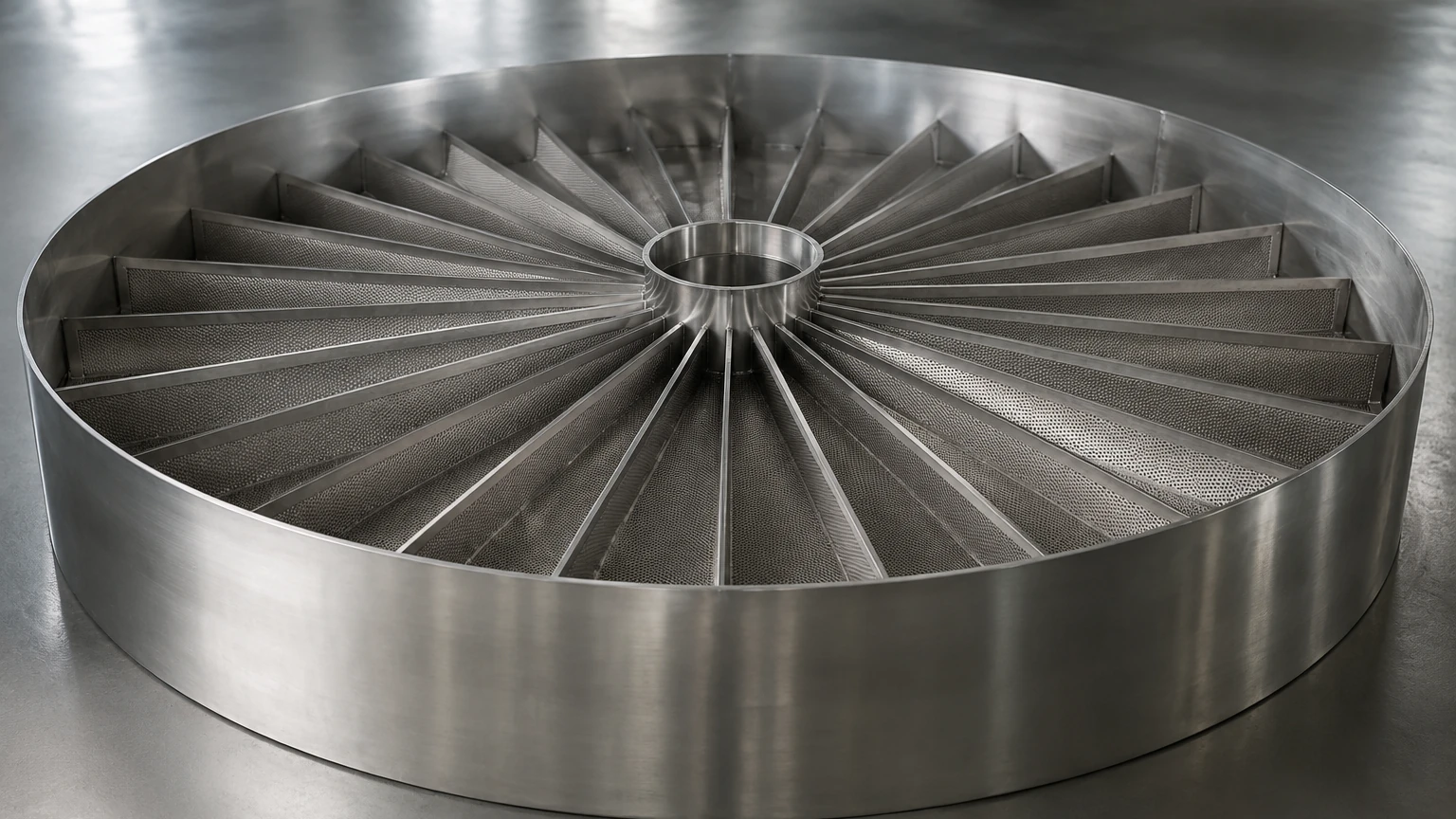
In industrial water treatment and process engineering, the radial flow settler stands as a fundamental component for the separation of suspended solids from liquid streams. Unlike rectangular longitudinal flow basins, a radial flow settler utilizes a circular geometry where the fluid enters at a central point and moves outward toward the periphery. This design leverages the principles of sedimentation by significantly reducing the horizontal velocity of the fluid as it travels toward the outer edge, allowing gravity to pull denser particles to the bottom of the tank.
For engineers and facility managers, understanding the technical nuances of radial flow settlers is essential for optimizing primary treatment stages. While these systems are highly effective at removing bulk solids, their efficiency often dictates the performance and lifespan of downstream precision filtration components, such as the stainless steel wire mesh and filter cartridges found on the Main Page of industrial filtration providers. This article examines the engineering principles, design criteria, and integration strategies necessary for effective radial flow sedimentation.
Understanding the Mechanics of Radial Flow Sedimentation
The core operational principle of a radial flow settler is the continuous reduction of fluid velocity. As the influent enters the center of the circular tank via a feed pipe, it is typically directed into a "stilling well" or center cage. This structure is designed to dissipate the kinetic energy of the incoming fluid and direct the flow downward and then radially outward.
As the fluid moves from the small diameter of the center well toward the much larger circumference of the outer wall, the cross-sectional area through which the fluid flows increases exponentially. According to the continuity equation, this results in a corresponding decrease in radial velocity. When the upward or horizontal velocity components fall below the settling velocity of the target particles (as defined by Stokes' Law), those particles settle onto the floor of the tank.
The floor of a radial flow settler is usually sloped toward the center. A rotating scraper mechanism, often called a clarifier bridge, slowly moves settled sludge toward a central hopper for removal. Meanwhile, the clarified liquid rises and exits the system over a peripheral weir into a collection launder.
Engineering Parameters and Design Criteria
Designing or specifying a radial flow settler requires a rigorous analysis of hydraulic and solids loading. Engineers must balance several critical factors to ensure the system meets discharge or process requirements.
Surface Overflow Rate (SOR)
The Surface Overflow Rate is perhaps the most critical metric in settler design. It is defined as the flow rate divided by the surface area of the tank (typically expressed in m³/m²/day or gpm/ft²). The SOR represents the theoretical settling velocity of the smallest particle that will be 100% removed. If a particle’s settling velocity is lower than the SOR, it may remain suspended and exit with the effluent. For industrial applications involving heavy metal precipitates or dense minerals, SOR values are typically lower than those used in standard municipal wastewater treatment to ensure higher clarity.
Weir Loading Rate
The weir loading rate measures the volume of fluid passing over each unit length of the effluent weir. If this rate is too high, it can create localized high-velocity currents (vortexing) near the periphery, which can pull settled solids back into suspension—a phenomenon known as "carryover." To mitigate this, many radial flow settlers utilize V-notch weirs, which provide more consistent flow control even during fluctuations in influent volume.
Hydraulic Retention Time (HRT)
HRT is the average time a fluid element spends within the settler. While gravity separation is the primary goal, sufficient HRT is required to allow for flocculation (the clumping of smaller particles into larger ones) if chemical coagulants are being used. In industrial processes, HRT typically ranges from two to four hours, depending on the nature of the solids.
The Role of Material Selection in Industrial Settlers
Industrial environments present unique challenges that standard municipal equipment cannot always withstand. Chemical processing, pharmaceutical manufacturing, and food production often involve corrosive fluids, extreme pH levels, or high temperatures. Consequently, the material selection for the internal components of a radial flow settler—such as the stilling well, scraper blades, and effluent launders—is paramount.
Stainless steel is the industry standard for these components due to its superior corrosion resistance and structural integrity. Grade 304 stainless steel is often sufficient for general water treatment, but Grade 316 is preferred in environments containing chlorides or aggressive chemicals. For highly specialized applications, manufacturers may provide custom-engineered components using duplex stainless steel or specialized coatings to prevent pitting and stress corrosion cracking.
Beyond the tank internals, the choice of materials extends to the secondary filtration stages. Once the radial flow settler has removed the bulk of the solids, the remaining fine particulates are often captured by stainless steel filter cartridges or wire mesh screens. These components must match the chemical compatibility of the settler to ensure a cohesive and durable system.
Synergies Between Settlers and Fine Filtration Systems
A radial flow settler is rarely a standalone solution in modern industrial filtration. It typically serves as the "heavy lifter," removing 70% to 90% of Total Suspended Solids (TSS). However, many processes require a level of clarity that sedimentation alone cannot achieve. This is where precision filtration comes into play.
Integrating a radial flow settler with downstream stainless steel wire mesh filters offers several advantages:
1. Reduced Filter Loading: By removing the majority of large and heavy particles in the settler, the solids loading on the secondary filters is significantly reduced. This prevents premature clogging and extends the interval between backwashing or manual cleaning cycles.
2. Protection of Sensitive Equipment: In hydraulic or cooling water systems, even small amounts of carryover from a settler can damage pumps or heat exchangers. High-precision metal filter cartridges provide a final barrier against these risks.
3. Consistency in Effluent Quality: Settlers can be sensitive to hydraulic surges or temperature-induced density currents. Downstream filters act as a buffer, ensuring that the final effluent remains within specification even if the settler experiences a temporary performance dip.
Engineers looking to optimize this synergy should consult technical resources such as the Main Page of specialized manufacturers to select the appropriate micron ratings for secondary stages based on the expected performance of their radial flow settler.
Operational Challenges and Performance Optimization
Despite their robust design, radial flow settlers are subject to several operational risks that can compromise effluent quality. Identifying and mitigating these risks is a key responsibility for technical teams.
Short-Circuiting
Short-circuiting occurs when the influent fluid finds a high-velocity path directly to the effluent weir, bypassing the bulk of the tank's volume. This reduces the effective HRT and leads to poor separation. This is often caused by poorly designed stilling wells or uneven weir levels. Regular leveling of the peripheral weirs is a critical maintenance task.
Density Currents and Thermal Stratification
In large outdoor settlers, temperature differences between the influent and the tank water can create density currents. Warmer (less dense) water may flow across the surface, while colder (denser) water may plunge to the bottom. Both scenarios disrupt the ideal radial flow pattern. In industrial settings, process fluids should be temperature-stabilized where possible before entering the settler.
Sludge Management
If the scraper mechanism fails or if the sludge withdrawal rate is too low, the sludge blanket can build up until it reaches the effluent zone. Conversely, if sludge is withdrawn too quickly, the solids concentration in the waste stream will be too low, increasing the cost of subsequent sludge dewatering. Automated sludge level sensors and variable-frequency drives (VFDs) on scraper motors are common engineering solutions to optimize this balance.
Specifying Custom Filtration Components for Settler Effluent
When a standard radial flow settler cannot meet the stringent requirements of a specific industrial application, customization becomes necessary. This often involves the engineering of custom internal baffles or the integration of specialized filtration media at the effluent stage.
For instance, in the food and beverage industry, the effluent from a settler might need to pass through food-grade stainless steel mesh to ensure no organic clumps proceed to the bottling line. In hydraulic applications, the focus might be on removing abrasive fines that the settler missed.
Customization options for these systems include:
* Variable Mesh Sizes: Tailoring the aperture of the wire mesh to the specific particle size distribution of the process fluid.
* Reinforced Cartridge Designs: Ensuring that filter elements can withstand the pressure differentials common in high-flow industrial lines.
* OEM Compatibility: Designing filtration components that fit seamlessly into existing settler infrastructures or downstream housings.
By working closely with manufacturers who specialize in custom stainless steel solutions, engineers can ensure that every component—from the radial flow settler's weir to the final polishing filter—is optimized for the specific chemical and physical demands of their application.
Conclusion
The radial flow settler remains a cornerstone of industrial separation technology due to its simplicity, reliability, and ability to handle high volumes of solids. However, its effectiveness is not purely a product of its size, but of the precision in its design parameters and the quality of its construction materials.
For technical professionals, the goal is to view the radial flow settler as part of a comprehensive filtration strategy. By understanding the relationship between primary sedimentation and secondary fine filtration, and by specifying high-quality stainless steel components, facilities can achieve superior water clarity, protect downstream assets, and minimize total cost of ownership. For further technical specifications on the filtration components that support these systems, visiting the Main Page offers a gateway to advanced industrial solutions.
