


Reticulated Pu Foam
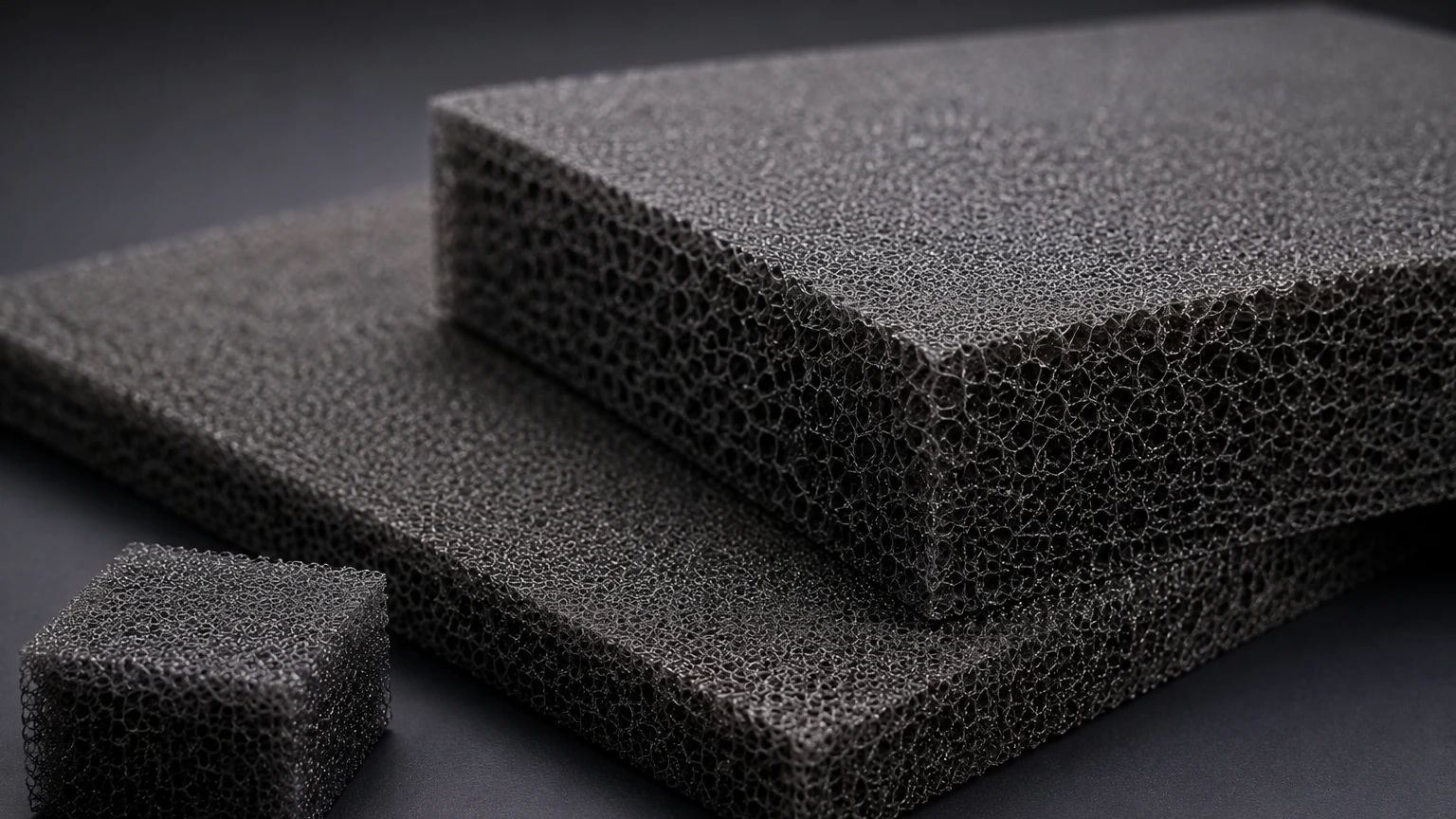
In the landscape of industrial filtration and fluid management, reticulated polyurethane (PU) foam serves as a versatile, open-cell material engineered for high permeability and low pressure drop. Unlike standard flexible polyurethane foams, which contain a mix of intact cell membranes and skeletal strands, reticulated foam undergoes a specific manufacturing process to remove these membranes. The result is a purely skeletal structure that offers approximately 97% void space, making it an ideal medium for air and liquid filtration, acoustic damping, and controlled fluid distribution.
For engineers and procurement teams, understanding the technical nuances of reticulated PU foam is essential when designing filtration stages or selecting pre-filter components. While Kaifil specializes in high-precision stainless steel filtration solutions, reticulated foam often serves as a complementary primary stage in complex industrial systems. This guide examines the engineering properties, manufacturing methods, and selection criteria necessary for integrating reticulated PU foam into industrial applications.
Understanding the Structure of Reticulated Polyurethane Foam
The defining characteristic of reticulated PU foam is its "open-cell" architecture. In standard foam production, the chemical reaction creates millions of tiny bubbles or cells. Most of these cells are closed or partially closed by thin polymer membranes. Reticulation is the post-processing step that eliminates these windows, leaving only the dodecahedron-like skeletal framework.
This skeletal structure provides several functional advantages in a B2B context:
* High Surface Area: The intricate network of strands provides a significant surface area for particle impingement without blocking the flow of the medium.
* Low Flow Resistance: Because the membranes are removed, air and liquids can pass through the foam with minimal resistance, which is critical for maintaining system efficiency in HVAC and compressor applications.
* Uniformity: High-quality reticulated foam maintains a consistent pore size across the entire block, ensuring predictable filtration performance and pressure drop characteristics.
The Reticulation Process: Thermal vs. Chemical Methods
Industrial reticulated PU foam is produced using two primary methods, each affecting the final physical properties of the material. Engineers must specify the method based on the required durability and cleanliness of the application.
Thermal Reticulation (Zapping)
Thermal reticulation involves placing a block of foam in a vacuum pressure vessel filled with a combustible gas mixture (typically hydrogen and oxygen). Upon ignition, a controlled flash flame sweeps through the foam. The heat is sufficient to melt the thin, high-surface-area membranes but is not enough to damage the thicker skeletal strands. This process is highly efficient and results in a very clean, "zapped" foam with no residual chemical byproducts.
Chemical Reticulation (Quenching)
Chemical reticulation involves running the foam through a caustic bath (typically a sodium hydroxide solution). The chemical reaction dissolves the cell membranes. While effective, this method requires thorough rinsing and drying to ensure no caustic residue remains. Chemical reticulation is sometimes preferred for specific foam types that may not react well to the high heat of the thermal process, though thermal reticulation remains the industry standard for high-purity filtration needs.
Key Technical Parameters: PPI and Porosity
When specifying reticulated PU foam, the most critical metric is Pores Per Inch (PPI). This measurement defines the coarseness or fineness of the foam and directly dictates its filtration efficiency and pressure drop.
* 10 to 30 PPI (Coarse): Typically used as pre-filters for large particulate matter, such as heavy dust or insects in automotive air intakes. These offer the lowest pressure drop and are often used in conjunction with more permanent solutions found on the Main Page for multi-stage filtration.
* 45 to 70 PPI (Medium): Common in general HVAC applications, small engine air cleaners, and as a support medium for specialized coatings.
* 80 to 100+ PPI (Fine): Used for fine dust filtration, medical devices, and acoustic damping. These grades provide higher capture efficiency but require more frequent monitoring of pressure differentials.
It is important to note that PPI is not the same as density. Density refers to the weight of the polymer per cubic foot, while PPI refers to the geometric structure. An engineer can specify a high-density foam with a low PPI to achieve a filter that is physically robust yet highly permeable.
Chemical Compatibility: Polyester vs. Polyether PU Foam
One of the most common points of failure in industrial filter selection is the misapplication of foam base chemistry. Reticulated PU foam is generally available in two chemical families: Polyester and Polyether.
Polyester-Based Foam
Polyester PU foam offers superior mechanical strength and resistance to hydrocarbons, oils, and fuels. It is the preferred choice for automotive filtration, gasket applications, and environments where the foam will come into contact with petroleum-based lubricants. However, polyester foam is susceptible to hydrolysis—it will degrade and eventually crumble if exposed to high humidity and heat over long periods.
Polyether-Based Foam
Polyether PU foam is engineered for moisture resistance. It is highly stable in aqueous environments and is the standard for water treatment, outdoor equipment, and medical applications where humidity is a factor. While it has slightly lower physical strength and less resistance to certain oils compared to polyester, its longevity in wet environments makes it indispensable for many industrial processes.
Industrial Applications and Filtration Roles
Reticulated PU foam serves several distinct roles across various sectors, often acting as the first line of defense in a broader filtration strategy.
1. Air and Gas Filtration: In air compressors and HVAC systems, reticulated foam captures large airborne contaminants before they reach high-efficiency secondary filters. This extends the life of more expensive components, such as stainless steel mesh or HEPA filters.
2. Fluid Management: In hydraulic systems and fuel tanks, reticulated foam acts as a baffle to prevent sloshing and as a coarse filter to remove large debris from the fluid stream.
3. Acoustic Damping: The open-cell structure is excellent at trapping sound waves, making it a common choice for lining equipment enclosures to reduce operational noise.
4. Coalescing: In oil-mist separators, the foam provides a surface for fine droplets to collide and grow into larger drops that can be drained away.
Integrating Foam with Stainless Steel Filtration Systems
In heavy industrial environments, such as chemical processing or high-temperature manufacturing, reticulated PU foam is often used as a consumable pre-filtration layer. While stainless steel filters from Kaifil provide the ultimate durability and precision required for final-stage filtration, using a low-cost foam pre-filter can significantly reduce the cleaning frequency and wear on the metal components.
For example, in a water treatment plant, a 30 PPI polyether foam might remove large organic debris, while a custom-engineered stainless steel cartridge ensures the removal of fine particulates down to specific micron ratings. This hybrid approach optimizes the total cost of ownership by protecting the permanent filtration assets with easily replaceable foam inserts.
Engineering Considerations for Filter Selection
When evaluating reticulated PU foam for a new project, engineers should confirm the following technical specifications with their supplier:
* Face Velocity: What is the speed of the air or liquid passing through the filter? High face velocities may require a more rigid foam or a support structure to prevent deformation.
* Target Particle Size: Using the PPI rating, determine if the foam can capture the required particle size or if it is intended only as a sacrificial pre-filter.
* Environmental Exposure: Will the filter be exposed to UV light, ozone, or specific industrial solvents? While PU foam is versatile, it may require additives for UV stabilization or specialized polymer formulations for extreme chemical resistance.
* Operating Temperature: Most PU foams have a maximum continuous operating temperature around 200°F (93°C). For applications exceeding this, metal filtration solutions are typically required.
Maintenance, Durability, and Total Cost of Ownership
One of the primary advantages of reticulated PU foam in a B2B setting is its washability. Unlike paper or fiberglass media, many grades of reticulated foam can be cleaned with water or mild detergents and reused multiple times. This is particularly true for coarse PPI grades used in dust collection.
However, the decision to clean versus replace should be based on a cost-benefit analysis. In many high-volume industrial settings, the labor cost of cleaning the foam exceeds the replacement cost. Furthermore, repeated cleaning can eventually fatigue the skeletal strands, leading to a loss of structural integrity. For critical applications where zero bypass is required, a scheduled replacement cycle is usually recommended.
By carefully selecting the PPI, base chemistry, and reticulation method, engineers can leverage reticulated PU foam to improve system reliability and filtration efficiency. For more advanced filtration needs involving high temperatures, high pressures, or extreme chemical environments, exploring precision metal components on the Main Page will provide the necessary technical alternatives to polymer-based media.
