


Rotary Screen Wastewater
In the landscape of industrial and municipal water treatment, the primary screening phase is arguably the most critical stage for protecting downstream equipment and ensuring process efficiency. Rotary screens serve as the "first line of defense" in these systems. When managing rotary screen wastewater applications, engineers must balance hydraulic capacity, solids loading, and material durability to achieve a sustainable filtration outcome.
As a specialized manufacturer of stainless steel filtration solutions, Kaifil understands that the performance of a rotary screen is dictated by the precision of its filter media and the structural integrity of its drum. This article provides a technical overview of rotary screen technology, material considerations, and the engineering variables that influence selection for demanding wastewater environments.
The Role of Rotary Screens in Industrial Wastewater Treatment
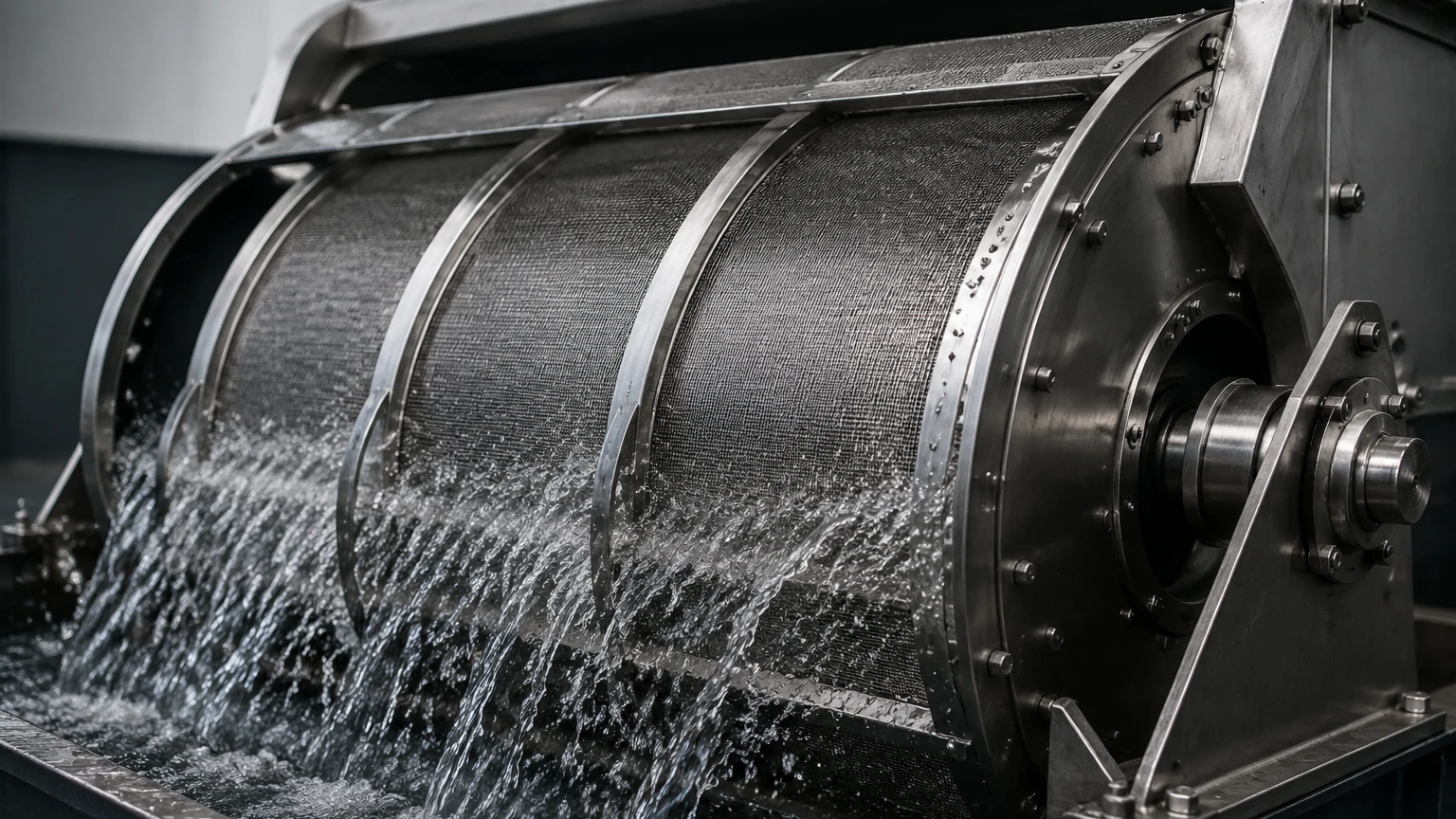
Rotary screens are mechanical self-cleaning filters designed to remove suspended solids from liquid streams. In the context of rotary screen wastewater management, these units are typically employed in the preliminary treatment stage. Their primary function is to remove large debris, fibers, and inorganic materials that could otherwise clog pumps, damage heat exchangers, or interfere with biological treatment processes.
Unlike static screens, which are prone to blinding (clogging) and require manual intervention, rotary screens utilize continuous rotation and integrated cleaning mechanisms. This makes them ideal for high-volume applications where downtime is not an option. By significantly reducing the Total Suspended Solids (TSS) and Biochemical Oxygen Demand (BOD) associated with particulate matter, rotary screens lower the operational burden on the entire treatment plant.
Mechanical Principles of Rotary Screen Operation
There are two primary configurations for rotary screens used in wastewater: external feed and internal feed. The choice between these depends on the nature of the solids and the available hydraulic head.
External Feed Rotary Screens
In an external feed system, the influent wastewater is pumped or gravity-fed into a headbox, which distributes the flow over the exterior surface of the rotating drum. The liquid passes through the screen media to the interior of the drum and exits through the bottom, while the captured solids remain on the outer surface. As the drum rotates, a scraper blade (doctor blade) or a discharge chute removes the accumulated solids.
Internal Feed Rotary Screens
Internal feed screens receive wastewater into the center of the rotating drum. The liquid is forced outward through the screen media by gravity or pressure. The solids are trapped on the internal surface and are moved toward the discharge end of the drum by internal flights or the natural tilt of the cylinder. This configuration is often preferred for applications involving high concentrations of fats, oils, and grease (FOG), as the internal environment can be more easily contained and cleaned with high-pressure spray bars.
Material Engineering: The Case for Stainless Steel
The environment within a wastewater treatment plant is inherently corrosive and abrasive. Selecting the correct material for the screen media is vital for long-term performance. While plastic or coated carbon steel components may offer lower initial costs, they rarely withstand the mechanical stresses and chemical exposure found in industrial rotary screen wastewater applications.
Stainless Steel 304 vs. 316L
Stainless steel is the industry standard for rotary screen drums. Grade 304 offers excellent strength and basic corrosion resistance suitable for many municipal applications. However, for industrial wastewater containing chlorides, acidic cleaners, or aggressive chemical byproducts—common in the chemical processing and pharmaceutical industries—Grade 316L is required. The addition of molybdenum in 316L provides superior resistance to pitting and crevice corrosion.
Wedge Wire vs. Woven Wire Mesh
Kaifil specializes in custom stainless steel filtration components, where the choice between wedge wire and woven mesh is a frequent engineering decision.
* Wedge Wire (Profile Wire): This is the most common media for rotary screens. The V-shaped profile of the wire creates a slot that widens inwardly. This design ensures that any particle small enough to pass the surface will continue through without getting wedged in the opening. It provides high structural rigidity and is exceptionally easy to clean.
* Woven Wire Mesh: For applications requiring extremely fine filtration (below 200 microns), stainless steel woven wire mesh may be used. While it offers a higher open area, it is more delicate than wedge wire and typically requires a support grid to withstand the hydraulic pressure of a rotary screen.
Optimizing Performance for Rotary Screen Wastewater Applications
To ensure a rotary screen operates at peak efficiency, engineers must evaluate several interconnected variables during the design and procurement phase.
Hydraulic Loading and Headloss
Headloss refers to the reduction in total head (pressure) as the liquid passes through the screen. Excessive headloss can lead to bypassing or overflowing. Engineers must calculate the hydraulic loading rate based on the peak flow of the facility, not just the average flow. The open area of the screen media—determined by the slot width and wire size—directly impacts the allowable flow rate.
Solids Loading and Capture Efficiency
The concentration and type of solids in the rotary screen wastewater significantly affect the drum's rotation speed and cleaning frequency. Fibrous solids (like those found in pulp and paper or textile plants) tend to mat, requiring more aggressive cleaning. In contrast, granular solids (like sand or grit) are more abrasive and may require hardened screen surfaces or specific drum alloys to prevent premature wear.
Cleaning Mechanisms
Self-cleaning is a hallmark of rotary screens. This is usually achieved through a combination of:
1. Internal Spray Bars: High-pressure nozzles located inside the drum (for external feed) or outside the drum (for internal feed) that blast particles off the screen.
2. Scraper Blades: Precision-machined blades that maintain constant contact with the drum surface to peel away the "filter cake."
3. Backwashing: Utilizing the screened effluent to wash the media from the reverse side.
Industry-Specific Applications
Different industries present unique challenges for rotary screen wastewater systems. Understanding these nuances is essential for selecting the right custom filtration solution.
Food and Beverage Processing
In meat processing, poultry, and dairy plants, wastewater contains high levels of proteins and fats. These substances can quickly blind a screen if they cool and solidify. Rotary screens in these sectors often incorporate hot water or steam-jacketed spray bars to keep the fats in a liquid state until they are separated from the screen media.
Pulp and Paper Industry
The primary goal here is often fiber recovery. Rotary screens allow the plant to capture valuable cellulose fibers from the whitewater stream, which can then be recycled back into the production process. This not only reduces waste but also provides a direct return on investment.
Chemical and Pharmaceutical
In these sectors, the wastewater may be highly acidic or alkaline. The filtration components must be manufactured with high-precision tolerances to ensure that fine chemical precipitates are captured effectively. For more information on specialized filtration components for these demanding environments, you can visit the Main Page of our technical resource site.
Selection Criteria: What Engineers Should Confirm
Before finalizing a specification for a rotary screen or replacement filtration components, procurement teams and engineers should confirm the following data points with their manufacturer:
1. Influent Characteristics: What is the maximum TSS, and are there significant concentrations of FOG or corrosive chemicals?
2. Micron Rating vs. Flow Rate: Is the required filtration accuracy (slot size) compatible with the required peak hydraulic flow?
3. Space Constraints: Does the site allow for the footprint of a large external feed unit, or is a more compact internal feed unit necessary?
4. Operational Costs: What is the water consumption for the spray bars, and what is the expected lifespan of the screen media before replacement is required?
5. Customization Requirements: Are there specific OEM dimensions or mounting configurations needed to fit into existing infrastructure?
Maintenance and Total Cost of Ownership
While the initial purchase price of a rotary screen is a significant factor, the Total Cost of Ownership (TCO) is driven by maintenance and durability. Stainless steel components from a specialized manufacturer like Kaifil are designed to minimize TCO by extending the interval between screen replacements.
Regular maintenance should include the inspection of the doctor blade for wear, checking the alignment of the spray nozzles, and monitoring the drive motor's power draw. A sudden increase in power consumption often indicates that the screen is partially blinded or that there is mechanical resistance in the drum bearings. By addressing these issues early, facilities can avoid catastrophic failures that lead to untreated wastewater discharge and potential regulatory fines.
Conclusion
Rotary screen wastewater systems are essential for modern industrial efficiency. By effectively removing solids at the start of the treatment chain, these systems protect downstream assets and optimize the performance of biological and chemical treatment stages. Success in these applications depends on the precise engineering of the screen media, the selection of appropriate stainless steel grades, and a deep understanding of the specific wastewater profile.
For engineers and purchasing managers looking to optimize their filtration processes, partnering with a manufacturer that provides customized, high-performance stainless steel components is the most reliable path to operational excellence. To review specific product options and application support for your filtration needs, visit the Main Page for a comprehensive overview of our capabilities.
