


Rvdf
In the landscape of industrial solid-liquid separation, the Rotary Vacuum Drum Filter (RVDF) remains one of the most reliable and widely utilized technologies for continuous processing. Designed to handle large volumes of slurry with varying solids concentrations, the efficiency of an rvdf system is fundamentally dependent on the integrity and precision of its filtration media. For engineers and procurement specialists, understanding the technical nuances of these systems—from vacuum dynamics to the selection of stainless steel mesh—is critical for optimizing throughput and minimizing downtime.
As a specialized manufacturer of custom stainless steel filtration solutions, Kaifil provides the precision-engineered components that allow these systems to operate in demanding environments. Whether the application involves chemical processing, pharmaceutical manufacturing, or food production, the choice of filter media directly impacts the total cost of ownership and the quality of the final filtrate.
Understanding the Fundamentals of Rotary Vacuum Drum Filters (RVDF)
The rvdf operates on the principle of pressure differential. The system consists of a large horizontal drum covered with a filter medium, partially submerged in a vat containing the slurry. As the drum rotates, a vacuum is applied to the interior, drawing the liquid (filtrate) through the filter medium while the solids are retained on the surface to form a "cake."
The process cycle of an rvdf is typically divided into several distinct zones:
1. Cake Formation Zone: The submerged portion of the drum where the vacuum pulls the initial layer of solids onto the filter surface.
2. Cake Washing and Drying Zone: As the drum emerges from the vat, the vacuum continues to pull air or wash liquid through the cake to remove impurities and reduce moisture content.
3. Discharge Zone: The point where the accumulated cake is removed from the drum surface using various mechanisms such as scrapers, rollers, or string discharges.
4. Cloth Cleaning Zone: The segment where the filter media is cleaned (often via spray bars) before re-entering the slurry vat.
Maintaining a consistent vacuum and ensuring the structural integrity of the drum surface are paramount. Any failure in the filter media can lead to "bypass," where solids contaminate the filtrate, or "blinding," where the pores become permanently blocked, halting production.
The Critical Role of Stainless Steel Filter Media in RVDF Operations
While traditional rvdf systems often utilized fabric cloths, modern industrial requirements for durability and chemical resistance have shifted the focus toward stainless steel wire mesh and precision metal components. Stainless steel offers several engineering advantages that fabric cannot match, particularly in high-temperature or corrosive environments.
Durability and Mechanical Strength
Stainless steel mesh provides the structural rigidity necessary to withstand the constant pressure differentials of vacuum filtration. Unlike synthetic fibers, metal mesh does not stretch or sag over time, ensuring a consistent pore size and predictable filtration performance. This is especially important in large-diameter drums where the mechanical load on the filter surface is significant.
Thermal and Chemical Resistance
In chemical processing and pharmaceutical applications, the slurry may contain aggressive solvents or be processed at elevated temperatures. Stainless steel (specifically grades like 304, 316L, or 904L) provides the necessary corrosion resistance to prevent premature failure of the filter media. For technical professionals evaluating these components, the Main Page of the Kaifil website offers detailed insights into material selection and customization for specific industrial environments.
Precision Pore Geometry
The manufacturing of stainless steel wire mesh allows for incredibly precise control over pore size and distribution. Whether the application requires a coarse separation or fine filtration down to several microns, metal mesh provides a stable geometry that ensures reliable particle retention.
Engineering Considerations for Selecting RVDF Filtration Components
Selecting the right filtration media for an rvdf is not a one-size-fits-all process. Engineers must evaluate several variables to ensure the component is compatible with both the equipment and the process fluid.
Micron Rating and Permeability
The micron rating defines the size of the particles the mesh will retain. However, engineers must also consider permeability—the rate at which liquid can pass through the mesh. A mesh that is too fine may lead to rapid blinding and low throughput, while a mesh that is too coarse will result in poor filtrate quality. Balancing these two factors requires an analysis of the particle size distribution (PSD) of the slurry.
Weave Types
The style of the weave significantly affects the performance of the rvdf. Common weaves include:
* Plain Weave: Offers high flow rates and is easy to clean, suitable for larger particle sizes.
* Twilled Weave: Allows for a heavier wire diameter in a given mesh count, providing increased strength.
* Dutch Weave (Plain and Twilled): Provides a tortuous path for the fluid, offering superior filtration accuracy and high mechanical strength, often used for fine filtration in vacuum systems.
Surface Finish and Cake Release
The ease with which the filter cake is discharged from the drum is a major factor in operational efficiency. A smooth surface finish on the stainless steel mesh reduces the adhesion between the cake and the media, facilitating a cleaner discharge and reducing the frequency of manual cleaning cycles.
Performance Optimization: Managing Cake Formation and Discharge
The efficiency of an rvdf is often measured by the dry weight of the cake produced per unit of time. To optimize this, the interaction between the vacuum level, drum rotation speed, and filter media must be finely tuned.
Vacuum Levels and Air Flow
If the vacuum is too high, the cake may become too compressed, increasing the resistance to flow and making washing difficult. Conversely, if the vacuum is too low, the cake may not adhere properly to the drum. High-quality stainless steel mesh ensures that the air and liquid flow are distributed evenly across the entire surface of the drum, preventing localized "hot spots" where the vacuum might pull through unevenly.
Discharge Mechanisms
The method of cake removal—whether it is a scraper blade, a roller, or a blow-back system—must be compatible with the filter media. For example, when using a scraper discharge, the stainless steel mesh must be perfectly flat and securely fastened to the drum to prevent the blade from catching and tearing the metal surface. Precision-manufactured components from Kaifil are designed to meet these tight tolerances, ensuring long-term reliability.
Maintenance and Durability of Metal Mesh in RVDF Systems
One of the primary drivers for moving to stainless steel components in rvdf systems is the reduction in maintenance costs. While the initial investment in metal mesh may be higher than fabric, the total cost of ownership is often much lower due to the extended service life.
Cleaning Protocols
Stainless steel filter media are highly amenable to Clean-in-Place (CIP) systems. They can withstand high-pressure water jets, steam sterilization, and aggressive chemical cleaning agents that would degrade synthetic materials. This is particularly vital in the food and beverage and pharmaceutical industries, where hygiene and cross-contamination prevention are mandatory.
Inspection and Replacement Cycles
Regular inspection of the drum surface is necessary to identify signs of fatigue, such as wire breakage or mesh displacement. Because stainless steel is resistant to the "blinding" common in fabrics, the replacement cycles are significantly longer. When replacement is eventually required, using high-precision OEM or custom-designed components ensures that the system returns to its peak operating efficiency without the need for extensive field modifications.
Customization and OEM Solutions for Industrial Filtration Needs
Every industrial process has unique requirements, and standard off-the-shelf filtration components often fall short of providing the necessary performance for specialized rvdf applications. Customization is the hallmark of effective industrial filtration.
Kaifil specializes in developing tailored solutions that address specific engineering challenges. This includes:
* Custom Dimensions: Manufacturing filter mesh and support structures that fit specific drum diameters and widths perfectly.
* Alloy Selection: Providing specialized alloys for extreme pH environments or high-salinity slurries.
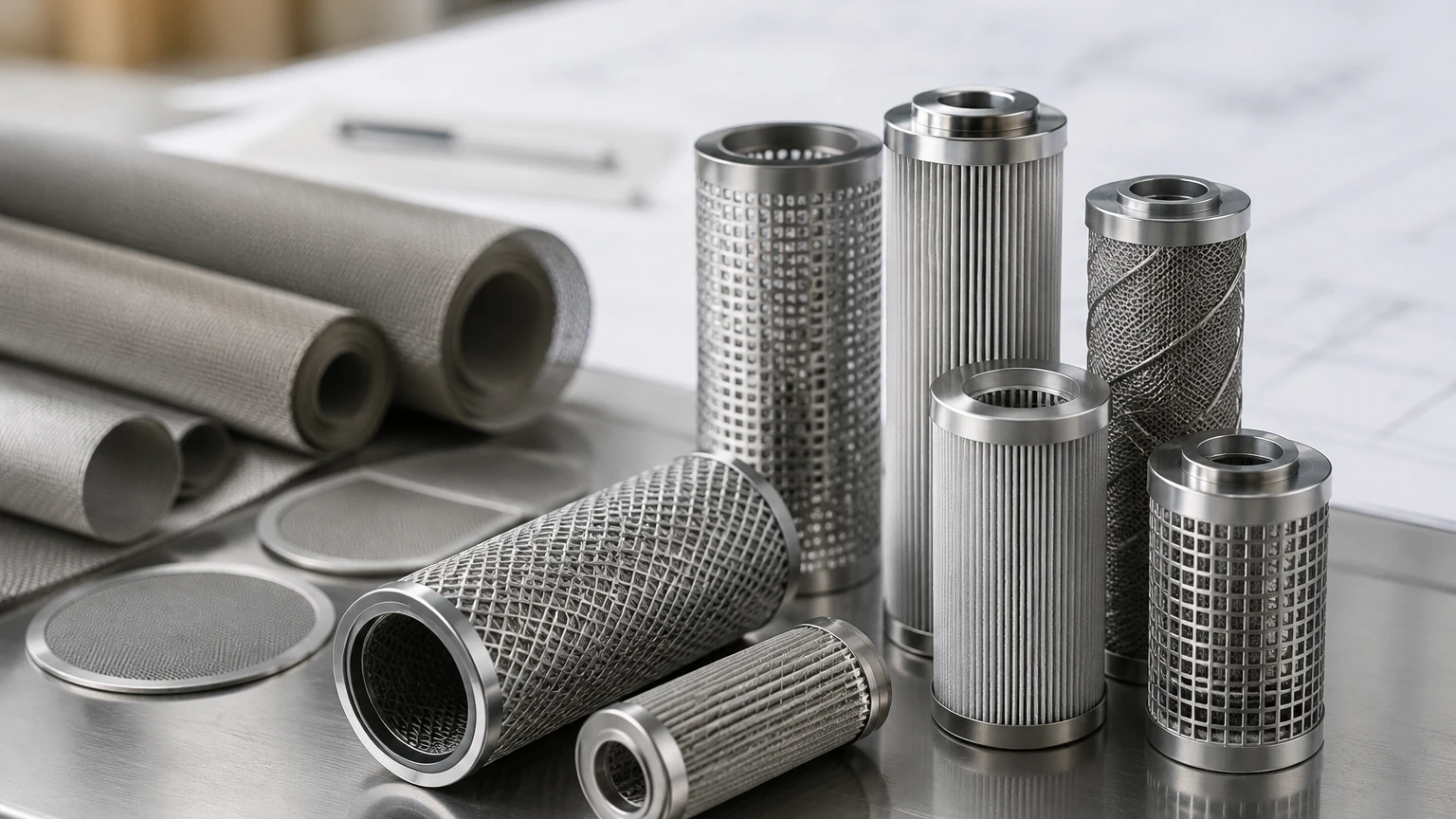
* Integrated Components: Developing multi-layer sintered mesh or reinforced filter cartridges that combine the benefits of different mesh types into a single, high-strength component.
For purchasing teams and engineers looking to upgrade their existing systems or specify components for new installations, the Main Page serves as a technical resource for exploring the full range of manufacturing capabilities available. By focusing on precision and durability, Kaifil helps industrial operators achieve higher filtrate purity and more efficient solid-liquid separation.
Conclusion
The rvdf remains a cornerstone of continuous industrial filtration, but its success is inextricably linked to the quality of its internal components. Stainless steel wire mesh and precision metal filters provide the mechanical strength, chemical resistance, and filtration accuracy required to handle modern industrial slurries. By selecting high-performance components and considering the specific engineering requirements of the application—such as weave type, micron rating, and material grade—operators can significantly improve the reliability and efficiency of their filtration processes. As a partner in industrial excellence, Kaifil continues to deliver the custom filtration solutions that power these essential systems across the globe.
