


Screening Treatment of Water
In industrial water management, the screening treatment of water serves as the critical first stage of physical separation. It is the primary defense mechanism designed to remove large solids, debris, and suspended particulates from raw water or process streams before they reach downstream equipment. For engineers and facility managers, selecting the correct screening technology is not merely a matter of filtration; it is a strategic decision that impacts the longevity of pumps, the efficiency of heat exchangers, and the overall operational stability of the entire treatment plant.
Industrial screening is categorized by the size of the openings and the method of cleaning. Whether dealing with intake water from a river, recirculating cooling water, or treating industrial effluent, the effectiveness of the screening process determines the frequency of maintenance and the risk of catastrophic equipment failure. As a manufacturer specializing in custom stainless steel filtration solutions, Kaifil emphasizes that the engineering of these components must account for hydraulic load, material compatibility, and the specific physical characteristics of the contaminants.
The Role of Screening in Industrial Water Processes
The primary objective of the screening treatment of water is to protect subsequent treatment units. In a typical industrial sequence, screening precedes processes such as sedimentation, flocculation, or membrane filtration (like Reverse Osmosis). Without robust screening, large debris can cause mechanical damage to pump impellers, clog spray nozzles, or prematurely blind expensive fine-filtration membranes.
In sectors such as chemical processing and food and beverage production, screening is also used for product recovery or the removal of process by-products. For instance, in a pulp and paper mill, screens are vital for recovering fibers from process water. In the pharmaceutical industry, high-precision metal screens ensure that raw water used for cooling or initial cleaning steps is free from particulates that could compromise sterile environments. By removing the bulk of the solids at the beginning, the screening stage significantly reduces the chemical and biological load on later stages, leading to lower operational costs.
Classification of Screening Technologies
Screening equipment is generally classified into three categories based on the size of the aperture: coarse, fine, and micro-screening.
Coarse Screening
Coarse screens, often referred to as trash racks, typically have openings larger than 6mm (0.25 inches). These are used at the very beginning of a water intake system to stop large objects like branches, plastic waste, and stones. These screens are often made from heavy-duty stainless steel bars designed to withstand significant hydraulic impact and debris load.
Fine Screening
Fine screens have openings ranging from 0.5mm to 6mm. This is where precision engineering becomes critical. Technologies such as wedge wire screens or perforated metal plates are common here. Fine screening is essential for protecting sensitive downstream components like high-pressure pumps and fine-mesh filters. The choice between a wedge wire design and a standard woven wire mesh depends on the nature of the solids; wedge wire is particularly effective for non-clogging performance due to its V-shaped profile.
Micro-Screening
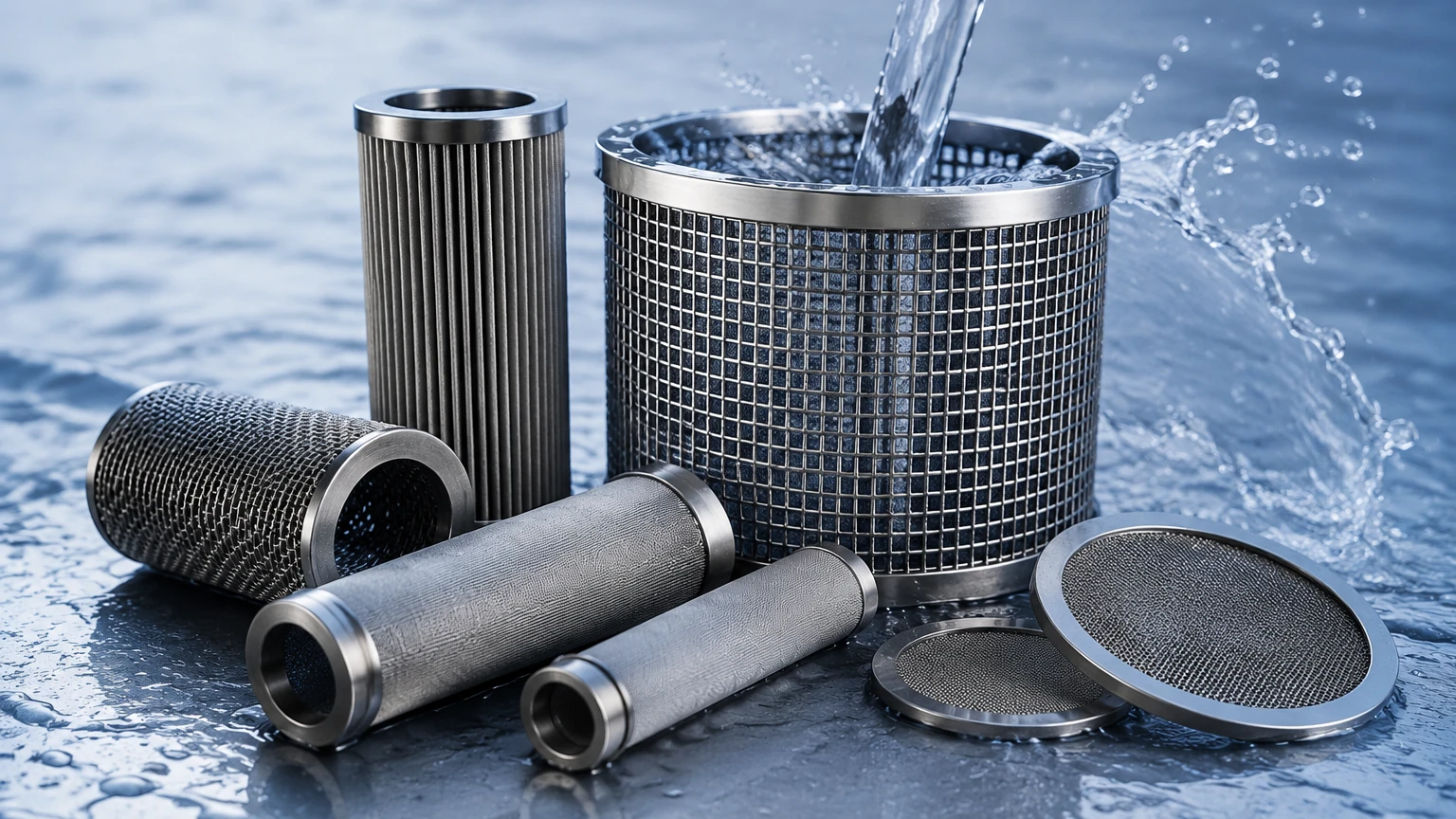
Micro-screening involves apertures smaller than 0.5mm. These are often used in tertiary treatment or for specific industrial water recycling loops. At this level, the screen acts more like a filter, capturing fine silt and organic fibers. Stainless steel filter cartridges and precision-woven wire mesh are the standard materials here, providing the necessary structural integrity to handle the higher pressure drops associated with smaller pore sizes.
Engineering Considerations for Screen Selection
When specifying a system for the screening treatment of water, engineers must evaluate several technical parameters to ensure the system performs reliably over its intended lifespan.
1. Hydraulic Loading and Velocity
The approach velocity—the speed at which water reaches the screen—must be carefully managed. If the velocity is too high, solids can be forced through the screen openings (extrusions) or become deeply embedded, making cleaning difficult. Conversely, if the velocity is too low, solids may settle in the channel before reaching the screen. Typically, an approach velocity of 0.6 to 0.9 meters per second (m/s) is targeted for mechanical screens.
2. Head Loss and Pressure Drop
Head loss is the difference in water level (or pressure) between the upstream and downstream sides of the screen. As the screen accumulates debris, the head loss increases. Engineers must calculate the maximum allowable head loss to prevent structural failure of the screen and to ensure that the pump system can maintain the required flow rate. Utilizing high-open-area designs, such as those found on the Main Page of professional filtration manufacturers, can help minimize initial pressure drop.
3. Aperture Shape and Open Area
The "open area" is the percentage of the total screen surface that allows water to pass. A higher open area reduces head loss and increases the time between cleaning cycles. However, the shape of the aperture (round, square, or slotted) must be matched to the shape of the particles being removed. For example, slotted openings are superior for removing elongated or fibrous materials that might otherwise pass through a square mesh.
Material Integrity: The Case for Stainless Steel
In industrial screening treatment of water, material selection is the most significant factor in determining the Total Cost of Ownership (TCO). While plastic or carbon steel screens may have lower initial costs, they often fail under the mechanical stresses and corrosive environments typical of industrial water treatment.
Stainless steel, particularly grades 304 and 316L, is the industry standard for several reasons:
* Corrosion Resistance: Industrial water often contains chlorides, chemicals, or varying pH levels. 316L stainless steel provides superior resistance to pitting and crevice corrosion, especially in saltwater or chemical-heavy applications.
* Structural Strength: Screens must withstand the weight of accumulated debris and the force of flowing water. Stainless steel maintains its shape and aperture precision under high pressure, preventing "bypass" where contaminants leak through deformed mesh.
* Hygienic Properties: In food, beverage, and pharmaceutical industries, the smooth surface of stainless steel prevents the buildup of biofilms and bacteria, making it easier to sanitize during Clean-in-Place (CIP) cycles.
* Longevity: A well-engineered stainless steel screen can last for decades, whereas synthetic materials may degrade due to UV exposure or mechanical abrasion from grit and sand.
Operational Challenges: Blinding and Cleaning
The most common operational issue in the screening treatment of water is "blinding." Blinding occurs when particles that are approximately the same size as the screen openings become wedged in the mesh, or when sticky, organic materials form a film over the surface.
To combat this, industrial screens employ various cleaning mechanisms:
* Mechanical Raking: Used for coarse screens to physically lift debris out of the water.
* Backwashing: High-pressure water jets are sprayed from the clean side of the screen to flush out trapped particles. This is common in automatic self-cleaning filter cartridges.
* Vibratory Separation: Used in specific process water applications to keep solids in motion and prevent them from settling on the screen surface.
Engineers should confirm the "cleanability" of a screen design before purchase. A screen that is difficult to clean will lead to increased energy consumption for pumps and more frequent downtime for manual maintenance.
Customization and OEM Solutions in Water Screening
Every industrial site has unique water characteristics. A one-size-fits-all approach to the screening treatment of water often leads to sub-optimal performance. Customization is essential for integrating screening components into existing infrastructure or for meeting specific filtration accuracies.
Customization options typically include:
* Bespoke Dimensions: Fitting screens into non-standard intake channels or specialized machine housings.
* Variable Micron Ratings: Layering different mesh sizes to create a multi-stage filtration effect within a single component.
* Reinforced Structures: Adding support rods or outer cages to filter cartridges to handle extreme pressure surges in hydraulic or high-flow water systems.
By working with a manufacturer that understands the nuances of metal fabrication and filtration physics, purchasing teams can procure components that are optimized for their specific flow rates and debris types. This collaborative approach ensures that the screening stage does not become a bottleneck in the production process.
Conclusion: Selecting the Right Partner for Filtration
The screening treatment of water is a foundational process that dictates the efficiency of all subsequent industrial operations. From protecting high-value assets to ensuring compliance with environmental discharge regulations, the screen is a small but vital component of the industrial ecosystem.
When evaluating suppliers, engineers should look beyond the purchase price and consider the technical expertise, material quality, and customization capabilities of the manufacturer. Reliable filtration requires a deep understanding of how fluids interact with metal surfaces under pressure. For those seeking advanced stainless steel components and technical guidance on optimizing their water treatment systems, reviewing specialized product options is the best next step. You can explore a wide range of precision-engineered solutions and application support on our Main Page.
By prioritizing high-quality materials and engineered designs in the screening phase, industrial facilities can achieve a more resilient, cost-effective, and efficient water management strategy.
