


Self Cleaning Filters for Liquids
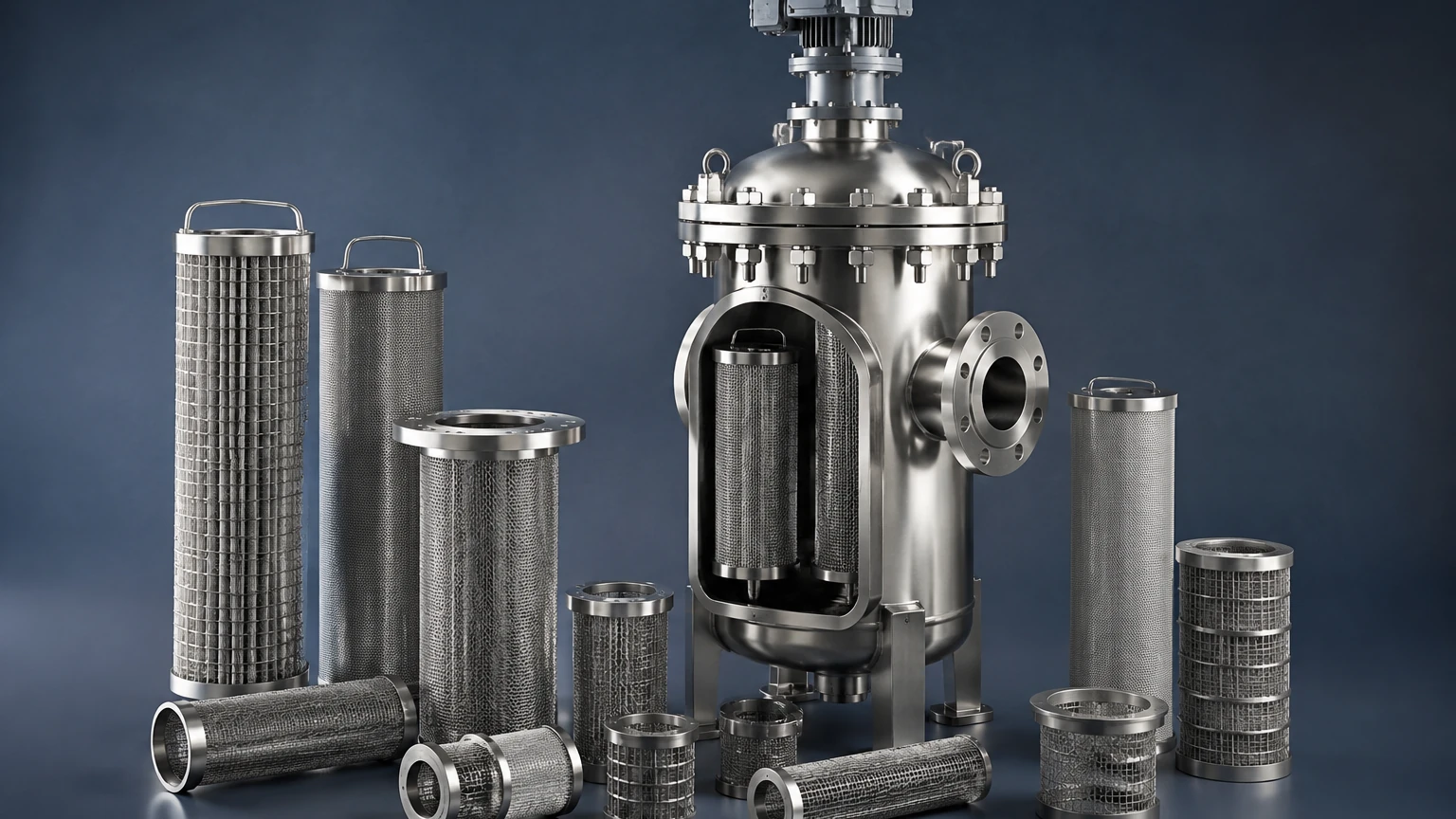
In modern industrial processing, the transition from manual batch filtration to automated, continuous systems is driven by the need for higher efficiency, reduced labor costs, and minimized environmental impact. Self cleaning filters for liquids represent a critical technology in this evolution. Unlike traditional bag or cartridge filters that require manual intervention and process downtime for replacement, self-cleaning systems utilize mechanical or hydraulic mechanisms to remove accumulated solids from the filter media while the process remains online.
For engineers and procurement professionals, selecting the right self-cleaning system requires a deep understanding of fluid dynamics, material compatibility, and the specific nature of the contaminants involved. As a specialized manufacturer of stainless steel filtration solutions, Kaifil provides the precision components—such as wedge wire elements and sintered mesh—that form the core of these high-performance systems.
The Engineering Logic Behind Self-Cleaning Systems
Self cleaning filters for liquids are designed to solve the problem of rapid blinding in high-solids or high-flow applications. The fundamental objective is to maintain a consistent pressure differential (ΔP) across the filter element. When the accumulated debris on the surface of the filter media reaches a predetermined threshold, the cleaning cycle is triggered.
There are two primary methods used to achieve this without stopping the flow:
1. Mechanical Scraping
Mechanical cleaning systems typically employ a scraper blade or brush that moves across the internal or external surface of a cylindrical filter element. This is particularly effective for viscous liquids or sticky contaminants, such as resins, paints, or food oils. The scraper dislodges the "filter cake," which then settles into a collection chamber at the bottom of the housing to be purged periodically.
2. Backwashing (Reverse Flow)
Backwash filters utilize a portion of the filtered liquid (or an external clean fluid source) to flow in the reverse direction through the filter media. This high-velocity reverse flow flushes particles out of the mesh or wedge wire openings. Backwashing is highly effective for low-viscosity liquids like water, chemicals, and light fuels where the particles are non-adhesive.
Material Selection: The Role of Stainless Steel
The durability and reliability of self cleaning filters for liquids depend heavily on the materials used for the filter element. Because these systems are often subjected to continuous mechanical stress (from scrapers) or high-pressure pulses (from backwashing), the media must be robust.
Stainless steel, specifically grades 304 and 316L, is the industry standard for several reasons:
* Mechanical Strength: Unlike polymer membranes or fabric bags, stainless steel wire mesh and wedge wire can withstand significant pressure differentials without deforming.
* Corrosion Resistance: In chemical processing and water treatment, resistance to oxidation and chemical attack is paramount for long-term service life.
* Thermal Stability: Stainless steel components maintain their structural integrity at temperatures that would melt or degrade synthetic media.
* Precision: Advanced manufacturing techniques allow for highly accurate micron ratings, ensuring that the filter captures the specific particle size distribution required for the process.
At Kaifil, we focus on the engineering of these stainless steel components to ensure they meet the rigorous demands of industrial automation. For more information on our manufacturing capabilities and product range, please visit our Main Page.
Key Evaluation Criteria for Industrial Selection
When specifying self cleaning filters for liquids, engineers must look beyond the initial price tag and evaluate the system based on its performance in a specific application environment. The following criteria are essential for an informed decision:
Micron Rating and Particle Characterization
It is vital to define whether the application requires absolute or nominal filtration. Furthermore, the shape and nature of the particles (e.g., hard sand vs. soft organic fibers) dictate the type of filter media. For example, wedge wire is often preferred for its non-clogging "V" shaped profile, which facilitates easier cleaning compared to standard square weave mesh.
Flow Rate and Flux
The flux—the rate of flow per unit area of filter media—must be optimized. If the flux is too high, particles may be forced into the depth of the media, making the self-cleaning mechanism less effective. A conservative flux rate extends the life of the filter element and reduces the frequency of cleaning cycles.
Viscosity and Temperature
The viscosity of the liquid significantly impacts the pressure drop. High-viscosity fluids require larger surface areas and more robust mechanical cleaning mechanisms. Similarly, the operating temperature must be factored into the selection of seals, gaskets, and the thermal expansion coefficients of the metal components.
Common Risks and Mitigation Strategies
While self cleaning filters for liquids offer significant advantages, improper selection or maintenance can lead to operational failures. Understanding these risks is the first step toward mitigation.
1. Media Blinding: If the cleaning mechanism is not aggressive enough or the micron rating is too fine for the solid load, the media can become permanently blinded. This often happens when oily solids are paired with a backwash system that lacks sufficient pressure.
2. Mechanical Wear: In scraper-type filters, the friction between the blade and the filter element can lead to wear over time. Using high-quality, precision-ground stainless steel elements can minimize this wear and extend the interval between component replacements.
3. Bypass Issues: If the internal seals of the filter housing are not properly maintained, unfiltered liquid may bypass the media. Regular inspection of O-rings and gaskets is essential, especially in pharmaceutical or food-grade applications where purity is non-negotiable.
Total Cost of Ownership (TCO) Considerations
For purchasing teams, the higher initial capital expenditure (CAPEX) of an automated self-cleaning filter is often a point of contention. However, a Total Cost of Ownership analysis usually reveals a rapid Return on Investment (ROI).
Consider the following cost offsets:
* Elimination of Consumables: The cost of purchasing, storing, and disposing of thousands of filter bags or cartridges per year is eliminated.
* Labor Savings: Manual filter changes are labor-intensive and often require two technicians for safety. Automated systems free up personnel for higher-value tasks.
* Reduced Product Loss: Every time a manual filter housing is opened, a certain volume of process liquid is lost. Self-cleaning systems are closed-loop, significantly reducing waste.
* Increased Uptime: By eliminating the need to shut down the line for filter maintenance, facilities can achieve higher annual production volumes.
Customization and OEM Integration
No two industrial processes are identical. Therefore, the ability to customize the filtration solution is critical. Whether it is a unique housing geometry to fit into a tight skid or a specific alloy requirement for highly corrosive environments, working with a manufacturer that understands the nuances of metal fabrication is an advantage.
Kaifil specializes in providing customized stainless steel filter cartridges and precision metal components that can be integrated into larger OEM filtration systems. By focusing on the technical specifications of the filter media, we help ensure that the final self-cleaning system performs to its maximum potential.
Conclusion: Information to Confirm Before Purchasing
Before moving forward with a procurement decision for self cleaning filters for liquids, technical teams should have the following data points confirmed:
* Fluid Analysis: What is the liquid's viscosity at operating temperature, and what is the chemical composition?
* Contaminant Profile: What is the maximum solids concentration (ppm or %), and what is the particle size distribution?
* Operational Constraints: What is the maximum allowable pressure drop, and what is the available footprint for installation?
* Control Requirements: Does the system need to integrate with an existing PLC (Programmable Logic Controller), and what are the preferred trigger mechanisms (time-based vs. pressure-based)?
By addressing these technical details early in the design or procurement phase, engineers can ensure they select a system that provides reliable, long-term service with minimal intervention. For professional guidance on material selection and custom filtration components, exploring the resources available on our Main Page is a recommended next step for any industrial filtration project.
