


Transferring Heat By Direct Contact
In industrial process engineering, the efficiency of thermal management systems often dictates the overall productivity and cost-effectiveness of a facility. One of the most fundamental methods for managing energy within these systems is transferring heat by direct contact. Unlike indirect heat transfer, which relies on a physical barrier like a tube wall or plate to separate two fluids, direct contact heat transfer allows the substances to interact physically. This method is highly efficient because it eliminates the thermal resistance of a separating wall, allowing for rapid temperature equalization and high heat transfer coefficients.
For engineers and technical professionals working with high-temperature fluids, steam systems, or chemical reactors, understanding the mechanics of transferring heat by direct contact is essential. Furthermore, the role of filtration components in these environments is critical. Filters must not only remove contaminants but also withstand the thermal stresses and potential phase changes associated with direct contact thermal exchange.
Principles of Direct Contact Heat Transfer in Industrial Systems
Transferring heat by direct contact occurs when two substances—typically a liquid and a gas, or two immiscible liquids—are mixed together. The heat exchange happens through conduction at the molecular level and convection as the fluids move. Because there is no solid interface to impede the flow of energy, the process can achieve much higher rates of heat transfer than traditional shell-and-tube or plate heat exchangers.
In many industrial applications, this process involves injecting a hot gas (such as steam) into a cooler liquid or spraying a cold liquid into a hot gas stream (as seen in quench towers). The efficiency of this process is largely determined by the surface area of the contact. This is where porous metal media and specialized filtration components become vital. By using sintered metal mesh or perforated plates, engineers can break down a gas stream into tiny bubbles or a liquid stream into fine droplets, exponentially increasing the surface area available for transferring heat by direct contact.
The Role of Stainless Steel Filtration in Thermal Management
In systems where heat is transferred through direct contact, the filtration media is often subjected to extreme conditions. Stainless steel is the material of choice for these applications due to its unique combination of thermal conductivity, mechanical strength, and corrosion resistance.
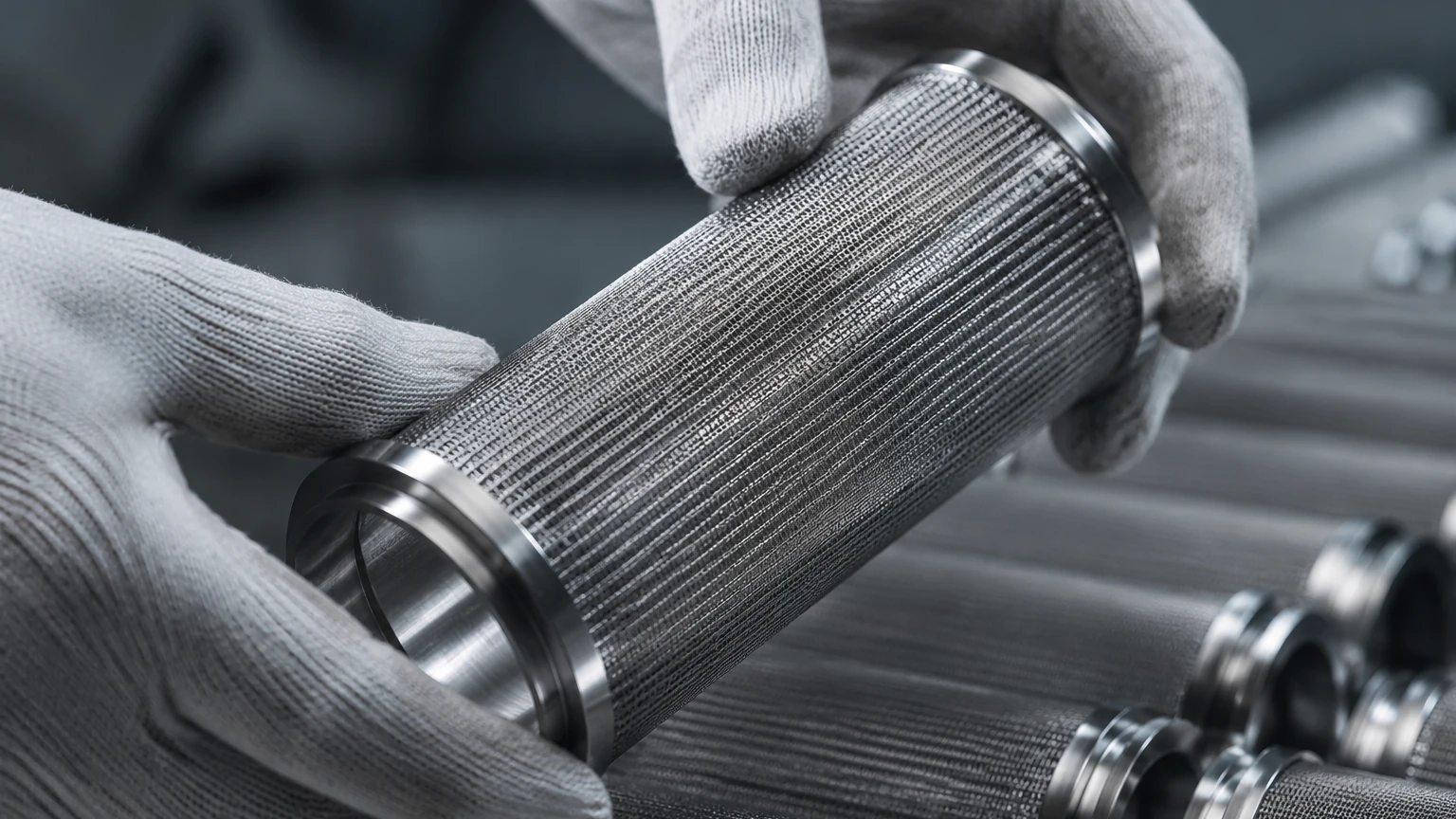
When a fluid is heated or cooled via direct contact, its viscosity and density change. These changes impact the pressure drop across filter cartridges. A filter designed for ambient temperatures may fail or become inefficient when the system shifts to a high-heat direct contact mode. Kaifil specializes in manufacturing stainless steel filter cartridges that maintain structural integrity even when exposed to the rapid temperature fluctuations common in direct contact heat exchangers.
Furthermore, the filtration media itself can act as a heat distribution element. In certain reactor designs, sintered wire mesh is used to distribute a hot reactant evenly into a cooler medium. The mesh ensures that the process of transferring heat by direct contact is uniform, preventing "hot spots" that could lead to chemical degradation or equipment damage.
Material Selection for High-Temperature Direct Contact Applications
Selecting the right alloy for filtration components in direct contact systems requires a deep understanding of the thermal and chemical environment. While 304 stainless steel is suitable for many general industrial applications, 316L is often preferred in pharmaceutical and food and beverage sectors due to its superior resistance to pitting and crevice corrosion, especially when handling steam or saline solutions.
Key considerations for material selection include:
1. Thermal Expansion Coefficients: In systems where transferring heat by direct contact leads to rapid temperature changes (thermal shock), the filter housing and the filter element must have compatible expansion rates to prevent seal failure or mechanical deformation.
2. Thermal Conductivity: While stainless steel has lower thermal conductivity than copper or aluminum, its ability to withstand high pressures and temperatures makes it ideal for industrial filtration. The thin-walled design of wire mesh filters helps minimize the thermal lag during heat transfer processes.
3. Oxidation Resistance: At elevated temperatures, many metals react with oxygen. Stainless steel forms a protective chromium oxide layer that prevents deep-seated corrosion, ensuring the longevity of the filtration system.
Engineers looking for specific material specifications and customized designs for these demanding environments can visit the Main Page to explore professional filtration options.
Engineering Challenges: Thermal Shock and Fouling
One of the primary risks when transferring heat by direct contact is thermal shock. This occurs when a component, such as a filter cartridge, is suddenly exposed to a fluid of a significantly different temperature. The resulting rapid expansion or contraction can lead to micro-cracking in sintered structures or the warping of mesh layers.
To mitigate this, Kaifil utilizes advanced manufacturing techniques like vacuum sintering, which bonds multiple layers of wire mesh into a robust, integrated structure. This process enhances the mechanical strength of the filter, allowing it to withstand the stresses of direct contact thermal cycles without shedding fibers or losing filtration accuracy.
Another significant challenge is fouling. In direct contact systems, the mixing of fluids can lead to the precipitation of solids or the formation of scales (such as calcium carbonate in water-steam systems). Because the filter is often located downstream of the contact point, it must be capable of capturing these precipitates without blinding. Stainless steel filters are advantageous here because they can be cleaned using backwashing, ultrasonic cleaning, or chemical stripping, extending their service life compared to disposable synthetic filters.
Applications of Direct Contact Heat Transfer and Filtration
Transferring heat by direct contact is utilized across various sectors, each requiring specific filtration solutions:
Steam Injection and Sparging
In the food and beverage industry, steam is often injected directly into products like juices or sauces to achieve rapid pasteurization. The steam must be filtered to "culinary grade" to ensure no particulates or boiler chemicals contaminate the food. Sintered metal filters are used here to both clean the steam and act as a sparger to create fine bubbles for efficient heat transfer.
Quench Cooling in Chemical Processing
In petrochemical refining, hot gas streams are often quenched by direct contact with a cooling liquid. Filtration components in these systems must handle high flow rates and potential chemical aggressiveness. Precision metal filters ensure that any catalysts or debris are removed from the quenched fluid before it moves to the next process stage.
Hydraulic and Lube Oil Systems
While less common, some specialized hydraulic systems use direct contact with a secondary fluid for temperature regulation. The filtration system must be capable of handling the resulting emulsion or ensuring the fluids are separated effectively after the heat transfer is complete.
Evaluating Filtration Performance in Thermal Systems
When specifying a filter for a system involving transferring heat by direct contact, engineers must evaluate several performance metrics beyond simple micron ratings:
* Differential Pressure (ΔP): How does the pressure drop change as the fluid temperature rises? Lower viscosity at higher temperatures usually reduces ΔP, but the filter must be rated for the maximum pressure at the lowest operating temperature.
* Filtration Efficiency: Does the thermal expansion of the mesh pores affect the capture rate of particles? High-quality sintered mesh maintains a stable pore structure across a wide temperature range.
* Cleaning Cycles: How often will the filter require cleaning due to thermally induced fouling? Selecting a filter with a larger surface area (pleated designs) can extend the time between maintenance intervals.
For technical teams, confirming these parameters with a manufacturer like Kaifil ensures that the filtration solution is optimized for the specific thermal dynamics of the application. Detailed product data and engineering support are available on the Main Page.
Conclusion: Achieving Efficiency in Thermal Filtration
Transferring heat by direct contact remains one of the most effective ways to manage energy in industrial processes. However, the success of these systems depends on the reliability of the components that operate within them. Stainless steel filtration solutions provide the necessary durability, thermal resistance, and precision required to maintain process fluid purity while enduring the rigors of direct contact heat exchange.
By focusing on material integrity, advanced sintering techniques, and customized engineering, Kaifil helps industries achieve optimized filtration performance. Whether dealing with steam injection, chemical quenching, or high-temperature fluid processing, selecting the right metal filter is a critical step in ensuring the longevity and efficiency of the entire thermal management system.
