


Self-cleaning Filter System
In modern industrial processing, the efficiency of liquid filtration directly impacts production uptime, product quality, and equipment longevity. A self-cleaning filter system represents an advanced automated solution designed to remove suspended solids and impurities from fluid streams without the need for manual intervention or process shutdowns. Unlike traditional bag or cartridge filters that require periodic replacement and labor-intensive maintenance, these systems utilize mechanical or hydraulic mechanisms to clear the filter element while the process continues to run.
For engineers and procurement teams, understanding the technical nuances of these systems is essential for optimizing filtration performance in demanding environments such as chemical processing, water treatment, and food production. This guide explores the engineering principles, material considerations, and selection criteria necessary for implementing a robust filtration strategy.
Mechanisms of Action in a Self-cleaning Filter System
The primary advantage of a self-cleaning filter system is its ability to maintain a consistent flow rate by preventing the buildup of a "filter cake" on the element surface. There are several primary mechanisms used to achieve this automation:
Mechanical Scraper Systems
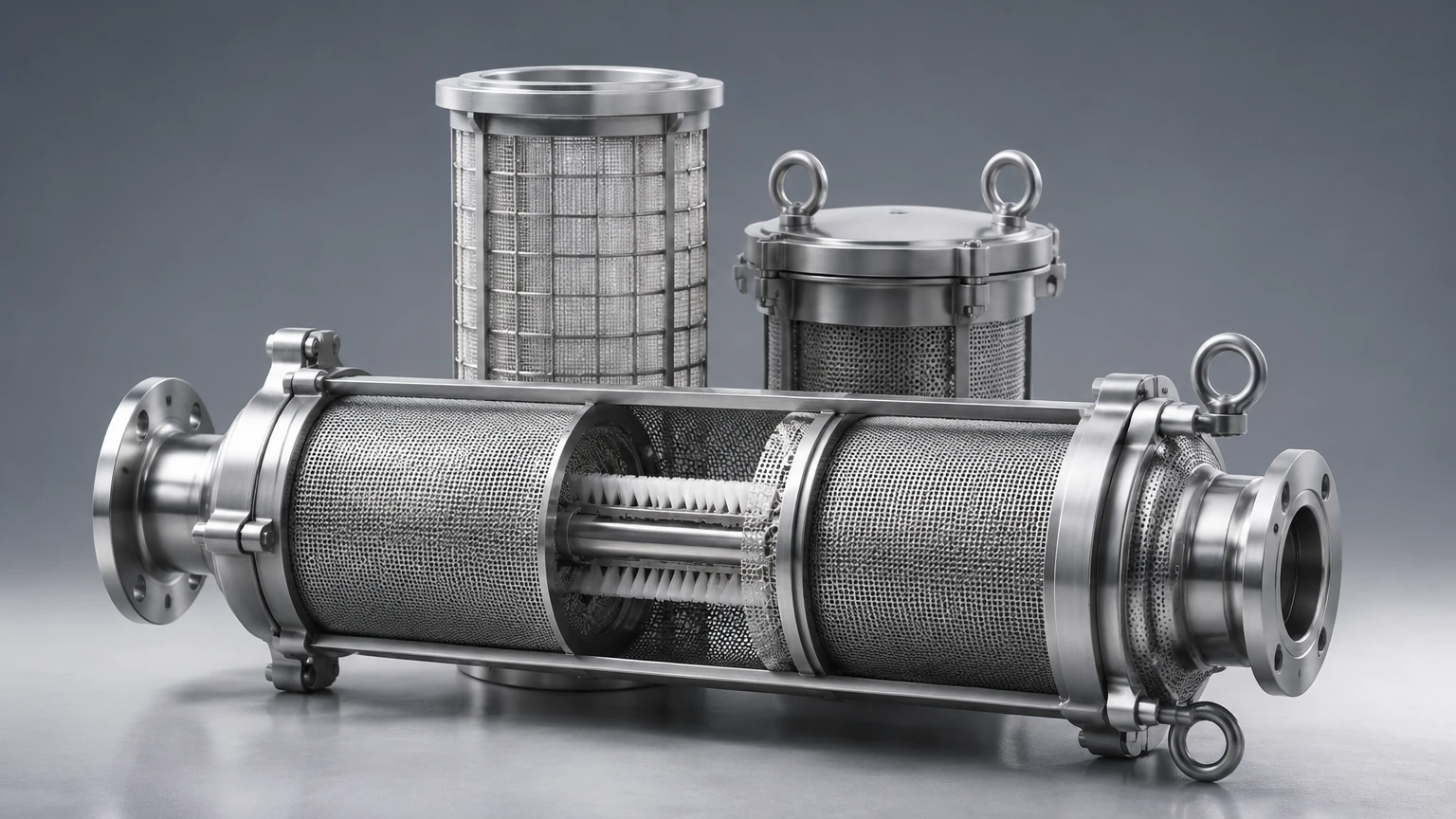
In applications involving high-viscosity fluids or sticky contaminants (such as resins, paints, or food syrups), mechanical scraping is often the most effective method. A scraper—typically made of reinforced polymers or stainless steel—moves along the surface of the filter element. This action physically dislodges debris, which then settles into a collection chamber at the bottom of the housing to be purged. These systems can be configured as internal or external scrapers depending on the flow direction and the nature of the solids.
Backwash and Suction Scanning
For low-viscosity fluids like water or light chemicals, backwash systems are prevalent. When the differential pressure across the filter reaches a predetermined set point, a portion of the filtered fluid (or an external clean fluid source) is forced backward through the filter element. In more sophisticated suction-scanning systems, a rotating nozzle moves across the inner surface of the screen, creating a localized high-velocity vacuum that pulls contaminants off the mesh and out through a flush valve. This method is highly efficient as it uses a minimal amount of fluid for the cleaning cycle.
Engineering Considerations: Material and Component Selection
The durability of a self-cleaning filter system depends heavily on the materials used for the filter element and the housing. As a professional manufacturer, Kaifil emphasizes the use of high-grade stainless steel to ensure resistance to corrosion and mechanical stress.
Stainless Steel Filter Media
The heart of the system is the filter element, which must withstand the mechanical forces of the cleaning cycle. Common types include:
* Wedge Wire: Constructed from V-shaped profiles, wedge wire offers high mechanical strength and a non-clogging surface, making it ideal for scraper-based systems.
* Sintered Wire Mesh: Multiple layers of stainless steel wire cloth are sintered together to create a rigid, high-precision filter medium. This is often used when fine filtration (down to 1-5 microns) is required.
* Perforated Plate: Used primarily for coarse filtration or as a support structure for finer meshes.
Housing and Seal Compatibility
Engineers must ensure that the housing material (typically SS304 or SS316L) is compatible with the chemical properties of the process fluid. Furthermore, the selection of O-rings and seals (Viton, EPDM, or PTFE) must account for temperature fluctuations and chemical reactivity to prevent leaks and system failures.
Performance Evaluation and Sizing
Correctly sizing a self-cleaning filter system is critical to preventing premature wear and ensuring filtration accuracy. Several technical parameters must be analyzed during the design phase:
1. Flow Rate and Velocity: The system must handle the maximum peak flow without exceeding the recommended face velocity for the specific filter media. Excessive velocity can force deformable particles through the mesh or cause rapid erosion of the filter element.
2. Micron Rating: Choosing the correct filtration grade is a balance between product purity and cleaning frequency. An overly fine mesh may lead to constant cleaning cycles, while a coarse mesh may fail to protect downstream equipment.
3. Differential Pressure (DP): The system is usually triggered by a DP sensor. Engineers must define the "clean" DP and the "trigger" DP. A typical trigger point is between 0.5 to 1.0 bar, depending on the system's structural integrity.
4. Viscosity and Solids Loading: Higher viscosity fluids require larger surface areas and more robust cleaning motors. Similarly, a high concentration of solids (ppm) will dictate the frequency of the purge cycles.
To explore specific technical specifications and component options for custom builds, engineers can visit the Main Page for a comprehensive overview of available filtration technologies.
Industrial Applications and Performance Expectations
Self-cleaning filter systems are integrated into various industrial sectors where downtime is costly or manual cleaning is hazardous.
* Chemical and Petrochemical: These systems are used to filter catalysts, polymers, and raw chemical feedstocks. The closed-loop nature of the system prevents operator exposure to toxic substances and reduces the loss of expensive product.
* Water Treatment: In cooling towers and membrane pre-filtration (RO/UF), self-cleaning filters remove sand, algae, and scale. This protects heat exchangers and prevents the fouling of sensitive membranes.
* Food and Beverage: For filtering chocolate, honey, or vegetable oils, the system ensures that large particles or coagulated solids are removed while maintaining the hygienic standards required by the industry.
* Pulp and Paper: Used for white water filtration and nozzle protection, where the high volume of fiber would quickly blind a standard manual filter.
Selection Guide: What Engineers Should Confirm Before Purchase
Before finalizing a purchase order for a self-cleaning filter system, technical teams should confirm the following details with the manufacturer to ensure the solution is fit-for-purpose:
* Automation Requirements: Will the system be controlled by a local PLC, or does it need to integrate into a plant-wide SCADA system? Confirm the availability of digital outputs for status monitoring and alarms.
* Power and Utility Availability: Mechanical systems require electrical power for motors, while backwash systems may require compressed air for pneumatic valves. Ensure these utilities are available at the installation site.
* Minimum Operating Pressure: Many backwash-style filters require a minimum line pressure (often 2-3 bar) to drive the cleaning mechanism effectively. If the system pressure is too low, a booster pump or a mechanical scraper design may be necessary.
* Maintenance Access: While the system is automated, the filter element will eventually need inspection. Confirm that the housing design allows for easy access to the internal components without specialized tools.
* Customization Options: Does the application require specialized coatings, high-pressure ratings (above 10 bar), or extreme temperature modifications? Working with an OEM provider like Kaifil allows for the adjustment of these parameters during the design phase.
Total Cost of Ownership (TCO) and ROI
While the initial capital expenditure for an automated self-cleaning filter system is higher than that of a manual housing, the Total Cost of Ownership (TCO) is significantly lower over the equipment's lifespan. The return on investment (ROI) is driven by three main factors:
1. Labor Savings: Eliminating the need for technicians to manually open housings, clean baskets, or replace bags saves hundreds of man-hours per year.
2. Reduced Consumable Costs: By using a permanent stainless steel filter element, the ongoing cost of purchasing, storing, and disposing of filter bags or cartridges is eliminated.
3. Increased Production: Because the cleaning cycle occurs during the process, there is no downtime associated with filter maintenance. This is particularly valuable in 24/7 manufacturing operations.
Conclusion
Implementing a self-cleaning filter system is a strategic investment in process stability and operational efficiency. By selecting the appropriate cleaning mechanism, ensuring material compatibility, and accurately sizing the system for the specific fluid dynamics of the application, industrial facilities can achieve reliable, long-term filtration performance. For technical professionals seeking to optimize their filtration processes, focusing on the quality of the stainless steel components and the robustness of the automation is the key to minimizing maintenance and maximizing output.
