


Self Cleaning Filtration
In modern industrial processing, maintaining continuous flow and consistent product quality is a primary engineering objective. Manual filtration systems, while effective for low-solids applications, often introduce operational bottlenecks due to the downtime required for cleaning or element replacement. Self cleaning filtration technology addresses these challenges by providing an automated method to remove accumulated solids from the filter media without interrupting the process flow. This approach is particularly critical in high-volume industries such as chemical processing, water treatment, and food production, where even minor interruptions can lead to significant financial losses.
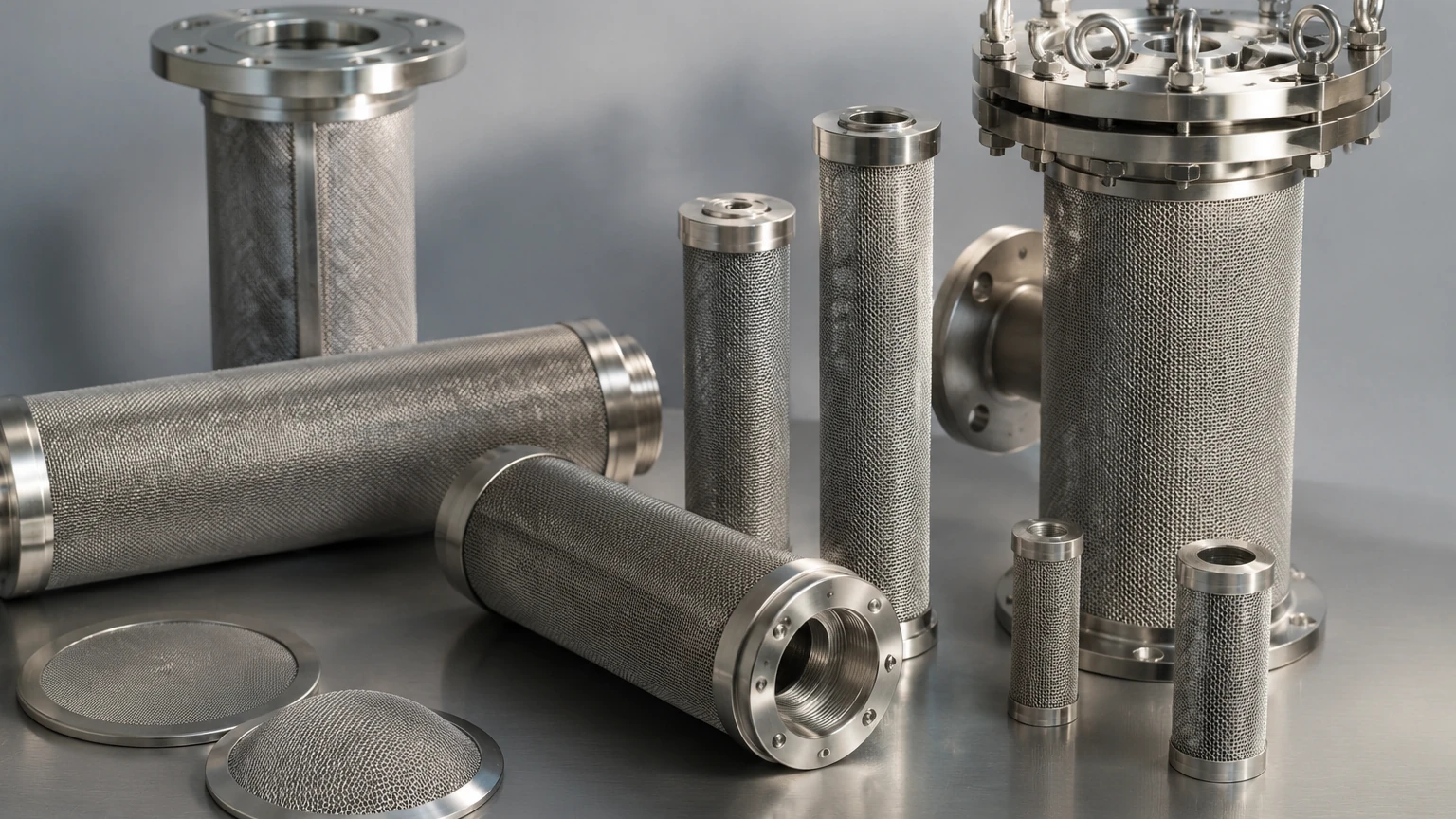
For engineers and procurement teams, selecting a self cleaning system requires a deep understanding of the mechanical principles involved, the durability of the internal components, and the specific characteristics of the fluid being processed. As a manufacturer specializing in stainless steel filtration components, Kaifil provides the precision-engineered elements that form the core of these automated systems.
Understanding the Principles of Self Cleaning Filtration
Self cleaning filtration operates on the principle of removing debris from the filter surface while the system remains online. Unlike traditional duplex strainers or bag filters that require manual intervention, these systems use sensors—typically measuring differential pressure—to trigger a cleaning cycle. When the pressure drop across the filter element reaches a pre-set threshold, the system initiates a cleaning mechanism to restore the flow path.
The effectiveness of this process depends heavily on the design of the filter element. In industrial environments, stainless steel is the preferred material due to its mechanical strength and resistance to the stresses of the cleaning cycle. Whether the system uses backwashing, mechanical scraping, or suction, the filter media must maintain its structural integrity and filtration accuracy under varying pressure loads.
Common Mechanisms in Industrial Self Cleaning Systems
There are several distinct mechanical approaches to self cleaning filtration, each suited to different types of contaminants and fluid viscosities. Choosing the right mechanism is essential for ensuring long-term reliability.
Backwashing Systems
Backwashing involves reversing the flow of the filtrate or using a secondary clean fluid to push contaminants off the outer surface of the filter element. This is highly effective for removing non-deformable solids from woven wire mesh or wedge wire screens. The reversed flow dislodges the "filter cake," which is then flushed out through a discharge valve.
Mechanical Scraping
For fluids containing sticky or fibrous materials, mechanical scraping is often more effective. In this design, a scraper blade or brush moves across the surface of the filter element (usually a wedge wire cylinder). The scraper physically removes the buildup, which settles into a collection chamber at the bottom of the housing to be purged. This method is common in the food and beverage industry for processing syrups, chocolate, or oils.
Suction Scanning
A suction scanner uses a rotating nozzle that moves across the internal surface of the filter screen. By creating a localized low-pressure zone, the nozzle vacuum-cleans the mesh. This method uses significantly less flush water than traditional backwashing, making it an efficient choice for large-scale water treatment applications.
Key Engineering Considerations for Filter Element Selection
The heart of any self cleaning system is the filter element. When designing or retrofitting a system, engineers must evaluate several technical factors to ensure compatibility and performance.
Material Selection and Corrosion Resistance
Industrial fluids often contain corrosive elements or operate at high temperatures. Most high-performance self cleaning filters utilize 304 or 316L stainless steel. 316L is particularly valued for its superior resistance to chlorides and organic acids, making it a standard for pharmaceutical and chemical applications. In specialized environments, exotic alloys may be required, but stainless steel remains the versatile baseline for most industrial OEM components.
Filtration Precision and Micron Ratings
Defining the required filtration accuracy is a balance between protecting downstream equipment and managing the frequency of cleaning cycles. Specifying a micron rating that is too fine can lead to excessive cleaning cycles and increased wear on the system. Conversely, a rating that is too coarse may allow harmful particles to pass. Engineers should analyze the particle size distribution (PSD) of the influent to determine the optimal aperture for the wire mesh or wedge wire element.
Structural Integrity and Differential Pressure
During a cleaning cycle, the filter element is subjected to localized pressure changes. The element must be engineered to withstand high differential pressures (ΔP) without collapsing or deforming. Precision welding and the use of support structures are critical in the manufacturing of these components to ensure they can handle thousands of cleaning cycles over their operational lifespan.
Performance Expectations and Operational Efficiency
Transitioning to self cleaning filtration is primarily an investment in operational efficiency. By automating the solids removal process, facilities can achieve several key performance benchmarks:
1. Reduced Product Loss: Automated systems can be tuned to minimize the amount of fluid lost during the purge cycle. This is especially important when processing high-value chemicals or food products.
2. Consistent Flow Rates: Because the cleaning cycle is triggered by pressure, the system maintains a relatively constant flow, preventing the gradual decline in throughput associated with manual filters.
3. Lower Labor Costs: Eliminating the need for manual cleaning reduces the labor hours dedicated to maintenance and minimizes the risk of human error during filter reassembly.
4. Enhanced Safety: In the chemical and pharmaceutical sectors, self cleaning systems provide a closed-loop environment, reducing operator exposure to potentially hazardous fluids.
For more information on the specific components that power these systems, technical teams can visit the Main Page to review available stainless steel filter configurations.
Application-Specific Requirements in Demanding Industries
Different industries impose unique constraints on self cleaning filtration systems. A "one size fits all" approach rarely succeeds in complex industrial environments.
Chemical and Petrochemical Processing
In these sectors, the primary concern is often chemical compatibility and the ability to handle high temperatures. Filters must be robust enough to handle aggressive solvents and high-pressure lines. Stainless steel wire mesh filters are frequently used here due to their predictable performance and ease of customization.
Food and Beverage Production
Hygiene is the priority in food processing. Filter elements must feature smooth surfaces (often electro-polished) to prevent bacterial growth and ensure they are compatible with Clean-in-Place (CIP) protocols. The mechanical scraping method is frequently employed to handle the high-viscosity fluids common in this industry.
Water and Wastewater Treatment
For large-scale water filtration, the focus is on handling high flow rates and high solids loading. Suction scanning and backwashing systems with coarse-to-fine multi-stage filtration are common. The durability of the stainless steel media ensures that the system can handle sand, scale, and organic debris without frequent element replacement.
Evaluating Total Cost of Ownership and Replacement Cycles
While the initial capital expenditure (CAPEX) for a self cleaning filtration system is higher than that of a manual strainer, the total cost of ownership (TCO) is often significantly lower when analyzed over a 3-to-5-year period.
Engineers should consider the following when calculating TCO:
* Consumable Costs: Unlike bag or cartridge filters, stainless steel self-cleaning elements are permanent or semi-permanent, eliminating the ongoing cost of disposable media.
* Energy Consumption: The power required for the cleaning motor and the loss of pressurized fluid during the purge cycle should be factored into the operational budget.
* Maintenance Intervals: While the system is automated, it is not maintenance-free. Seals, gaskets, and scraper blades will eventually wear. However, high-quality stainless steel filter cartridges often last for years before requiring professional refurbishment or replacement.
Technical Checklist for Procurement and Engineering Teams
Before moving forward with a self cleaning filtration solution, project teams should confirm the following data points to ensure the system is correctly sized and specified:
* Fluid Characteristics: What is the viscosity at operating temperature? Is the fluid Newtonian or non-Newtonian?
* Contaminant Profile: Are the solids hard, soft, fibrous, or gelatinous? What is the maximum expected solids concentration (PPM)?
* Operational Parameters: What are the minimum and maximum flow rates? What is the maximum operating pressure and temperature?
* Cleaning Trigger: Is the system better served by a pressure-differential trigger, a timer-based trigger, or a combination of both?
* Customization Needs: Does the housing require specific inlet/outlet orientations or specialized flange types to fit existing piping?
By addressing these technical requirements early in the specification process, engineers can ensure that the self cleaning filtration system provides reliable, long-term service. Kaifil’s expertise in manufacturing custom stainless steel filtration solutions allows for the development of components tailored to these exact specifications, ensuring that the automated cleaning mechanism operates at peak efficiency. For detailed technical specifications and support, visit the Main Page to explore our engineering capabilities.
