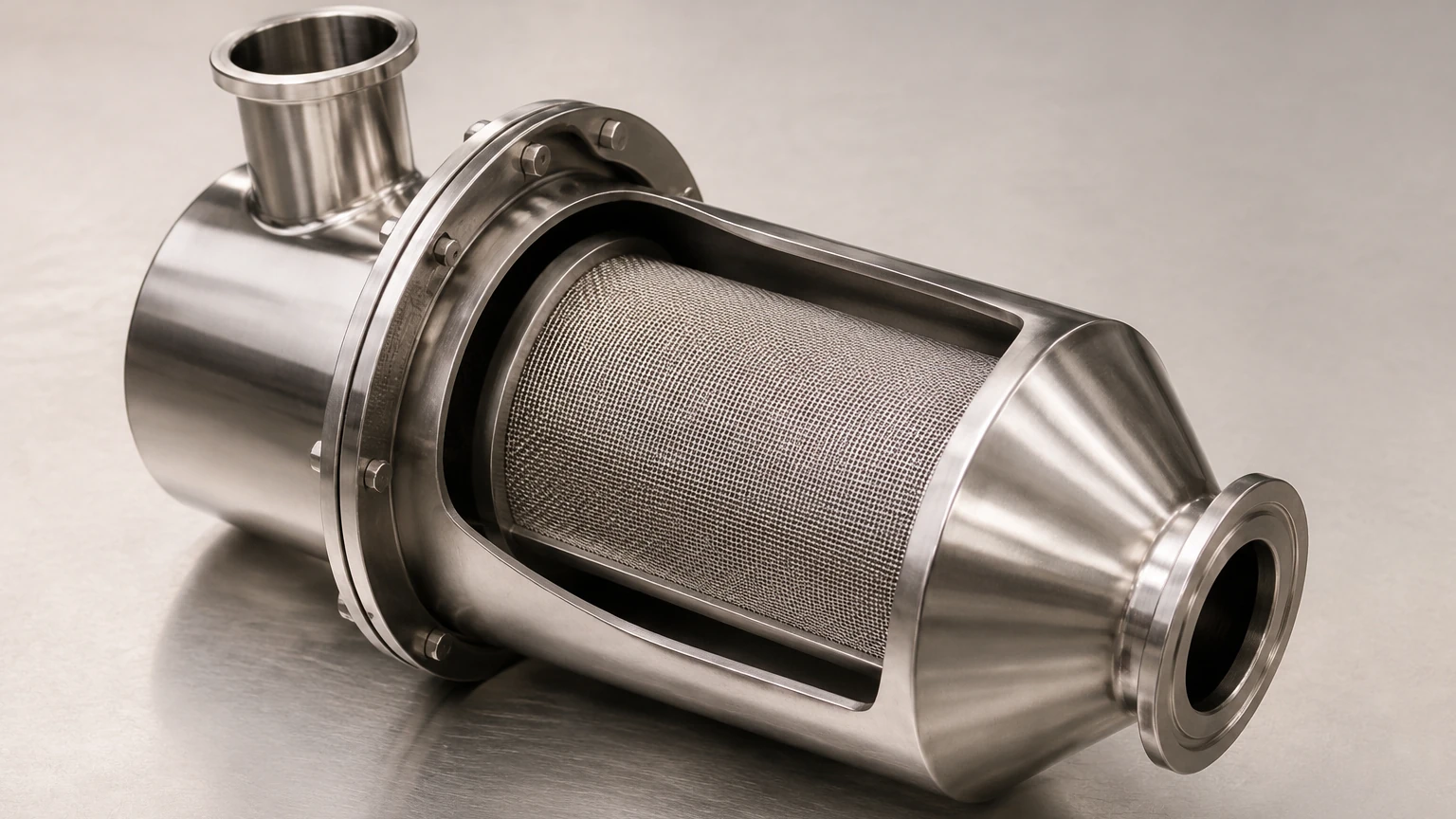
Filtre Cyclonique
In industrial fluid processing and gas purification, the efficiency of a filtration system often depends on its ability to handle high solids loading without frequent downtime. The filtre cyclonique, or cyclone filter, serves as a critical mechanical separator that utilizes centrifugal force to remove particulate matter from a fluid stream. Unlike barrier filters that rely solely on a physical mesh or membrane, the cyclone filter operates on the principle of density differentiation and vortex dynamics. For engineers and procurement teams, understanding the technical nuances of these systems is essential for optimizing the lifespan of downstream precision components, such as the stainless steel wire mesh and cartridges produced by Kaifil.
The Engineering Principles of Centrifugal Separation
A filtre cyclonique operates by converting the velocity of an incoming fluid into a high-speed rotational flow. The fluid—whether liquid or gas—enters the cylindrical chamber tangentially. This entry method forces the fluid into a downward spiral, creating a powerful vortex.
As the fluid rotates, centrifugal force acts upon the suspended particles. Because these particles typically have a higher density than the carrier fluid, they are projected toward the outer walls of the cyclone body. Gravity then pulls these separated solids down the conical section of the filter into a collection hopper or underflow outlet. Meanwhile, the cleaned fluid, now free of heavier contaminants, reverses direction near the bottom of the cone and forms an inner vortex that exits through the center of the top outlet, often referred to as the vortex finder.
From an engineering perspective, the efficiency of a filtre cyclonique is determined by several variables:
* Inlet Velocity: Higher velocities generally increase centrifugal force but also lead to higher pressure drops and potential erosion of the internal walls.
* Cyclone Diameter: Smaller diameters generate higher centrifugal forces, allowing for the separation of finer particles, though they may limit total flow capacity.
* Fluid Viscosity: In liquid applications (hydrocyclones), higher viscosity increases the drag on particles, making separation more difficult and requiring higher pressure to achieve the same results.
Industrial Roles: Pre-filtration and System Protection
In many complex industrial setups, a filtre cyclonique is rarely used as the sole filtration stage. Instead, it functions as a robust pre-filter. Its primary role is to "scalp" the bulk of the heavy contaminant load before the fluid reaches more sensitive, high-precision filtration media.
For instance, in a large-scale chemical processing plant, a cyclone filter might remove 90% of the coarse solids from a process stream. This significantly reduces the "cake" buildup on downstream stainless steel filter cartridges. By integrating a filtre cyclonique, facilities can extend the service life of expensive precision elements, reduce the frequency of backwashing cycles, and lower the total cost of ownership. This synergy is a cornerstone of the solutions provided at the Main Page of Kaifil’s technical offerings, where customized filtration stages are designed to meet specific industrial demands.
Material Selection and Structural Integrity
The environment in which a filtre cyclonique operates is often abrasive and corrosive. Therefore, material selection is a primary concern for design engineers. While plastic or carbon steel cyclones may suffice for low-impact water treatment, demanding sectors like pharmaceutical and food processing require high-grade alloys.
Stainless steel (specifically grades 304 and 316L) is the industry standard for high-performance cyclone filters. The advantages include:
1. Corrosion Resistance: Essential when handling acidic chemicals or saline solutions found in water treatment.
2. Thermal Stability: Stainless steel maintains structural integrity at high temperatures, which is vital for steam-based cleaning or high-heat industrial exhausts.
3. Surface Finish: In the food and beverage industry, the internal surfaces of the filtre cyclonique must be polished to prevent bacterial growth and ensure effective Clean-in-Place (CIP) procedures.
4. Erosion Resistance: High-velocity particles can act like sandpaper on the interior of a filter. Advanced manufacturing techniques, such as those employed by Kaifil, ensure that the wall thickness and weld quality can withstand long-term mechanical wear.
Key Evaluation Criteria for Engineers
When specifying a filtre cyclonique for a new or existing system, engineers must confirm several technical parameters to ensure the equipment meets performance expectations.
Particle Cut Point (d50)
The d50 value represents the particle size at which the filter is 50% efficient. If a process requires the removal of particles down to 10 microns, the cyclone must be designed with a d50 significantly lower than that, or it must be paired with a secondary fine-mesh filter. It is important to note that a filtre cyclonique is most effective for particles with a high specific gravity relative to the fluid.
Pressure Drop (ΔP)
The pressure drop across a cyclone filter is a measure of the energy required to operate the unit. A high ΔP indicates high centrifugal energy (better separation) but increases the load on pumps or compressors. Balancing separation efficiency with energy consumption is a critical optimization task during the design phase.
Flow Rate Variability
Unlike barrier filters, which can often handle varying flow rates (albeit with changing pressure), a filtre cyclonique is sensitive to flow fluctuations. If the flow rate drops too low, the centrifugal force weakens, and separation efficiency plummets. Conversely, excessive flow can lead to turbulence that re-entrains separated particles back into the clean fluid stream.
Common Risks and Mitigation Strategies
Despite their simplicity—having no moving parts—cyclone filters are subject to specific operational risks:
* Abrasive Wear: The inlet area and the bottom of the cone are high-wear zones. Specifying reinforced wall thicknesses or replaceable liners in these areas can prevent premature failure.
* Air/Gas Leakage: In gas cyclones, any air leakage at the solids discharge point can disrupt the vortex and cause the separated dust to be sucked back up through the center. Using high-quality rotary valves or airtight collection bins is essential.
* Clogging at the Underflow: If the solids concentration is too high or the particles are particularly "sticky," the discharge nozzle can clog. Engineers should confirm the nature of the contaminants (morphology, stickiness, and concentration) before finalizing the design.
Customization and Integration with Kaifil Solutions
Every industrial application presents unique challenges that off-the-shelf solutions often fail to address. Customization of a filtre cyclonique involves tailoring the geometry of the vortex finder, the cone angle, and the inlet dimensions to match the specific fluid dynamics of the client's process.
At Kaifil, the focus is on providing integrated filtration solutions. A custom-built filtre cyclonique can be designed as the first stage of a multi-stage skid that includes secondary and tertiary stainless steel filter cartridges. This holistic approach ensures that the entire system is balanced for flow, pressure, and filtration accuracy. Whether for hydraulic systems, chemical processing, or water treatment, the goal is to provide a durable component that minimizes maintenance and maximizes uptime.
Information to Confirm Before Purchasing
Before moving forward with a procurement or design project involving a filtre cyclonique, the following data points should be verified with the manufacturer:
1. Fluid Characteristics: Viscosity, density, temperature, and chemical compatibility.
2. Contaminant Profile: Particle size distribution (PSD), particle density, and total suspended solids (TSS) concentration.
3. Operational Requirements: Desired flow rate (minimum, nominal, and maximum) and allowable pressure drop.
4. Connection Standards: Flange types (ANSI, DIN, JIS) or threaded connections to ensure seamless integration into existing piping.
5. Regulatory Compliance: Requirements for food-grade certifications (FDA), pressure vessel codes (ASME), or pharmaceutical standards.
By addressing these factors, engineering teams can ensure that the selected filtre cyclonique provides the necessary pre-filtration performance to protect downstream assets and maintain process integrity. For more information on precision metal filtration components and how they integrate with centrifugal separation systems, technical professionals can explore the resources available on the Kaifil Main Page.
Conclusion
The filtre cyclonique remains an indispensable tool in the industrial filtration toolkit. Its ability to handle high volumes of solids with minimal maintenance makes it the ideal partner for high-precision stainless steel filters. By leveraging centrifugal force, industries can achieve a level of pre-filtration that significantly enhances the efficiency and longevity of their entire fluid management system. Through careful engineering, material selection, and a clear understanding of the specific application requirements, the cyclone filter provides a reliable, cost-effective solution for the most demanding industrial environments.