


Steam Sparger
In industrial processing, the efficient transfer of thermal energy and the precise introduction of gases into liquids are critical for maintaining product quality and process throughput. A steam sparger is a specialized component designed for direct steam injection into a liquid medium. Unlike indirect heating methods, such as heat exchangers or jacketed vessels, a steam sparger introduces steam directly into the process fluid, providing rapid heating, agitation, and, in some cases, chemical reaction enhancement.
For engineers and procurement professionals, selecting the correct steam sparger involves understanding the fluid dynamics of steam condensation, the material science of porous media, and the specific mechanical requirements of the application. As a manufacturer specializing in precision metal filtration and injection components, Kaifil provides high-performance stainless steel solutions tailored to these demanding environments. Detailed specifications and engineering support can be found on our Main Page.
The Role of Steam Spargers in Industrial Thermal Management
Direct steam injection via a steam sparger is often the preferred method for heating large volumes of liquid quickly. The primary advantage of this method is its nearly 100% thermal efficiency, as the latent heat of the steam is transferred directly to the liquid upon contact.
In traditional indirect heating, a physical barrier (like a pipe wall) separates the steam from the process fluid, leading to thermal resistance and energy loss. A steam sparger eliminates this barrier. Beyond heating, the injection of steam provides significant agitation. As steam bubbles are introduced and subsequently collapse (condense), they create localized turbulence that helps maintain a uniform temperature profile throughout the vessel without the need for heavy mechanical stirring equipment.
Engineering Dynamics: Bubble Size and Heat Transfer Efficiency
The performance of a steam sparger is fundamentally tied to the surface area of the steam bubbles it produces. According to the principles of mass and heat transfer, smaller bubbles provide a higher surface-area-to-volume ratio, which facilitates faster condensation and more uniform heat distribution.
Sintered Metal vs. Drilled Pipe
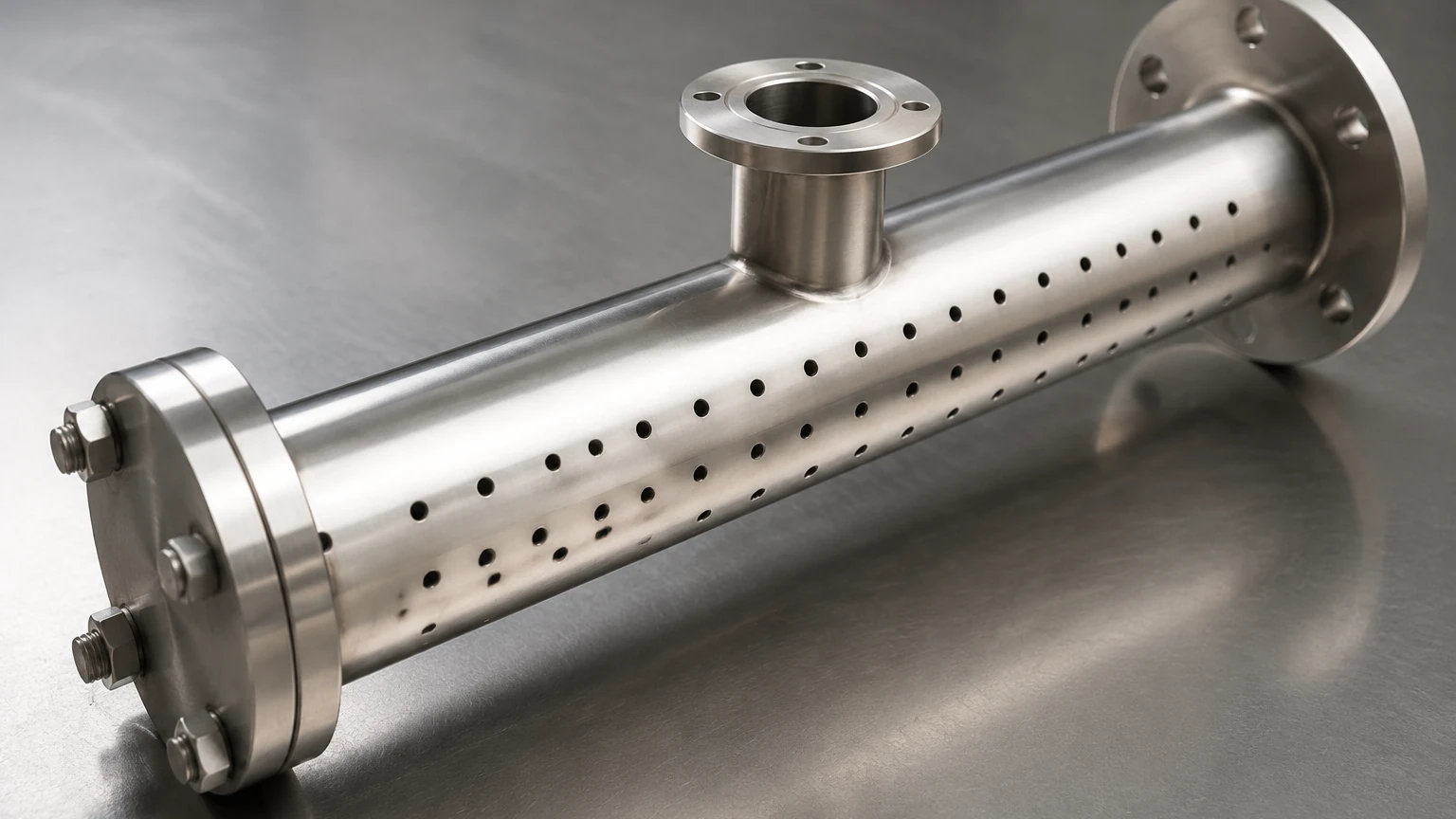
Traditional steam spargers often consist of simple pipes with drilled holes. While cost-effective, these designs produce large, buoyant bubbles that rise quickly to the surface. This can lead to "steam breakthrough," where steam escapes the liquid before fully condensing, resulting in energy waste and potential damage to headspace equipment.
In contrast, porous sintered metal spargers—utilizing stainless steel wire mesh or sintered metal powder—create thousands of minute injection points. These pores produce micro-bubbles that condense almost instantly. This rapid condensation prevents the formation of large steam pockets, which is the primary cause of "steam hammer"—the loud, damaging vibrations caused by the sudden collapse of large steam bubbles.
Material Science in Sparger Construction
Industrial steam applications subject components to extreme thermal stress, high pressures, and often corrosive chemical environments. Therefore, material selection is a non-negotiable factor in sparger longevity.
Stainless Steel 316L
Most high-quality steam spargers are manufactured from 316L stainless steel. This alloy provides excellent resistance to oxidation at elevated temperatures and is resistant to many organic and inorganic chemicals. The "L" denotes low carbon content, which is essential for components that require welding, as it prevents carbide precipitation and subsequent intergranular corrosion.
Thermal Expansion and Mechanical Strength
Because a steam sparger is frequently cycled between ambient temperatures and the high temperature of pressurized steam, the material must withstand significant thermal expansion. Sintered metal components are engineered to maintain structural integrity under these cycles, ensuring that the pore structure does not deform or clog over time. Kaifil’s manufacturing process ensures that these components meet the rigorous standards required for industrial pressure vessels.
Application-Specific Design Considerations
A steam sparger is rarely a "one-size-fits-all" component. Each industrial application presents unique challenges that dictate the design of the sparger assembly.
Food and Beverage Processing
In the food industry, steam spargers are used for blanching, cooking, and tank heating. Here, hygiene is paramount. Spargers must be designed with "clean-in-place" (CIP) capabilities in mind. Sintered stainless steel is ideal because it can withstand the caustic cleaning agents and high-pressure washdowns required to prevent bacterial growth.
Chemical and Pharmaceutical Production
In chemical reactors, steam sparging may be used to initiate or accelerate exothermic reactions. Precision is required to ensure that the steam does not introduce contaminants. Utilizing high-purity metal filter media ensures that the steam injected is free of pipe scale or other particulate matter that could compromise the batch.
Pulp and Paper Industry
Large-scale water heating and chemical pulp processing require robust spargers capable of handling high flow rates. In these environments, the mechanical mounting of the sparger—whether it is a flange-mount, NPT thread, or a custom manifold—must be engineered to withstand the physical forces of the moving fluid.
Mitigating Operational Risks: Vibration and Scaling
Two of the most common issues engineers face with steam injection are mechanical vibration and mineral scaling.
1. Vibration and Noise: As mentioned, steam hammer occurs when steam bubbles collapse violently. By using a porous metal steam sparger to create micro-bubbles, the energy of condensation is distributed across a much larger area, significantly reducing noise levels and protecting the vessel's structural integrity.
2. Scaling and Clogging: In hard water applications, mineral deposits can form at the injection points where the hot steam meets the cooler liquid. This is known as scaling. Proper pore size selection and regular maintenance cycles are necessary to prevent flow restriction. Sintered metal spargers can often be cleaned using ultrasonic baths or chemical descaling agents to restore original flow characteristics.
Customization and Technical Selection Criteria
When specifying a steam sparger, several technical parameters must be confirmed to ensure optimal performance:
* Steam Flow Rate (kg/hr or lb/hr): The total amount of heat energy required determines the volume of steam that must pass through the sparger.
* Operating Pressure: The differential pressure between the steam line and the liquid head pressure is critical for determining the required pore size and wall thickness of the sparger.
* Tank Geometry: The placement of the sparger (e.g., center-mounted, ring-style, or side-entry) affects the mixing patterns and heat distribution.
* Connection Type: Standard options include NPT, BSP, or flanged connections (ANSI/DIN). Custom OEM connections are often necessary for integration into existing specialized machinery.
As a dedicated manufacturer, Kaifil works closely with engineering teams to develop customized filtration and sparging solutions. Whether you require a single replacement component or a complete OEM production run, our expertise in stainless steel fabrication ensures reliable results. For more information on our capabilities, please visit our Main Page.
Maintenance Protocols for Porous Metal Spargers
To maximize the service life of a stainless steel steam sparger, a proactive maintenance schedule should be implemented. Unlike drilled pipes, which may simply erode over time, porous metal components can gradually accumulate fine particulates from the steam supply or minerals from the process liquid.
* Steam Quality: Using filtered steam (culinary grade if necessary) prevents the internal clogging of the sparger pores from pipe scale or boiler carryover.
* Cleaning Cycles: Depending on the liquid medium, spargers should be periodically inspected for external fouling. In many cases, back-pulsing with water or air can dislodge surface debris.
* Replacement Indicators: A steady increase in the required steam pressure to maintain the same flow rate usually indicates that the sparger is reaching the end of its effective cleaning cycle and may require professional refurbishment or replacement.
Conclusion
The steam sparger is a vital component in modern industrial thermal management, offering efficiency and agitation that indirect heating cannot match. By moving from primitive drilled-pipe designs to precision-engineered sintered metal spargers, facilities can reduce noise, eliminate steam hammer, and improve energy utilization. Selecting the right material, pore size, and configuration is essential for long-term operational success. Engineers looking for durable, high-precision stainless steel sparging and filtration components can rely on Kaifil’s manufacturing expertise to meet their specific application requirements.
