


Semi Batch
In the landscape of industrial chemical processing and pharmaceutical manufacturing, the semi batch reactor occupies a critical middle ground between batch and continuous flow systems. While batch reactors process a fixed volume of materials from start to finish and continuous reactors maintain a steady stream of input and output, the semi batch process involves the gradual addition of one or more reactants over time or the continuous removal of a byproduct while the main reaction proceeds. This operational flexibility allows for precise control over reaction kinetics, heat generation, and concentration gradients.
However, the dynamic nature of semi batch operations introduces unique challenges for filtration and separation systems. As the volume of the mixture changes and the concentration of solids or catalysts shifts throughout the cycle, the filtration components must be engineered to withstand varying pressures, flow rates, and chemical environments. For engineers and procurement teams, selecting the right filtration solution is essential to maintaining product purity, protecting downstream equipment, and ensuring the longevity of the processing system.
The Fundamentals of Semi Batch Processing
A semi batch operation is typically characterized by a vessel that starts with a partial charge of reactants, followed by the controlled feeding of additional components. This method is often preferred for highly exothermic reactions where the rate of heat generation must be managed by limiting the availability of one reactant. It is also used when a reaction product needs to be removed continuously to shift chemical equilibrium or when a high concentration of a specific reactant would lead to undesirable side reactions.
From a filtration perspective, the semi batch cycle is non-steady-state. Unlike continuous systems where filters operate under constant conditions, filters in a semi batch setup must handle a "ramp-up" phase. As reactants are added, the liquid level rises, the viscosity may change, and the density of suspended solids or catalysts can fluctuate. This requires filtration media that are not only chemically compatible but also mechanically robust enough to handle the transition from low-flow to high-flow conditions without compromising integrity.
The Critical Role of Filtration in Semi Batch Reactors
Filtration in a semi batch environment serves several primary functions, each demanding specific technical considerations:
1. Catalyst Recovery and Retention
Many semi batch processes rely on heterogeneous catalysts to drive reactions. These catalysts are often expensive precious metals or specialized compounds that must be retained within the reactor or recovered with high efficiency. Stainless steel wire mesh filters and sintered metal cartridges are frequently employed here because they offer precise micron ratings and high mechanical strength, preventing catalyst escape even under the turbulent conditions often found in stirred-tank semi batch reactors.
2. Impurity Removal and Product Polishing
As the reaction progresses, secondary precipitates or impurities may form. Filtration components must be capable of capturing these particles to ensure the final product meets stringent quality standards. In pharmaceutical applications, where "semi batch" synthesis is common for active pharmaceutical ingredients (APIs), the filtration media must be of high-purity grade, typically 316L stainless steel, to prevent leaching and ensure batch-to-batch consistency.
3. Protection of Downstream Equipment
In many setups, the output of a semi batch reactor is fed into a secondary processing unit, such as a centrifuge, a distillation column, or a high-pressure pump. Effective filtration prevents particulate matter from damaging these sensitive components, reducing the risk of unplanned downtime and extending the maintenance intervals of the entire production line.
Engineering Challenges: Handling Variable Process Parameters
Designing a filtration system for a semi batch process requires a deep understanding of the variable parameters involved. Engineers must account for several factors that differ significantly from standard batch or continuous operations.
Dynamic Flow Rates and Pressure Drops
In a semi batch reactor, the flow rate through a filter may increase as the volume of the vessel grows or as the feed rate of a reactant is adjusted. This leads to a dynamic differential pressure (ΔP). If the filter is not sized correctly, the accumulation of solids can lead to a rapid pressure spike, potentially deforming the filter element or causing a bypass. Precision-engineered stainless steel cartridges are often preferred because their rigid structure maintains pore geometry even as ΔP increases.
Chemical and Thermal Compatibility
Semi batch reactions often involve aggressive chemicals and high temperatures. The filtration media must be resistant to corrosion and thermal degradation. Stainless steel (304, 316L, or specialty alloys like Hastelloy) is the industry standard for these applications. Unlike polymer-based filters, metal filters do not soften at high temperatures and offer superior resistance to a wide range of solvents and pH levels.
Solids Loading and Cake Formation
As the reaction proceeds, the concentration of solids in the mixture typically increases. This leads to the formation of a "filter cake" on the surface of the media. In some semi batch applications, this cake can actually assist in filtration (depth filtration), but if it becomes too thick, it will impede flow. Understanding the particle size distribution of the solids is crucial for selecting the correct wire mesh weave or sintered structure to balance filtration efficiency with flow capacity.
Material Selection: Why Stainless Steel is the Standard
For industrial semi batch applications, stainless steel is the material of choice for filtration components. The reasons are rooted in the material's physical properties and the requirements of the manufacturing environment.
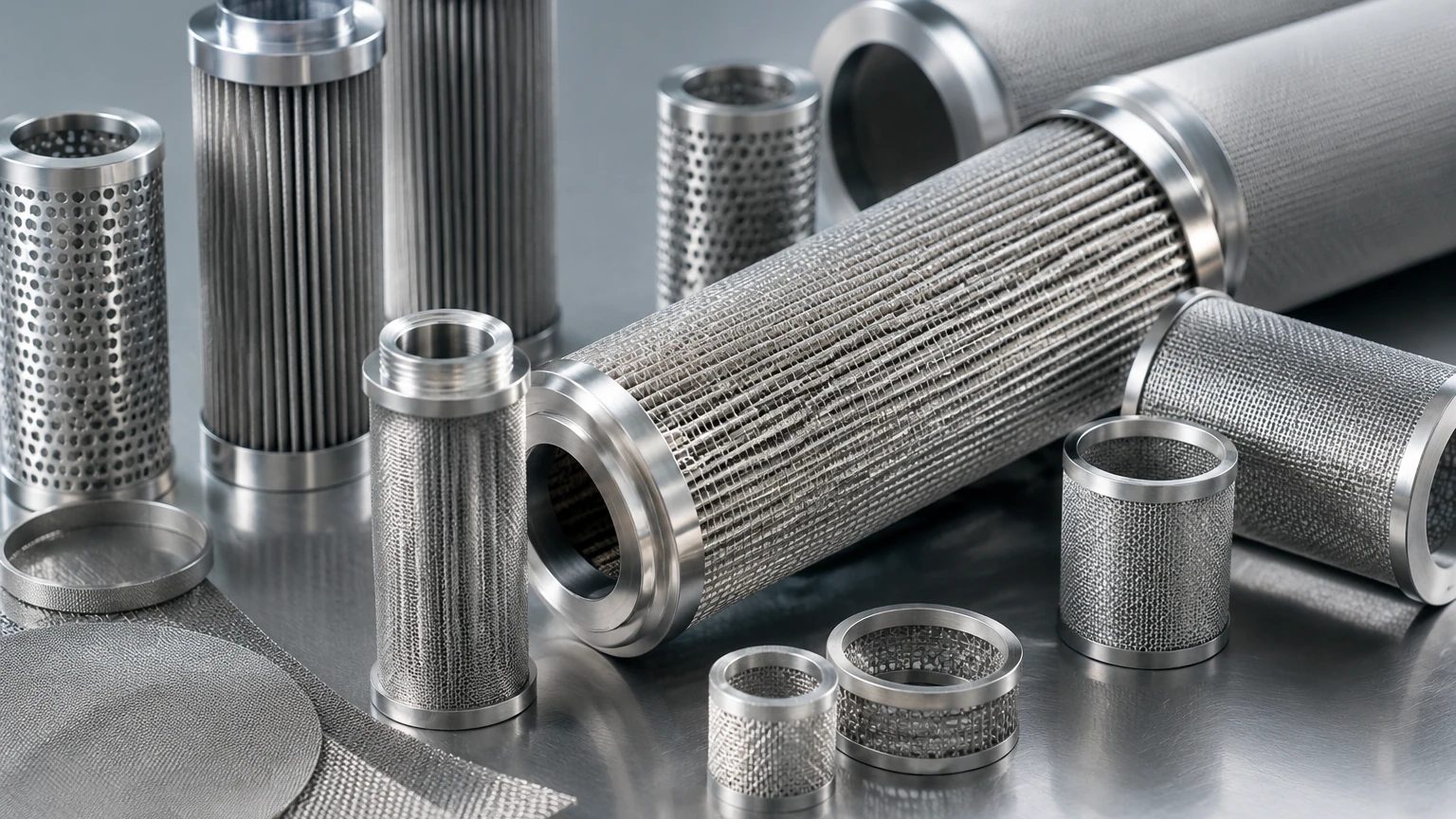
* Durability and Reusability: Unlike disposable plastic or paper filters, stainless steel filter elements can be cleaned and reused multiple times. In a semi batch context, where cycles are repeated frequently, the ability to clean a filter in-place (CIP) or via ultrasonic baths significantly reduces the total cost of ownership.
* Precision Filtration: Advanced manufacturing techniques allow for the production of wire mesh with incredibly precise apertures. This ensures that even the smallest catalyst particles are retained, which is vital for maintaining the economic viability of processes using expensive catalytic materials.
* Structural Integrity: Semi batch reactors often involve high-speed agitation. Filtration components must be able to withstand the mechanical stresses of turbulent flow and potential vibrations without shedding fibers or collapsing.
For a comprehensive overview of our full range of industrial filtration components and how they can be integrated into your specific process, visit our Main Page.
Customization and OEM Integration for Semi Batch Systems
No two semi batch processes are identical. Factors such as vessel size, reactant chemistry, and required throughput vary from one facility to another. This is where customization becomes a critical factor for engineering teams. A one-size-fits-all approach rarely provides the efficiency needed for high-performance industrial applications.
Customization options for semi batch filtration often include:
* Tailored Micron Ratings: Adjusting the pore size to match the specific particle size distribution of the process solids.
* Specialized End Fittings: Ensuring the filter cartridge fits perfectly into existing reactor housings or piping manifolds to prevent bypass.
* Reinforced Structures: Adding internal cores or external shrouds to filters that will be subjected to high-pressure backwashing or extreme mechanical stress.
* Alloy Selection: Choosing the specific grade of stainless steel or nickel alloy that provides the best corrosion resistance for the specific chemical cocktail used in the semi batch reaction.
By working with a manufacturer that specializes in custom solutions, engineers can ensure that the filtration component is an asset to the process rather than a bottleneck.
Maintenance, Cleaning, and Performance Optimization
The longevity of a filter in a semi batch system is largely dependent on the maintenance protocol. Because these systems are often used for high-value products, the cost of filter failure is high.
Cleaning Protocols
In many semi batch setups, the filter is cleaned between cycles. This can be done through backpulsing (using a reverse flow of gas or liquid to dislodge the filter cake) or through chemical cleaning. Because stainless steel is non-reactive to most cleaning agents, it allows for aggressive cleaning cycles that would destroy other materials. This ensures that the filter returns to its original clean pressure drop at the start of every new batch.
Monitoring and Replacement Cycles
Predictive maintenance is key. By monitoring the differential pressure across the filter during the semi batch cycle, operators can identify when a filter is reaching the end of its functional life. While stainless steel filters are durable, they are not infinite. Factors such as erosion from abrasive particles or gradual blinding from sub-micron fines will eventually necessitate replacement. Establishing a clear replacement cycle based on empirical data helps avoid catastrophic failures during a production run.
Conclusion
The semi batch process is a sophisticated method of chemical production that requires equally sophisticated filtration hardware. The dynamic nature of these operations—characterized by changing volumes, varying concentrations, and rigorous thermal demands—makes the selection of filtration media a primary engineering concern.
Stainless steel filtration solutions, such as those provided by Kaifil, offer the precision, durability, and customization required to optimize semi batch reactors. By focusing on high-quality materials and engineered designs, manufacturers can achieve higher product purity, better catalyst recovery, and a lower total cost of operation. Whether you are designing a new semi batch line or looking to improve the efficiency of an existing process, understanding the technical nuances of your filtration components is the first step toward operational excellence. For more information on tailored filtration solutions, please review our product options and application support on our Main Page.
