


Semiconductor Gas Filters Market
The semiconductor gas filters market represents a critical segment of the microelectronics supply chain, providing the essential purification hardware required to manufacture modern integrated circuits. As the industry transitions toward smaller process nodes—moving from 7nm and 5nm to 3nm and beyond—the tolerance for particulate contamination has reached near-zero levels. In this high-stakes environment, the performance of stainless steel and precision metal filtration components is a primary determinant of wafer yield and process stability.
For engineers and procurement professionals, navigating the semiconductor gas filters market requires a deep understanding of material science, fluid dynamics, and the specific rigors of ultra-high purity (UHP) gas delivery. This guide examines the technical requirements, market drivers, and evaluation criteria necessary for selecting filtration solutions that meet the demanding standards of modern fabrication facilities (fabs).
The Critical Role of High-Purity Filtration in Semiconductor Manufacturing
In semiconductor manufacturing, gases are used in almost every stage of production, including lithography, etching, chemical vapor deposition (CVD), and atomic layer deposition (ALD). These gases—ranging from inert nitrogen and argon to highly corrosive specialty gases like hydrogen chloride (HCl) and ammonia (NH3)—must be delivered with absolute purity. Even a single sub-micron particle can cause a "killer defect" on a wafer, leading to significant financial losses.
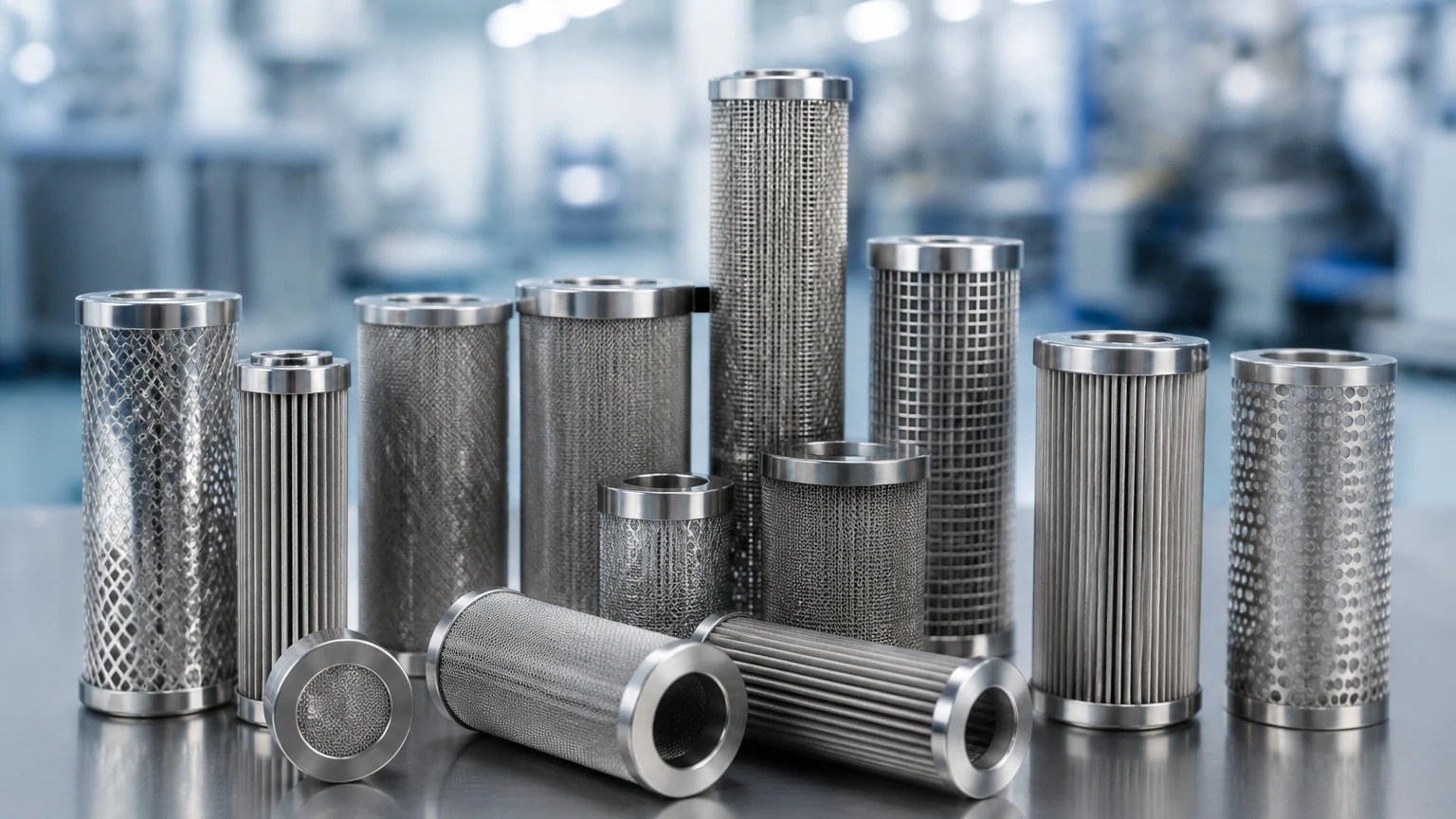
The semiconductor gas filters market has evolved to address these challenges by shifting toward advanced metal media. Unlike polymer-based filters, which may suffer from outgassing or chemical degradation in harsh environments, stainless steel and nickel-based filters offer the mechanical integrity and thermal stability required for UHP applications. These filters are designed to capture particles at the nanometer scale while maintaining high flow rates and minimal pressure drops across the gas delivery system.
Material Selection: Engineering for Corrosive and High-Temperature Environments
When evaluating components within the semiconductor gas filters market, material selection is the first and most critical engineering decision. The choice of media impacts not only filtration efficiency but also the longevity of the gas delivery manifold.
316L Stainless Steel
316L stainless steel is the industry standard for most UHP gas applications. Its low carbon content and high chromium/nickel composition provide excellent corrosion resistance. In the context of filtration, 316L is often used in the form of sintered metal powder or multi-layered wire mesh. These structures provide a robust framework that can withstand high differential pressures and temperatures exceeding 400°C, which is essential for heated gas lines used in ALD processes.
Nickel and Exotic Alloys
For processes involving highly reactive halogen gases (such as fluorine or chlorine), standard stainless steel may be susceptible to pitting. In these instances, the market utilizes high-nickel alloys or pure nickel filters. These materials offer superior resistance to chemical attack and ensure that the filter itself does not become a source of metallic contamination due to corrosion.
Surface Finish and Electropolishing
Beyond the base material, the internal surface finish of the filter housing is paramount. To prevent particle entrapment and minimize moisture adsorption, UHP filters undergo rigorous electropolishing. This process smooths the internal surfaces to a Ra (Roughness Average) of less than 5–10 micro-inches, ensuring that the gas path remains as clean as possible.
Technical Evaluation Criteria for Industrial Gas Filters
Engineers must look beyond basic dimensions when sourcing from the semiconductor gas filters market. A technical evaluation should focus on the following performance metrics:
1. Filtration Rating and Efficiency: Modern semiconductor processes require 99.9999999% (9-log) removal efficiency at the most penetrating particle size (MPPS), often rated down to 0.003 micrometers (3nm).
2. Flow Capacity vs. Pressure Drop: A filter must allow for the required gas flow without causing a significant drop in pressure, which could destabilize the process tool's mass flow controllers (MFCs). Engineering teams must calculate the Cv (flow coefficient) to ensure the filter is sized correctly for the specific gas density and flow rate.
3. Outgassing and Moisture Contribution: UHP gases must remain dry. Metal filters are preferred because they can be baked at high temperatures to remove residual moisture and hydrocarbons, achieving outgassing levels below detectable limits.
4. Helium Leak Integrity: Filter assemblies must be helium leak tested to ensure they are hermetically sealed. A typical requirement is a leak rate of less than 1×10^-9 atm cc/sec, preventing both gas leakage and atmospheric contamination.
Understanding Market Drivers and Industry Standards
The growth of the semiconductor gas filters market is intrinsically linked to the global expansion of fab capacity. As nations invest in domestic chip production, the demand for reliable filtration hardware has surged. However, this growth is accompanied by stricter industry standards, primarily those set by SEMI (Semiconductor Equipment and Materials International).
SEMI standards dictate the testing protocols for particle shedding, moisture contribution, and chemical compatibility. Compliance with these standards is non-negotiable for any component integrated into a Tier-1 process tool. Furthermore, the shift toward "Green Fabs" is driving the market to develop filters with longer service lives and lower environmental impact, favoring durable metal components over disposable plastic alternatives.
Common Risks and Failure Modes in Gas Filtration
Failure to properly specify or maintain filtration components can lead to catastrophic results in a semiconductor environment. Common risks include:
* Particle Shedding: If a filter is poorly manufactured or subjected to mechanical shock, it may shed its own material into the gas stream. This is why sintered metal and high-quality wire mesh filters are subjected to rigorous pulse testing during the OEM phase.
* Chemical Incompatibility: Using a standard 316L filter with a gas that requires a nickel alloy can lead to rapid corrosion. This not only destroys the filter but introduces metallic ions into the process chamber, poisoning the semiconductor devices.
* Seal Failure: The interface between the filter and the gas line (typically a VCR or C-seal fitting) is a common point of failure. Proper torque and high-quality gaskets are essential to maintain the UHP environment.
* Saturation and Clogging: While gas filters generally have long lifespans, an upstream failure (such as a failing valve or contaminated gas cylinder) can clog the filter prematurely. Monitoring pressure transducers across the filter is a standard practice to detect these events before they impact the wafer.
Customization and OEM Solutions for Specialized Equipment
Standard off-the-shelf filters do not always meet the spatial or functional requirements of modern gas delivery modules. Consequently, a significant portion of the semiconductor gas filters market is dedicated to customized OEM solutions.
Customization allows engineers to specify unique housing geometries, integrated bypass valves, or specific mesh densities tailored to a particular gas chemistry. As a professional manufacturer, Kaifil provides the technical expertise required to develop these specialized components. By working closely with equipment designers, manufacturers can ensure that filtration units are optimized for the specific flow dynamics and footprint of the tool. For those seeking to explore specific hardware configurations, it is advisable to Main Page and review product options and application support to align with project-specific technical requirements.
Procurement Considerations: Total Cost of Ownership
In the semiconductor gas filters market, the initial purchase price is often a secondary consideration compared to the total cost of ownership (TCO). A low-cost filter that requires frequent replacement or, worse, causes a single hour of tool downtime can result in costs far exceeding the savings on the component itself.
When calculating TCO, procurement teams should consider:
* Service Life: How many cycles or liters of gas can the filter process before replacement?
* Yield Protection: What is the reliability of the filter in preventing defects?
* Maintenance Labor: How easily can the filter be replaced within the gas cabinet?
* Supply Chain Stability: Can the manufacturer provide consistent quality and lead times for high-volume fab expansions?
By focusing on high-performance stainless steel and metal filtration components, fabs can achieve a more stable production environment with fewer interruptions for maintenance.
Conclusion
The semiconductor gas filters market is a foundational element of the global electronics industry. As the complexity of chip manufacturing increases, the reliance on high-precision, durable, and ultra-clean filtration hardware will only grow. By understanding the material advantages of stainless steel, adhering to strict technical evaluation criteria, and partnering with experienced manufacturers for customized solutions, engineers can ensure their gas delivery systems meet the rigorous demands of the next generation of semiconductor technology.
Selecting the right filtration partner is not merely a purchasing decision; it is an engineering commitment to quality and yield. As the industry continues to push the boundaries of physics, the components that keep the process clean will remain the silent enablers of innovation.
