


Suction Filter Hydraulic
In industrial hydraulic systems, the pump is often regarded as the heart of the operation. Its efficiency and longevity directly dictate the performance of the entire machinery. However, hydraulic pumps are precision-engineered components with tight tolerances, making them highly susceptible to damage from particulate contamination. A suction filter hydraulic component serves as the primary safeguard for these pumps, positioned on the intake line to intercept contaminants before they can enter the sensitive internal mechanisms.
Selecting the correct suction filter requires a deep understanding of fluid dynamics, material science, and the specific operational parameters of the hydraulic circuit. As a specialized manufacturer of stainless steel filtration solutions, Kaifil provides the technical expertise necessary to navigate these complexities, ensuring that industrial systems remain operational with minimal downtime. For more information on custom filtration components, you can visit the Main Page to review product options and application support.
The Role of Suction Filters in Hydraulic Circuits
The primary function of a suction filter hydraulic unit is to protect the hydraulic pump from large particles that may be present in the reservoir. These contaminants can originate from several sources, including built-in debris from the manufacturing process, external ingress through breathers or seals, and wear particles generated by other components within the system.
Unlike pressure filters or return-line filters, which are designed to capture fine silt and maintain overall fluid cleanliness, suction filters are typically "coarse" filters. Their main objective is to prevent "catastrophic" failure. If a large piece of metal, a stray bolt, or a fragment of a seal is drawn into the pump, it can cause immediate and irreparable damage to the gears, vanes, or pistons. By acting as a mechanical barrier, the suction filter ensures that only fluid free of large debris reaches the pump inlet.
However, the placement of a filter on the suction side introduces a unique engineering challenge: the risk of pump cavitation. Because the pump must "pull" fluid through the filter, any excessive resistance (pressure drop) can cause the fluid pressure to drop below its vapor pressure, leading to the formation of vapor bubbles. When these bubbles collapse in the high-pressure zone of the pump, they cause micro-explosions that erode metal surfaces. Therefore, the design and selection of a suction filter hydraulic assembly must balance filtration efficiency with high flow permeability.
Technical Specifications: Micron Ratings and Flow Capacity
When specifying a suction filter, engineers must look beyond simple dimensions. The two most critical technical factors are the micron rating and the rated flow capacity.
Micron Ratings for Suction Applications
In most industrial hydraulic applications, suction filters utilize a stainless steel wire mesh with a rating between 74 and 150 microns (approximately 100 to 200 mesh). While it might seem intuitive to use a finer filter to keep the oil cleaner, doing so on the suction side is dangerous. A fine-micron filter (such as 10 or 25 microns) creates too much flow resistance, especially when the oil is cold and viscous. This resistance leads to a high vacuum at the pump inlet, triggering cavitation.
For systems requiring high fluid cleanliness, engineers typically rely on a combination of a coarse suction strainer for pump protection and a high-efficiency glass fiber return-line filter for fine particle removal. This multi-stage approach optimizes both component protection and fluid longevity.
Sizing for Flow and Viscosity
A common rule of thumb in hydraulic engineering is to size the suction filter for at least two to three times the maximum flow rate of the pump. For example, if a pump delivers 100 liters per minute (LPM), the suction filter should be rated for at least 200 to 300 LPM. This over-sizing accounts for the increase in fluid viscosity during cold starts and provides a "dirt-holding" margin. As the filter captures debris, the available flow area decreases; an oversized filter ensures that the pressure drop remains within safe limits (typically less than 0.05 to 0.1 bar or 1.5 psi) even as the element begins to load with contaminants.
Material Selection: The Advantages of Stainless Steel
In demanding industrial environments, the material of the filter element is just as important as its rating. While some low-cost suction filters use treated paper or plastic mesh, stainless steel is the professional standard for B2B applications in chemical processing, food and beverage, and heavy hydraulics. Kaifil specializes in utilizing high-grade stainless steel (such as SUS 304 or SUS 316L) for several key reasons:
1. Chemical Compatibility: Industrial hydraulic fluids are not limited to mineral oils. Many systems use fire-resistant fluids, water-glycols, or synthetic esters that can degrade standard adhesives and paper media. Stainless steel is inert to almost all hydraulic fluids and additives.
2. Structural Integrity: Suction filters are subject to vacuum forces. If a filter element collapses due to high differential pressure, the debris it has collected will be dumped directly into the pump. Stainless steel wire mesh, often supported by a perforated metal inner core, provides the mechanical strength required to resist collapse.
3. Cleanability and Reusability: Unlike disposable cellulose elements, stainless steel mesh filters can often be cleaned and reused. This is particularly beneficial in large-scale industrial operations where reducing the total cost of ownership (TCO) and minimizing waste are corporate priorities. Ultrasonic cleaning or back-flushing can restore the element to near-original performance levels.
4. Temperature Resistance: In applications like steel mills or foundry hydraulics, fluid temperatures can fluctuate significantly. Stainless steel maintains its physical properties across a wide temperature range, where plastics might soften or become brittle.
Preventing Cavitation and Managing Pressure Drop
The greatest risk associated with a suction filter hydraulic installation is a high pressure drop ($ΔP$). Engineers must monitor the vacuum levels at the pump inlet to ensure the system operates within the "safe zone."
The Impact of Viscosity
Viscosity is the most variable factor affecting pressure drop. On a cold morning, hydraulic oil can be dozens of times thicker than at its operating temperature of 50°C. If the suction filter is not designed to handle this high-viscosity flow, the pump will starve. This is why many suction filters are equipped with an internal bypass valve. If the pressure differential across the mesh exceeds a certain threshold (e.g., 0.2 bar), the bypass valve opens, allowing unfiltered oil to reach the pump. While unfiltered oil is not ideal, it is far less damaging than the mechanical destruction caused by cavitation.
Installation Best Practices
To minimize flow resistance, the suction line should be as short and straight as possible. Every elbow, T-junction, or reduction in pipe diameter adds to the total pressure drop. The suction filter should be submerged well below the minimum oil level in the reservoir to prevent air from being drawn in (vortexing), but it should also be high enough from the bottom of the tank to avoid sucking up settled sludge and water.
Customization and OEM Engineering Support
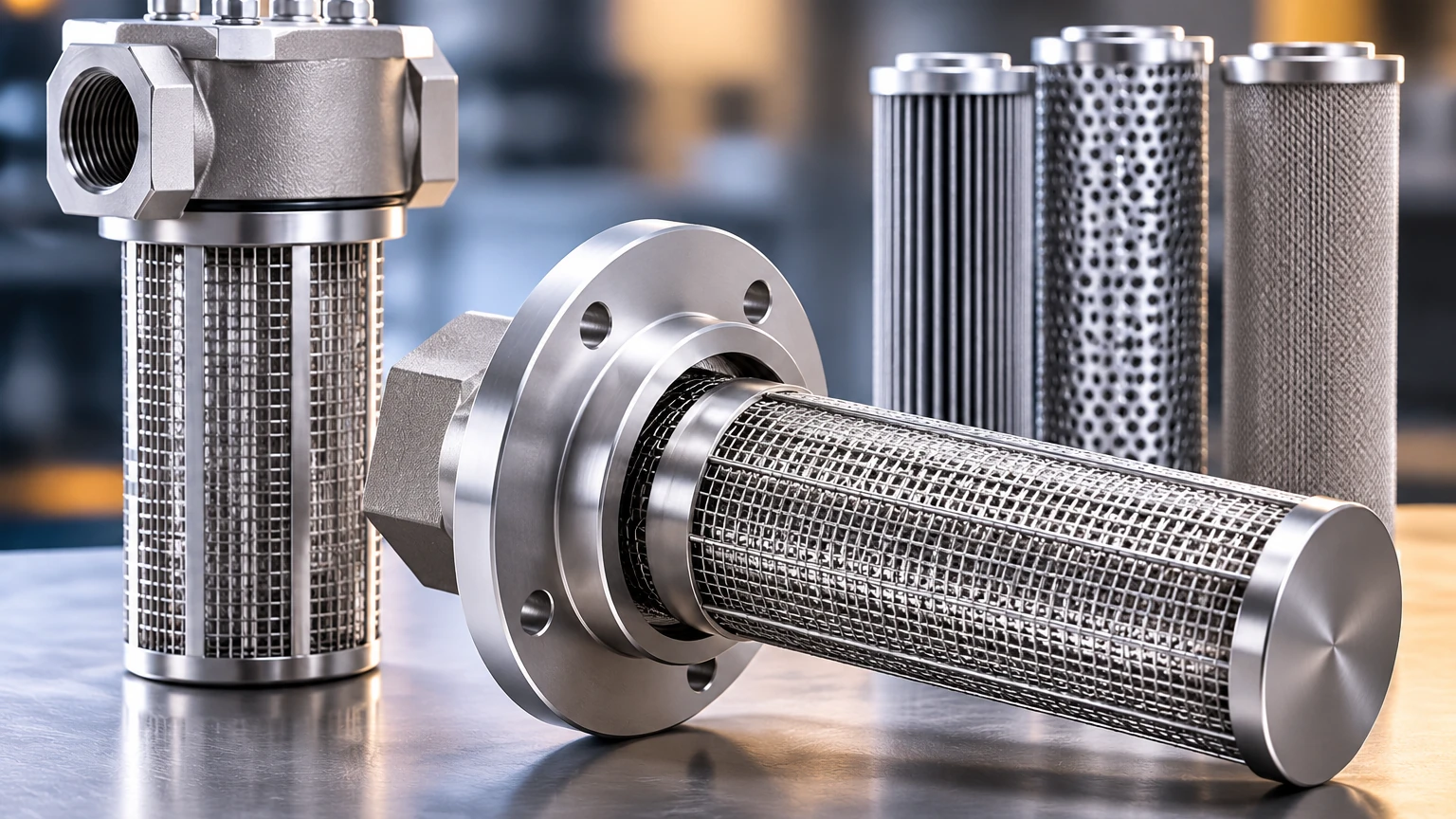
Standard off-the-shelf suction filters do not always meet the spatial or performance requirements of specialized industrial machinery. This is where custom OEM manufacturing becomes essential. When designing a custom suction filter hydraulic solution, several variables can be adjusted:
* Connection Types: Depending on the manifold or tank design, filters may require NPT, BSPP, or SAE flanged connections. Custom housings can be engineered to fit into tight footprints.
* Pleated vs. Cylindrical Elements: For high-flow applications, pleating the stainless steel mesh significantly increases the surface area. This lowers the initial pressure drop and extends the service interval compared to a simple cylindrical strainer.
* Magnetic Inserts: In systems where ferrous wear is a concern (such as in gearboxes or high-wear hydraulic motors), a magnetic column can be added to the center of the suction filter. This captures fine metallic particles that might otherwise pass through a 100-micron mesh.
* Visual and Electrical Indicators: For proactive maintenance, suction filters can be fitted with vacuum gauges or electrical switches that signal the control system when the filter is becoming clogged, allowing for scheduled maintenance before a bypass event occurs.
Kaifil works closely with engineering teams to develop these tailored solutions, ensuring that the filtration hardware is perfectly matched to the pump’s requirements and the environmental conditions of the site.
Evaluating Total Cost of Ownership (TCO)
In a B2B procurement context, the purchase price of a suction filter is only a small fraction of its total cost. Purchasing teams and engineers must consider the long-term implications of their choice. A low-quality, undersized filter may save money upfront but can lead to:
* Frequent Pump Replacements: Replacing a high-pressure piston pump can cost thousands of dollars in parts and labor.
* Unscheduled Downtime: In a continuous production environment, an hour of downtime can exceed the cost of the entire filtration system.
* Fluid Degradation: While suction filters don't remove fine silt, a failing pump (due to cavitation) will shed massive amounts of metallic debris into the oil, necessitating a full fluid change and system flush.
By investing in high-quality stainless steel suction filters, facilities can extend the mean time between failures (MTBF) for their hydraulic power units. The durability and cleanability of stainless steel media ensure that the filter remains a reliable asset for years, rather than a frequent replacement item.
Conclusion: Selecting the Right Partner
The suction filter hydraulic component is a critical insurance policy for any hydraulic system. Its design must be a precise calculation of flow, viscosity, and filtration surface area to protect the pump without inducing cavitation. For engineers and purchasing managers, the goal is to find a balance between robust protection and operational efficiency.
As a professional manufacturer, Kaifil provides the technical depth and manufacturing precision required to produce high-performance stainless steel filtration components. Whether you are designing a new hydraulic power unit or seeking to optimize an existing system, understanding the engineering nuances of suction filtration is the first step toward long-term reliability. For detailed specifications and to explore our range of custom metal filter solutions, visit the Main Page and consult with our technical team to ensure your hydraulic systems are protected by the best in industrial filtration technology.
