


V Bank Filter
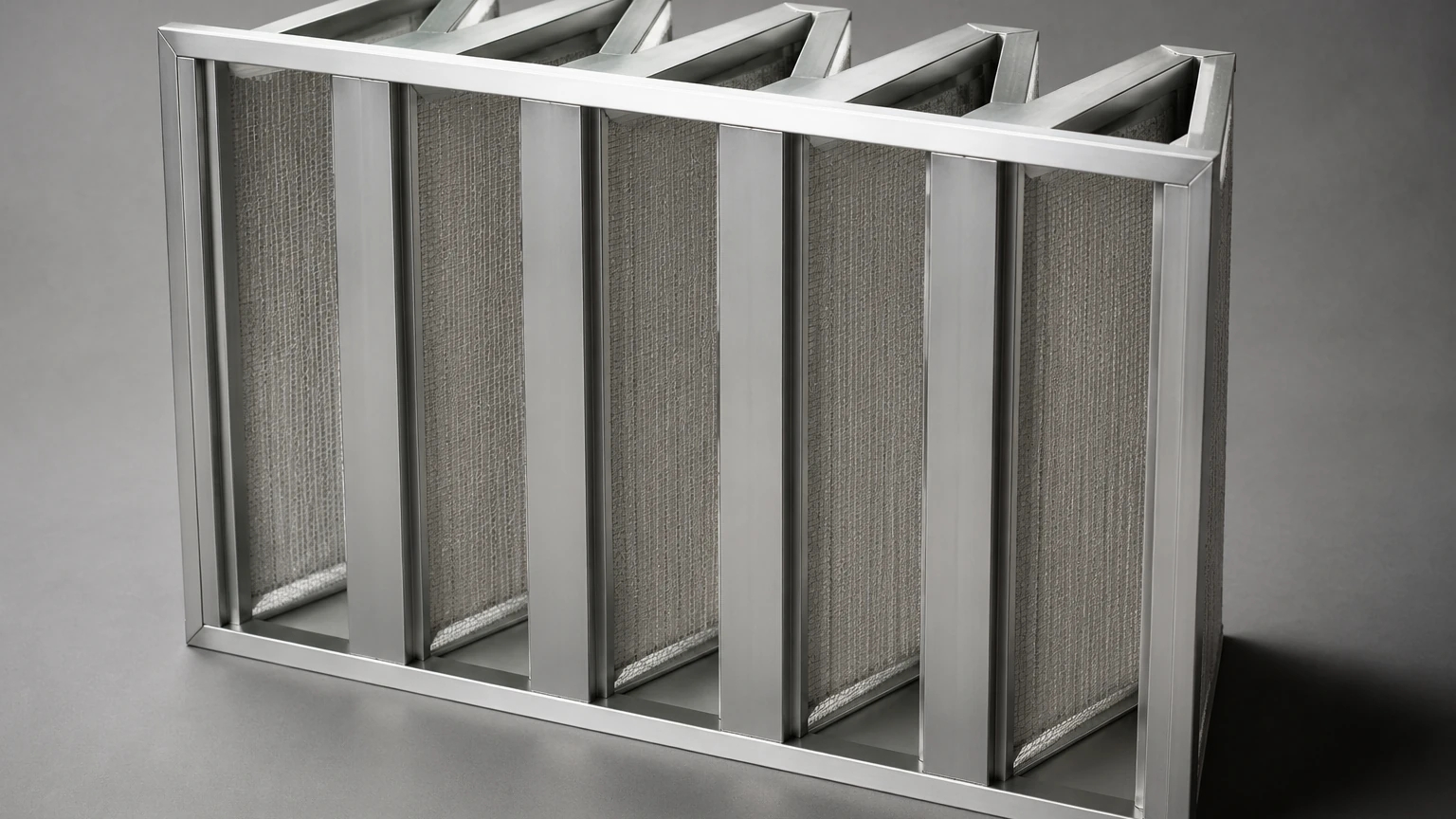
In the landscape of industrial filtration, the V bank filter represents a critical engineering solution for applications requiring high flow rates, low pressure drops, and extended service life. Unlike standard flat-panel or single-cylinder filters, the V bank configuration utilizes a series of pleated filter media arranged in a V-shaped geometry. This design significantly increases the effective filtration surface area within a compact footprint. For engineers and procurement specialists in the chemical, pharmaceutical, and food processing industries, understanding the technical nuances of V bank filters—particularly those constructed from stainless steel—is essential for optimizing process efficiency and reducing total cost of ownership.
Industrial filtration systems often face the challenge of balancing high-volume throughput with the need for fine particle retention. When a standard filter reaches its capacity, the pressure drop across the media increases, leading to higher energy consumption and potential system failure. The V bank filter addresses this by distributing the fluid or gas flow across multiple angled panels, effectively slowing the face velocity at the media surface while maintaining a high overall system flow rate.
Engineering Principles of V Bank Design
The fundamental advantage of a V bank filter lies in its geometric efficiency. By arranging filter packs in a V-shape (often in multiples of two, four, or six "banks"), the design can offer up to three times the surface area of a standard box filter of the same frontal dimensions.
Surface Area and Flow Dynamics
From a fluid dynamics perspective, the increased surface area provided by the V bank configuration directly correlates to a lower velocity of the medium (liquid or gas) as it passes through the filter material. This lower "pore velocity" is beneficial for several reasons:
1. Reduced Pressure Drop: Lower velocity results in less resistance, which translates to a lower initial pressure drop ($ΔP$). For systems powered by pumps or fans, this reduces energy requirements.
2. Higher Dirt Holding Capacity: With more surface area available, the filter can trap a larger volume of contaminants before reaching its terminal pressure drop, thereby extending the interval between cleaning or replacement cycles.
3. Improved Filtration Efficiency: Many filtration mechanisms, such as brownian motion or depth filtration, are more effective at lower velocities, allowing for more consistent particle capture.
Structural Integrity in Industrial Environments
In heavy-duty industrial applications, the V bank filter must withstand significant mechanical stress. This includes high differential pressures, thermal expansion, and potential pressure surges. High-quality V bank filters, such as those manufactured by Kaifil, utilize robust stainless steel frames and support grids to ensure the V-packs remain stable and do not bypass or collapse under load. The use of precision welding and specialized sealing gaskets ensures that the filter remains leak-proof throughout its operational life.
Material Selection: The Case for Stainless Steel
While V bank filters are commonly found in HVAC systems using synthetic or glass fiber media, industrial process filtration demands more resilient materials. Stainless steel (typically Grade 304 or 316L) is the preferred material for V bank filters used in chemical processing, steam filtration, and high-temperature gas applications.
Corrosion and Chemical Resistance
In the chemical and petrochemical sectors, filters are frequently exposed to aggressive solvents, acids, and bases. Stainless steel 316L, containing molybdenum, provides superior resistance to pitting and crevice corrosion. This is a critical consideration for engineers when selecting a V bank filter for corrosive environments where carbon steel or plastic components would fail prematurely.
Thermal Stability
Many industrial processes operate at temperatures exceeding 200°C, which would melt or degrade standard synthetic filter media. Stainless steel wire mesh or sintered metal fiber V bank filters maintain their structural integrity and filtration accuracy at extreme temperatures. This makes them ideal for hot gas filtration or high-pressure steam applications found in the food and beverage industry.
Cleanability and Sustainability
One of the most significant advantages of a stainless steel V bank filter is its ability to be cleaned and reused. Unlike disposable filters that contribute to industrial waste and recurring procurement costs, metal filters can be cleaned using ultrasonic baths, backwashing, or chemical cleaning agents. For a comprehensive overview of reusable filtration components and custom manufacturing capabilities, technical teams can visit the Kaifil Main Page to evaluate material specifications.
Performance Evaluation Criteria
When specifying a V bank filter for a new or existing system, engineers must evaluate several key performance indicators (KPIs) to ensure the component meets the application's demands.
Micron Rating and Beta Ratio
The micron rating defines the size of particles the filter is intended to capture. However, for industrial precision, the Beta Ratio ($β$) is a more accurate measure. It represents the ratio of particles of a given size upstream versus downstream of the filter. A V bank filter with a high Beta Ratio provides more consistent filtration performance, which is vital for protecting downstream equipment like high-pressure pumps or sensitive nozzles.
Flow Rate vs. Differential Pressure
Engineers should request a flow curve that plots the flow rate against the differential pressure. A well-designed V bank filter should exhibit a linear relationship at lower flow rates, with a gradual curve as it nears its maximum capacity. If the initial pressure drop is too high, it may indicate that the filter surface area is insufficient for the application, or the media density is too high for the required flow.
Seal and Gasket Compatibility
The interface between the V bank filter and the housing is a common point of failure. Depending on the process fluid, gaskets may be made of Viton, EPDM, PTFE, or silicone. Ensuring that the gasket material is chemically compatible with the process fluid and can withstand the operating temperature is as important as the filter media itself.
Common Applications for Industrial V Bank Filters
The versatility of the V bank design allows it to be utilized across various demanding sectors. Its high-capacity nature makes it particularly suitable for "pre-filtration" or as a final stage in high-flow systems.
* Chemical Processing: Used to remove catalysts, precipitates, or impurities from large volumes of liquid chemicals. The V bank design allows for high-throughput processing without frequent shutdowns.
* Food and Beverage: In large-scale breweries or dairies, V bank filters are used for water treatment and steam filtration. Stainless steel construction ensures compliance with food safety standards and allows for CIP (Clean-in-Place) sterilization.
* Pharmaceuticals: For the intake of sterile air or the filtration of bulk active pharmaceutical ingredients (APIs), the V bank filter provides the necessary surface area to maintain high purity levels while handling significant flow volumes.
* Hydraulic and Lubrication Systems: In heavy machinery, V bank filters help maintain the cleanliness of large oil reservoirs, protecting components from wear-causing particles and extending the life of the lubricant.
Addressing Common Risks and Failures
Even a well-engineered V bank filter can fail if not properly selected or maintained. Engineers should be aware of the following risks:
1. Bypass Leakage: If the filter frame is not perfectly aligned or the sealing mechanism is inadequate, contaminated fluid can bypass the media. This is often caused by poor manufacturing tolerances or improper installation.
2. Media Blinding: This occurs when the filter is exposed to a high concentration of particles that are exactly the size of the pores, or when sticky/oily contaminants coat the surface. In V bank filters, blinding can happen unevenly if the flow distribution across the banks is not uniform.
3. Fatigue Cracking: In systems with high-frequency pressure pulsations, the pleated metal media can experience fatigue. High-quality manufacturers use support layers and specialized pleating techniques to mitigate this risk.
Selection and Customization Considerations
Before finalizing a purchase, the intended project audience should confirm several technical details with the manufacturer. Standard off-the-shelf V bank filters may not meet the specific requirements of a specialized industrial process.
Custom Dimensions and Configurations
While standard sizes exist, many industrial housings require custom-sized V bank filters. Manufacturers like Kaifil specialize in OEM solutions where the frame dimensions, the number of V-packs, and the pleat depth can be tailored to the existing hardware. This eliminates the need for expensive housing modifications.
Media Selection
The choice between woven wire mesh, sintered metal fiber, or wedge wire depends on the nature of the contaminant and the required cleaning method. For example, sintered fiber felt offers high porosity and excellent depth filtration, while woven mesh is easier to clean and provides precise surface filtration.
Total Cost of Ownership (TCO)
When evaluating the cost of a V bank filter, engineers should look beyond the initial purchase price. A stainless steel V bank filter may have a higher upfront cost than a disposable alternative, but its longevity, cleanability, and the energy savings associated with a lower average pressure drop often result in a much lower TCO over a 5-to-10-year period.
Conclusion
The V bank filter is a sophisticated filtration component designed to meet the high-capacity needs of modern industrial processes. By maximizing surface area and utilizing durable materials like stainless steel, these filters provide a reliable and efficient solution for protecting equipment and ensuring product purity. For technical professionals, the key to success lies in selecting a filter that balances micron accuracy with flow requirements, while considering the long-term benefits of a cleanable, robust design. For those seeking specialized engineering support or custom manufacturing for industrial filtration, exploring the resources available on the Kaifil Main Page is a recommended next step in the procurement process.
