


Sintered Disc Filter
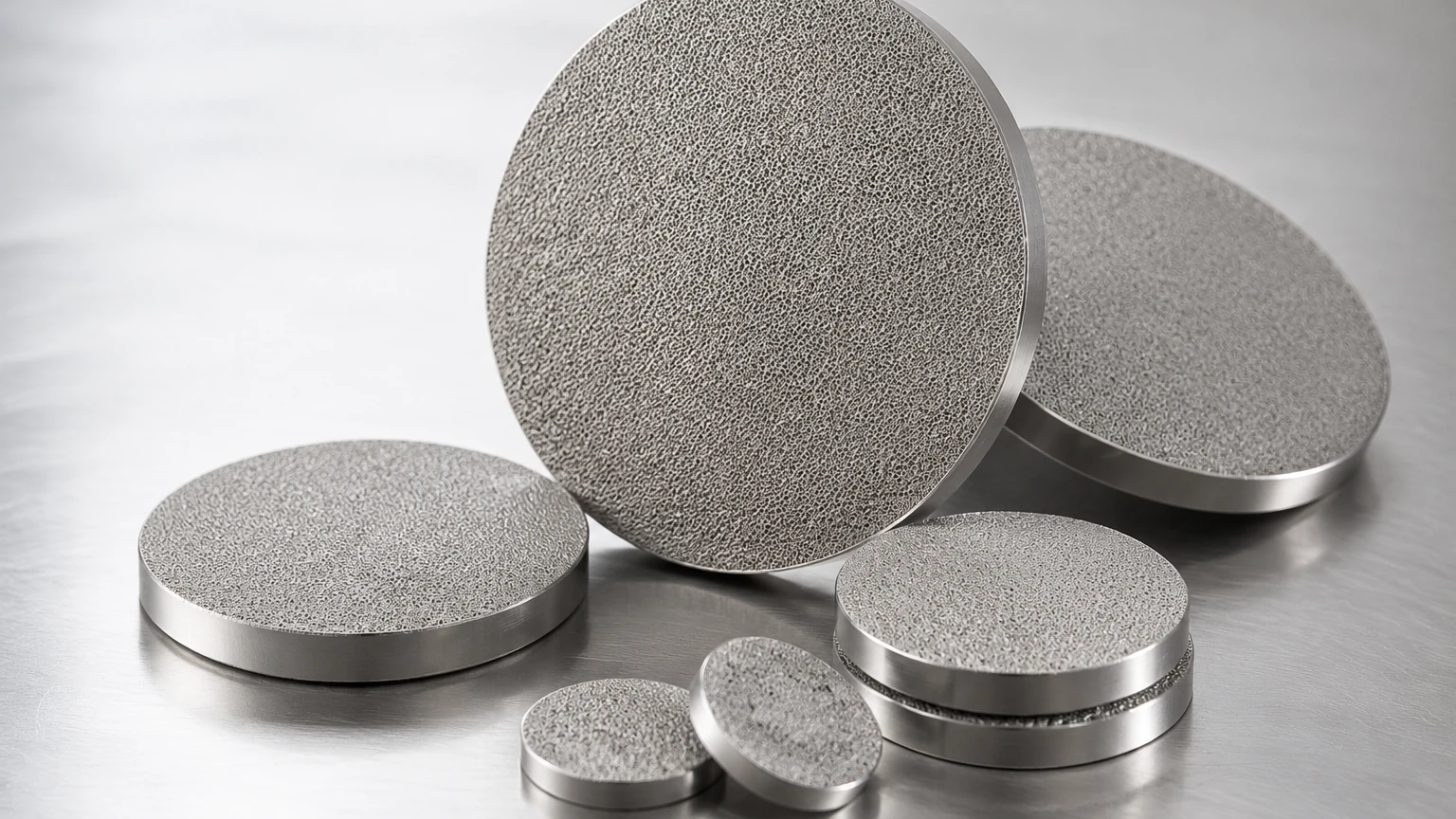
In the landscape of industrial filtration, the sintered disc filter represents a pinnacle of engineering for high-pressure, high-temperature, and corrosive environments. Unlike traditional fabric or non-bonded mesh filters, a sintered disc filter is a rigid, porous component created through a process called diffusion bonding. This manufacturing technique transforms multiple layers of stainless steel wire mesh or metal powders into a single, integrated structure that retains the filtration accuracy of fine mesh while gaining the mechanical strength of a solid plate. For engineers and technical procurement teams, understanding the nuances of these components is essential for optimizing system performance and reducing long-term operational costs.
Understanding the Sintered Disc Filter: Construction and Manufacturing
The performance of a sintered disc filter is rooted in the sintering process. Sintering involves taking multiple layers of stainless steel wire mesh—ranging from coarse support layers to fine filtration layers—and placing them under high pressure and temperature in a vacuum furnace. The temperature is carefully controlled to remain below the melting point of the metal, facilitating diffusion bonding. This process causes the atoms at the contact points of the wires to interdiffuse, creating permanent molecular bonds.
The result is a multi-layer structure that typically includes:
1. The Filtration Layer: A fine-weave mesh that determines the micron rating and filtration accuracy.
2. The Protective Layer: A slightly coarser mesh that protects the delicate filtration layer from mechanical damage during handling and operation.
3. The Support Layers: One or more layers of heavy-duty, coarse mesh that provide the structural rigidity required to withstand high differential pressures without deformation.
By combining these layers into a monolithic disc, manufacturers like Kaifil ensure that the pore size remains stable even under extreme mechanical stress. This stability is a critical advantage over non-sintered filters, where wires can shift under pressure, leading to "pore migration" and bypass of contaminants.
Technical Performance Characteristics
When evaluating a sintered disc filter for industrial applications, engineers must consider several key performance metrics that define its suitability for a specific process.
Mechanical Strength and Pressure Resistance
Because of the diffusion bonding, sintered discs possess exceptional mechanical strength. They can operate under high differential pressures ($ΔP$) that would cause standard mesh filters to collapse or burst. This makes them ideal for hydraulic systems and high-viscosity fluid filtration where the resistance to flow is naturally high.
Thermal Stability and Corrosion Resistance
Typically manufactured from Grade 304 or 316L stainless steel, these filters are designed to operate in temperatures ranging from -200°C to over 600°C. The use of 316L stainless steel is particularly common in chemical processing due to its superior resistance to pitting and crevice corrosion in chloride-rich environments. For even more extreme conditions, specialty alloys like Hastelloy or Monel can be used in the sintering process.
Filtration Accuracy and Permeability
Sintered disc filters offer precise micron ratings, often ranging from 0.5 microns to 200 microns. Despite their rigid structure, they maintain high permeability. The uniform distribution of pores ensures a consistent flow rate and a low initial pressure drop, which is vital for energy efficiency in pump-driven systems.
Filtration Mechanisms: Surface vs. Depth Filtration
A sintered disc filter can be engineered to perform either surface filtration or a hybrid of surface and depth filtration, depending on the layer configuration.
Surface Filtration occurs when the particles are larger than the pore size of the outermost filtration layer. These particles are trapped on the upstream surface of the disc, forming a "filter cake." This cake itself can then act as an additional filtration medium, often trapping even finer particles. Surface filtration is highly effective for applications where backwashing or mechanical cleaning is required, as the cake can be easily dislodged.
Depth Filtration is achieved when the sintered disc is composed of metal fibers or multiple layers of varying pore sizes. In this configuration, particles are trapped within the tortuous path of the internal structure. Depth filtration offers a higher dirt-holding capacity, meaning the filter can operate for longer periods before reaching its maximum allowable pressure drop. However, depth-style sintered discs are generally more difficult to clean and are often used in applications where the contaminant load is relatively low but the required purity is extremely high.
Engineering Selection Criteria for Industrial Systems
Selecting the correct sintered disc filter requires a detailed analysis of the operating environment. Engineers should confirm the following parameters before finalizing a specification:
* Micron Rating (Absolute vs. Nominal): It is critical to distinguish between absolute ratings (where 100% of particles above a certain size are captured) and nominal ratings (which indicate a percentage efficiency). For critical pharmaceutical or semiconductor applications, absolute ratings are usually required.
* Operating Flow Rate: The disc must be sized to handle the maximum system flow without exceeding the initial pressure drop limits. Over-sizing the filter can extend service life but increases initial capital expenditure.
* Fluid Compatibility: Beyond the base metal, engineers must consider the compatibility of any gaskets or seals used in conjunction with the disc.
* Viscosity of the Medium: High-viscosity fluids like polymers or heavy oils require sintered discs with larger surface areas or coarser support layers to manage the increased flow resistance.
For technical teams seeking specialized guidance on material selection and custom geometries, visiting the Main Page provides access to professional product options and application support tailored to complex industrial needs.
Maintenance, Cleaning, and Operational Longevity
One of the most significant advantages of a stainless steel sintered disc filter is its cleanability. Unlike disposable polymer or paper filters, a sintered disc is a long-term asset. When the pressure drop reaches a predetermined threshold, the disc can be cleaned and returned to service.
Common Cleaning Methods
1. Backwashing/Backflushing: Using a clean fluid or gas to flow in the reverse direction through the disc. This is most effective for surface-trapped contaminants.
2. Ultrasonic Cleaning: Placing the disc in an ultrasonic bath. The high-frequency sound waves create cavitation bubbles that dislodge fine particles trapped deep within the pores. This is the gold standard for restoring the permeability of sintered components.
3. Chemical Cleaning: Using solvents, acids, or caustic solutions to dissolve organic or inorganic deposits. This method requires careful selection of chemicals to ensure they do not react with the stainless steel alloy.
4. Heat Treatment (Burn-off): For filters used in polymer or plastic processing, high-temperature ovens can be used to carbonize and remove organic build-up.
Proper maintenance cycles not only extend the life of the filter but also ensure that the system operates at peak efficiency, reducing the energy load on pumps and compressors.
Industrial Applications and Case Use
Sintered disc filters are utilized across a broad spectrum of industries where reliability is non-negotiable.
Chemical and Petrochemical Processing
In these sectors, filters are exposed to aggressive solvents and high-pressure catalysts. Sintered discs are used for catalyst recovery, ensuring that expensive catalytic materials are not lost in the process stream, and for the filtration of corrosive acids.
Pharmaceutical and Biotechnology
In sterile environments, the ability of a sintered disc filter to withstand steam-in-place (SIP) and autoclave sterilization is invaluable. They are used for gas sparging, vent filtration, and the removal of precipitates from active pharmaceutical ingredients (APIs).
Food and Beverage
Stainless steel is the preferred material for food contact. Sintered discs are employed in the filtration of steam used for direct injection into food products, as well as in the clarification of oils and syrups where high temperatures are required to maintain low viscosity.
Aerospace and Hydraulics
High-performance hydraulic systems in aircraft and heavy machinery require filtration that can handle rapid pressure spikes and extreme vibrations. The structural integrity of the sintered disc ensures that no metal fragments or fibers are released into the hydraulic fluid, which could cause catastrophic component failure.
Customization and OEM Considerations
Every industrial system has unique constraints, from physical space limitations to specific flow dynamics. Standard off-the-shelf filters often fall short of meeting these specialized requirements. This is where the value of a manufacturer with robust OEM capabilities becomes apparent.
Customization options for sintered disc filters include:
* Variable Layering: Adjusting the number and sequence of mesh layers to balance flow rate, strength, and filtration depth.
* Specific Geometries: Producing discs in non-standard diameters, thicknesses, or with integrated threaded fittings and flanges.
* Surface Treatments: Applying coatings or specialized finishes to enhance hydrophobicity or reduce protein binding in medical applications.
By working closely with a manufacturer like Kaifil, engineers can develop filtration components that are optimized for their specific equipment, leading to better performance and lower total cost of ownership. For more information on how custom designs can support your project, visit the Main Page to review product options and application support.
Conclusion
The sintered disc filter is more than just a consumable; it is a precision-engineered component designed to solve the most difficult filtration challenges. By leveraging the strength of diffusion-bonded stainless steel, these filters provide a level of durability and accuracy that other media cannot match. Whether the goal is protecting sensitive downstream equipment, recovering valuable catalysts, or ensuring the purity of a final product, the selection of a high-quality sintered disc is a critical decision for any engineering team. Through proper selection, maintenance, and a focus on technical specifications, industrial operators can achieve efficient, reliable, and cost-effective filtration performance for years to come.
