


Sintered Discs
In industrial filtration, the requirement for components that can withstand extreme pressures, corrosive chemicals, and high temperatures while maintaining precise pore structures is paramount. Sintered discs represent a specialized class of filtration media engineered to meet these rigorous demands. Unlike traditional woven wire mesh or disposable polymer filters, sintered discs are produced through a thermal bonding process that creates a rigid, integrated structure. This article examines the technical characteristics, engineering considerations, and selection criteria for sintered discs within industrial B2B applications.
Understanding Sintered Discs: Manufacturing and Structure
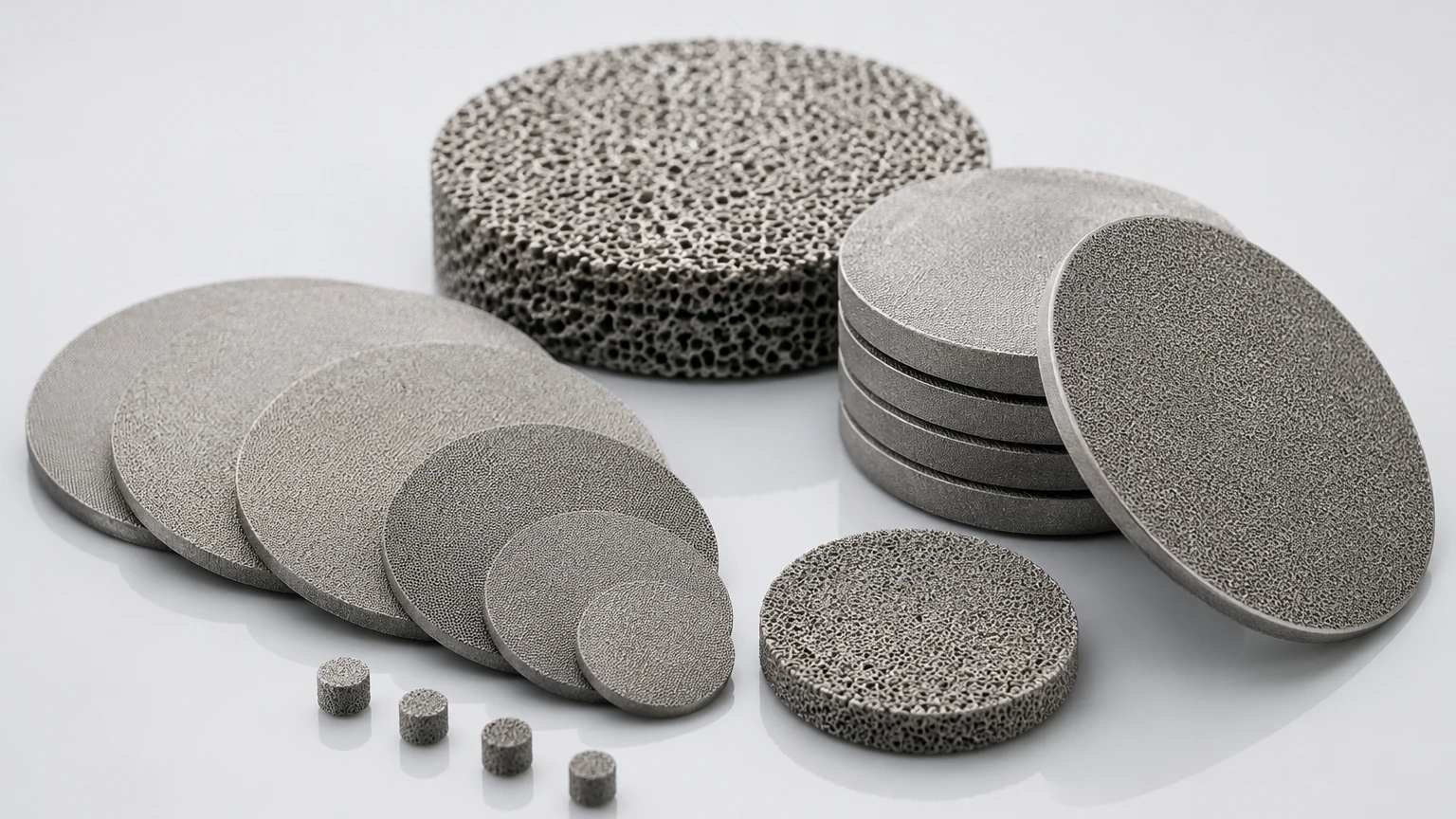
Sintered discs are primarily manufactured using two types of base materials: metal powders or multiple layers of stainless steel wire mesh. The core of the technology lies in the sintering process—a heat treatment that bonds the metal particles or mesh wires at their contact points without melting the entire structure. This occurs in a controlled-atmosphere furnace at temperatures just below the melting point of the alloy.
Sintered Metal Powder Discs
These discs are formed by compressing spherical or irregular metal powders into a disc shape and then sintering them. The result is a porous metal structure with a tortuous path for fluids. The pore size is determined by the particle size of the powder and the degree of compression. These discs are known for their exceptional depth filtration capabilities and ability to capture very fine particles, often down to 0.5 microns.
Sintered Wire Mesh Discs
Sintered mesh discs are constructed by laminating several layers of woven wire mesh (typically 2 to 7 layers) and sintering them together. The layers usually include a fine filtration layer, supported by coarser drainage and reinforcement layers. This configuration provides a combination of high mechanical strength and high permeability, making them ideal for surface filtration and applications requiring frequent back-flushing.
Key Technical Specifications and Material Selection
When specifying sintered discs for industrial systems, material selection is the first critical decision. The choice of alloy dictates the disc’s resistance to chemical attack and thermal degradation.
* Stainless Steel 316L: The most common material for sintered discs due to its excellent corrosion resistance and mechanical properties. The "L" (low carbon) variant is preferred to prevent carbide precipitation during the sintering process, ensuring the integrity of the grain structure.
* Stainless Steel 304: Suitable for less aggressive environments where cost-effectiveness is a priority but high mechanical strength is still required.
* Specialty Alloys: For extreme environments, alloys such as Hastelloy, Inconel, or Monel may be used. These are typically reserved for highly acidic or high-temperature applications (exceeding 500°C) where standard stainless steel would fail.
Porosity and Filtration Rating
Porosity refers to the percentage of void space within the disc. Sintered discs typically offer porosity ranges from 30% to 50%. A higher porosity generally equates to lower pressure drops and higher flow rates, but may compromise mechanical strength. Engineers must distinguish between nominal and absolute filtration ratings:
* Nominal Rating: Indicates the ability to retain a majority of particles of a specific size.
* Absolute Rating: Indicates the diameter of the largest spherical particle that can pass through the filter under specific test conditions. For critical pharmaceutical or chemical processes, absolute ratings are usually required.
Performance Advantages in Industrial Environments
Sintered discs offer several performance advantages over non-metallic or non-sintered metallic filters:
1. Mechanical Stability: The diffusion-bonded structure ensures that the pores do not shift or enlarge under high differential pressure. This prevents "media migration," where parts of the filter material break off and contaminate the filtrate.
2. Thermal Resistance: Sintered stainless steel discs can operate continuously at temperatures up to 450°C (842°F) in oxidizing atmospheres and even higher in reducing environments.
3. Pressure Tolerance: These components can handle high collapse pressures, making them suitable for hydraulic systems and high-pressure gas filtration where pressure spikes are common.
4. Uniform Pore Distribution: The sintering process allows for very tight control over pore size distribution, ensuring consistent filtration performance across the entire surface of the disc.
Engineering Considerations for Custom Sintered Discs
Selecting a sintered disc involves more than just choosing a micron rating. Engineers must consider the fluid dynamics and the physical integration of the disc into the housing. As a specialist in customized filtration, Kaifil provides engineering support to ensure these components meet specific application envelopes.
Pressure Drop (ΔP)
The pressure drop across a sintered disc is a function of the fluid viscosity, flow velocity, and the disc's permeability. A disc that is too thick or has pores that are too fine will result in an unacceptable ΔP, increasing energy costs and potentially damaging pumps. Conversely, a disc that is too thin may lack the structural integrity to withstand the process pressure.
Edge Treatment and Integration
Sintered discs often require specific edge treatments to ensure a leak-proof seal within a filter housing. Options include:
* Solid Metal Rims: Integrating a solid metal ring around the circumference for welding or gasket seating.
* Compressed Edges: Thinning the edges of the sintered material to fit into tight tolerances.
* Welded Assemblies: Sintering the disc directly into a cap or threaded fitting to create a single-piece component.
Customization Options
Industrial applications rarely follow a one-size-fits-all approach. Customization options include varying the thickness (from 1mm to several centimeters), diameter, and the number of mesh layers. For unique flow patterns, discs can be manufactured with graduated porosity, where the pore size changes through the depth of the disc.
Applications Across Demanding Industries
Sintered discs are utilized in sectors where reliability and precision are non-negotiable. Their versatility allows them to function in liquid, gas, and steam filtration.
* Chemical Processing: Used for the filtration of aggressive solvents, catalysts recovery, and polymer melt filtration. Their resistance to a wide pH range makes them indispensable in chemical synthesis.
* Pharmaceutical and Biotech: In these industries, the ability to sterilize components is vital. Sintered discs can be cleaned in place (CIP) and sterilized in place (SIP) using high-pressure steam without losing their structural integrity.
* Food and Beverage: Used for carbonation, aeration, and the removal of impurities from steam used in food processing. The non-shedding nature of sintered metal ensures compliance with food safety standards.
* Hydraulic and Aerospace: Sintered discs serve as "last chance" filters in hydraulic lines to protect sensitive valves and actuators from particulate contamination.
* Gas Sparging: Beyond filtration, sintered discs are used to introduce gases into liquids in the form of very fine bubbles, increasing the surface area for gas-liquid reactions in bioreactors or water treatment plants.
Maintenance, Cleaning, and Total Cost of Ownership
One of the primary B2B considerations for choosing sintered discs is the total cost of ownership (TCO). While the initial purchase price of a sintered stainless steel disc is higher than that of a disposable polymer or paper filter, the long-term value is realized through durability and cleanability.
Cleaning Methods
Sintered discs are designed to be reused. Depending on the contaminant, several cleaning methods can be employed:
* Back-flushing: Reversing the flow of the fluid to dislodge particles trapped on the surface.
* Ultrasonic Cleaning: Using high-frequency sound waves in a cleaning solution to remove fine particles from deep within the pores.
* Chemical Cleaning: Using acids, alkalis, or solvents to dissolve organic or inorganic deposits.
* High-Temperature Burn-off: Heating the disc in a vacuum furnace to carbonize and remove organic contaminants.
Replacement Cycles
The replacement cycle for a sintered disc is significantly longer than for disposable media. A disc is typically replaced only when the permanent pressure drop (the ΔP after cleaning) reaches a level that impairs process efficiency or when physical damage occurs. In many industrial settings, a well-maintained sintered disc can last for several years.
Conclusion
Sintered discs provide a robust and precise solution for industrial filtration challenges that exceed the capabilities of standard materials. By understanding the nuances of material selection, pore structure, and mechanical design, engineers can optimize their filtration systems for maximum uptime and efficiency. For those seeking specialized guidance or OEM manufacturing for these components, you can Review product options and application support on our Main Page to find the right configuration for your specific industrial requirements.
When evaluating a supplier for sintered discs, it is essential to confirm their capabilities in material verification, filtration accuracy testing, and customized design. Proper specification at the outset prevents costly downtime and ensures the long-term integrity of the industrial process.
