


Ss Mesh Filter
In industrial processing, the reliability of filtration components directly impacts product purity, equipment longevity, and operational efficiency. The stainless steel (SS) mesh filter is a cornerstone technology in this regard, offering a combination of mechanical strength, thermal resistance, and chemical stability that synthetic media cannot match. For engineers and procurement specialists, selecting the correct ss mesh filter involves a deep understanding of material science, fluid dynamics, and the specific rigors of the application environment.
As a specialized manufacturer, Kaifil provides high-performance filtration solutions tailored to demanding industrial requirements. Understanding the technical nuances of these components is essential for optimizing system performance and ensuring long-term reliability. For more information on specific configurations and technical support, you can visit the Main Page to explore professional filtration options.
Technical Fundamentals of SS Mesh Filter Construction
The performance of an ss mesh filter is primarily determined by the alloy used and the specific weave pattern employed during manufacturing. These factors dictate the filter’s micron rating, flow capacity, and structural integrity.
Material Selection: 304 vs. 316L
Stainless steel is the preferred material for industrial filters due to its oxidation resistance. However, the choice between grades is critical:
* Grade 304: The standard industrial grade, offering excellent strength and basic corrosion resistance. It is suitable for water treatment, food processing, and general industrial applications where high concentrations of chlorides or acids are not present.
* Grade 316L: Containing molybdenum, 316L provides superior resistance to pitting and crevice corrosion, particularly in chloride-rich environments. The "L" denotes low carbon content, which improves weldability and prevents intergranular corrosion in the heat-affected zones of the filter assembly. This grade is the industry standard for pharmaceutical and chemical processing.
Weave Types and Their Functional Impact
The geometry of the mesh determines how it interacts with particles and fluid flow:
* Plain Weave: The simplest pattern where wires cross over and under each other. It provides high flow rates and is easy to clean, making it ideal for coarse filtration.
* Twill Weave: Each shute wire passes successively over and under two warp wires. This allows for a heavier wire diameter for a given mesh count, increasing the filter's durability.
* Dutch Weave (Plain and Twill): This weave uses different wire diameters for warp and shute. The result is a dense, strong mesh with very fine openings. Dutch weaves are preferred for high-pressure applications where precision and mechanical strength are paramount.
* Reverse Dutch Weave: By reversing the arrangement of warp and shute wires, manufacturers create a mesh that is exceptionally strong and resistant to high pressure, often used in continuous polymer filtration or high-pressure hydraulic systems.
Engineering Considerations for Industrial Selection
Selecting an ss mesh filter is not merely about choosing a micron size. Engineers must account for the physical forces and fluid properties the filter will encounter during its service life.
Pressure Drop and Flow Rate
The differential pressure ($ΔP$) across a filter is a critical metric. A high initial pressure drop limits the available flow rate and shortens the time between cleaning cycles. The effective filtration area (EFA) is the primary variable here; by utilizing pleated designs or larger filter housings, engineers can increase the EFA, thereby reducing the velocity of the fluid through the mesh and lowering the pressure drop. This optimization is a core focus at the Main Page of filtration design.
Absolute vs. Nominal Filtration Ratings
It is vital to distinguish between these two ratings:
* Nominal Rating: Refers to the ability of the filter to retain a certain percentage (usually 60% to 90%) of particles of a specific size. It is an approximation and can vary based on flow conditions.
* Absolute Rating: Defines the diameter of the largest hard spherical particle that will pass through the filter under specific test conditions. For critical pharmaceutical or chemical applications, absolute-rated ss mesh filters are required to ensure process consistency.
Structural Integrity and Support
In high-pressure systems, a single layer of mesh may deform or burst. Industrial filters often utilize a multi-layer construction. A fine filtration layer is sandwiched between coarser support layers (often referred to as sintered mesh or reinforced mesh). This construction allows the filter to withstand high differential pressures without compromising the precision of the filtration layer.
Key Applications in Demanding Environments
The versatility of the ss mesh filter makes it indispensable across several high-stakes industries. Each sector imposes different stresses on the filtration media.
Chemical and Petrochemical Processing
In these environments, filters must contend with aggressive solvents, high temperatures, and corrosive reagents. Stainless steel's ability to maintain its structural properties at temperatures exceeding 400°C makes it superior to polymer-based filters. It is commonly used for catalyst recovery, monomer filtration, and the removal of impurities from corrosive acids.
Food and Beverage Industry
Hygiene and cleanability are the primary concerns here. SS mesh filters are non-migrating (they do not shed fibers into the product) and can withstand Clean-in-Place (CIP) procedures involving caustic chemicals and high-pressure steam sterilization. Applications include syrup filtration, beverage clarification, and steam filtration for direct product contact.
Pharmaceutical Manufacturing
Precision is the hallmark of pharmaceutical filtration. SS mesh filters are used in the production of active pharmaceutical ingredients (APIs), where they must provide absolute retention of particles while ensuring zero contamination. The smooth surface of stainless steel prevents bacterial growth and allows for validated sterilization processes.
Customization and OEM Solutions
Standard off-the-shelf filters rarely meet the specific needs of complex industrial machinery. Customization is often necessary to balance filtration efficiency with the physical constraints of the equipment.
Tailored Geometry and Fittings
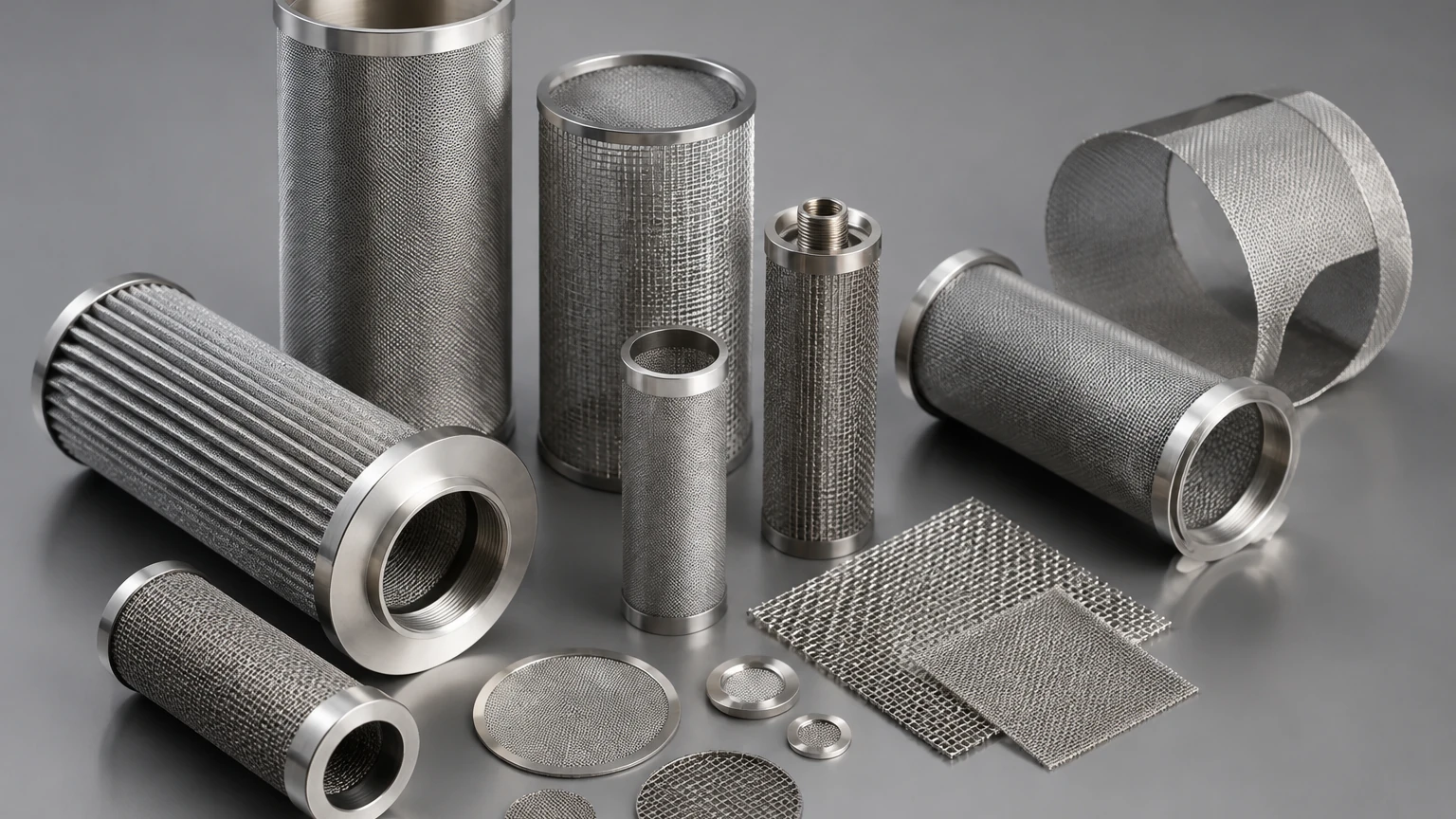
Custom ss mesh filters can be engineered into various shapes, including cylindrical cartridges, conical strainers, flat discs, or complex pleated elements. End caps and fittings (such as NPT, BSP, or flange connections) must be integrated seamlessly to prevent bypass—a condition where fluid bypasses the filter media entirely due to poor sealing.
Sintered Mesh Technology
For the most demanding applications, multiple layers of SS mesh are sintered together. This process uses heat and pressure to fuse the wires at their contact points without melting them. The result is a porous metal plate that combines the precision of fine mesh with the strength of a solid metal plate. This is particularly useful in fluidized beds, aeration, and high-pressure hydraulic return lines.
Evaluating Total Cost of Ownership (TCO)
While the initial purchase price of an ss mesh filter is higher than that of disposable paper or polymer filters, the Total Cost of Ownership is often significantly lower in industrial settings.
1. Reusability: Stainless steel filters are designed to be cleaned and reused. Whether through backwashing, ultrasonic cleaning, or chemical baths, the ability to restore the filter to near-original condition eliminates the recurring cost of replacement media.
2. Reduced Downtime: High-strength metal filters are less prone to sudden failure or "blow-through." This reliability reduces unscheduled maintenance and prevents downstream contamination that could ruin entire batches of product.
3. Waste Reduction: In an era of increasing environmental regulation, reducing the volume of spent filter cartridges sent to landfills is a significant operational advantage.
Maintenance and Operational Best Practices
To maximize the lifespan of an ss mesh filter, a proactive maintenance strategy is required. Monitoring the differential pressure is the most effective way to determine when a filter requires cleaning. If the $ΔP$ exceeds the manufacturer's recommended threshold, the risk of media deformation or particle unloading increases.
Cleaning Methodologies
* Ultrasonic Cleaning: High-frequency sound waves create cavitation bubbles that dislodge fine particles trapped deep within the mesh pores. This is highly effective for Dutch weave and sintered filters.
* Chemical Cleaning: Soaking the filter in specific solvents or acids can dissolve organic or mineral buildup. It is essential to ensure the cleaning agent is compatible with the specific grade of stainless steel.
* Backwashing: Reversing the flow of fluid through the filter can flush out surface-loaded contaminants. This is often automated in continuous process systems.
Conclusion
The ss mesh filter is a vital component for ensuring process integrity in modern industry. By understanding the technical specifications—from alloy selection and weave patterns to pressure drop calculations—engineers can specify filtration solutions that offer the best balance of performance and longevity. As a professional manufacturer, Kaifil remains committed to delivering precision-engineered stainless steel filtration components that meet the rigorous demands of the global industrial market. For technical guidance and custom manufacturing capabilities, professionals are encouraged to consult the resources available on the Main Page.
