


Sintered Filter Disk
In industrial filtration, the sintered filter disk represents a pinnacle of engineering for high-pressure, high-temperature, and corrosive environments. Unlike standard woven wire mesh or disposable polymer filters, these disks are manufactured through a thermal diffusion process that creates a permanent, rigid structure. This article provides a technical overview of sintered filter disks, focusing on their manufacturing, performance metrics, and the critical engineering considerations required for successful integration into industrial systems.
Understanding Sintered Filter Disk Technology
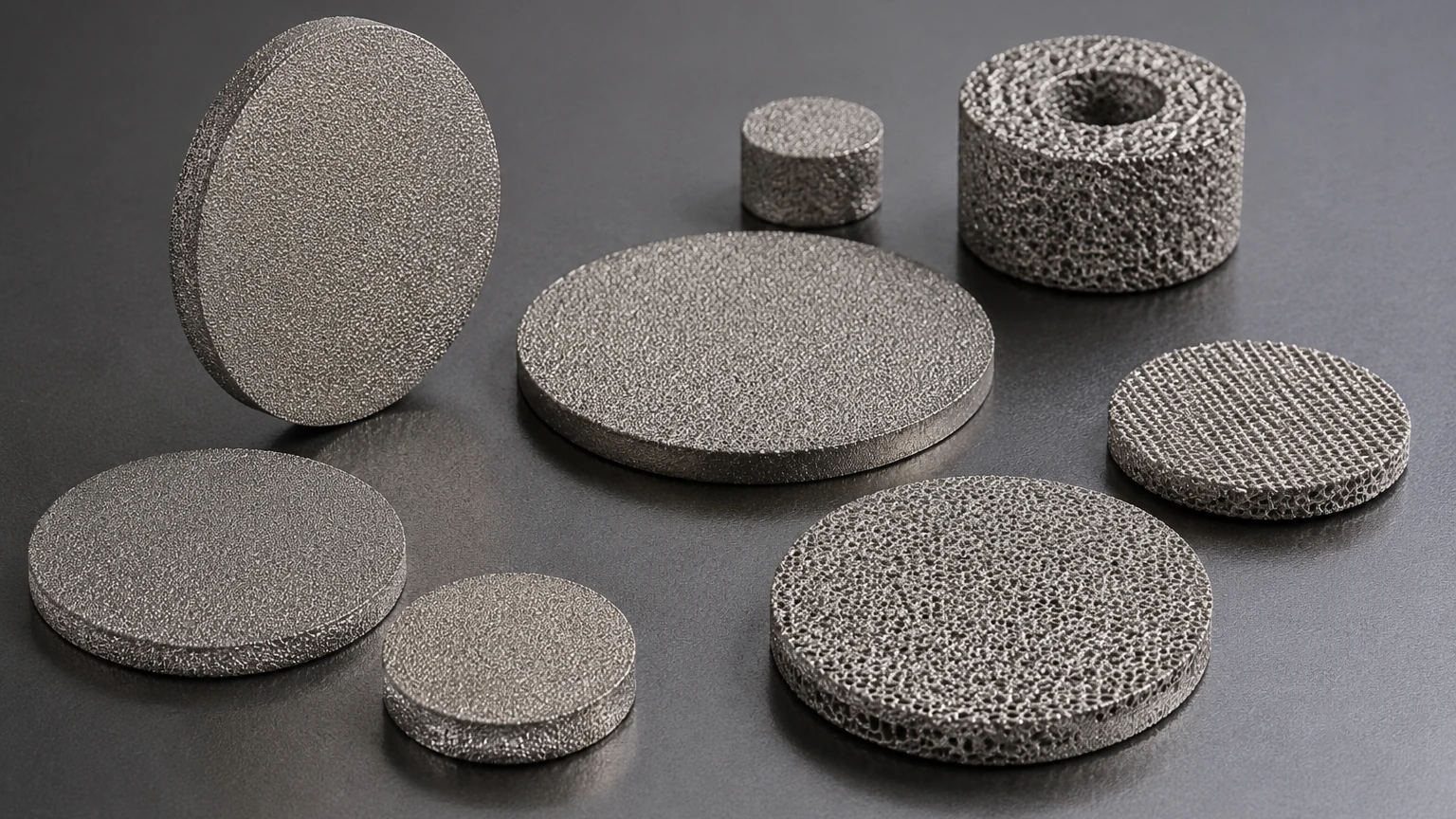
A sintered filter disk is a porous metal component produced by bonding multiple layers of stainless steel wire mesh or metal powders through a process known as sintering. This involves placing the material in a high-temperature furnace under controlled atmospheric conditions, often with applied pressure. The temperature is maintained just below the melting point of the metal, causing the contact points of the individual wires or particles to fuse through molecular diffusion.
The result is a monolithic structure that retains the porosity of the original material but gains significant mechanical strength and stability. For engineers, this means the filter media will not migrate, and the pore sizes remain constant even under extreme hydraulic stress. Kaifil specializes in these custom stainless steel filtration solutions, ensuring that the structural integrity of each disk meets the rigorous demands of chemical processing and pharmaceutical manufacturing.
Engineering and Manufacturing Processes
The performance of a sintered filter disk is largely determined by its construction. There are two primary types of sintered media used in disk production:
Multi-Layer Sintered Wire Mesh
This is the most common construction for industrial disks. It typically consists of several layers of stainless steel wire mesh (often 3 to 7 layers) stacked in a specific orientation.
1. The Control Layer: A fine mesh layer that determines the filtration accuracy (micron rating).
2. The Support Layers: Coarser mesh layers that provide mechanical rigidity and protect the control layer from deformation.
3. The Drainage Layers: Layers designed to facilitate the flow of the filtrate and reduce pressure drop.
Sintered Metal Powder
These disks are formed from spherical or irregular metal powders. The porosity is controlled by the particle size of the powder and the sintering parameters. Powder-sintered disks are often used when very fine filtration (down to 0.5 microns) is required and where a high degree of depth filtration is beneficial.
Material Selection
Stainless steel 316L is the industry standard due to its excellent corrosion resistance and carbon content, which minimizes carbide precipitation during welding. However, for specialized applications, alloys such as Hastelloy, Monel, or Inconel may be utilized to withstand specific chemical attacks or temperatures exceeding 500°C.
Key Performance Characteristics
When evaluating a sintered filter disk for a project, engineers must focus on several performance indicators that distinguish these components from alternative filtration media.
Mechanical Strength and Pressure Resistance
One of the primary advantages of the sintering process is the resulting mechanical strength. Standard wire mesh can shift or experience "pore enlargement" under high pressure. Sintered disks, however, are self-supporting. They can withstand high differential pressures (often up to several hundred bars depending on the housing design) without the need for additional perforated support plates in some configurations.
Thermal Stability
Sintered stainless steel disks can operate continuously at temperatures ranging from -200°C to 600°C in non-oxidizing environments. This makes them indispensable in steam filtration, polymer melt filtration, and high-temperature gas processing where polymer-based filters would fail.
Precise Filtration Accuracy
Because the sintering process fixes the wires in place, the pore size distribution is extremely narrow. This provides a consistent "absolute" filtration rating, ensuring that particles above a specific size are reliably captured. This is critical in pharmaceutical and food and beverage applications where batch consistency is paramount.
Critical Selection Criteria for Industrial Applications
Selecting the right sintered filter disk requires more than just picking a micron rating. Engineers must consider the fluid dynamics and chemical environment of the entire system. Reviewing product options and application support at the Main Page can assist in navigating these technical variables.
1. Fluid Compatibility and Viscosity
The viscosity of the fluid significantly impacts the pressure drop across the disk. High-viscosity fluids, such as polymers or heavy oils, require disks with larger surface areas or coarser support layers to maintain flow rates. Chemical compatibility must also be verified to prevent pitting or stress corrosion cracking, especially in chloride-rich environments.
2. Flux Rate and Pressure Drop (ΔP)
The flux rate (flow per unit area) must be balanced against the initial pressure drop. A common mistake is selecting a filter that is too fine for the application, leading to a high initial ΔP and a shortened service life. Engineers should calculate the clean pressure drop and the terminal pressure drop (the point at which the filter must be cleaned or replaced).
3. Contaminant Characteristics
Is the contaminant deformable or rigid? Is it crystalline or fibrous? Sintered wire mesh disks are excellent for surface filtration, allowing for easy backwashing of rigid particles. If the contaminants are gelatinous or vary in size, a sintered powder disk or a multi-layer depth-sintered structure may be more appropriate to prevent premature surface blinding.
Common Risks and Failure Modes
Even the most robust sintered filter disk can fail if misapplied or poorly maintained. Understanding these risks is essential for maintaining system uptime.
Surface Blinding and Clogging
Blinding occurs when particles become lodged within the pore structure or form a dense cake on the surface that cannot be removed by standard cleaning. This is often the result of an incorrect micron rating or unexpected changes in the process fluid. In systems with high solids loading, pre-filtration is often necessary to protect the precision sintered disk.
Fatigue and Stress Cracking
In applications involving cyclic pressure pulses (such as reciprocating pumps or rapid valve closures), the filter disk may experience fatigue. While sintering provides strength, the heat-affected zones near welds or the edges of the disk can be points of failure if the disk is not properly seated or if the housing allows for excessive movement.
Bypass Leakage
No matter how efficient the filter media is, the system will fail if fluid can bypass the disk. This usually occurs due to improper sealing. Sintered disks often require precision-machined edges or integrated gaskets (such as PTFE or Viton) to ensure a leak-proof fit within the filter housing.
Maintenance and Cleaning Procedures
A significant advantage of the sintered filter disk is its cleanability. Unlike disposable cartridges, these disks are a long-term investment. Proper cleaning protocols can extend the service life of a disk for several years.
Ultrasonic Cleaning
This is the most effective method for removing fine particles trapped within the internal pore structure. The disk is submerged in a cleaning solvent, and high-frequency sound waves create cavitation bubbles that dislodge contaminants.
Backwashing and Backpulsing
In automated systems, a reverse flow of clean fluid or gas can be used to blow off the filter cake. This is highly effective for surface-loading sintered mesh disks. The design of the disk must be able to withstand the reverse pressure required for this process.
Chemical Cleaning
For contaminants like organic polymers or mineral scale, chemical baths (such as caustic soda or dilute acids) may be used. It is vital to ensure that the cleaning agents are compatible with the stainless steel grade and any sealing materials used in the disk assembly.
Customization and OEM Solutions
Industrial filtration is rarely a one-size-fits-all field. Customization is often required to fit existing hardware or to meet specific flow requirements. Kaifil provides extensive OEM capabilities, allowing for the design of sintered filter disks with specific diameters, thicknesses, and multi-layer configurations.
Engineering teams should confirm the following before finalizing a custom order:
* Edge Treatment: Should the edge be raw, welded, or encased in a metal ring?
* Layer Orientation: Does the application require specific flow directions?
* Micron Rating Validation: Does the disk require bubble point testing to verify the absolute rating?
Conclusion
The sintered filter disk is an essential component for high-performance industrial filtration. By combining the chemical resistance of stainless steel with the structural integrity of the sintering process, these disks offer a reliable solution for demanding environments. When selecting a disk, engineers must prioritize mechanical compatibility, flow dynamics, and cleanability to ensure the lowest total cost of ownership and maximum process efficiency. For those seeking specialized filtration components, Kaifil remains a dedicated partner in delivering precision-engineered stainless steel solutions for global industrial applications.
