


Sintered Flow Restrictors
In precision industrial environments, the ability to control the flow of gases and liquids with high repeatability and reliability is a fundamental engineering requirement. Sintered flow restrictors have emerged as a superior alternative to traditional calibrated orifices and needle valves in applications where durability, clog resistance, and uniform flow distribution are paramount. Unlike a single-hole orifice, a sintered flow restrictor utilizes a porous metal matrix to create a tortuous path for the fluid, providing calibrated resistance that is less susceptible to environmental fluctuations and mechanical wear.
As industrial processes become increasingly automated and sensitive, understanding the technical nuances of sintered flow restrictors is essential for engineers and procurement teams. This guide explores the manufacturing principles, performance characteristics, and selection criteria necessary for implementing these components in demanding B2B applications.
The Engineering Behind Sintered Flow Restrictors
Sintered flow restrictors are manufactured through a powder metallurgy process. High-purity metal powders, typically 316L stainless steel, are compacted and then heated in a controlled-atmosphere furnace to a temperature just below their melting point. This process, known as sintering, causes the metal particles to bond at their contact points while maintaining a network of interconnected pores.
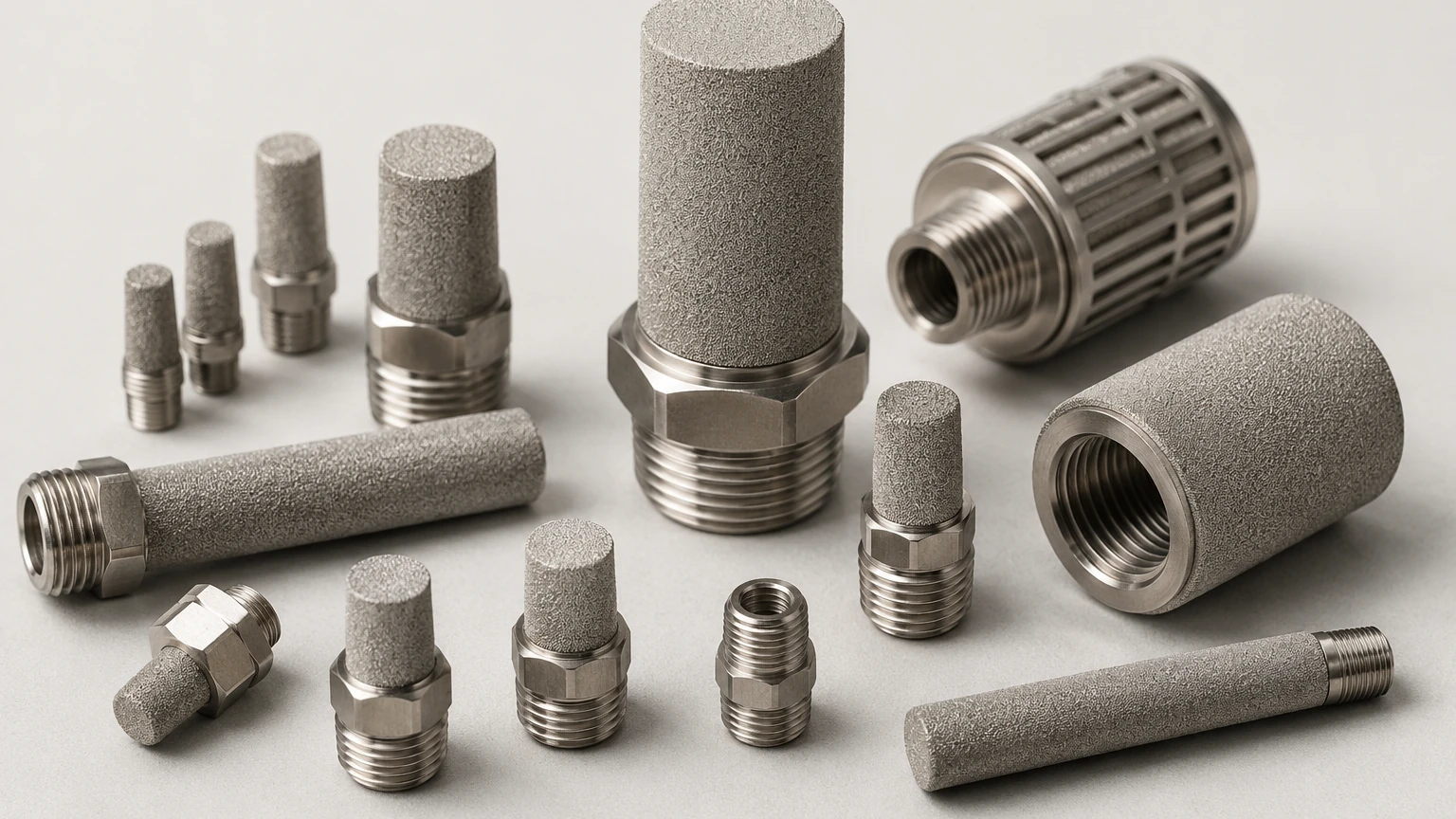
The resulting structure is a rigid, porous metal component that acts as a multi-passage flow control device. Because the flow is distributed across thousands of tiny channels rather than a single opening, the velocity of the fluid remains relatively low and uniform. This "tortuous path" design is the primary reason why sintered flow restrictors excel in maintaining laminar flow and resisting the catastrophic failure modes often associated with traditional orifices.
Material Selection and Durability
While 316L stainless steel is the industry standard due to its excellent corrosion resistance and mechanical strength, other alloys such as Hastelloy, Monel, or Inconel may be used for specialized chemical processing or high-temperature environments. The choice of material directly impacts the component’s lifespan and its compatibility with the process fluid. In hydraulic and chemical applications, the structural integrity of the sintered matrix ensures that the restrictor can withstand high differential pressures without deformation or shedding of particles.
Performance Advantages Over Traditional Orifices
Engineers often face a choice between a drilled orifice and a sintered flow restrictor. While drilled orifices are simpler to manufacture, they present several technical challenges in precision applications.
Resistance to Clogging
A primary risk with single-hole orifices is clogging. A single particle of debris matching the diameter of the hole can completely stop the flow. In contrast, sintered flow restrictors feature a high number of interconnected pores. If a single pore becomes obstructed, the fluid simply redirects through the thousands of other available paths. This inherent redundancy significantly extends the service life of the component and reduces the frequency of emergency maintenance.
Laminar Flow and Noise Reduction
Traditional orifices often generate turbulent flow and acoustic noise, especially at high pressure drops. The porous structure of a sintered restrictor naturally dampens turbulence, promoting laminar flow. This is particularly critical in analytical instrumentation, such as gas chromatography or mass spectrometry, where turbulent pulses can interfere with sensor accuracy. Furthermore, the reduction in fluid velocity through the matrix helps minimize noise in pneumatic systems.
Precision and Calibration
Sintered flow restrictors can be calibrated to extremely tight tolerances. By adjusting the thickness, diameter, and micron rating of the sintered element, manufacturers can achieve precise flow rates at specific differential pressures. This level of customization allows for the regulation of gas flows down to fractions of a standard cubic centimeter per minute (SCCM).
Key Applications in Industrial Sectors
The versatility of sintered flow restrictors makes them indispensable across a wide range of industries where precision fluid handling is required.
Gas Chromatography and Analytical Instrumentation
In laboratory and field-testing equipment, maintaining a constant flow of carrier gases is vital for reproducible results. Sintered restrictors provide the stable, pulse-free flow necessary for sensitive detectors. They are also used to protect delicate sensors from pressure surges.
Medical and Pharmaceutical Manufacturing
Medical devices, such as oxygen concentrators and anesthesia delivery systems, rely on flow restrictors to ensure patient safety. The biocompatibility of 316L stainless steel and the ability to sterilize these components make them ideal for pharmaceutical processing and medical gas regulation.
Semiconductor and Vacuum Systems
In semiconductor fabrication, the precise delivery of process gases is a requirement for thin-film deposition and etching. Sintered flow restrictors are also utilized as vacuum breakers or venting elements, allowing for the controlled re-pressurization of vacuum chambers without disturbing sensitive internal components with high-velocity air jets.
Aerospace and Defense
From hydraulic fluid regulation to fuel system venting, the high strength-to-weight ratio and vibration resistance of sintered metal components ensure reliability in extreme environments. They are often used as flame arrestors in fuel lines, where the porous matrix quenches flames by absorbing heat while still allowing gas to pass through.
Selection Criteria for Engineers and Purchasing Teams
Selecting the correct sintered flow restrictor requires a detailed understanding of the operating environment. When consulting with a manufacturer, technical teams should be prepared to provide the following specifications:
1. Fluid Type: Is the medium a gas or a liquid? The viscosity and density of the fluid significantly affect the flow characteristics through the porous matrix.
2. Target Flow Rate: Specify the required flow (e.g., SLM, SCCM, or L/min) at a given inlet and outlet pressure.
3. Differential Pressure (ΔP): The difference between the upstream and downstream pressure is the driving force behind the flow. Sintered restrictors must be sized to handle the maximum expected ΔP without structural failure.
4. Micron Rating: This refers to the size of the pores within the matrix. A lower micron rating provides higher resistance and finer filtration but may require higher pressure to achieve the same flow rate.
5. Operating Temperature: High temperatures can affect the fluid's properties and the mechanical strength of the housing. Ensure the material and any seals used in the assembly are rated for the environment.
6. Mechanical Integration: How will the restrictor be installed? Common options include press-fit discs, threaded plugs (NPT, BSPP), or integrated tube fittings. Custom housings are often necessary for OEM applications.
For organizations looking to integrate these components into their systems, visiting the Main Page of a specialized manufacturer can provide deeper insights into the available customization options and material certifications.
Maintenance and Longevity
One of the most significant advantages of stainless steel sintered flow restrictors is their cleanability. Unlike polymer-based filters or disposable orifices, sintered metal components can often be refurbished. Common cleaning methods include:
* Ultrasonic Cleaning: Using high-frequency sound waves in a solvent bath to dislodge particles trapped within the pores.
* Backflushing: Directing a clean fluid through the restrictor in the opposite direction of normal flow to push out contaminants.
* Chemical Cleaning: Using compatible acids or alkalis to dissolve organic or inorganic deposits, followed by thorough rinsing.
The total cost of ownership (TCO) for sintered flow restrictors is often lower than cheaper alternatives because of this durability. While the initial acquisition cost may be higher than a simple drilled plate, the reduction in downtime, sensor protection, and extended replacement cycles provide a significant return on investment.
Customization and OEM Solutions
In many B2B scenarios, off-the-shelf components do not meet the exact requirements of a proprietary system. Customization is a core strength of professional filtration manufacturers. Engineering teams can collaborate to design restrictors with specific geometries, such as tapered plugs for easier assembly or multi-stage filtration layers to handle heavily contaminated fluids.
Kaifil specializes in these custom stainless steel filtration solutions, providing the engineering support needed to transition from a conceptual design to a high-performance production component. By focusing on material purity and precise pore distribution, manufacturers can ensure that every flow restrictor performs consistently across large production batches.
Conclusion
Sintered flow restrictors represent a critical intersection of material science and fluid dynamics. For industrial applications requiring precision, durability, and reliable performance, these components offer a technical advantage that traditional orifices cannot match. By understanding the manufacturing process, application requirements, and selection criteria, engineers can optimize their systems for maximum efficiency and minimal maintenance.
Whether the goal is to stabilize gas flow in a laboratory instrument or to protect a hydraulic system from pressure spikes, the implementation of high-quality sintered flow restrictors is a proven strategy for industrial success. To explore specific product configurations and technical data, engineers and procurement professionals should consult authoritative resources and manufacturer specifications on the Main Page to ensure the selected solution aligns with their operational needs.
