


Sintered Metal Filter
In the landscape of industrial separation technology, the sintered metal filter represents a pinnacle of durability and precision. Unlike disposable polymer-based filters or standard woven wire meshes, sintered metal components are engineered through a thermal bonding process that creates a rigid, porous structure capable of withstanding extreme mechanical stress, high temperatures, and corrosive chemical environments. For engineers and procurement specialists in sectors such as chemical processing, pharmaceuticals, and hydraulic systems, understanding the technical nuances of these filters is essential for optimizing system performance and reducing the total cost of ownership.
Understanding Sintered Metal Filtration Technology
The production of a sintered metal filter involves a process known as sintering, a branch of powder metallurgy. This process begins with either metal powders, metal fibers (felt), or multiple layers of woven wire mesh. These materials are placed in a mold or layered and then subjected to high temperatures in a controlled-atmosphere furnace. Crucially, the temperature remains below the melting point of the base metal.
During sintering, molecular diffusion occurs at the contact points between the particles or wires, creating "necks" or permanent metallurgical bonds. This results in a consolidated structure that retains the porosity of the original material while gaining significant mechanical strength. The resulting medium is a monolithic piece of metal that does not require a support core in many applications, as the material itself is self-supporting.
From an engineering perspective, this manufacturing method allows for precise control over pore size distribution and permeability. By selecting specific powder grain sizes or wire diameters, manufacturers like Kaifil can tailor the filtration rating to meet specific industrial requirements, ranging from coarse filtration at 100 microns down to fine particulate retention at 0.5 microns.
Key Performance Characteristics and Advantages
When evaluating filtration media, sintered metal filters offer several distinct advantages over traditional materials like paper, cloth, or synthetic membranes.
1. Thermal and Mechanical Stability
Sintered stainless steel filters can operate in environments where temperatures exceed 450°C (842°F) in oxidizing atmospheres and even higher in reducing environments. This thermal resilience is coupled with high mechanical strength. These filters can withstand significant differential pressures (Delta P) without deforming or experiencing "media migration," a common failure mode in fiber-based filters where the filter material itself sheds particles into the filtrate.
2. Corrosion Resistance
By utilizing alloys such as AISI 316L stainless steel, Hastelloy, or Inconel, sintered filters provide exceptional resistance to acids, alkalis, and organic solvents. This makes them the standard choice for aggressive chemical processing and steam filtration.
3. Cleanability and Longevity
One of the most significant B2B advantages of a sintered metal filter is its reusability. Unlike disposable cartridges that must be replaced and disposed of, sintered elements can be cleaned using backwashing, ultrasonic cleaning, or chemical solvent baths. This ability to restore the filter to near-original pressure drop levels significantly extends the service life, often lasting years in applications where disposables would fail in weeks.
Material Selection and Engineering Considerations
Selecting the right material for a sintered metal filter is a critical step in the design phase. The choice of alloy dictates not only the filter's chemical compatibility but also its longevity and cost-effectiveness.
* Stainless Steel 316L: The most common material for industrial filtration. It offers excellent corrosion resistance and is suitable for most food, beverage, and pharmaceutical applications due to its inert nature.
* Stainless Steel 304: Often used in less aggressive environments where cost is a primary factor but metal durability is still required.
* Nickel and Monel: Utilized in specialized chemical applications involving fluorine or hydrofluoric acid.
* Titanium: Preferred for its high strength-to-weight ratio and exceptional resistance to seawater and chlorides, making it ideal for desalination and aerospace applications.
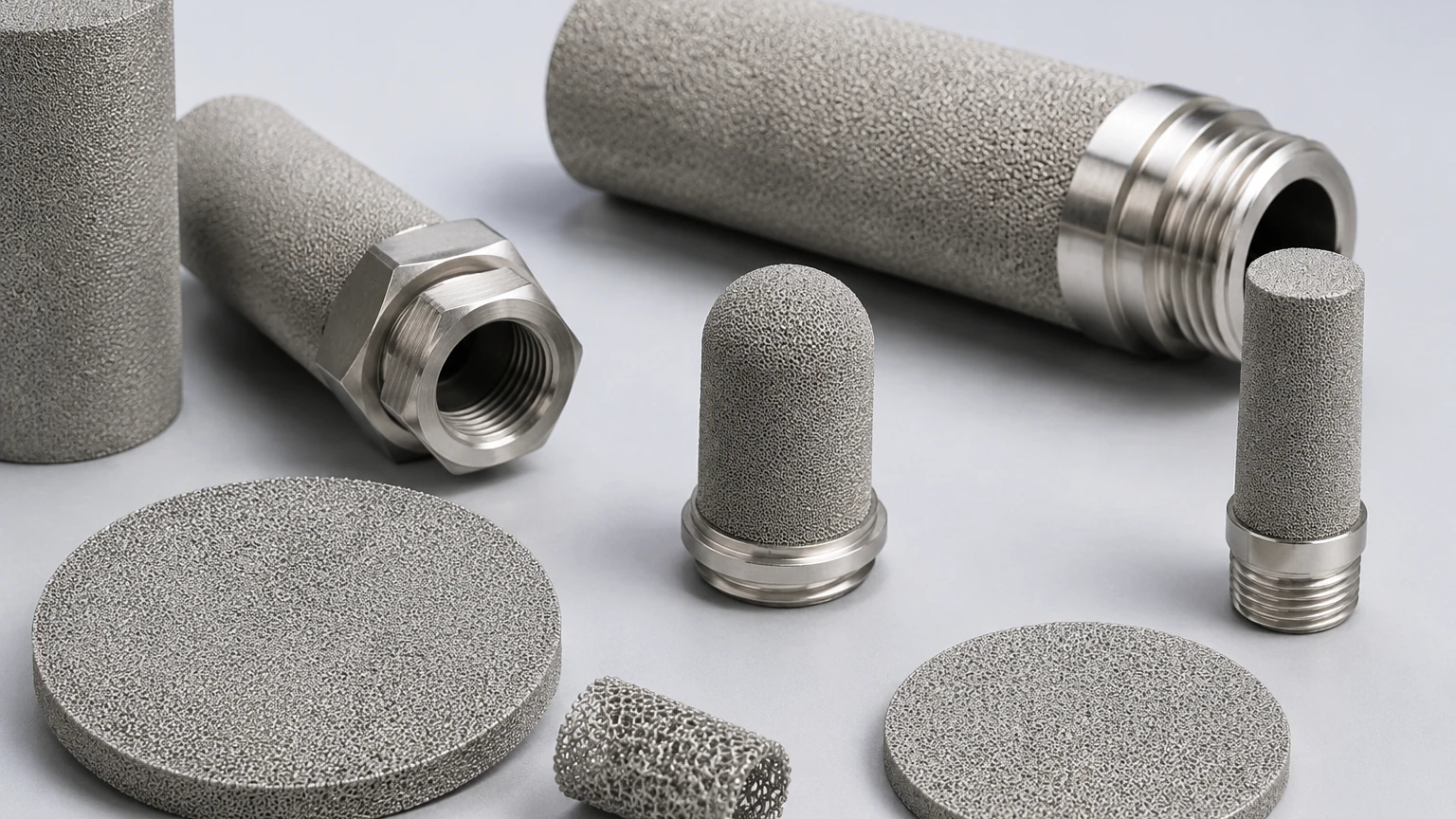
Beyond the alloy, engineers must consider the geometry of the filter. Sintered filters can be produced in various forms, including seamless tubes, flat discs, conical shapes, and complex pleated cartridges. Pleating a sintered metal fiber felt, for instance, significantly increases the filtration surface area, allowing for higher flow rates within the same footprint compared to a cylindrical powder-sintered element.
Performance Metrics: Permeability and Pore Size
In industrial filtration, two metrics define the efficiency of a sintered metal filter: absolute micron rating and permeability.
Absolute vs. Nominal Rating:
A nominal rating refers to the ability of the filter to retain a certain percentage (usually 60% to 90%) of particles of a specific size. However, for critical applications, an absolute rating is required. An absolute rating indicates the diameter of the largest hard spherical particle that will pass through the filter under specified test conditions. Sintered metal filters are prized for their consistent pore structure, which provides a reliable absolute rating that does not shift under pressure surges.
Permeability (Darcy’s Law):
Permeability is the measure of how easily a fluid can pass through the porous medium. It is influenced by the porosity (the ratio of void volume to total volume) and the tortuosity of the paths through the filter. Engineers must balance the need for fine filtration (smaller pores) with the requirement for low pressure drop (higher permeability). A high pressure drop increases the energy consumption of pumps and can lead to premature filter clogging.
Industrial Applications and Case Uses
The versatility of the sintered metal filter allows it to be deployed across a wide spectrum of demanding industries:
Chemical and Petrochemical Processing
In these sectors, filters are used for catalyst recovery, where expensive precious metal catalysts must be captured from a process stream. The ability of sintered metal to withstand high-temperature gas or liquid streams ensures that these catalysts are recovered efficiently without the risk of filter failure.
Pharmaceutical and Biotechnology
Sintered filters are used in the production of Active Pharmaceutical Ingredients (APIs). Their ability to be sterilized in place (SIP) using steam and their compliance with stringent cleanliness standards make them ideal for sterile filtration and gas sparging in bioreactors.
Food and Beverage
Steam filtration is a primary application here. "Culinary grade" steam, used for direct injection into food products or for sterilizing equipment, must be free of rust and scale. A sintered stainless steel filter effectively removes these particulates, ensuring product safety and equipment longevity.
Hydraulic and Aerospace Systems
In high-pressure hydraulic systems, sintered metal filters protect sensitive valves and actuators from wear particles. Their high collapse pressure rating ensures that even in the event of a system malfunction, the filter will not rupture and release contaminants downstream.
Engineering Selection Guide: Balancing Flow Rate and Efficiency
When specifying a sintered metal filter for a new project or as a replacement component, engineers should confirm the following parameters to ensure optimal performance:
1. Fluid Characteristics: Determine the viscosity, density, and chemical composition of the fluid. Higher viscosity fluids require larger surface areas or coarser filtration to maintain acceptable flow rates.
2. Operating Conditions: Confirm the maximum operating temperature and pressure. It is also vital to consider the "differential pressure limit"—the point at which the filter must be cleaned or replaced.
3. Contaminant Profile: Understand the type of solids being removed. Are they hard, abrasive particles or soft, deformable gels? This affects how the filter cakes and how easily it can be cleaned.
4. Flow Rate Requirements: Calculate the required flux (flow per unit area). Over-sizing a filter can lead to higher initial costs but significantly lower maintenance frequency and energy costs over time.
For technical teams looking to integrate these components into their systems, you can Review product options and application support on the Kaifil Main Page to see how various configurations align with specific industrial standards.
Maintenance and Cleaning Protocols for Extended Service Life
The total cost of ownership (TCO) for a sintered metal filter is often lower than disposables because of its reusability. However, the effectiveness of the filter depends on a proper cleaning regimen.
* Backwashing/Backpulsing: This is the most common in-situ cleaning method. By reversing the flow of the fluid (often using a gas pulse), the accumulated filter cake is dislodged from the surface of the media.
* Ultrasonic Cleaning: For deep-seated particulates within the pore structure, ultrasonic baths use high-frequency sound waves to create cavitation bubbles that scrub the metal surfaces clean.
* Chemical Cleaning: Soaking the filter in specific acids, alkalis, or solvents can dissolve organic or inorganic deposits that mechanical cleaning cannot reach.
* Furnace Cleaning (Burn-off): For organic contaminants, heating the filter in a controlled furnace can polymerize or carbonize the residue, which can then be removed via ultrasonic cleaning.
Proper maintenance ensures that the sintered metal filter maintains its permeability and structural integrity over hundreds of cleaning cycles.
Customization and OEM Capabilities at Kaifil
Every industrial process has unique constraints, and off-the-shelf filtration solutions often fall short of specific engineering requirements. Kaifil specializes in the custom manufacturing of stainless steel filtration solutions, providing OEM support that bridges the gap between standard components and specialized application needs.
Whether the requirement is for a specific micron rating in a high-pressure hydraulic cartridge or a custom-shaped sintered disc for a medical device, Kaifil’s manufacturing capabilities ensure precision and durability. By working closely with global customers, Kaifil develops filtration components that are optimized for material selection, filtration accuracy, and mechanical fit.
In conclusion, the sintered metal filter is an indispensable tool for modern industry. Its combination of strength, thermal resistance, and precise filtration makes it the superior choice for demanding B2B applications. By understanding the manufacturing process, material science, and selection criteria, engineers can implement filtration solutions that enhance process efficiency and provide long-term reliability. For further technical specifications and to explore the full range of custom filtration components, visiting the Kaifil Main Page provides access to professional guidance and high-performance product options tailored for the most challenging industrial environments.
