


Sintered Porous Plastic
In the landscape of industrial filtration and fluid handling, sintered porous plastic represents a specialized category of materials engineered for controlled permeability. Unlike traditional fibrous filters or membranes, these components are manufactured through a thermal bonding process that creates a robust, omni-directional pore structure. For engineers and procurement specialists, understanding the technical nuances of sintered porous plastic is essential for selecting the right media for applications ranging from pneumatic venting and medical wicking to industrial water treatment.
While high-performance metal filtration remains the standard for extreme temperatures and pressures, sintered plastics offer a lightweight, chemically resistant, and cost-effective alternative for specific operating environments. This guide examines the manufacturing principles, material properties, and engineering considerations necessary to integrate these components into industrial systems.
The Manufacturing Process of Sintered Porous Plastic
The production of sintered porous plastic relies on a process known as powder sintering. This method differs significantly from injection molding or extrusion, which aim to create solid, non-porous parts. In sintering, thermoplastic powders—typically Polyethylene (PE) or Polypropylene (PP)—are placed into a mold and heated to a temperature just below their melting point.
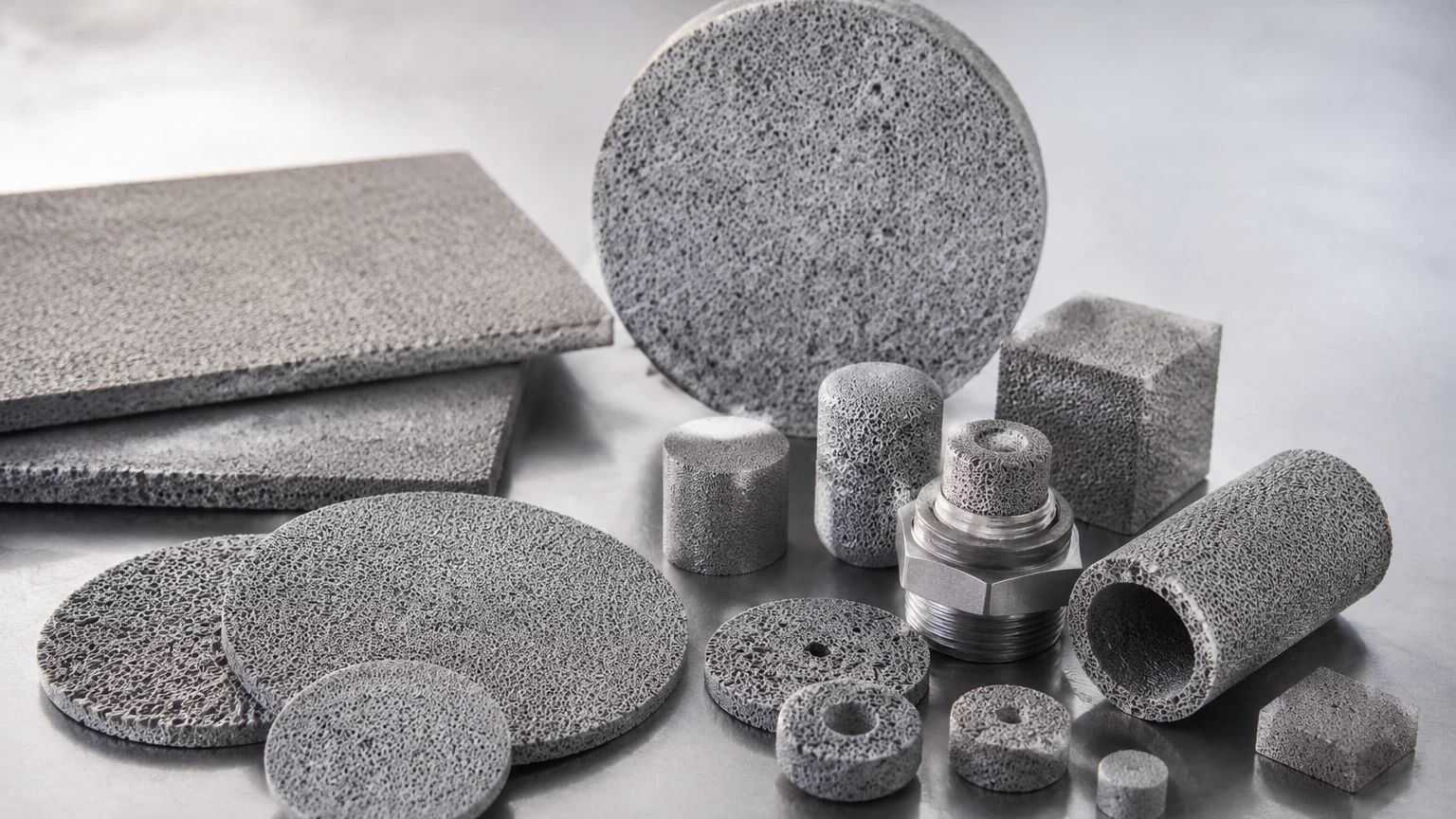
Under controlled heat and pressure, the surface of the plastic granules begins to soften and fuse at the contact points. This creates a stable, three-dimensional matrix of interconnecting voids. Because the particles do not fully melt, the spaces between them remain open, forming a "tortuous path" for fluids or gases to pass through.
Manufacturers can manipulate the porosity and filtration rating by carefully selecting the particle size and shape of the raw polymer powder. Finer powders result in smaller pore sizes and higher filtration accuracy, while coarser powders increase permeability and flow rates. This level of control allows for the production of components with pore sizes typically ranging from 5 microns to over 200 microns.
Material Selection: PE, PP, and PTFE
The performance of a sintered porous plastic component is largely dictated by its base polymer. Each material offers distinct advantages regarding chemical compatibility, thermal stability, and mechanical strength.
Polyethylene (PE)
Polyethylene is the most common material used for sintered porous components. It is available in various densities, including High-Density Polyethylene (HDPE) and Ultra-High Molecular Weight Polyethylene (UHMWPE).
- HDPE: Offers excellent chemical resistance to many acids and alkalis and is generally the most economical choice. It is widely used in water filtration and pneumatic mufflers.
- UHMWPE: Provides superior abrasion resistance and higher mechanical strength. It is often selected for applications involving abrasive slurries or where the filter must withstand significant physical wear.
Polypropylene (PP)
Sintered PP is chosen when higher operating temperatures are required than what PE can sustain. While PE typically reaches its limit around 80°C (176°F), PP can often operate effectively up to 100°C–110°C. It also exhibits excellent fatigue resistance, making it suitable for applications involving repeated pressure cycles.
Polytetrafluoroethylene (PTFE)
For the most demanding environments, sintered PTFE is the material of choice. It offers near-total chemical inertness and can withstand temperatures up to 260°C (500°F). Additionally, PTFE is naturally hydrophobic, making it an ideal candidate for gas/liquid separation and venting applications where moisture must be excluded.
Key Performance Characteristics
When evaluating sintered porous plastic for an industrial application, several technical parameters must be analyzed to ensure the component meets the system's requirements.
Porosity and Pore Size Distribution
Porosity refers to the percentage of open space within the material volume, usually ranging from 30% to 50% for sintered plastics. Pore size distribution is equally critical; a narrow distribution ensures consistent filtration performance across the entire surface of the media. Engineers must distinguish between the "mean pore size" and the "absolute filtration rating" to ensure the media can effectively capture the target particle size.
Flow Rate and Pressure Drop
The interconnected pore structure creates resistance to fluid flow, resulting in a pressure drop (delta P). This resistance is a function of the material's thickness, pore size, and the viscosity of the fluid. In many B2B applications, such as vacuum filtration or gas sparging, maintaining a low pressure drop while achieving high flow rates is a primary design goal.
Mechanical Integrity
Unlike flexible membranes, sintered porous plastics are self-supporting. They possess sufficient structural rigidity to be machined, pressed, or welded into housings without the need for internal cages or external supports. This simplifies the design of filter cartridges and integrated components. However, their tensile strength is lower than that of metal filters, which must be accounted for in high-pressure systems.
Sintered Porous Plastic vs. Stainless Steel Filters
In many industrial settings, the choice between sintered plastic and stainless steel is a pivotal engineering decision. Both materials offer unique benefits depending on the application's constraints. For a comprehensive look at high-durability metal options, engineers often consult the Main Page of specialized manufacturers to compare performance data.
Temperature and Pressure: Stainless steel filters excel in high-temperature environments (up to 500°C and higher) and high-pressure applications where plastic would deform or melt. Sintered plastic is generally limited to low-to-medium pressure systems and temperatures below 100°C (excluding PTFE).
Chemical Resistance: While stainless steel (especially 316L) is highly resistant to many chemicals, it can be susceptible to corrosion in the presence of certain halides or strong acids. Sintered plastics, particularly PTFE and HDPE, offer superior resistance to aggressive acids that might degrade metal components.
Cost and Weight: Sintered porous plastic is significantly lighter and generally more cost-effective than stainless steel, especially for high-volume OEM components. In applications where weight is a critical factor, such as portable medical devices or aerospace sensors, plastic is often the preferred media.
Cleanability: Stainless steel filters are often designed for long-term reuse through ultrasonic cleaning or backwashing. While some sintered plastics can be cleaned, they are more frequently treated as semi-disposable or replaceable components due to the difficulty of removing deeply embedded contaminants from the polymer matrix.
Industrial Applications and Use Cases
The versatility of sintered porous plastic allows it to serve various functions beyond simple particle filtration. Its ability to manage gas and liquid flow makes it essential in several sectors.
Pneumatic Venting and Silencing
In pneumatic systems, air exhaust can generate significant noise. Sintered plastic mufflers are used to diffuse the air, reducing noise levels while preventing dust and debris from entering the valves. The porous structure allows for a high volume of air to escape with minimal backpressure.
Medical and Life Sciences
Sintered plastics are widely used in the medical field for wicking and fluid management. In diagnostic kits, the material acts as a reservoir or a transport medium for reagents. Because these plastics can be manufactured to be naturally hydrophobic or treated to be hydrophilic, they are excellent for venting medical waste containers—allowing gases to escape while blocking liquid overflow.
Water Treatment and Aeration
In water treatment, sintered porous plastic tubes are used as fine-bubble diffusers. By pumping air through the porous walls, the material creates a consistent stream of micro-bubbles, which increases the oxygen transfer efficiency in aeration tanks. The resistance of PE and PP to biological growth and chemical additives makes them durable in these environments.
Powder Fluidization
In the bulk solids industry, sintered porous plastic sheets are used to line silos and hoppers. By introducing compressed air through the porous lining, the friction between the powder and the walls is reduced, allowing for a smooth, consistent flow of materials like flour, cement, or plastic resins.
Engineering Considerations for Selection
Before finalizing a specification for sintered porous plastic, engineers should confirm several factors with their supplier to avoid premature failure or system inefficiency.
1. Chemical Compatibility: Verify the specific concentration and temperature of the chemicals involved. While a material might be resistant at room temperature, elevated temperatures can accelerate polymer degradation.
2. Hydrophobicity vs. Hydrophilicity: Standard PE and PP are naturally hydrophobic (water-repellent). If the application involves aqueous filtration where low pressure is used, the material may need to be treated to become hydrophilic to allow water to pass through the pores easily.
3. Dimensional Tolerances: Sintered plastics can exhibit slight shrinkage during the cooling phase of manufacturing. It is vital to establish clear tolerances for diameter, length, and wall thickness to ensure a proper fit in the final assembly.
4. Total Cost of Ownership: Evaluate the replacement cycle. If a filter becomes blinded (clogged) quickly and cannot be cleaned, the labor and downtime costs of replacement may outweigh the initial savings of choosing plastic over a cleanable stainless steel alternative.
Conclusion
Sintered porous plastic is a highly versatile engineered material that provides precise control over fluid and gas flow. By leveraging the unique properties of polymers like PE, PP, and PTFE, manufacturers can create filtration and venting solutions tailored to specific industrial needs. Whether the goal is to reduce noise in pneumatic systems, manage fluids in medical diagnostics, or provide aeration in water treatment, these components offer a balance of performance and cost-efficiency.
For engineers designing complex systems, the choice of filtration media is rarely a one-size-fits-all decision. By understanding the mechanical and thermal limits of sintered plastics and comparing them with the capabilities of metal filtration, procurement teams can ensure long-term reliability and optimized system performance. For further technical specifications and to explore a wider range of industrial filtration components, visit the Main Page to review product options and application support.
