


Pe Filter
In the landscape of industrial filtration, the selection of filter media is a critical engineering decision that directly impacts process efficiency, product purity, and operational costs. Among the various porous plastic solutions, the pe filter (polyethylene filter) stands out as a versatile and cost-effective option for a wide range of liquid and gas applications. Typically manufactured through a sintering process, these filters offer unique structural properties that distinguish them from traditional fiber-based or metallic media.
For engineers and procurement teams, understanding the technical nuances of polyethylene media—ranging from its chemical compatibility to its mechanical limitations—is essential for optimizing filtration systems. This guide provides a factual exploration of the pe filter, its manufacturing principles, industrial applications, and how it compares to high-performance alternatives like stainless steel filtration components.
Technical Properties of Sintered Polyethylene
A pe filter is primarily composed of High-Density Polyethylene (HDPE) or Ultra-High Molecular Weight Polyethylene (UHMWPE). The manufacturing process involves sintering, where spherical polyethylene granules are heated under controlled pressure until they fuse at their contact points. This results in a robust, self-supporting porous structure with a complex, omni-directional pore network.
Material Composition
Polyethylene is a thermoplastic polymer with a high strength-to-density ratio. In filtration, UHMWPE is often preferred for more demanding environments due to its superior abrasion resistance and impact strength. The material is inherently hydrophobic, though it can be chemically treated to become hydrophilic for specific water-based applications.
Porosity and Micron Ratings
The sintering process allows for precise control over pore size distribution. A standard pe filter can be engineered with filtration ratings ranging from 1 micron to 200 microns. Because the pores are formed by the gaps between fused spheres, the resulting "tortuous path" ensures high particle retention efficiency throughout the depth of the media, rather than just on the surface.
Chemical Resistance
One of the primary advantages of polyethylene is its excellent resistance to a broad spectrum of chemicals. It is virtually inert to most acids, alkalis, and organic solvents at ambient temperatures. This makes the pe filter an ideal choice for chemical processing and laboratory environments where corrosive fluids would degrade less resilient materials.
Manufacturing Processes and Form Factors
The versatility of the sintering process allows manufacturers to produce pe filter components in various geometries to suit specific housing designs and flow requirements. Unlike wire mesh, which must be cut and welded, sintered polyethylene can be molded into complex shapes during the primary production phase.
Common Geometries
* Filter Cartridges and Tubes: Often used in pressurized liquid systems or as aeration stones.
* Porous Discs and Sheets: Frequently utilized in laboratory vacuum filtration or as support plates in larger vessels.
* Custom Molded Shapes: Including cones, plugs, and threaded components for integrated pneumatic or medical devices.
* Silencers and Vents: Used in pneumatic systems to reduce noise while allowing air to exhaust freely.
* Hydrophobic Vents: Specifically designed to allow gas to pass while blocking aqueous liquids, common in medical waste containers and automotive sensors.
Industrial Applications of the Pe Filter
The unique combination of chemical inertness and structural integrity allows the pe filter to serve diverse roles across multiple sectors. Its application is generally governed by the temperature and pressure profiles of the specific process.
Water and Wastewater Treatment
In water treatment, sintered PE components are often used for pre-filtration to protect sensitive downstream membranes or as diffusers for aeration. Their resistance to chlorine and other disinfecting agents ensures a long service life in municipal and industrial water circuits.
Medical and Laboratory Equipment
Because polyethylene can be produced with high purity and low extractables, it is a staple in the medical industry. Pe filters are found in pipette tips to prevent cross-contamination, in surgical suction canisters to prevent fluid overflow into vacuum lines, and in diagnostic equipment for sample preparation.
Pneumatics and Gas Handling
In compressed air systems, a pe filter acts as an effective muffler and particulate trap. It protects sensitive valves and actuators from dust and debris while significantly reducing the noise generated by air exhaust. The depth-loading nature of the media allows it to handle high flow rates with relatively low pressure drops.
Chemical and Ink Handling
In the printing industry, PE filters are used to remove micro-aggregates from inks and solvents. Their compatibility with various chemical bases ensures that the filter media does not leach contaminants into the fluid stream, which is critical for maintaining print head integrity.
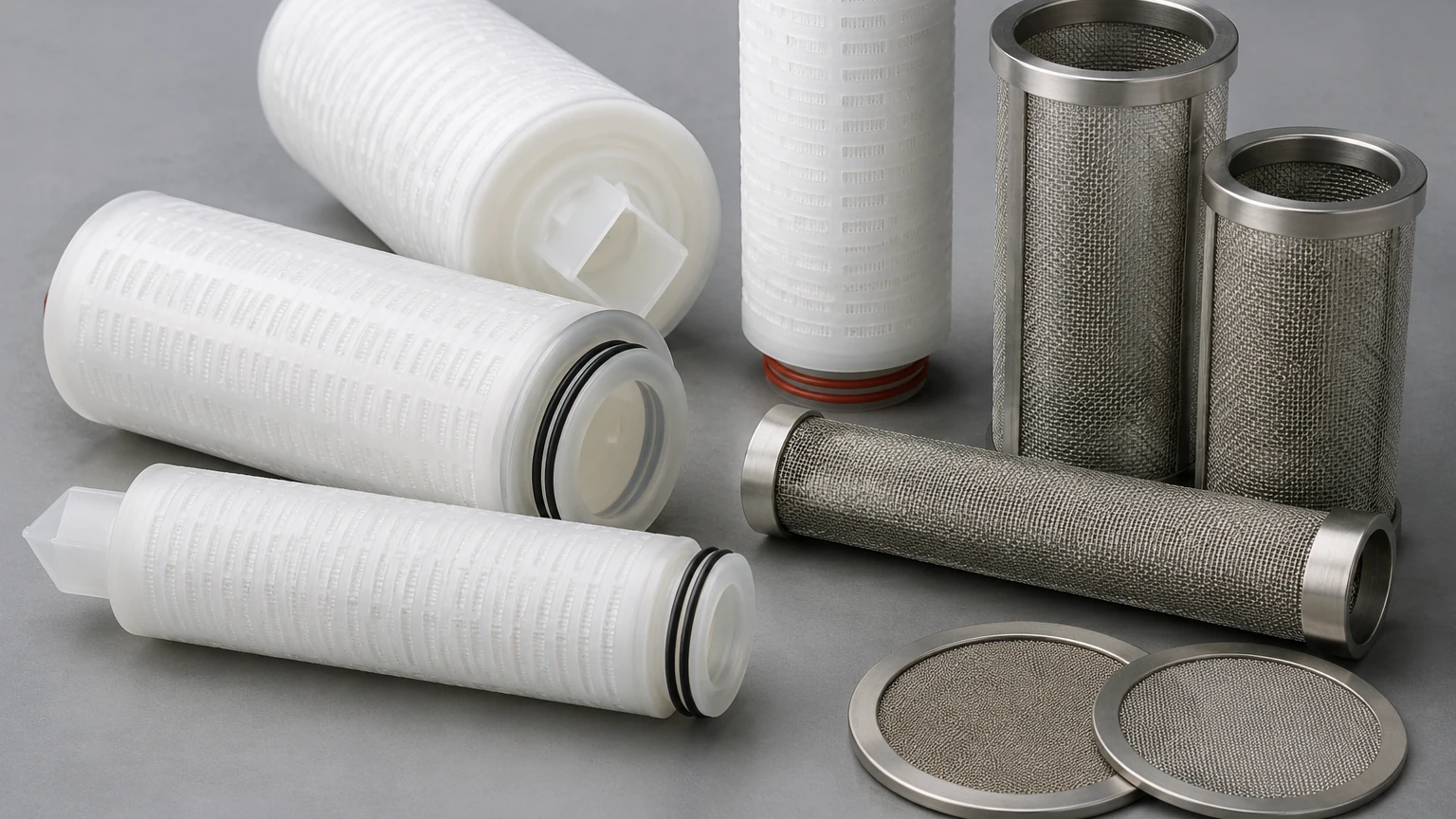
Comparing PE Filters vs. Stainless Steel Filtration
When selecting a filtration solution, engineers must often choose between polymer-based media and metallic media. While the pe filter is excellent for many applications, it has distinct boundaries compared to the stainless steel solutions found on the Main Page of industrial manufacturers like Kaifil.
Temperature and Pressure Limits
Polyethylene is a thermoplastic, meaning its structural integrity diminishes as temperatures rise. Most PE filters are limited to operating temperatures below 80°C (176°F). In contrast, stainless steel filters can operate at temperatures exceeding 500°C. Similarly, while sintered PE is rigid, it cannot match the burst pressure resistance of a reinforced stainless steel wire mesh or sintered metal cartridge.
Cleanability and Reusability
A pe filter is often treated as a semi-disposable or consumable component. While they can sometimes be backflushed, the depth-loading nature of the pores means that fine particulates can become permanently trapped, eventually leading to an unrecoverable pressure drop. Stainless steel filters are designed for rigorous cleaning cycles, including ultrasonic cleaning and chemical stripping, allowing them to be reused for years in heavy-duty industrial environments.
Precision and Durability
For applications requiring extreme precision or high mechanical stress—such as high-pressure hydraulic systems or steam filtration—stainless steel is the industry standard. However, for low-pressure, ambient-temperature chemical transfer, the pe filter offers a significantly lower initial capital expenditure.
Engineering Selection Criteria
To ensure the successful integration of a pe filter into an industrial system, technical professionals should evaluate several key performance indicators (KPIs).
1. Micron Rating (Absolute vs. Nominal): Determine if the application requires an absolute rating (where 99.9% of particles are captured) or a nominal rating. Sintered PE is typically rated nominally due to the variation in pore geometry.
2. Flow Rate and Pressure Drop (ΔP): Calculate the clean pressure drop at the required flow rate. A high initial ΔP will shorten the service life of the filter and increase energy consumption.
3. Chemical Compatibility: Verify the compatibility of the specific grade of polyethylene with the process fluid, especially if the fluid is at an elevated temperature.
4. Housing Compatibility: Ensure the filter geometry (DOE, SOE, or custom threads) matches the existing housing to prevent bypass, which occurs when fluid flows around the filter rather than through it.
5. Regulatory Compliance: For food, beverage, or pharmaceutical applications, confirm that the PE resin used is FDA-compliant or meets USP Class VI standards.
Maintenance and Replacement Considerations
Unlike metallic filters, which may show signs of wear through corrosion or physical deformation, a pe filter typically fails through "blinding"—the gradual clogging of the internal pore structure. Monitoring the differential pressure across the filter is the most reliable method for determining replacement cycles.
In many high-volume industrial processes, the total cost of ownership (TCO) must be considered. While a pe filter has a lower unit cost, the frequency of replacement and the associated labor costs may eventually exceed the cost of a permanent stainless steel solution. Conversely, in laboratory or medical settings where sterility and cross-contamination are concerns, the disposable nature of the PE filter is a primary benefit.
Conclusion
The pe filter remains a foundational component in the filtration industry, offering a unique balance of chemical resistance, structural rigidity, and cost-efficiency. Whether used as a pneumatic silencer, a medical vent, or a chemical pre-filter, its performance is highly dependent on correct specification and an understanding of its material limits.
For applications that demand higher thermal stability, extreme mechanical strength, or long-term reusability, transitioning to professional metal filtration is often the next logical step. By evaluating the specific needs of the process—including temperature, pressure, and cleaning requirements—engineers can choose the most appropriate media to ensure long-term operational success. For those seeking advanced metal-based alternatives to supplement or replace plastic media in demanding environments, consulting with specialized manufacturers can provide the technical clarity needed for complex industrial challenges.
