


Sintered Stainless Steel Tube
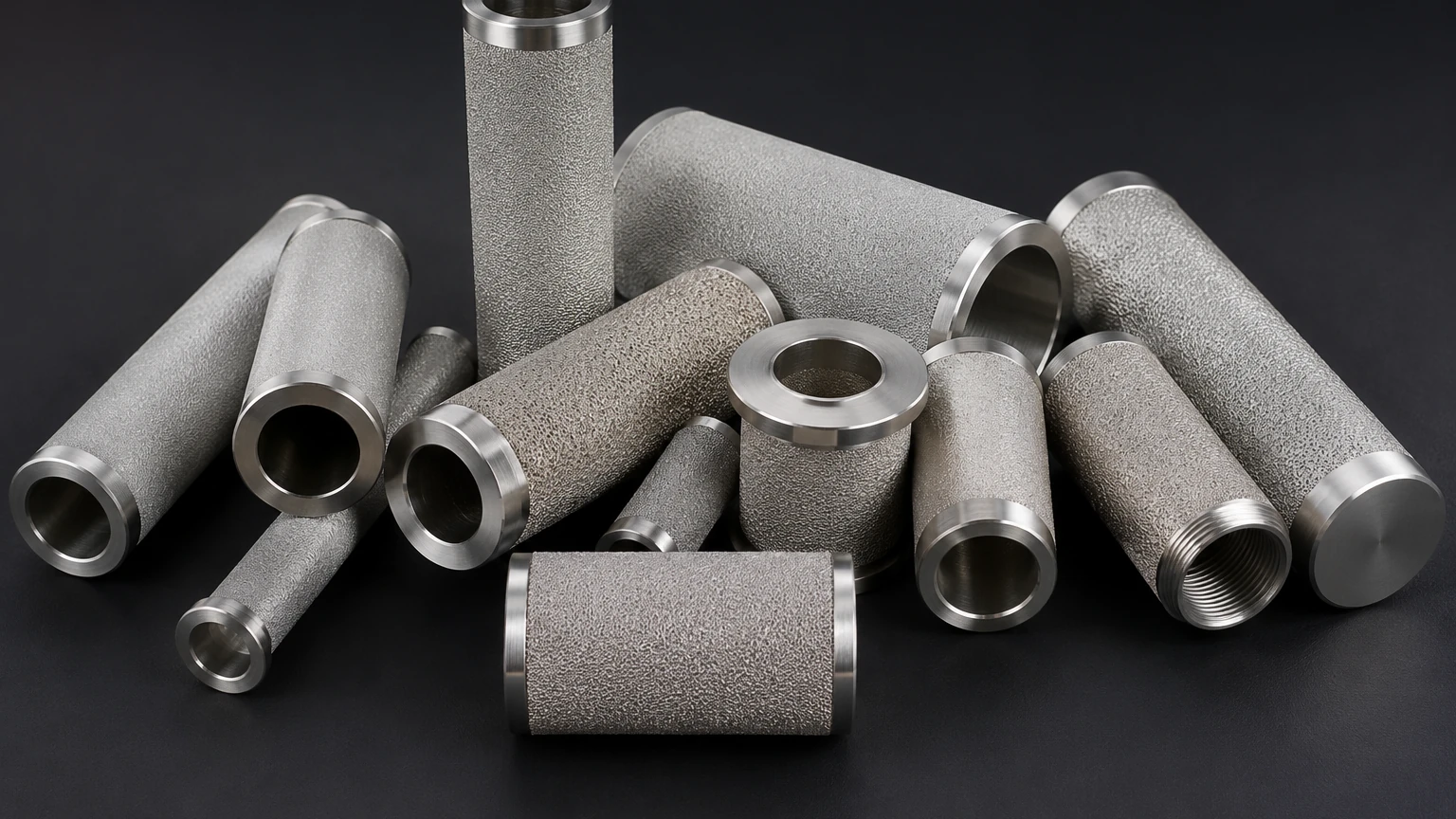
In the landscape of industrial filtration, the sintered stainless steel tube represents a pinnacle of engineering durability and precise separation capability. Unlike traditional disposable filter media, these components are engineered to withstand extreme temperatures, high pressure, and corrosive environments while maintaining a consistent pore structure. For engineers and procurement specialists, understanding the technical nuances of sintered metal technology is essential for optimizing process efficiency and reducing the total cost of ownership in demanding applications such as chemical processing, pharmaceuticals, and food production.
Understanding the Sintering Process and Material Properties
A sintered stainless steel tube is manufactured through a powder metallurgy process or by layering multiple sheets of stainless steel wire mesh. The term "sintering" refers to a thermal treatment where the material—either metal powder or wire mesh—is heated in a controlled-atmosphere furnace to a temperature just below its melting point. This causes the metal particles or wires to bond at their contact points through a process of molecular diffusion.
The result is a rigid, porous structure that retains the mechanical strength and corrosion resistance of the base alloy. Most industrial-grade sintered tubes are fabricated from 316L stainless steel. The "L" denotes low carbon content, which is critical for preventing carbide precipitation during the sintering process and ensuring the tube remains resistant to intergranular corrosion in acidic or high-temperature environments. Other alloys, such as 304L, Inconel, or Monel, may be used for specialized applications involving specific chemical compatibilities or extreme thermal requirements.
From a structural standpoint, the sintering process creates a "tortuous path" for the fluid or gas passing through the tube. This depth filtration mechanism allows the tube to capture particles not only on the surface but also within the thickness of the wall, providing high dirt-holding capacity compared to simple surface filters.
Key Engineering Considerations for Selection
Selecting the correct sintered stainless steel tube requires a detailed analysis of the operating environment and the desired filtration outcome. Engineers must balance several competing factors to ensure the component performs reliably over a long service life.
Filtration Rating and Pore Size Distribution
The filtration rating of a sintered tube is typically defined in microns (µm). It is important to distinguish between "nominal" and "absolute" ratings. A nominal rating refers to the ability of the filter to retain a certain percentage of particles of a specific size, whereas an absolute rating indicates the size of the largest particle that can pass through the media under specific test conditions. For critical applications, such as sterile venting in pharmaceuticals, absolute ratings are mandatory. The pore size distribution must be uniform across the entire surface of the tube to prevent localized high-velocity zones that could lead to premature clogging or "breakthrough" of contaminants.
Permeability and Pressure Drop
Permeability is a measure of how easily a fluid can flow through the porous wall of the tube. Higher porosity generally leads to a lower initial pressure drop (ΔP), which reduces the energy requirements for pumps and compressors. However, increasing porosity often comes at the expense of mechanical strength. Engineers must calculate the expected pressure drop based on the fluid's viscosity, flow rate, and the specific surface area of the Main Page components to ensure the system operates within its design limits.
Mechanical Integrity and Differential Pressure
Sintered stainless steel tubes are often subjected to high differential pressures, especially during the later stages of a filtration cycle or during backwashing. The wall thickness and the sintering quality determine the tube's collapse pressure and burst pressure. In high-pressure hydraulic or gas systems, the structural integrity of the tube is a primary safety consideration. Unlike polymer filters, sintered metal tubes do not suffer from media migration—the shedding of filter material into the filtrate—even under high-pressure pulses.
Industrial Applications and Performance Expectations
The versatility of the sintered stainless steel tube makes it a staple in various heavy industries. Its performance is measured not just by what it removes, but by how it maintains process stability under duress.
* Chemical and Petrochemical Processing: These tubes are used for catalyst recovery, where they must withstand aggressive solvents and temperatures exceeding 400°C. The ability to clean and reuse the tubes is a significant advantage in these high-volume processes.
* Food and Beverage Industry: In carbonation and aeration processes, sintered tubes act as spargers, creating fine, uniform bubbles for efficient gas-liquid mass transfer. They are also used for steam filtration to ensure that "culinary steam" used in direct contact with food is free of pipe scale and other particulates.
* Pharmaceutical Manufacturing: Sintered tubes are utilized in gas sparging for bioreactors and as vent filters for storage tanks. Their ability to be sterilized in place (SIP) using steam or chemicals makes them ideal for maintaining aseptic conditions.
* Hydraulic and Lubrication Systems: In aerospace and heavy machinery, sintered metal tubes protect sensitive valves and actuators from metallic wear particles, operating reliably in environments where vibration and thermal cycling would cause other media to fail.
Comparing Sintered Tubes with Other Filtration Media
When evaluating filtration solutions, engineers often compare sintered stainless steel with alternatives like wire mesh, wedge wire, or disposable polymer cartridges. Each has its place, but the sintered tube offers unique advantages in specific scenarios.
Compared to standard wire mesh, a sintered tube is far more rigid. While a single layer of mesh can easily deform under pressure, the sintered structure acts as a self-supporting pressure vessel. This eliminates the need for internal perforated cores in many applications, simplifying the design and reducing potential entrapment zones for bacteria.
When compared to disposable polymer filters (such as polypropylene or PTFE), the initial capital expenditure for a sintered stainless steel tube is higher. However, the total cost of ownership (TCO) is often lower over the long term. Polymer filters must be replaced and disposed of frequently, leading to ongoing procurement costs and environmental waste. In contrast, a sintered metal tube can be cleaned and returned to service hundreds of times. Furthermore, stainless steel is immune to the chemical degradation and thermal softening that limit the use of plastics in harsh environments.
Maintenance, Cleaning, and Replacement Cycles
One of the most significant operational benefits of the sintered stainless steel tube is its cleanability. Because the media is metallic and structurally robust, it can be subjected to aggressive cleaning protocols that would destroy other types of filters.
Cleaning Methodologies
1. Backwashing and Backpulsing: This is the most common in-situ cleaning method. By reversing the flow of the fluid or using a high-pressure pulse of gas, particles trapped on the surface and within the pores are dislodged and flushed away. This is particularly effective for surface-loading applications.
2. Ultrasonic Cleaning: For deep-seated contaminants, the tube can be removed and placed in an ultrasonic bath. High-frequency sound waves create microscopic cavitation bubbles that implode near the pore surfaces, effectively scrubbing the internal geometry of the tube.
3. Chemical Cleaning: Depending on the nature of the contaminant, tubes can be soaked in caustic solutions, acids, or solvents. For example, organic buildup can often be removed with a caustic wash, while mineral scale may require a mild acid treatment. The corrosion resistance of 316L stainless steel allows for the use of a wide range of cleaning agents.
Determining Replacement Cycles
While sintered tubes are exceptionally durable, they are not infinite. A tube should be replaced if the "clean pressure drop"—the pressure drop measured after a thorough cleaning cycle—begins to rise significantly over time. This indicates that some pores have become permanently blinded by contaminants that cannot be removed. Additionally, any signs of physical deformation, pitting corrosion, or cracks in the welds or end fittings necessitate immediate replacement to prevent bypass or system failure.
Customization and OEM Solutions
Industrial filtration is rarely a one-size-fits-all field. The performance of a sintered stainless steel tube is highly dependent on its integration into the larger system. Manufacturers like Kaifil provide extensive customization options to meet specific engineering requirements.
Customization starts with the geometry. While standard diameters and lengths are available, tubes can be fabricated to custom dimensions to fit existing housings. The end fittings—such as NPT threads, flange mounts, or specialized quick-connects—are welded to the sintered body using high-precision TIG (Tungsten Inert Gas) welding to ensure leak-proof joints.
Beyond physical dimensions, the filtration characteristics themselves can be tailored. By adjusting the particle size of the starting powder or the density of the wire mesh layers, manufacturers can
