


Skid Mount Fountain Filter Systems
In large-scale commercial and industrial water features, maintaining water clarity and system hygiene is a complex engineering challenge. Skid mount fountain filter systems represent a sophisticated, modular approach to this challenge, integrating filtration, pumping, and control components onto a single structural frame. For engineers and facility managers, selecting the right system requires a deep understanding of hydraulic requirements, particulate loading, and material science to ensure long-term operational efficiency and minimal maintenance overhead.
As a specialized manufacturer, Kaifil provides the critical stainless steel filtration components that form the heart of these systems. By focusing on precision-engineered wire mesh and filter cartridges, we support the development of robust Main Page solutions that withstand the rigors of continuous outdoor and industrial operation.
The Engineering Logic of Skid Mount Architectures
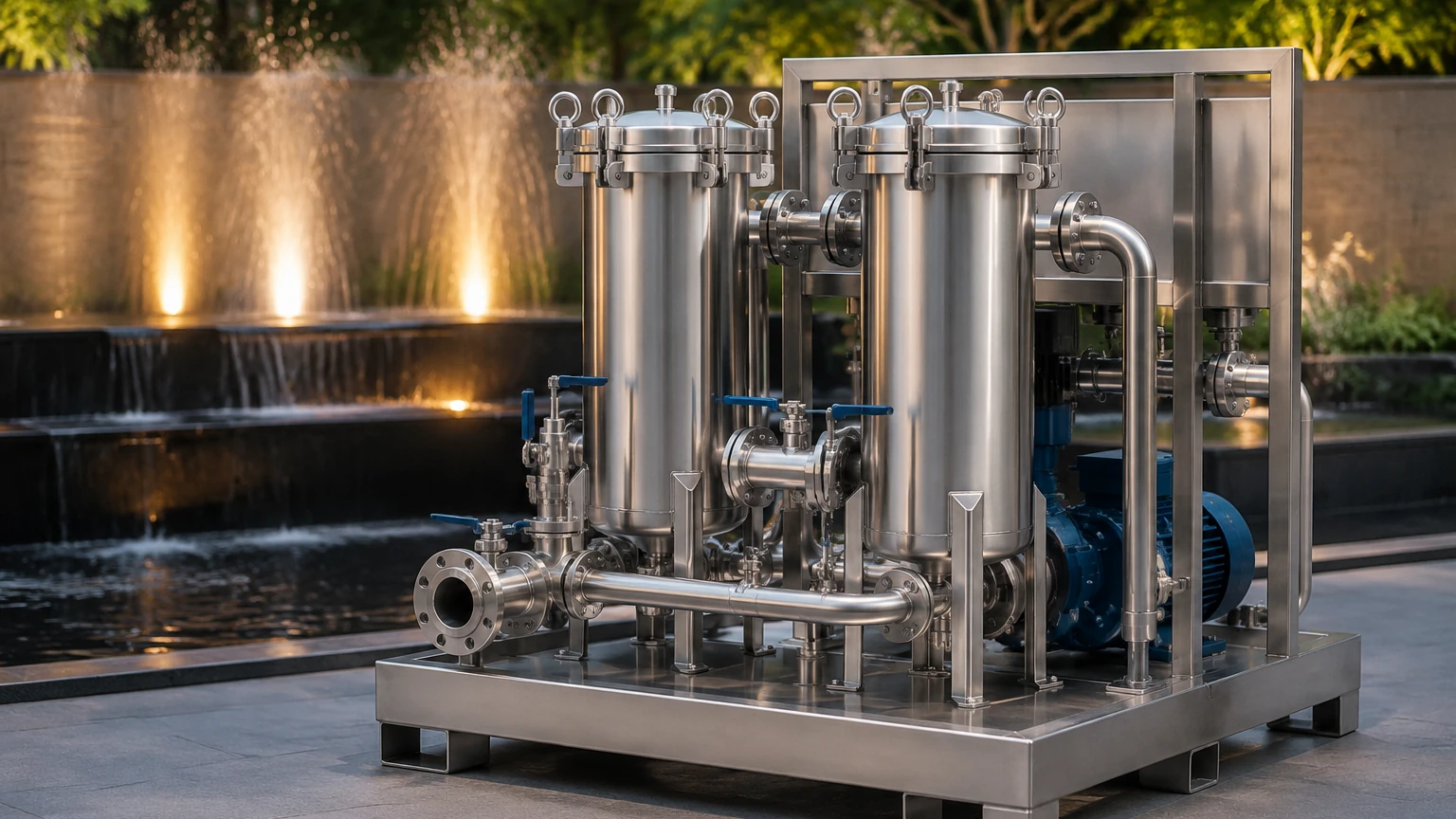
The primary advantage of skid mount fountain filter systems lies in their "plug-and-play" design. Unlike field-erected systems, which require extensive on-site plumbing and electrical work, a skid-mounted system is assembled and tested in a controlled factory environment. This ensures that the alignment of pumps, the sealing of filter housings, and the calibration of sensors meet strict engineering tolerances before the unit ever reaches the site.
From a technical perspective, a skid typically includes:
- Primary and Secondary Filtration Units: Often utilizing stainless steel housings and high-precision mesh.
- Circulation Pumps: Sized to handle the total dynamic head (TDH) of the fountain's spray nozzles and the pressure drop across the filter media.
- Control Panels: Featuring Programmable Logic Controllers (PLCs) and Variable Frequency Drives (VFDs) to manage flow rates and backwash cycles.
- Chemical Dosing Systems: For pH control and disinfection, preventing algae growth and mineral scaling.
By consolidating these components, engineers can significantly reduce the footprint of the mechanical room and simplify the integration of the fountain into the broader site infrastructure.
Critical Role of Stainless Steel Filtration Media
In any skid mount fountain filter systems, the filtration media is the most critical component for determining water quality. While sand filters were once the industry standard, modern high-performance systems increasingly rely on stainless steel wire mesh and cartridge-based solutions due to their superior durability and precise micron ratings.
Advantages of Stainless Steel Mesh
Stainless steel wire mesh filters offer several technical advantages over synthetic or disposable media:
1. Mechanical Strength: Stainless steel can withstand high differential pressures without deforming, which is essential during heavy particulate loading events.
2. Corrosion Resistance: Using 304 or 316L grade stainless steel ensures that the filter remains impervious to the corrosive effects of treated water and environmental exposure.
3. Cleanability: Unlike disposable cartridges, stainless steel mesh can be backwashed or ultrasonically cleaned, significantly extending the service life of the component and reducing the total cost of ownership.
4. Precision: Kaifil’s manufacturing process allows for precise control over pore size, ensuring that even fine silts and organic debris are effectively removed from the water column.
Technical Evaluation Criteria for System Selection
When specifying skid mount fountain filter systems, engineers must move beyond basic flow rate requirements and consider the specific environmental variables of the installation site. A failure to account for these factors can lead to frequent clogging, pump cavitation, or premature system failure.
1. Particulate Loading and Particle Size Distribution (PSD)
Understanding what needs to be filtered is as important as knowing how much water is moving. In outdoor fountains, the system must handle wind-blown dust, organic matter (leaves, pollen), and potentially high mineral content from makeup water. A multi-stage approach—using a coarse strainer followed by a fine stainless steel mesh filter—is often the most efficient way to manage diverse particulate loads.
2. Flow Rate and Pressure Drop ($ΔP$)
Every filter media introduces a degree of resistance to the flow. Engineers must calculate the clean pressure drop and the maximum allowable pressure drop before a cleaning cycle is triggered. Over-sizing the filter area can reduce the frequency of maintenance and lower the energy consumption of the pumps by minimizing resistance.
3. Material Compatibility
If the fountain water is treated with high concentrations of chlorine or bromine, or if the system is located in a coastal environment with salt-laden air, 316L stainless steel is the mandatory choice for all wetted parts. This prevents pitting corrosion and ensures the structural integrity of the filter elements over decades of service.
Common Risks and Mitigation Strategies
Operating skid mount fountain filter systems involves managing several inherent risks, particularly concerning biological growth and mechanical wear.
Biofouling: In warm climates, biofilm can rapidly accumulate on filter surfaces. This not only increases pressure drop but can also harbor pathogens like *Legionella*. Utilizing high-grade stainless steel surfaces, which are smoother and less hospitable to bacterial attachment than plastics, combined with automated backwash cycles, helps mitigate this risk.
Pump Cavitation: If the suction-side filtration becomes overly restricted, the pump may experience cavitation, leading to impeller damage. Incorporating vacuum gauges and automated shut-off or bypass valves into the skid design is a critical safety measure.
Media Migration: In systems using sand or loose media, there is a risk of the media entering the fountain nozzles and causing blockages. Transitioning to fixed stainless steel cartridge filters or robust wire mesh screens eliminates this risk entirely, providing a more reliable barrier for the downstream spray heads.
Customization and OEM Capabilities
No two fountain projects are identical. A system designed for a reflective pool in a corporate courtyard will have vastly different requirements than a high-velocity musical fountain in a public park. This is where customization becomes essential.
Kaifil works closely with system integrators to provide OEM filtration components tailored to the specific dimensions and performance targets of their skid mount fountain filter systems. Whether the requirement is for a specific flange connection, a unique housing geometry to fit a tight space, or a specialized mesh weave for ultra-fine filtration, custom engineering ensures the component integrates seamlessly into the larger assembly.
Engineers should confirm the following with their filtration partner before finalizing a design:
- Micron Rating Requirements: Balancing water clarity with the frequency of the cleaning cycle.
- Housing Pressure Ratings: Ensuring the vessels can handle the maximum system pressure, including potential water hammer effects.
- Maintenance Access: Ensuring that filter elements can be removed and cleaned without requiring specialized tools or extensive downtime.
Maintenance and Total Cost of Ownership (TCO)
While the initial capital expenditure for a high-quality skid mount system featuring stainless steel components may be higher than cheaper alternatives, the long-term TCO is significantly lower. The durability of stainless steel reduces the need for frequent part replacements, and the efficiency of the modular design reduces labor costs associated with maintenance.
A standard maintenance schedule for these systems typically includes:
- Weekly: Visual inspection of gauges and checking for leaks.
- Monthly: Manual inspection of the primary strainers and verification of the chemical dosing levels.
- Annually: Deep cleaning of the stainless steel filter elements and calibration of all sensors and flow meters.
By investing in a system built on robust engineering principles and high-quality materials, facility owners can ensure their water features remain a focal point of beauty rather than a source of mechanical frustration.
Conclusion
Skid mount fountain filter systems are the backbone of modern aquatic architecture. By centralizing complex filtration and hydraulic components, these systems provide a reliable and efficient way to maintain water quality in demanding environments. The choice of filtration media—specifically the use of precision-engineered stainless steel components—is a deciding factor in the system's longevity and performance.
For technical teams seeking to optimize their water feature designs, focusing on material quality, hydraulic precision, and ease of maintenance is paramount. To explore the full range of custom stainless steel filtration solutions available for industrial and commercial applications, professionals are encouraged to visit the Main Page for detailed product specifications and engineering support. Through collaborative design and advanced manufacturing, Kaifil continues to support the global demand for high-performance filtration in the most challenging water treatment sectors.
