


Beer Filter System
In the industrial brewing sector, the transition from a fermented beverage to a shelf-stable, crystal-clear product depends heavily on the efficacy of the beer filter system. Filtration is not merely an aesthetic choice; it is a critical engineering process that ensures microbial stability, removes haze-forming proteins and polyphenols, and eliminates residual yeast. For engineers and production managers, selecting the right filtration hardware requires a deep understanding of fluid dynamics, material science, and the specific mechanical requirements of the brewing environment.
As a manufacturer specializing in custom stainless steel filtration solutions, Kaifil provides the technical components necessary to build and maintain high-performance filtration stages. This guide explores the technical considerations, material requirements, and engineering principles behind an effective beer filter system, helping technical professionals make informed decisions for their facilities.
The Fundamental Stages of Beer Filtration
An industrial beer filter system typically operates in multiple stages, moving from coarse separation to fine polishing and, eventually, sterile filtration. Each stage serves a distinct purpose and utilizes different types of filter media to balance flow rate with filtration accuracy.
Primary Filtration (Roughing)
In the primary stage, the goal is to remove the bulk of the yeast and large particulate matter following fermentation and maturation. This is often achieved using centrifuge systems or coarse filtration media. In systems utilizing stainless steel components, this stage may involve high-capacity wire mesh filters designed to capture particles in the 5 to 20-micron range. The focus here is on throughput and the ability to handle high solids loading without immediate blinding of the filter surface.
Secondary Filtration (Polishing)
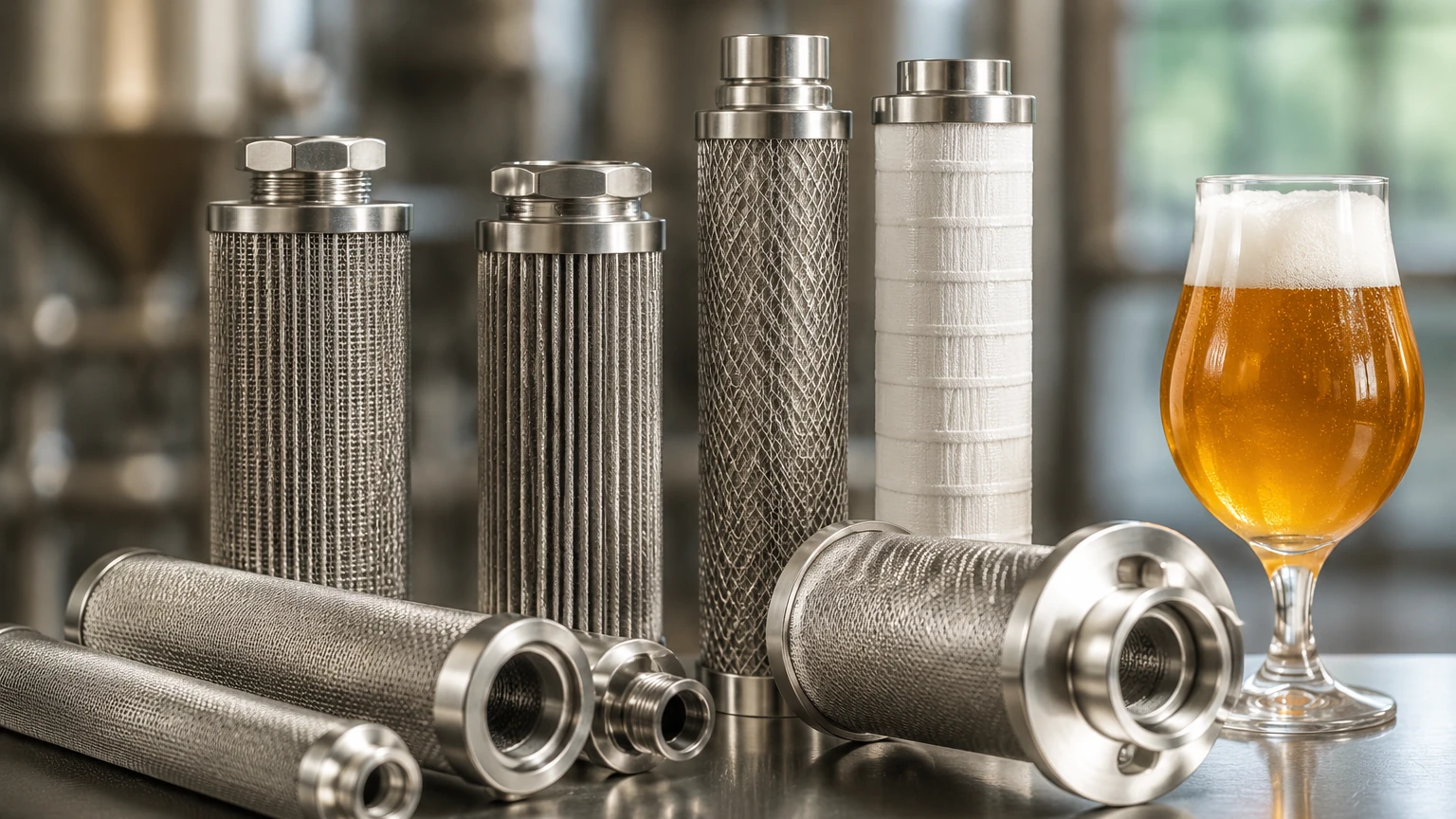
Polishing filtration is where the beer achieves its characteristic clarity. This stage targets smaller particles, including fine yeast cells and protein-tannin complexes that contribute to "chill haze." Engineering a beer filter system for polishing requires a finer micron rating, typically between 1 and 5 microns. Stainless steel pleated filter cartridges are frequently employed here due to their high surface area, which allows for lower differential pressure even as the filter accumulates debris.
Final/Sterile Filtration
For beers that will not be pasteurized, sterile filtration is the final safeguard against spoilage organisms like *Lactobacillus* or *Pediococcus*. This stage requires absolute-rated membranes or high-precision sintered metal filters capable of removing microorganisms down to 0.45 microns. At this level, the integrity of the filter housing and the precision of the filter seals are as important as the media itself to prevent bypass.
Material Selection: Why Stainless Steel Dominates
When designing a beer filter system, the choice of material for housings, support structures, and filter media is paramount. Stainless steel, specifically grades 304 and 316L, is the industry standard for several technical reasons.
Corrosion Resistance and Longevity
Beer is a chemically complex fluid with a slightly acidic pH (typically 3.8 to 4.5). Furthermore, the cleaning agents used in breweries—including caustic soda, phosphoric acid, and peracetic acid—are highly corrosive. Stainless steel 316L, with its molybdenum content, provides superior resistance to pitting and crevice corrosion, ensuring that the filter system remains structurally sound over decades of operation.
Hygiene and Cleanability
In food and beverage applications, the surface finish of the filtration hardware is critical. Stainless steel components can be electropolished to achieve a low Ra (roughness average) value, which minimizes the ability of bacteria to adhere to the surface and form biofilms. This high level of cleanability is essential for Clean-In-Place (CIP) cycles, allowing the beer filter system to be sanitized without disassembly.
Thermal and Mechanical Durability
Unlike plastic or polymer-based filters, stainless steel components can withstand high-pressure differentials and extreme temperature fluctuations. This is particularly important during steam sterilization (SIP) or hot water sanitization, where temperatures can exceed 120°C. The mechanical rigidity of stainless steel wire mesh ensures that the pore structure remains stable even under the fluctuating pressures of a centrifugal pump.
Engineering Considerations for Filter Selection
Selecting a beer filter system is an exercise in balancing competing technical variables. Engineers must evaluate the following factors to optimize performance and minimize downtime.
Micron Rating: Nominal vs. Absolute
One of the most common points of confusion in filter procurement is the distinction between nominal and absolute ratings. A nominal rating refers to a filter's ability to retain a majority percentage of particles at a given size, whereas an absolute rating indicates that 99.9% or more of particles above that size are captured. For a beer filter system, primary filtration often uses nominal-rated mesh, while final polishing and sterile stages require absolute-rated cartridges to guarantee product stability.
Flow Rate and Flux
Flux is the rate of flow per unit of filter area. Designing for a low flux rate generally extends the life of the filter media by reducing the velocity at which particles impact the mesh. Engineers must calculate the total surface area required to meet the brewery's peak production demands while maintaining a manageable differential pressure (ΔP). Over-sizing the filter area is often a wise long-term investment, as it reduces the frequency of cleaning cycles.
Pressure Drop and Blinding
As a beer filter system operates, the accumulated solids create a "filter cake" that increases the resistance to flow. Monitoring the pressure drop across the filter is the primary method for determining when a cleaning cycle is necessary. High-quality stainless steel wire mesh is designed to provide a high percentage of open area, which minimizes the initial pressure drop and allows for longer run times before the terminal pressure is reached.
Customization and OEM Solutions in Filtration
No two breweries are identical, and often, off-the-shelf filtration products do not meet the specific spatial or functional requirements of a facility. This is where custom manufacturing becomes essential. For more specialized needs, engineers often look to the Main Page of professional manufacturers to explore custom design capabilities.
Tailored Mesh Configurations
Depending on the specific yeast strain and the presence of adjuncts (like fruit or spices), a brewery may require a unique mesh weave. Options include plain weave, twilled weave, or Dutch weave, each offering different levels of strength and filtration precision. Customizing the weave allows for a beer filter system that is optimized for the specific viscosity and solids content of the product.
Bespoke Filter Cartridges and Housings
In many OEM applications, the filtration component must fit into an existing machine or a compact skid. Custom stainless steel filter cartridges can be manufactured to specific lengths, diameters, and end-cap configurations (such as Code 7 or 226 fittings). This flexibility ensures that the filtration hardware integrates seamlessly with the rest of the brewing equipment.
Operational Efficiency and Maintenance
The total cost of ownership for a beer filter system is heavily influenced by how easily it can be maintained. Stainless steel filters offer a significant advantage in this regard compared to disposable depth filters.
Backwashing and Regeneration
Many stainless steel wire mesh filters are designed for backwashing. By reversing the flow of filtered beer or water, the accumulated solids are dislodged from the surface of the mesh. This regeneration process can be automated, significantly extending the time between manual cleanings and reducing the need for consumable filter replacements.
CIP (Clean-In-Place) Protocols
An effective beer filter system must be fully compatible with CIP protocols. This involves circulating cleaning chemicals at specific temperatures and flow rates. Engineers must ensure that the filter seals (typically EPDM, Silicone, or Viton) are compatible with the chemicals used and that the filter housing has no "dead legs" where bacteria could proliferate.
Monitoring and Automation
Modern industrial filtration often incorporates sensors for turbidity, flow, and pressure. By integrating these sensors into the brewery's control system, operators can receive real-time data on the performance of the beer filter system. Automation can trigger a backwash cycle or alert staff to a required cartridge change, preventing product loss and ensuring consistent quality.
Common Risks in Beer Filtration
Failure to properly specify or maintain a beer filter system can lead to several operational risks that impact both product quality and the bottom line.
1. Oxygen Pickup: Any leak in the filtration housing or pump seals can introduce oxygen into the beer, leading to rapid oxidation and stale flavors. Precision-engineered stainless steel housings with high-quality gaskets are essential to prevent this.
2. Product Loss: Excessive dead volume in the filter housing or frequent, inefficient backwashing can lead to significant product loss. Selecting a housing size that matches the batch size is critical.
3. Shear Stress: If the pump or the filter restrictive elements cause too much turbulence, it can break apart yeast cells, releasing unwanted enzymes and off-flavors into the beer. Designing for smooth flow paths is a key engineering requirement.
4. Media Migration: In lower-quality filters, fibers or metal fragments may migrate into the filtrate. Using high-integrity sintered or welded stainless steel mesh eliminates this risk, providing a secure barrier.
Conclusion: Selecting the Right Partner
Implementing a robust beer filter system requires more than just buying a filter; it requires a partnership with a manufacturer that understands the nuances of industrial filtration. From the initial material selection to the final customization of the filter mesh, every detail impacts the efficiency and reliability of the brewing process.
For engineers and procurement teams, the focus should remain on durability, cleanability, and technical precision. By choosing high-grade stainless steel components and working with an experienced OEM provider like Kaifil, breweries can ensure their filtration process is a source of consistency rather than a bottleneck. Whether you are scaling up a craft operation or optimizing a large-scale industrial facility, the right filtration hardware is the foundation of a stable, high-quality product.
To explore the full range of custom stainless steel filtration solutions and technical support, please visit our Main Page.
