


Ultrafiltration Centrifuge Tubes
In the realm of precision separation and molecular biology, ultrafiltration centrifuge tubes represent a critical bridge between raw chemical samples and purified concentrates. For engineers and laboratory managers in the pharmaceutical, chemical processing, and biotechnology sectors, selecting the correct filtration medium is not merely a matter of convenience but a fundamental engineering decision that impacts yield, purity, and process efficiency. While these components are often viewed as laboratory consumables, their design principles mirror the complex fluid dynamics and material science found in large-scale industrial stainless steel filtration systems.
Understanding the technical nuances of ultrafiltration centrifuge tubes allows procurement teams and process engineers to optimize their workflows, ensuring that delicate macromolecules are handled with the necessary precision to maintain biological activity or chemical integrity. This guide examines the engineering considerations, material selections, and performance metrics essential for professional filtration applications.
Understanding the Mechanics of Ultrafiltration in Centrifugation
Ultrafiltration (UF) is a membrane-based separation process that operates on the principle of size exclusion. Unlike microfiltration, which typically handles particles in the micrometer range, ultrafiltration targets molecules and particles ranging from 1 to 100 nanometers. In the context of a centrifuge tube, the driving force for this separation is centrifugal acceleration rather than the hydraulic pressure used in industrial cross-flow systems.
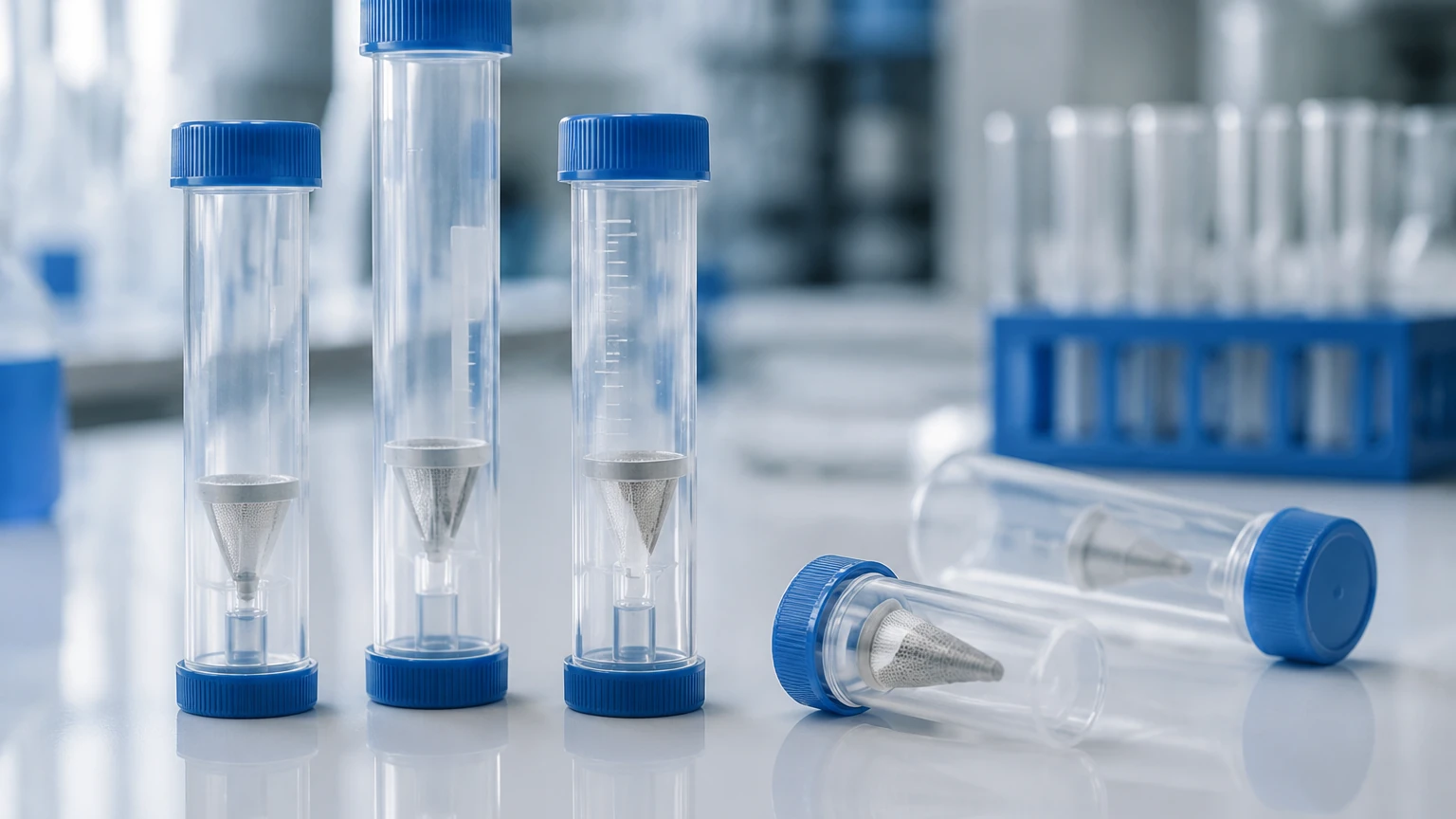
When a sample is placed in an ultrafiltration centrifuge tube and spun, the centrifugal force drives the solvent (permeate) and smaller solutes through a semi-permeable membrane. Larger molecules, such as proteins, nucleic acids, or industrial polymers, are retained by the membrane (retentate) and concentrated in a specific reservoir. The efficiency of this process is governed by the Stokes-Einstein equation and the physical characteristics of the membrane pore structure.
Engineers must consider the G-force limits of the tube assembly. Most professional-grade tubes are designed to withstand relative centrifugal forces (RCF) between 2,000 and 15,000 x g. Exceeding these limits risks membrane rupture or housing deformation, leading to sample loss and potential equipment damage. Conversely, operating at too low a speed increases processing time and may lead to concentration polarization, where a dense layer of solute builds up on the membrane surface, effectively blocking further filtration.
Key Engineering Specifications: MWCO and Membrane Selection
The most critical specification in ultrafiltration is the Molecular Weight Cut-Off (MWCO). This value represents the molecular weight at which 90% of a known standard solute is retained by the membrane. For engineers, selecting the correct MWCO is a balancing act between recovery and speed.
* The Rule of Three: To ensure maximum recovery of a target molecule, the standard engineering practice is to select a membrane with an MWCO that is at least three times smaller than the molecular weight of the solute being concentrated. For example, if the target protein is 30 kDa, a 10 kDa MWCO membrane is typically utilized.
* Membrane Morphology: Most ultrafiltration centrifuge tubes utilize either Polyethersulfone (PES) or Regenerated Cellulose (RC). PES is favored for its high flow rates and thermal stability, making it ideal for general aqueous solutions. Regenerated Cellulose, however, is preferred for applications requiring low non-specific binding, which is vital when working with dilute protein samples where every milligram of recovery is critical.
* Pore Uniformity: In industrial applications, the distribution of pore sizes is as important as the nominal rating. A narrow pore size distribution ensures consistent performance and prevents "leaky" membranes that might allow target solutes to pass into the filtrate.
Material Compatibility and Chemical Resistance
In industrial B2B environments, samples often contain more than just water and proteins. They may include organic solvents, surfactants, acids, or bases used in chemical synthesis or cleaning protocols. The housing of the centrifuge tube, typically made of medical-grade polypropylene, must be evaluated alongside the membrane material for chemical compatibility.
PES membranes offer excellent resistance to a wide range of pH levels (typically pH 1–14), but they are sensitive to certain organic solvents like ketones and esters. Regenerated Cellulose offers superior resistance to many organic solvents but has a narrower pH range (typically pH 3–12). For highly aggressive chemical environments where plastic housings and polymer membranes fail, engineers often look toward specialized metal filtration components. While standard centrifuge tubes are polymer-based, the lessons learned in chemical resistance often lead industrial designers to specify Main Page solutions involving stainless steel mesh or sintered metal for larger-scale processing equipment.
Before finalizing a purchase, technical teams should consult compatibility charts to ensure that the surfactants (like Triton X-100) or stabilizers in their buffer do not cause membrane swelling or degradation, which would compromise the filtration accuracy.
Performance Optimization: Minimizing Fouling and Maximizing Recovery
Fouling is the primary challenge in any filtration process. In ultrafiltration centrifuge tubes, fouling occurs when solutes adsorb to the membrane surface or block the internal pore structure. This leads to a significant drop in flux (flow rate) and can result in the loss of valuable samples.
To mitigate this, many modern centrifuge tubes utilize a vertical membrane design. Unlike traditional horizontal membranes where the solute settles directly onto the filter surface due to gravity and centrifugal force, vertical membranes allow the solute to move parallel to the filter surface. This creates a self-cleaning effect as the centrifugal force helps sweep the membrane surface, reducing the thickness of the "cake" layer and maintaining a higher flow rate throughout the run.
Another critical factor is the "dead-stop" volume. This is a design feature that prevents the sample from filtering to complete dryness. By incorporating a small reservoir that the centrifuge cannot empty, manufacturers ensure that the concentrated solute remains in a liquid state, which is essential for maintaining the stability of biological molecules and facilitating easy recovery via pipetting.
Scaling from Lab to Production: The Role of Stainless Steel Filtration
Ultrafiltration centrifuge tubes are indispensable for bench-scale research and small-batch quality control. However, as processes move from the laboratory to the pilot plant and eventually to full-scale production, the limitations of disposable plastic components become apparent. The transition from centrifugal ultrafiltration to pressurized industrial filtration requires a shift in hardware.
In high-volume industrial environments, the durability and cleanability of stainless steel become paramount. While the principles of size exclusion remain the same, the implementation shifts to stainless steel filter cartridges and precision wire mesh filters. These components, such as those manufactured by Kaifil, provide the structural integrity required for high-pressure systems and the longevity needed for continuous operation.
Engineers who have optimized their separation parameters using centrifuge tubes often apply those same MWCO and flux calculations when designing larger-scale stainless steel filtration systems. The data gathered at the tube level—such as the required filtration area and the sensitivity of the solute to shear forces—is vital for the successful scale-up of chemical and pharmaceutical processes.
Maintenance, Sterilization, and Operational Lifespan
For B2B buyers, the total cost of ownership involves more than just the initial purchase price. In a laboratory setting, ultrafiltration centrifuge tubes are typically single-use to prevent cross-contamination. However, in certain industrial R&D workflows, tubes may be cleaned and reused for the same batch process.
Sterilization is a key requirement in pharmaceutical and food applications. Most polypropylene tubes can be autoclaved, but the membranes themselves are more sensitive. PES membranes can generally withstand autoclaving, while RC membranes may require chemical sterilization using dilute ethanol or sodium azide. It is essential to verify that the sterilization method does not alter the pore structure or the mechanical strength of the membrane-to-housing bond.
In contrast, industrial stainless steel filtration components offer the advantage of being fully compatible with Clean-in-Place (CIP) and Steam-in-Place (SIP) protocols. This difference highlights the importance of choosing the right filtration medium based on the required level of hygiene and the frequency of use. For those looking to bridge the gap between lab-scale testing and industrial-grade durability, reviewing professional product options is a necessary step.
Conclusion: Selecting the Right Filtration Partner
Ultrafiltration centrifuge tubes are high-performance engineering tools that require a deep understanding of material science and fluid dynamics. By carefully evaluating MWCO, membrane material, chemical compatibility, and design features like dead-stop volumes, engineers can ensure reliable and repeatable results in their separation processes.
As requirements grow beyond the capacity of centrifuge-based separation, the need for robust, customized industrial filtration becomes evident. Whether you are refining a laboratory protocol or scaling up to a full production line, selecting components that meet precise filtration standards is essential for operational success. For organizations seeking to optimize their industrial filtration infrastructure with durable, high-precision solutions, it is recommended to Review product options and application support to find the right balance of performance and reliability.
