


Sparging Nitrogen
In industrial processing, the introduction of gases into liquids—a process known as sparging—is a critical operation for achieving specific chemical or physical outcomes. Sparging nitrogen is one of the most common applications of this technology, primarily used for deoxygenation, stripping, and maintaining product stability. By introducing nitrogen in the form of fine bubbles, engineers can effectively displace dissolved oxygen and other unwanted gases, protecting sensitive materials from oxidation and degradation.
For engineers and procurement teams, selecting the right sparging equipment is not merely a matter of gas delivery; it is a calculation of mass transfer efficiency, material compatibility, and long-term operational reliability. Stainless steel porous media have become the industry standard for these applications due to their ability to generate high-surface-area micro-bubbles while withstanding the rigors of industrial environments.
Understanding the Fundamentals of Nitrogen Sparging
Nitrogen sparging relies on the principles of gas-liquid mass transfer. The primary goal is often to remove dissolved oxygen (DO) from a liquid medium. Nitrogen, being an inert gas, does not react with most process fluids, making it an ideal candidate for stripping.
According to Henry's Law, the amount of dissolved gas in a liquid is proportional to its partial pressure above the liquid. By introducing nitrogen bubbles, the partial pressure of oxygen within the bubble is initially zero. As the nitrogen bubble rises through the liquid, oxygen molecules diffuse from the liquid into the bubble until equilibrium is approached. The efficiency of this "stripping" process is governed by the total surface area of the gas-liquid interface. Smaller bubbles provide a significantly higher surface area-to-volume ratio than larger bubbles, leading to faster and more complete deoxygenation.
In addition to oxygen removal, sparging nitrogen is used for:
- Carbonation and Nitrogenation: In the beverage industry, nitrogen is used to create a creamy mouthfeel or to displace oxygen in carbonated drinks.
- Agitation: Using gas bubbles to mix liquids without the need for mechanical impellers.
- Volatile Organic Compound (VOC) Stripping: Removing unwanted volatile contaminants from wastewater or chemical solvents.
The Role of Porous Metal Media in Gas Sparging
Traditional sparging methods, such as drilled pipes or open-ended tubes, produce large, turbulent bubbles. These bubbles rise quickly to the surface, offering minimal contact time and limited surface area. In contrast, porous metal spargers—specifically those manufactured from sintered stainless steel—utilize a matrix of interconnected pores to create millions of tiny, uniform micro-bubbles.
Advantages of Sintered Stainless Steel
Sintered metal media offer several distinct advantages for nitrogen sparging:
1. High Surface Area: By producing bubbles in the micron range (typically 0.5 to 100 microns), sintered spargers maximize the gas-liquid interface, which significantly reduces the volume of nitrogen required to achieve the desired deoxygenation levels.
2. Durability: Unlike ceramic or plastic spargers, stainless steel components are resistant to mechanical shock and high-pressure differentials. This makes them suitable for high-flow applications and deep-tank installations.
3. Thermal Resistance: Stainless steel can operate at extreme temperatures, allowing for sparging in hot chemical reactors or steam-sterilized pharmaceutical vessels.
4. Precise Pore Control: Manufacturing processes allow for specific micron ratings, ensuring that the bubble size is optimized for the viscosity and surface tension of the process fluid.
Engineering Considerations for Efficient Mass Transfer
When designing a system for sparging nitrogen, several engineering variables must be balanced to ensure optimal performance. Simply increasing the gas flow rate does not always lead to better results; in fact, excessive flow can lead to bubble coalescence, where small bubbles merge into larger ones, reducing efficiency.
Bubble Size and Exit Velocity
The size of the bubble is determined by the pore size of the media and the exit velocity of the gas. If the velocity is too high, the gas will "jet" through the pores, forming large bubbles. Engineers must calculate the optimal flux—the volume of gas per unit area of the sparger—to maintain the micro-bubble regime.
Pressure Drop
Every porous medium introduces a pressure drop ($ΔP$). This is the difference between the gas supply pressure and the hydrostatic pressure of the liquid at the depth of the sparger. A well-designed sparger minimizes this pressure drop to reduce energy consumption while ensuring enough backpressure to distribute the gas evenly across the entire surface of the porous element.
Tank Geometry and Placement
The placement of the sparger within a vessel is critical. To maximize contact time, spargers are typically placed at the lowest possible point in the tank. In large-scale reactors, multiple sparging elements may be arranged in a manifold or ring configuration to ensure uniform gas distribution throughout the entire liquid volume.
Material Selection and Chemical Compatibility
In B2B industrial environments, material integrity is non-negotiable. While nitrogen itself is inert, the liquid being sparged is often corrosive or requires high levels of purity.
- 316L Stainless Steel: This is the most common material for nitrogen spargers. It offers excellent corrosion resistance in a wide range of organic and inorganic environments. The "L" denotes low carbon content, which prevents intergranular corrosion after welding.
- Specialty Alloys: For highly aggressive environments, such as those involving hot acids or chlorides, materials like Hastelloy® C-276 or Monel® may be used.
- Surface Finish: In pharmaceutical and food applications, the surface of the sparger must be smooth and free of pits to prevent bacterial growth. Electropolishing is often employed to achieve the necessary sanitary standards.
Industrial Applications of Nitrogen Sparging
Food and Beverage Processing
In the production of edible oils, nitrogen sparging is used to remove dissolved oxygen that would otherwise cause rancidity and shorten shelf life. Similarly, in the wine industry, nitrogen is sparged into the wine before bottling to ensure that the delicate flavor profiles are not compromised by oxidation.
Pharmaceutical and Biotechnology
Bioreactors often require precise gas management. While oxygen is sparged for cell growth, nitrogen is used to control the concentration of other gases and to strip out carbon dioxide. The ability of stainless steel spargers to withstand Clean-in-Place (CIP) and Steam-in-Place (SIP) cycles is essential in these sterile environments.
Chemical and Petrochemical Manufacturing
Nitrogen sparging is used to inert chemical reactors, preventing the formation of explosive atmospheres. It is also used in the "blanketing" of storage tanks, where nitrogen is sparged into the liquid to strip out any oxygen that may have entered during filling or temperature fluctuations.
Optimizing Sparger Design for Specific Process Requirements
Standard off-the-shelf spargers may not meet the requirements of complex industrial processes. Customization is often necessary to achieve the desired results. Key customization factors include:
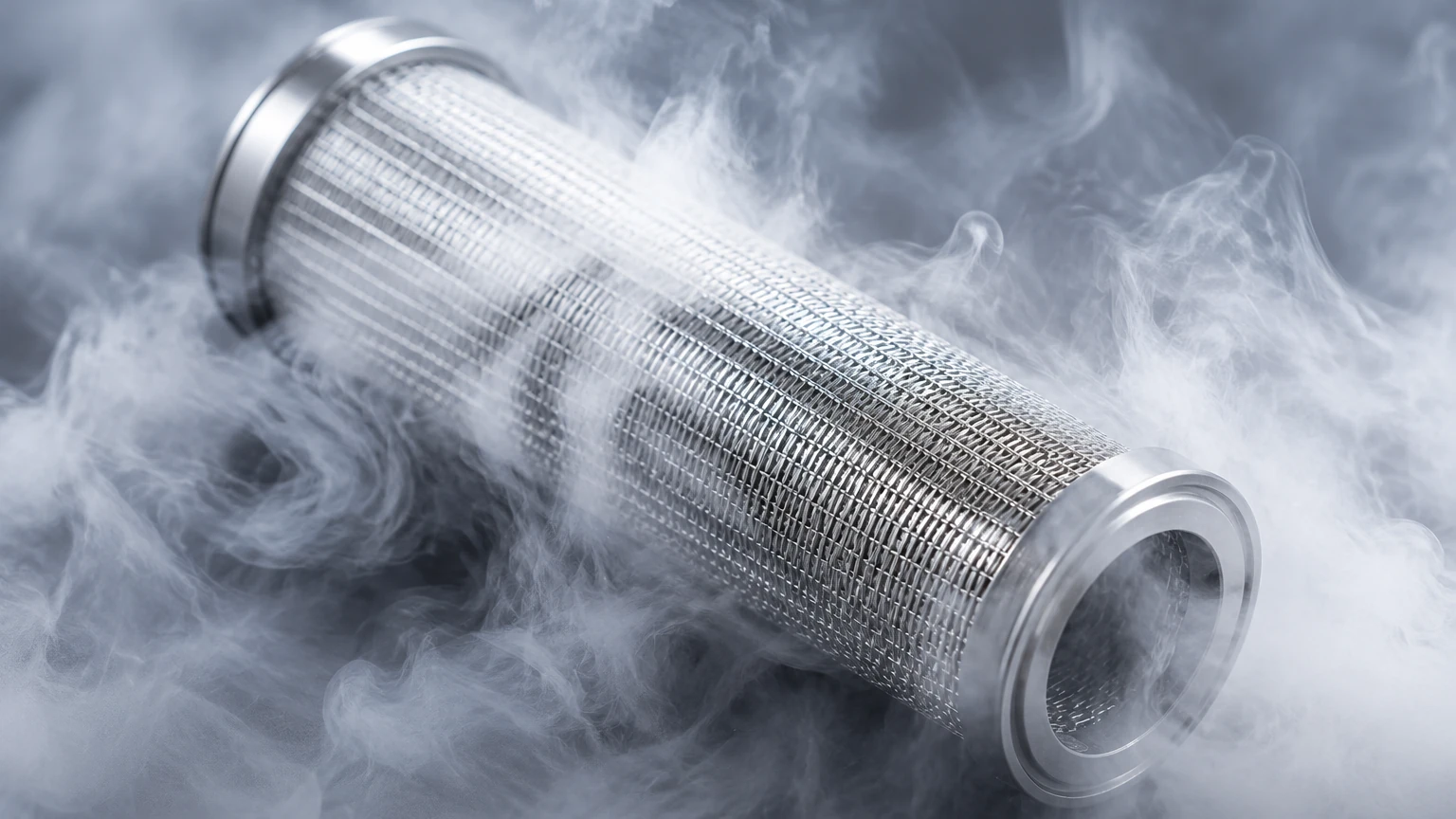
- Element Geometry: Spargers can be designed as cylindrical cartridges, flat plates, or even flexible configurations to fit specific vessel shapes.
- Connection Types: Depending on the piping system, spargers can be equipped with NPT threads, flanged connections, or sanitary Tri-Clamp fittings.
- Retractable Designs: In some applications, it is necessary to remove the sparger for cleaning without draining the tank. Retractable sparger assemblies allow the porous element to be withdrawn through a ball valve while the process remains online.
When evaluating a provider, it is important to confirm their ability to perform flow characterization and provide documentation on pore size distribution. This technical transparency ensures that the sparger will perform as predicted in the theoretical model.
Maintenance and Longevity of Stainless Steel Spargers
While sintered stainless steel is exceptionally durable, it is not immune to fouling. Over time, particulates in the gas stream or precipitates from the liquid can clog the pores.
Cleaning Protocols
Effective cleaning is essential for maintaining the performance of nitrogen sparging systems. Common methods include:
- Backflushing: Reversing the flow of gas or liquid through the sparger to dislodge surface contaminants.
- Ultrasonic Cleaning: Using high-frequency sound waves in a cleaning solvent to remove deep-seated particles from the porous matrix.
- Chemical Cleaning: Using acids or caustics to dissolve organic or inorganic scale. Because the spargers are made of stainless steel, they can withstand aggressive cleaning agents that would destroy other materials.
Replacement Cycles
The total cost of ownership for a sparging system includes the initial purchase price and the frequency of replacement. High-quality stainless steel spargers often have a lower total cost than cheaper alternatives because they can be cleaned and reused multiple times over several years of service.
Conclusion
Sparging nitrogen is a fundamental process for ensuring product quality and safety across a vast array of industries. The efficiency of this process is heavily dependent on the technology used to introduce the gas into the liquid. Sintered stainless steel porous media provide the precision, durability, and efficiency required for modern industrial applications. By focusing on bubble size, material compatibility, and proper engineering design, facilities can optimize their nitrogen usage and improve their process outcomes.
For engineers looking to implement or upgrade their filtration and gas delivery systems, selecting a partner with deep manufacturing expertise is vital. To learn more about how custom stainless steel filtration solutions can enhance your operations, you can Review product options and application support on our Main Page. Understanding the technical nuances of sparger selection will lead to better performance, lower gas consumption, and a more robust industrial process.
